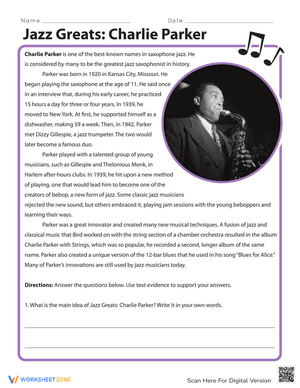
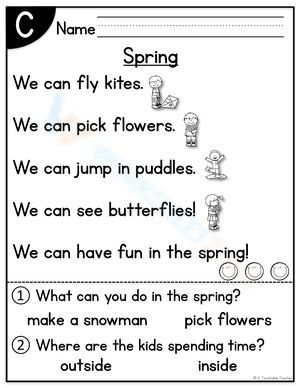
These who what when where why questions worksheets give elementary teachers a structured entry point into narrative comprehension — the kind that reveals, in real time, which students are reading with actual understanding and which are decoding without tracking meaning. Each worksheet breaks a story into five core elements, giving students a concrete task to complete while reading rather than a vague instruction to "think carefully about what you read."
The Skills Each Worksheet Targets
The five elements are not equal in difficulty, and that matters for instruction. Who and Where tend to come easily to younger readers — they can find a character's name or a named location on the page without much inference. What is harder because it demands that students identify the central conflict and resist the pull to list everything that happened. When requires reading for contextual clues rather than explicit labels: a story set in colonial America may never say "the 1700s," but the details are there. Why is where the real comprehension work sits, and where most of the formative assessment data lives. Students who answer Why by restating the plot event rather than explaining a character's motivation show exactly the gap between literal recall and inferential reading.
- Identifying the protagonist versus supporting characters and explaining each one's role
- Summarizing the central problem or event in one focused sentence rather than retelling the whole plot
- Distinguishing explicit setting details from implied ones — time of year, historical period, geographic region
- Using text evidence to support Why answers, which are rarely answered in a single line from the book
- Connecting character motivation to the setting and time period in which a story takes place
Where Students Stumble and What Those Errors Actually Tell You
The most consistent pattern across completed who what when where why questions worksheets is the What box becoming a full plot retelling. A first grader working through The Three Billy Goats Gruff will write something like: "the goats wanted to cross the bridge but the troll was there and then the big goat knocked him off and they all got to eat grass." That's not wrong — it's unfocused. The skill being built is compression: one central event, not a summary of every moment. Teaching students to underline the single most important sentence before they write trains that compression across multiple practice sessions.
The Why box produces a different and more instructive error. Students newer to inferential reading copy the What answer almost verbatim — they'll write "because the goat wanted to cross the bridge," which restates the event without touching motivation. The distinction between what a character does and why they do it is the hinge between literal and inferential comprehension. Naming that distinction explicitly, then showing students where in the text to look for clues about internal motivation, is where targeted reteaching pays off.
Where gets underestimated consistently. Students give it one word — "forest," "school," "outside" — even when the text offers a much richer picture. A thin Where answer usually signals that the student hasn't yet connected environment to character behavior, which is precisely the connection that supports later analytical work in upper grades.
Fitting These Worksheets Into Your Instructional Week
During whole-group instruction, one worksheet completed together on a shared read-aloud — with the teacher thinking aloud about why a detail belongs in Why rather than What — builds a working model before students attempt the same task independently. This think-aloud step matters more than it might seem: students often don't realize the five boxes are genuinely distinct categories until someone sorts information out loud in front of them.
For literacy rotations, a station with a short picture book and one worksheet per student keeps independent reading time accountable without turning it into a test. Students who finish quickly can go back and add a supporting sentence from the text next to each answer. During small-group guided reading, collecting the worksheets at the end of the session and scanning the Why and What answers takes about ten minutes — and gives a clear picture of where re-teaching is needed before moving to the next text.
Exit slips are an underused application here. Rather than asking students to complete all five boxes, assign a single element before the transition: "Today, just tell me the Why." The practice stays low-stakes while the formative data accumulates across the week. For homework, these worksheets replace traditional reading logs more usefully — a completed five-element response shows comprehension in a way that a minutes-read log cannot.
Standard Alignment
The worksheets align to CCSS.ELA-LITERACY.RL.1.3, which asks first graders to describe characters, settings, and major events; RL.2.5, which addresses story structure; and RL.3.3, which requires students to describe character traits and motivations. In instructional terms, the Who, What, and Where boxes carry the RL.1.3 and RL.2.5 load, while the Why component drives toward RL.3.3. The same set works across all three grade levels because the standard shifts from identification at grade 1 to explanation at grade 3 — the worksheet format holds; the depth of response expected is what changes.
Adapting the Set for Mixed-Ability Classrooms
For students still developing writing fluency, the worksheets work with drawings or dictated answers recorded by a partner or aide. The comprehension thinking is the goal — the written output is the evidence of it. Removing the writing demand entirely for several weeks lets those students demonstrate what they actually understand without the task collapsing into a spelling exercise.
Students who move through all five boxes accurately and quickly need a different kind of challenge. The natural extension is adding How as a sixth element — asking them to explain the process by which an event unfolded, not just name that it did. Another strong option: ask students to rewrite the Why answer from the perspective of a different character. A student who can explain why the troll behaves as he does, from the troll's point of view and with text evidence, is doing work that reaches comfortably into fourth-grade literary analysis.
For English language learners, pairing who what when where why questions worksheets with a visual anchor chart — one that shows each question word alongside a drawn example rather than a written definition — reduces the language barrier without lowering the cognitive demand. The aim is to keep thinking at grade level while clearing away vocabulary obstacles that have nothing to do with comprehension.
Frequently Asked Questions
When in the school year should I introduce these worksheets?
Most first-grade teachers introduce the five questions in October or November, after students have enough decoding fluency to follow a simple picture book narrative on their own. Kindergarten classrooms can run the same structure orally — posing each question aloud after a shared read-aloud — before any writing is involved. By the end of third grade, students who have practiced consistently should be applying the five questions without a worksheet in front of them, which is the actual long-term goal of this instruction.
Do these work for nonfiction, or just stories?
The who what when where why questions worksheets transfer to informational reading with almost no adjustment to the format. A biography of Ruby Bridges maps directly onto all five elements: who she was, what she did, when and where it happened, and why it mattered — both to her and to the country. News articles work especially well as a Monday warm-up: students read a two-paragraph summary of a current event and fill in each box before transitioning to morning meeting. The one adjustment worth making is pointing out that Why in nonfiction often asks about historical significance rather than personal motivation.
Can these worksheets also serve as writing planning tools?
Yes, and students often find this more useful than a traditional story map. A completed worksheet is already a rough outline: the Who becomes the character introduction, the What anchors the middle, and the Why carries the resolution or lesson. Students who struggle to begin a summary or short narrative can use their filled-in worksheet as a sentence-by-sentence guide. The written response that results tends to be more organized than work produced from a blank prompt, because the thinking about structure happened first, during reading.















 Interactive Worksheet Maker
 Quiz Maker
 Word Search Maker
 Crossword Puzzle Maker
 Word Scramble Generator
 Sentence Scramble Generator
 Handwriting Worksheet Generator
 Name Tracing Generator
 Fill In The Blank Generator