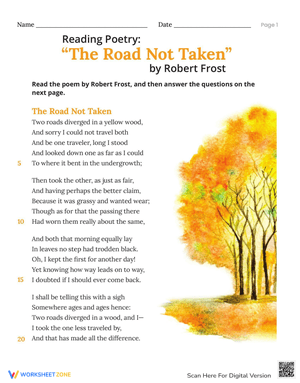
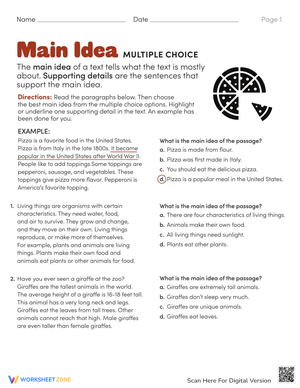
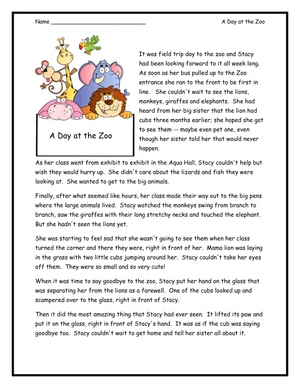
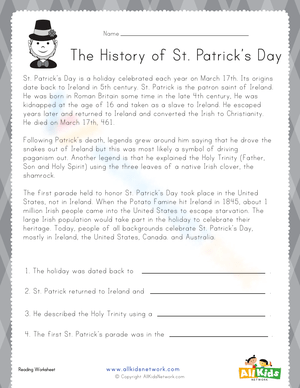
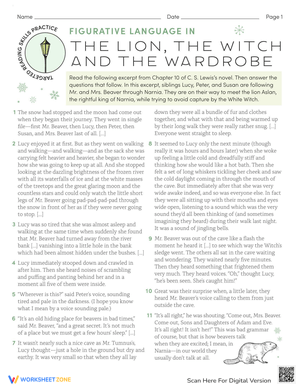
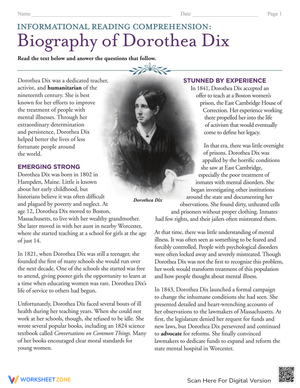
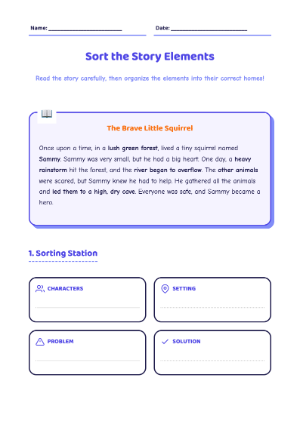
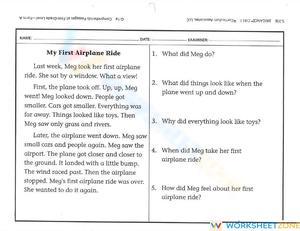
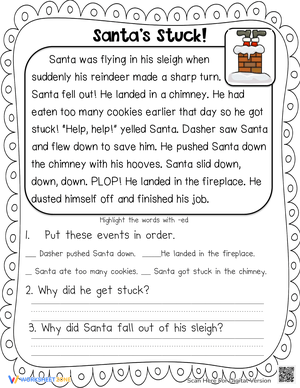
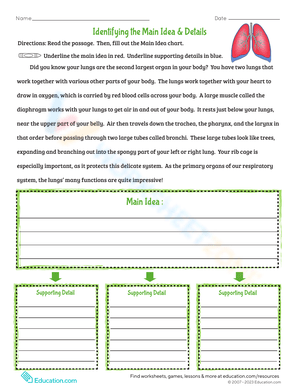
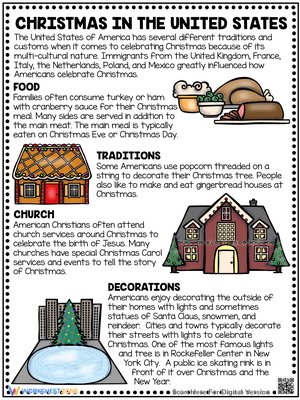
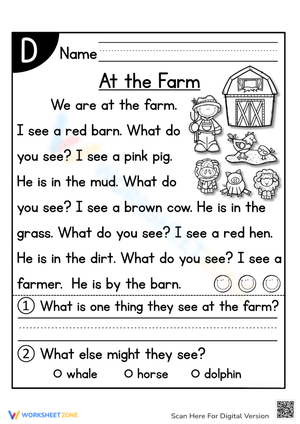
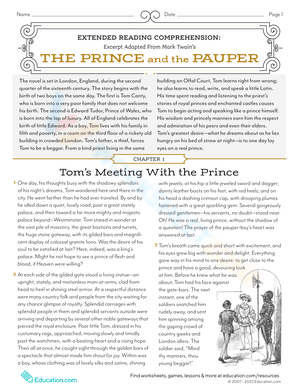
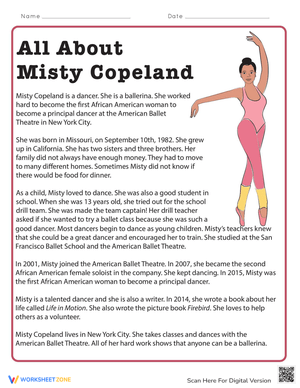
These reading comprehension questions worksheets give teachers a concrete way to move students through literal, inferential, and evaluative questioning — the three cognitive levels most programs mention but rarely give students enough structured practice to internalize. Each worksheet targets a specific thinking demand rather than blending all question types together, which lets teachers assign work with a clear instructional purpose in mind.
What Students Practice Across the Set
At the literal level, students locate and restate information stated directly in the text — names, events, sequence, explicit cause-and-effect relationships. This sounds like easy work, but students who can't answer literal questions reliably aren't ready for inference tasks, and rushing past that foundation shows in the work. At the inferential level, students draw conclusions the text implies but doesn't state: figuring out a character's motivation from their actions, connecting a detail in one paragraph to an event two paragraphs later, or reading tone from word choice. Evaluative questions push further — asking students to assess an author's argument, judge a character's decision, or connect the text to a larger idea and defend that connection in writing.
Across all three levels, students aren't just selecting an answer; they're locating or constructing reasoning. That distinction matters for how teachers use the work afterward. A checked answer tells you little. A written response tells you exactly where a student's thinking broke down — or held up.
Patterns in Student Work Teachers Should Know Before Assigning These
Using reading comprehension questions worksheets in the classroom tends to surface a consistent cluster of errors. The most common: students answer inferential questions by writing what they already believe rather than what the text supports. Ask why a character made a particular choice, and many students write "because she wanted to help her friend" — a reasonable guess, but grounded entirely in their own assumption rather than anything stated or implied in the passage. The student isn't confused about the story; they just aren't in the habit of returning to the text at all.
A second pattern shows up specifically with evaluative questions. Students treat "what do you think" as an open invitation — they write an opinion without any text-based support, because at that age opinion and evidence still feel like separate activities. Third and fourth graders are especially prone to this. Watching for it early, before it becomes routine, is why these worksheets work better as ongoing formative checks than as one-time assessments: the error pattern only becomes visible over repeated exposure.
Where These Worksheets Fit in a Literacy Block
The most productive placement isn't independent seatwork during a busy period — it's the 10 to 15 minutes after shared or guided reading, when students still have the passage fresh and the teacher is close enough to redirect. Assign one worksheet, have students respond independently, then use two or three student answers as the starting point for a whole-class conversation: "Walk me through how you got there." That structure converts a paper task into a genuine discussion about how readers think, rather than a collection of right and wrong responses filed away in a folder.
Reading comprehension questions worksheets also work well as opening tasks at the start of a literacy block. A short passage with three targeted questions — one at each level — gives students a focused entry point and gives the teacher immediate information about where comprehension is breaking down before instruction moves forward. For small-group reading sessions, assign a worksheet matched to the group's current skill ceiling rather than their independent reading level; the slight stretch is where the growth happens, and the small-group setting means students can get support without the task becoming overwhelming.
Adjusting the Work Across a Range of Readers
For students who are still developing fluency, the passage itself is the main obstacle, not the questions. Read the passage aloud — or have a more fluent partner do it — before asking the student to respond independently. That separation isolates the comprehension skill from the decoding demand, which gives you cleaner information about what the student actually understands.
For students who move through literal and inferential questions without much difficulty, add an extension step: have them write a question the worksheet didn't ask, then answer it with evidence from the text. Students who work above grade level often disengage when the task doesn't demand anything new from them; generating and defending their own evaluative question changes that dynamic without requiring a separate resource. At the other end of the range, students who freeze when facing an open-response question benefit from sentence frames — "The text says ___, which makes me think ___" — that reduce the blank-page anxiety without changing the thinking the question requires.
Standard Alignment
These worksheets address CCSS.ELA-LITERACY RL and RI standards in the "Key Ideas and Details" strand — specifically RL.3.1 through RL.5.1 and RI.3.1 through RI.5.1, which require students to ask and answer questions supported by explicit textual evidence. Inferential and evaluative question types also connect to the "Craft and Structure" cluster, where students analyze how authors use language to develop meaning and how point of view shapes a text. In most grade 3 through 5 literacy programs, these standards anchor comprehension instruction from late fall through spring assessment, making this set a natural fit for sustained practice across the year rather than a one-unit focus.
Frequently Asked Questions
How do I know which question level to focus on with my class?
Give students a short passage with one question at each level — literal, inferential, evaluative — and look at the written responses before making any instructional decision. Students who miss the literal question need foundational work before inference makes sense. Students who answer literal questions correctly but guess at inferential ones are ready for focused inference practice. Most classes in grades 3 through 5 will have students spread across all three levels simultaneously, which is why individual or small-group assignment tends to produce better results than giving the same worksheet to the whole class at once.
What's the difference between a student getting an inference question wrong and simply misreading the passage?
Ask the student to retell the relevant section of the passage before reviewing the question with them. If they can retell the section accurately but still couldn't answer the inference question, fluency isn't the issue — the reasoning move is. If they can't retell the passage accurately, decoding or fluency needs attention first. These worksheets surface that distinction quickly, which is one reason they're useful as diagnostic tools alongside their function as practice tasks.
How often should these worksheets appear in an instructional week?
Two to three times a week is a workable rhythm for most students. Reading comprehension questions worksheets are most effective when paired with time to discuss responses — not just collect them. Using a worksheet every day without built-in discussion tends to turn the task into something students power through without slowing down to think. Reserving at least one session per week where student responses become the basis for a conversation, rather than a graded paper, keeps the questioning work connected to genuine comprehension development rather than just completion habits.












 Interactive Worksheet Maker
 Quiz Maker
 Word Search Maker
 Crossword Puzzle Maker
 Word Scramble Generator
 Sentence Scramble Generator
 Handwriting Worksheet Generator
 Name Tracing Generator
 Fill In The Blank Generator