Understanding the Role of Text Features in Nonfiction Reading
Nonfiction reading presents unique challenges for elementary students. Unlike narrative fiction, expository texts rely on structural tools to organize information. These tools, known as text features, act as signposts that guide readers through complex data and specialized vocabulary. Using text features worksheets resources provides explicit instruction on these elements. When students understand how to use a table of contents, glossary, or caption, they move from being passive decoders to active participants in learning. This transition is essential for deep comprehension in science and social studies.
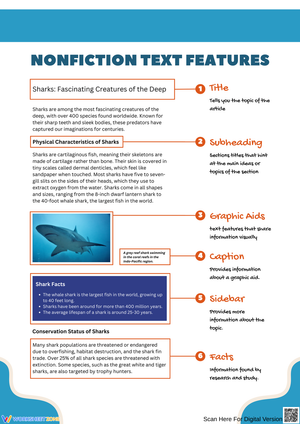
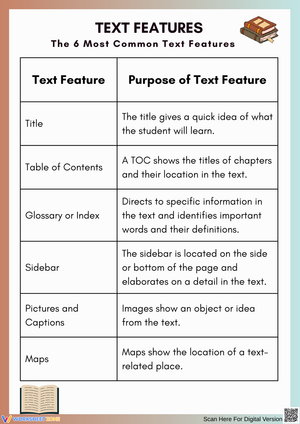
Text features include organizational, graphic, and typographic types. Organizational features like indices help students find information quickly. Graphic features, such as diagrams and maps, provide visual representations of concepts. Typographic features, including bold text and bulleted lists, signal the importance of specific ideas. In a typical classroom, students often skip over these elements. However, effective instruction emphasizes that these features are often where the most vital information resides. By integrating targeted worksheets, teachers can ensure students develop a habit of scanning these features before reading the main narrative. This habit is a key step in creating independent readers.
Identifying Key Structural Elements with Targeted Worksheets
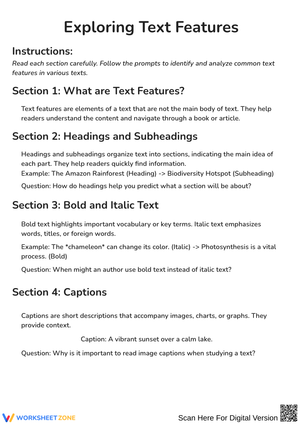
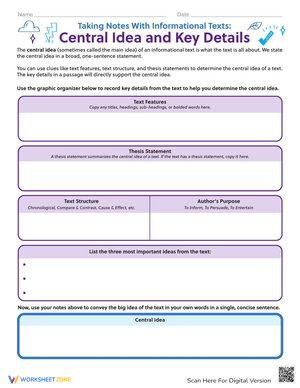
Structural elements are the backbone of organized nonfiction. These include headings, subheadings, and sidebars, which break down information into manageable sections. For many young readers, a solid wall of text can be intimidating. Headings and subheadings serve as titles for sections, giving students a preview of the content. Using text features worksheets activities that ask students to create their own subheadings is an excellent way to check for understanding. This requires students to synthesize the main idea of a section and condense it into meaningful words, building both comprehension and writing skills.
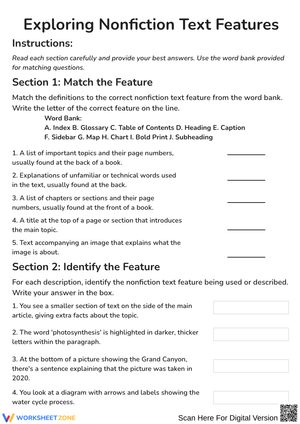
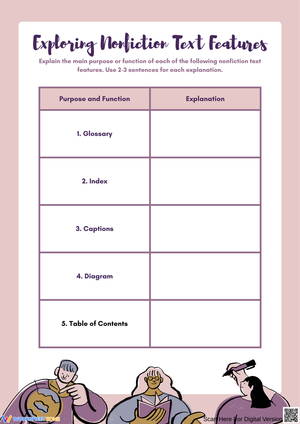
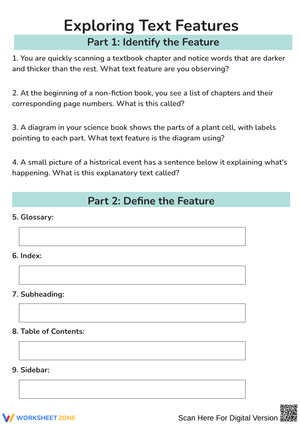
Sidebars provide supplementary information related to the main topic, often containing interesting facts or biographies. While not part of the main text flow, they enrich the reader's experience and provide context. Worksheets can prompt students to analyze why an author chose to put certain information in a sidebar. This analysis encourages students to think about the intentionality behind text design. Glossaries and indices are also vital tools. A glossary provides definitions for domain-specific vocabulary, while an index helps readers locate topics. Teaching students to use these tools effectively increases their efficiency during independent research projects.
Visual Literacy: Analyzing Diagrams, Maps, and Charts
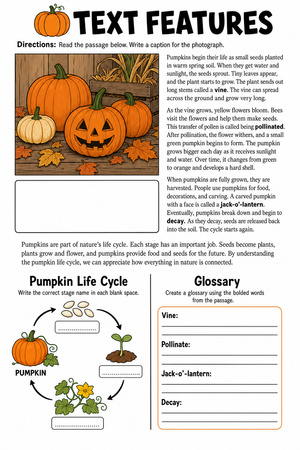
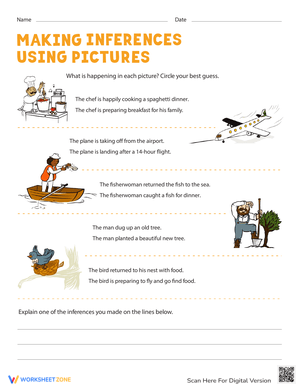
Visual literacy is as vital as traditional reading skills. Nonfiction texts are frequently supplemented with diagrams, maps, and charts that convey information effectively. However, many students lack the skills to interpret these visual aids. A diagram might show the internal parts of a flower or the steps in a process. Without the ability to read labels and understand relationships, the student misses the core concept. Utilizing text features worksheets files that focus specifically on visual elements helps bridge this gap by providing students with the strategies needed for successful interpretation.
Text features provide a "roadmap" for reading nonfiction. When students analyze these elements before reading, they build a mental framework that improves information retention. Research suggests that explicit instruction in these features can lead to a 20% gain in students' overall comprehension of expository texts. This data point highlights the importance of making text feature instruction a regular part of the literacy block. By treating visual elements as text that needs to be analyzed, teachers help students develop a sophisticated approach to informational materials. This skill is useful as students move into higher grades where textbooks become visual-heavy.
Scaffolding and Differentiation in the Literacy Block
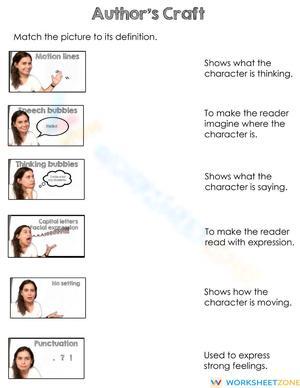
Every classroom is home to a diverse range of learners, and text features worksheets resources are easily adaptable. For struggling readers, teachers can provide leveled worksheets focusing on high-frequency features like bold text and photographs. These students might benefit from matching games where they pair a picture of a feature with its name. This builds confidence and provides an entry point into nonfiction without the pressure of reading complex text. By simplifying the linguistic load, teachers allow these students to focus on the structural logic of the text, a necessary precursor to advanced comprehension strategies.
For advanced learners, text features worksheets can promote higher-order thinking. Instead of simply identifying a feature, these students can be asked to evaluate its effectiveness. For example, they might be asked how a diagram enhances their understanding in a way that words do not. These questions require students to think critically about the author's purpose and information design. English Language Learners (ELLs) also find text features helpful. Graphic features provide visual context that can help them understand the meaning of words they might not yet have in English. By providing these scaffolds, teachers ensure all students master the essential skills of nonfiction reading.
Teacher Tips: Integrating Worksheets into Literacy Rotations
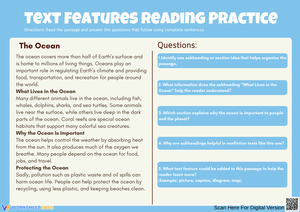
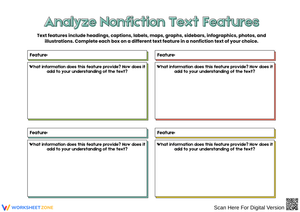
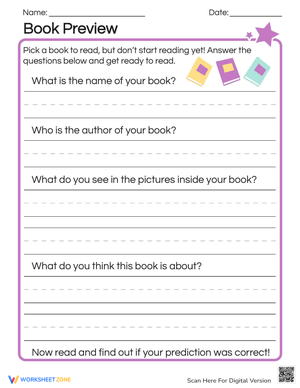
Integrating text features worksheets materials into a daily literacy block can be done through centers. One effective strategy is to include them as a choice during independent work stations. This allows students to work on these skills in a low-pressure environment. Another approach is to use them during small-group guided reading sessions. Before opening a new nonfiction book, the teacher can have students complete a "feature hunt" using a worksheet. They scan the book, list the features they see, and predict the topic. This pre-reading activity activates prior knowledge and sets a purpose for reading, a key component of successful classroom comprehension.
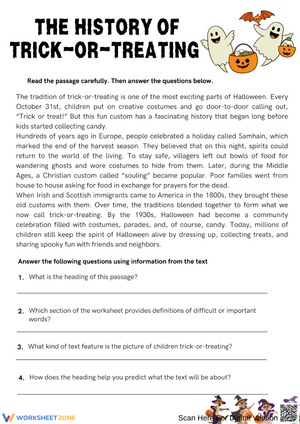
Practitioners often find that student engagement with "text-heavy" nonfiction increases significantly when worksheets focus first on the interaction between captions and diagrams rather than just identification. By asking students to predict how a caption adds value to a picture, teachers shift the cognitive load from passive recognition to active synthesis. This small shift in focus can lead to deeper discussions during whole-group instruction. Teachers can also create a "Text Feature of the Week" board. Each week, the class focuses on a different feature, such as captions. Students find examples in their reading and share them, creating a community of observant readers who appreciate information structure.
Assessing Mastery of Expository Structures and Features
Assessment is a vital part of the learning process. To truly master nonfiction, students must demonstrate their understanding in multiple ways. One common method is through a quiz that asks students to identify various features and explain their purposes. However, more authentic assessments can also be effective. For example, a teacher might provide students with a piece of raw text without any features and ask them to add three features that would help a reader. This "design your own" approach shows whether a student can not only recognize features but also apply them in a logical context.
Observational assessments are also valuable. During independent reading, a teacher can move around the room and ask individual students to point out a text feature. If the student can identify the feature and explain how it helps them, it is a strong indicator of mastery. This type of on-the-spot checking provides immediate feedback and allows the teacher to correct misconceptions. Mastery of text features is not an end goal but a means to an end. The objective is for students to use these tools to become better readers and thinkers. By providing a solid foundation through explicit instruction, teachers empower students to navigate the world of information with confidence.
Frequently Asked Questions
1. What are the most common text features students should know?
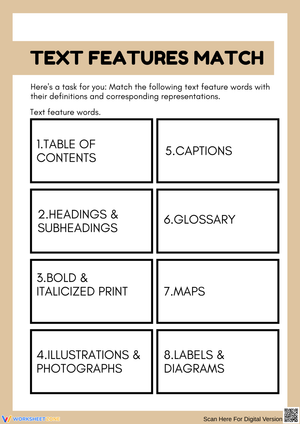
The most common text features include headings, subheadings, bold text, italics, captions, diagrams, maps, and indices. These elements are found in almost all nonfiction materials and are essential for organizing key information. Students should also be familiar with tables of contents and glossaries, which help with navigation and vocabulary development in the classroom.
2. How do captions and diagrams help with reading comprehension?
Captions and diagrams provide visual and textual support for the main ideas in a book. A diagram can show a process that is difficult to describe in words, while a caption explains the significance of an image. Together, they help students build a clearer mental picture of the subject matter, leading to better retention of information over time.
3. Why should students analyze text features before reading?
Analyzing text features before reading serves as a preview of the text's contents. It helps students activate prior knowledge, make predictions, and set a purpose for their reading. This pre-reading strategy builds a mental framework that makes the subsequent reading of the main text more efficient and effective for young learners.
4. Are text features worksheets suitable for all grade levels?
Text features worksheets can be adapted for students from early elementary through middle school. For younger students, the focus is on basic identification of features like photographs. For older students, the focus shifts to analyzing the author's purpose and evaluating how effectively various features convey information in complex expository texts.












 Interactive Worksheet Maker
 Quiz Maker
 Word Search Maker
 Crossword Puzzle Maker
 Word Scramble Generator
 Sentence Scramble Generator
 Handwriting Worksheet Generator
 Name Tracing Generator
 Fill In The Blank Generator