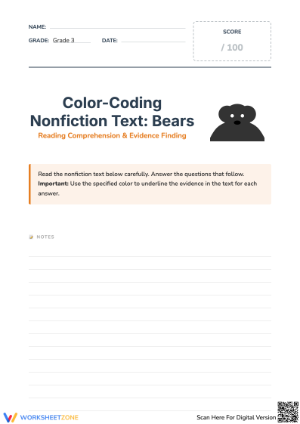
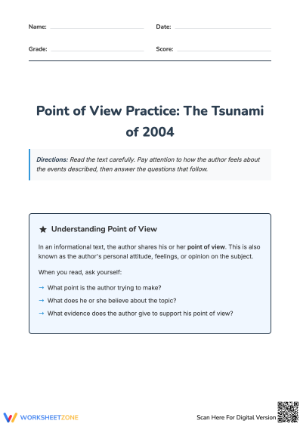
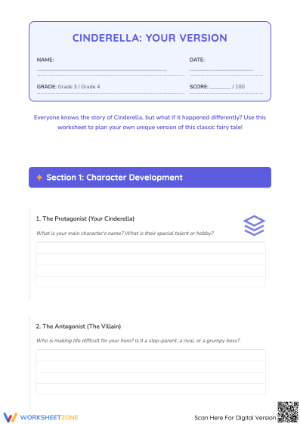
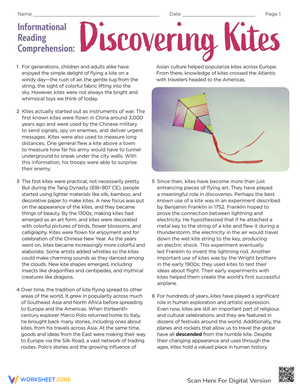
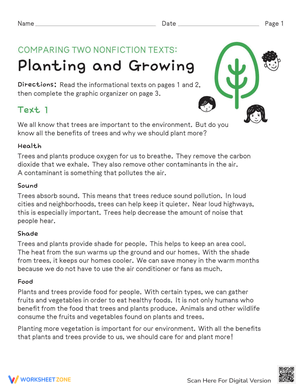
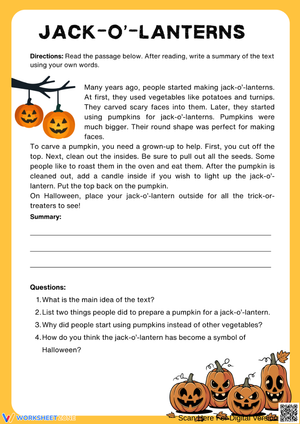
These summarizing worksheets resources give students a structured way to work through one of reading's most cognitively demanding tasks — deciding what a text actually needs and what it doesn't. That distinction is harder than it looks, and most students need explicit, repeated practice before they can apply it without prompting. The set covers both narrative and informational text, with separate frameworks for each.
What's Inside the Set
The worksheets target a specific cluster of summarizing skills:
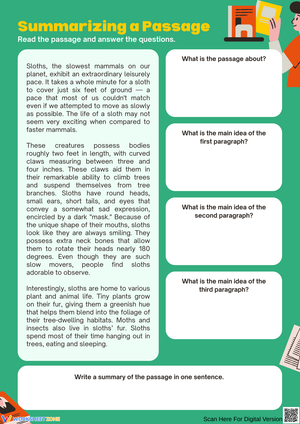
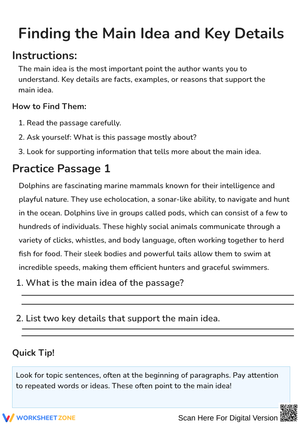
- Identifying main idea versus supporting detail in short passages
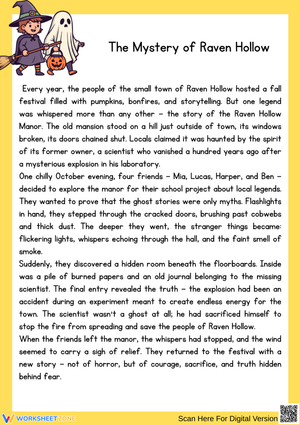
- Applying the "Someone Wanted But So Then" structure to fiction and narrative nonfiction
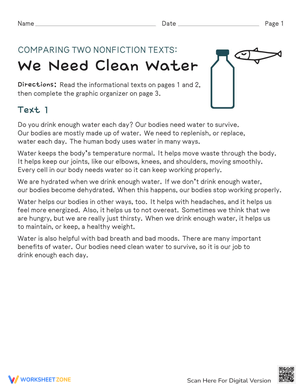
- Using Who, What, Where, When, Why, and How to summarize informational articles
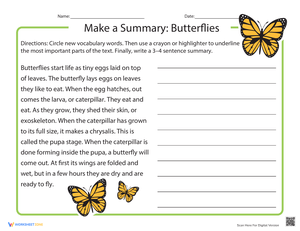
- Writing summaries within a fixed word count — a constraint that forces real prioritization
- Distinguishing personal reaction from text-based main idea
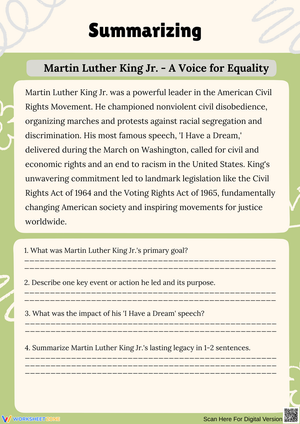
- Condensing multi-paragraph passages into two or three sentences without copying phrases directly from the text
Each worksheet is built around one text type. That separation reflects how differently the summarizing moves work in practice — what counts as essential in a news article and what counts as essential in a short story follow different logic, and conflating the two frameworks early stalls students rather than accelerates them.
The Error Patterns That Show Up Most in Student Work
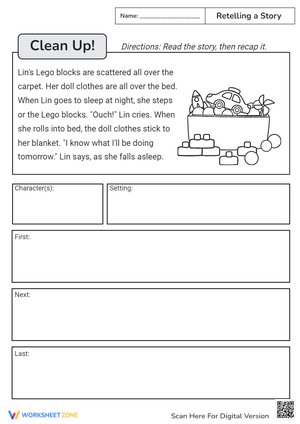
The most persistent problem is the retelling-as-summary habit. A retelling tracks events in order and includes most of them. A summary identifies what drove the text forward and leaves the rest behind. When asked to summarize a chapter, many fourth graders write "First this happened, then this happened" — a sequential list presented as a paragraph. Each worksheet in this summarizing worksheets set addresses that pattern directly by replacing the prompt "What happened next?" with deliberate decision-making questions like "What did the character need?" and "What stood between the character and that goal?"
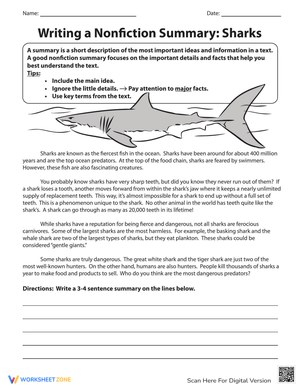
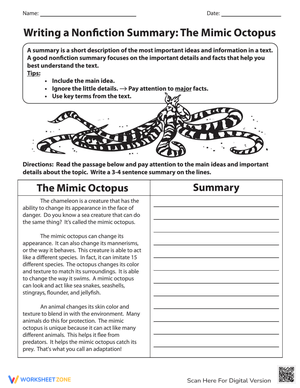
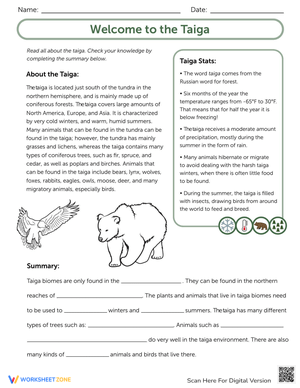
A second error surfaces consistently in nonfiction work. Students latch onto the most surprising or vivid fact in an article — that a particular animal can regrow a limb, or that a historical battle lasted fewer than two hours — and build the entire summary around that detail while the text's central argument disappears. The Who, What, Where, When, Why, and How organizer interrupts that pattern by requiring students to locate Who and Why before they write a single sentence. Students who cannot fill in those two boxes with confidence almost always haven't understood the text's main claim, which is exactly the diagnostic signal a teacher needs before moving the class forward.
How to Work These Worksheets Into Your Lesson Planning
The most reliable placement is as a mid-lesson practice task after shared or guided reading. After 15 to 20 minutes of reading together, students work through the organizer independently or with a partner. That window — typically 12 to 15 minutes — is long enough to complete the graphic organizer and draft a summary sentence, short enough that teachers can scan completed worksheets the same period and adjust instruction on the spot without taking anything home.
A few teachers in our building used the narrative worksheets as Monday warm-ups, having students summarize whatever they had been reading at home over the weekend. By week four, students were using the "Someone Wanted But So Then" phrasing in discussion without being prompted — which is usually the sign that a framework has stopped being a worksheet activity and become an actual reading habit. The nonfiction worksheets slot into science and social studies blocks with minimal transition. When students are reading a passage about the water cycle or annotating a primary source, the 5 Ws organizer gives them something active to do with the information as they encounter it, rather than reading passively and hoping retention happens.
Standard Alignment
These worksheets address CCSS ELA-Literacy RI.4.2 and RL.4.2, both of which ask students to determine the main idea or theme of a text and summarize it without inserting personal opinion or reaction. That last clause — no personal opinion — is where fourth graders most commonly fall short. They write "I thought it was interesting when..." and believe they have summarized. Each worksheet in the set includes a short reminder that a summary reports only what the author wrote, which directly targets that gap in the standard's expectation of unbiased summarization.
Adjusting the Set for Students at Different Levels
For students still building reading fluency, the most practical adjustment is passage selection. A shorter or more familiar text keeps the cognitive work on summarizing rather than on decoding unfamiliar vocabulary. Using the same worksheet format across ability groups means every student practices the same skill — only the access point changes, not the task structure itself.
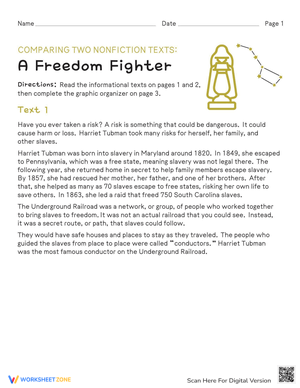
Students who move through these worksheets quickly benefit most from a strict word-count ceiling on their summaries. Limiting a response to 25 words or fewer makes the task substantially harder than it appears. Students who default to writing more as a substitute for thinking more precisely will find the constraint genuinely difficult at first, and the summaries that come out the other side are almost always more accurate than their longer, looser originals. For independent readers pushing toward grade 5 and 6 complexity, adding a comparison step — examining two summaries of the same text and marking which details each writer kept or cut — builds the metacognitive layer that this summarizing worksheets set establishes but does not fully reach on its own.
Frequently Asked Questions
How do the narrative and informational worksheets differ from each other?
Each worksheet is specific to one text type. The narrative worksheets use the "Someone Wanted But So Then" organizer; the informational ones use a Who, What, Where, When, Why, and How framework. The structures aren't interchangeable — a student trying to find "what the character wanted" in a science article notices the mismatch quickly, which is the right kind of productive friction. The set keeps the frameworks separate so students build clean, distinct habits for each text type before they attempt to transfer between them.
What grade levels work best for this set?
The resources work across grades 3 through 6. Third graders typically need more whole-class practice before working through each worksheet independently — the framework language is new and needs multiple exposures before students can apply it without talking through it first. By fifth grade, most students can use the organizers as self-monitoring tools during independent reading. Because the frameworks stay consistent across the grade span, students who enter a new grade already knowing the structure spend their first weeks deepening the skill rather than learning a new format from scratch.
Can these be used as formative assessment tools?
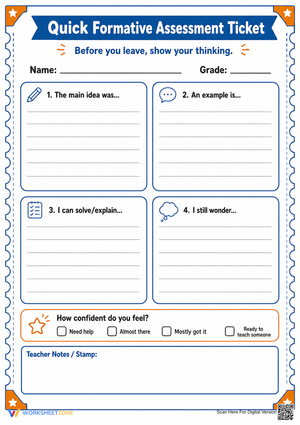
A completed worksheet tells you a great deal. It shows exactly what the student identified as most important — and what they left out. A student who consistently skips the "But" and "So" columns in the SWBST organizer is almost certainly not tracking conflict and resolution across the texts they read. That pattern is far easier to catch across four completed worksheets than in a single open-ended written response, making this summarizing worksheets set useful as both a teaching tool and a running diagnostic across the unit.












 Interactive Worksheet Maker
 Quiz Maker
 Word Search Maker
 Crossword Puzzle Maker
 Word Scramble Generator
 Sentence Scramble Generator
 Handwriting Worksheet Generator
 Name Tracing Generator
 Fill In The Blank Generator