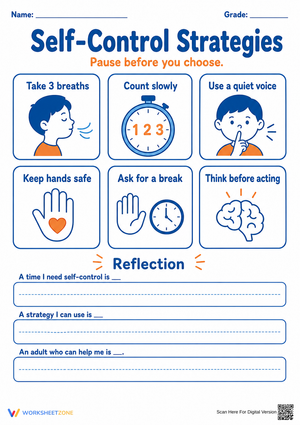
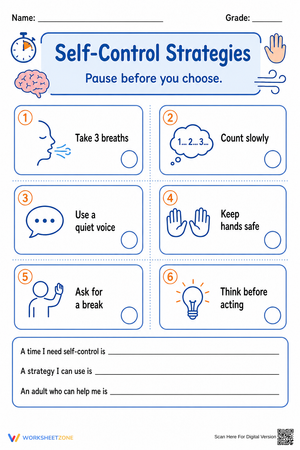
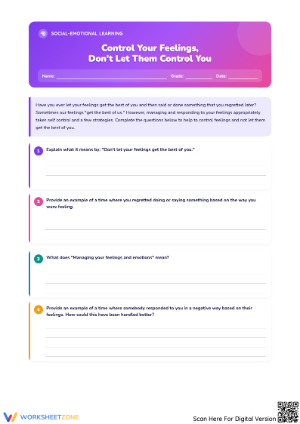
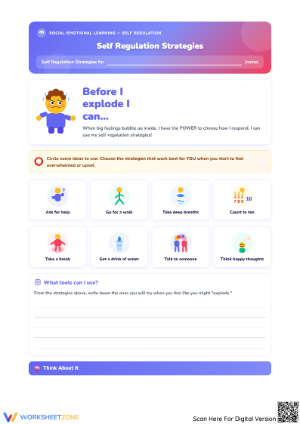
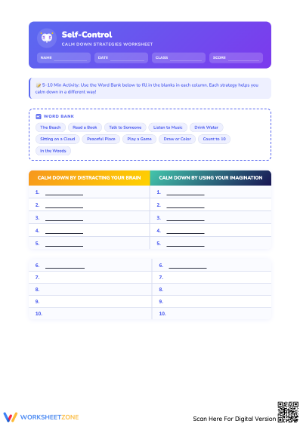
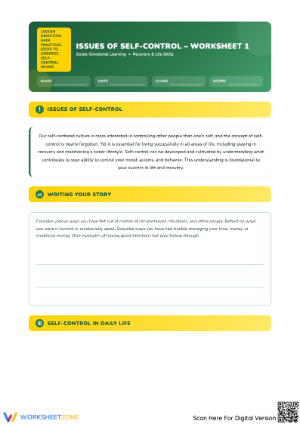
When a student blurts out an answer, grabs a shared marker, or melts down over a missed turn, you are watching the gap between a feeling and a reaction. Self-control worksheets give that gap a name, a routine, and a place to practice. Instead of hoping students settle after a redirection, you hand them a structured page that walks through noticing a trigger, pausing, and choosing a response. This guide shows US K-12 teachers, counselors, and interventionists how to use these worksheets during SEL blocks, morning meeting, and Tier 2 groups so the skill sticks beyond a single tough moment.
What Self-Control Worksheets Actually Teach
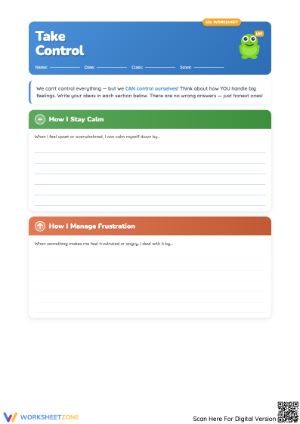
Good self-control worksheets are not busywork or a punishment disguised as an assignment. They target a specific, teachable skill: the ability to pause, name what you feel, and pick a response on purpose. A single sheet usually moves a student through four steps, notice the body signal, label the emotion, name the trigger, and choose a strategy. Because the page is concrete and gradeable, you can see exactly where a student's thinking breaks down, whether they cannot name the feeling, or they can name it but have no strategy ready.
This matters because self-control is a school skill, not just a home one. It shows up in raising a hand, waiting in line, handling a lost game, and sticking with hard work. Worksheets let you rehearse those moments when everyone is calm, so the strategy is already familiar when a real trigger hits during math or recess.
Where These Worksheets Fit in a CASEL Self-Management Block
CASEL organizes social-emotional learning around five core competencies, and self-control lives inside self-management alongside impulse regulation and goal-setting. That gives you a clean home for these pages. During a dedicated SEL block or an advisory period, a self-control worksheet becomes the practice half of an explicit lesson, you teach a strategy, model it, then let students apply it on paper to a scenario they recognize.
According to CASEL's research summary, social-emotional learning that targets self-management competencies is tied to measurable academic gains: a widely cited Durlak meta-analysis found students in SEL programs scored 11 percentile points higher on achievement than peers without that instruction, a difference few single classroom interventions match. That number reframes self-control practice as instruction that protects learning time, not a soft add-on.
Here is the shift that separates worksheets that work from ones that gather dust: treat the page as a rehearsal script, not a record of misbehavior. The Learning Policy Institute's evidence review finds that well-implemented SEL programming improves classroom behavior and emotional regulation across K-12 settings, and implementation quality is the variable teachers control. A worksheet completed proactively during a calm Tuesday morning meeting builds a strategy students can retrieve later. The same worksheet handed out only after a blowup teaches students that the page equals trouble, and they will resist it every time.
Matching Worksheets to Grade Bands
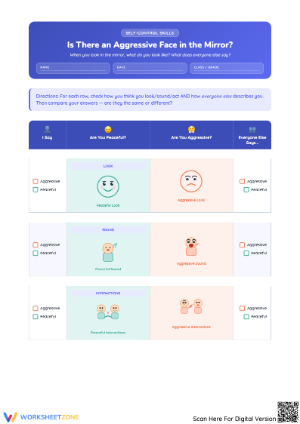
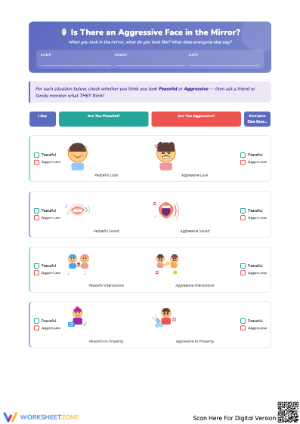
Self-control looks different at five than it does at thirteen, and your worksheets should too. In early elementary, keep the load light and visual. Emotion-labeling sheets, simple stop-and-think prompts, and color or face rating scales let young students connect a body feeling to a word before they add a strategy. The goal is naming, not essay writing.
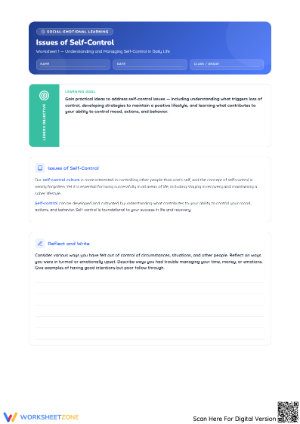
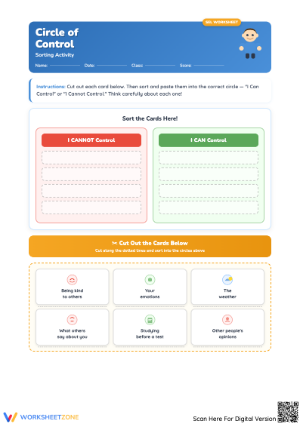
By upper elementary and middle school, students can handle scenario-based reflection. Give them a short situation, a peer cut in line, a group member took credit, and ask them to map the trigger, the impulse, the possible consequences, and a better choice. These sheets push perspective-taking and planning, which is where older students actually struggle. Programs like The Zones of Regulation and Skillstreaming are built around this same explicit, repeated skill practice, so worksheet drills reinforce curricula many schools already run.
Classroom Implementation
Start small and build a routine. Introduce one self-control strategy per week during morning meeting, model it yourself with a real classroom example, then use a matching worksheet the same day so practice follows the teaching immediately. Keep completed sheets in a folder students can revisit, so a strategy is never a one-time worksheet.
Reframe your calm-down corner or reset space as a practice zone, not a time-out. Stock it with blank stop-and-think sheets a student can grab to work through a moment independently. This positions the worksheet as a tool the student controls, which protects buy-in and keeps the page from feeling like a consequence.
Watch your language and your workload. Edutopia's roundup of self-regulation strategies for elementary students emphasizes short, repeatable routines over long one-off lessons, and worksheets fit that model well because they take minutes, not periods. There is a teacher payoff too, recent SEL-implementation research links explicitly teaching self-regulation skills to lower job-related stress and higher self-efficacy, likely because a calmer, more predictable room is easier to teach in.
Frequently Asked Questions
1. What age or grade level are self-control worksheets appropriate for?
They work across K-12 when you match the format to the grade. Early elementary students do best with visual emotion-labeling and simple stop-and-think prompts, while upper elementary and middle school students can handle scenario-based reflection that asks them to map triggers, consequences, and better choices.
2. How do self-control worksheets support IEP or behavior intervention plan goals?
Dated, completed worksheets act as timestamped work samples. They show whether a student can name a trigger and choose a strategy independently or with prompting, which gives progress-monitoring evidence for IEP goals or a behavior intervention plan without building a separate tracking system.
3. How can teachers use these worksheets during SEL or morning meeting time?
Teach one strategy, model it with a real classroom example, then use a matching worksheet the same day so practice follows instruction. Keeping it to a short, repeatable routine during morning meeting builds daily self-regulation habits without eating a full class period.
4. What is the difference between self-control and self-regulation worksheets?
Self-control is the in-the-moment ability to pause and resist an impulse, and it sits inside the broader skill of self-regulation, which also includes managing emotions and behavior toward a goal over time. In CASEL's framework both fall under the self-management competency, so the worksheets overlap heavily.
5. How often should teachers use self-control worksheets with students who struggle with impulse control?
For Tier 2 groups, short and frequent beats long and rare. A brief guided worksheet two or three times a week, paired with role-play and consistent calm-down-corner language, gives students enough repetition to retrieve a strategy when a real trigger hits during the school day.