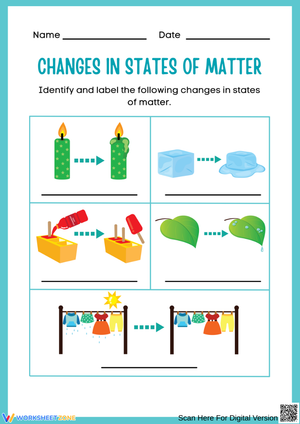
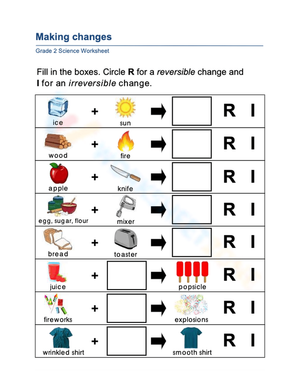
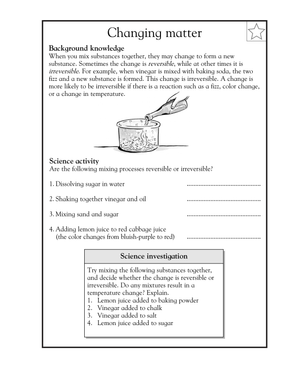
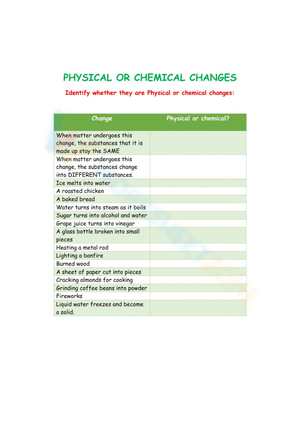
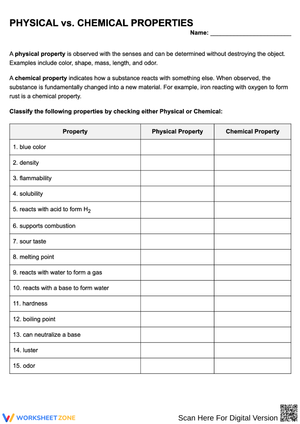
Where these worksheets fit in your physical science unit
Physical and chemical changes worksheets earn their place when students need repeated, low-stakes practice sorting observable evidence before they ever pick up a lab tray. The topic looks simple on the surface, but it asks students to hold two ideas at once: what they can see happening, and what that observation tells them about whether a new substance formed. A well-built worksheet slows that reasoning down so students name the evidence instead of guessing.
For US science teachers, the sweet spot runs from grade 5 through grade 8. Fifth graders meet the idea for the first time as they test whether mixing substances creates something new. Middle schoolers return to it with more precision, analyzing property data to argue that a chemical reaction did or didn't occur. The same worksheet formats support both, as long as you adjust the reasoning demand you expect in the answer column.
Grade 5 use: building toward NGSS 5-PS1-4
At the elementary level, worksheets should mirror the investigation students will run. NGSS 5-PS1-4 asks grade 5 students to investigate whether mixing two or more substances results in a new substance. The classic contrast is sand stirred into water, where nothing new forms, versus baking soda and vinegar, where bubbling signals a new substance. A worksheet that pairs each scenario with a new-substance yes-or-no prompt and an evidence line gives students a structure they can reuse in the lab.
According to NextGenScience's 5th Grade Topic Bundle 1 on physical and chemical changes, students meeting 5-PS1-4 must investigate whether mixing two substances produces a new one, contrasting sand and water with baking soda and vinegar. That single distinction, new substance or not, anchors the entire grade 5 progression and sets up the reaction reasoning students face in middle school.
Keep the grade 5 language observational. Students should record what they see, feel, or smell, then decide. Worksheets that push young students to name reaction types too early tend to backfire; the standard only expects them to detect that a new substance appeared.
Middle school use: MS-PS1-2 evidence-based reasoning
By middle school, the bar rises from something new happened to here is the property data that proves it. NGSS MS-PS1-2 asks students to analyze and interpret data on the properties of substances before and after they interact, then determine whether a chemical reaction has occurred. Examples include burning steel wool or mixing zinc with hydrogen chloride. Worksheets at this level should give students a before-and-after property table and ask them to cite which changed property is their evidence.
This is where the disciplinary core idea matters. In a chemical process, atoms regroup into different molecules, so the products carry different properties than the reactants. A strong worksheet prompt asks students not just to circle chemical change but to explain which new property, flammability lost, a new color, a gas released, signals that regrouping. The Wonder of Science's MS-PS1-2 resources frame this same before-and-after property comparison as the heart of the standard.
Worksheet formats that actually build understanding
Not every format does the same job. Match the format to the thinking you want:
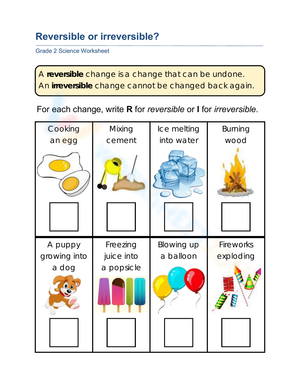
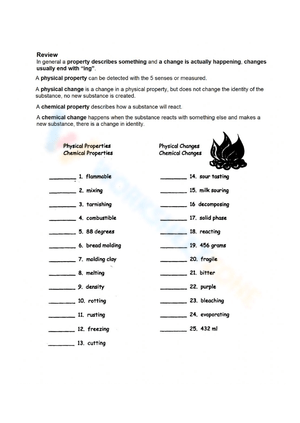
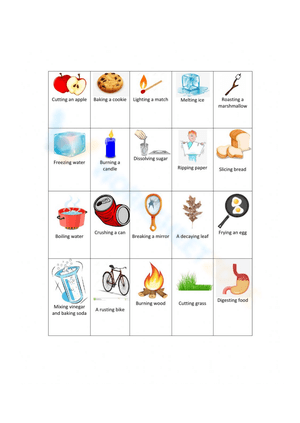
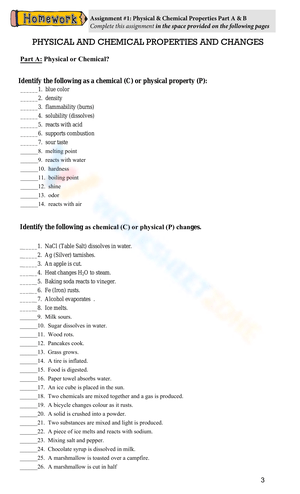
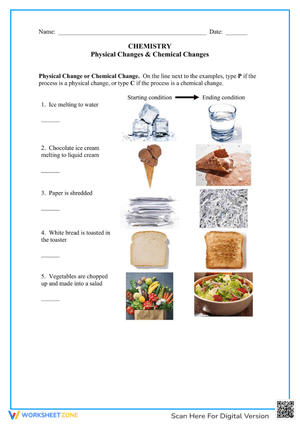
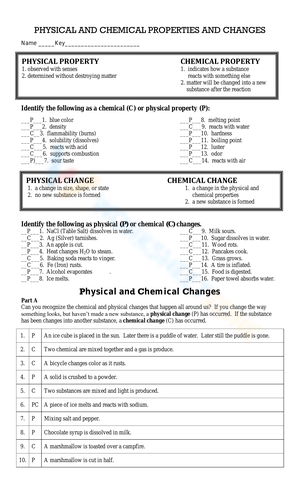
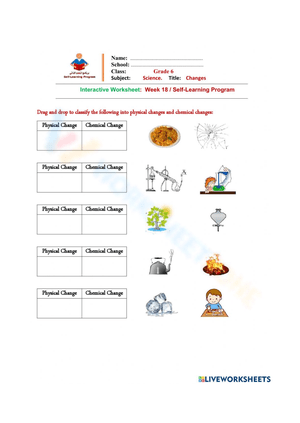
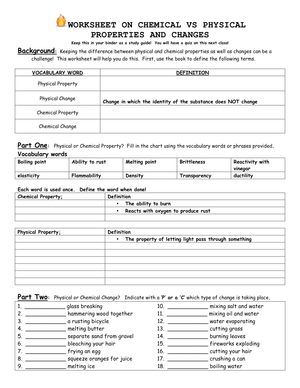
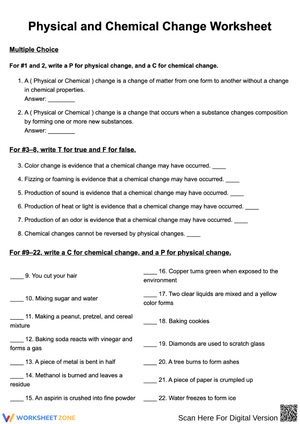
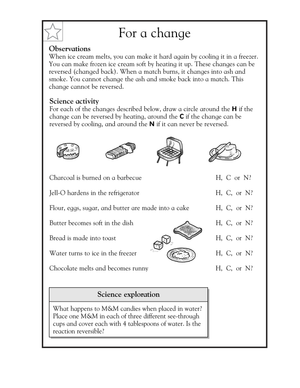
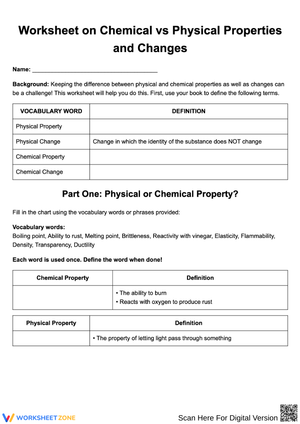
- Sorting and classifying tables: students place cards or examples into physical versus chemical columns, which is fast and great for warm-ups and vocabulary.
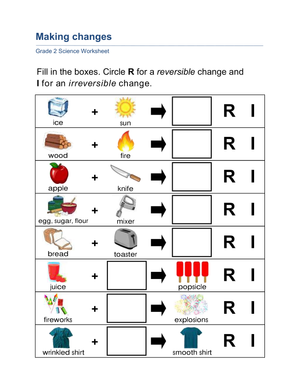
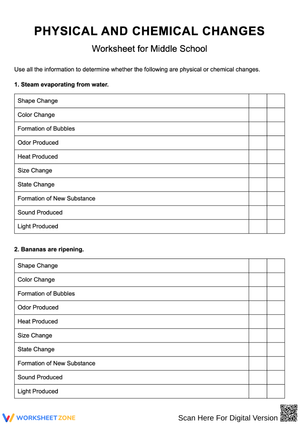
- Evidence checklists: students mark which indicator they observed, from color change to gas bubbles, temperature change, precipitate, or odor, before deciding.
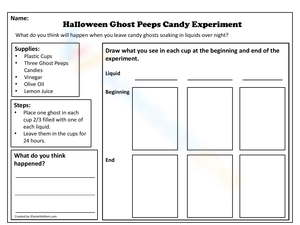
- Lab observation logs: before-and-after tables that mirror MS-PS1-2 data analysis.
- Short-answer explanation prompts: students justify a claim with specific evidence, which surfaces misconceptions a sorting task can hide.
The five indicators, color change, gas bubble formation, temperature change, precipitate formation, and odor change, work best as a shared reference students see on every worksheet. When the same evidence list repeats, students stop guessing and start checking.
Classroom Implementation
Sequence the worksheets so each one raises the demand. Open with a sorting table to activate vocabulary, move to an evidence checklist tied to a short demonstration, then finish with a short-answer prompt that asks for a claim and evidence. In a 45-minute block, that progression fits a warm-up, a guided practice, and an exit ticket without feeling rushed.
For small-group intervention, pull the students who keep labeling dissolving salt as a chemical change. Give them a focused checklist that contrasts dissolving salt and melting ice, both physical, with baking soda and vinegar. Ask them to point to the missing evidence: no new color, no gas, no temperature spike. Naming the absence of evidence is often what finally clicks.
Pair worksheets with a quick teacher demonstration whenever you can. Students who watch steel wool burn and then complete the property table build a memory hook that a page alone can't provide.
Frequently Asked Questions
1. What grade level are physical and chemical changes worksheets best for?
They fit grades 5 through 8 most naturally. Grade 5 students use them to investigate whether mixing substances forms something new, in line with NGSS 5-PS1-4, while grades 6-8 use property-comparison versions aligned to MS-PS1-2.
2. What difference should students look for between a physical and chemical change?
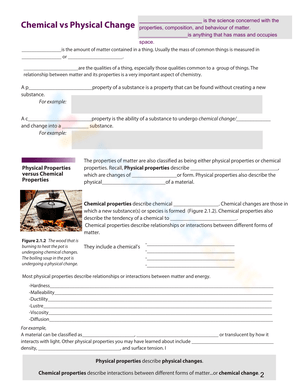
A physical change alters form but keeps the same substance, like melting ice or dissolving salt. A chemical change produces a new substance, signaled by color change, gas bubbles, a temperature change, a precipitate, or a new odor.
3. How do these worksheets prepare students for NGSS investigations?
They rehearse the exact reasoning the investigation requires. Students practice recording evidence and deciding whether a new substance formed on paper first, so the hands-on 5-PS1-4 or MS-PS1-2 lab becomes about doing rather than decoding the task.
4. What examples work well on these worksheets?
Use clear pairs: melting ice, tearing paper, dissolving salt, and crushing a can for physical changes; baking soda and vinegar, burning steel wool, and rusting for chemical changes. Contrasting pairs teach faster than isolated examples.
5. Should I use these for review or formative assessment?
Both. A mixed sorting sheet works for pre-quiz review, while a short-answer version makes a strong exit ticket that tells you who is ready for the lab and who needs a quick small-group reteach first.