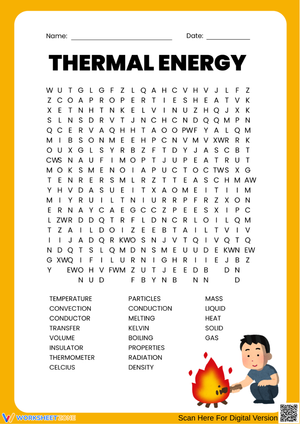
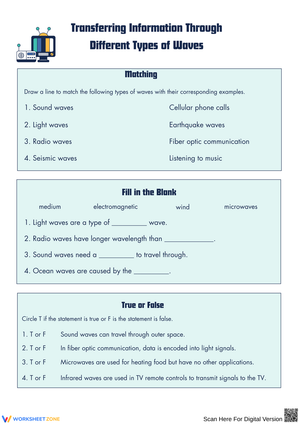
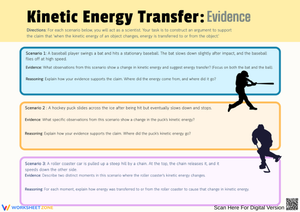
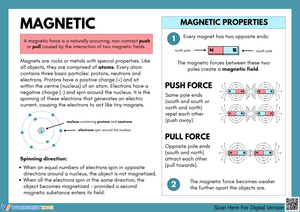
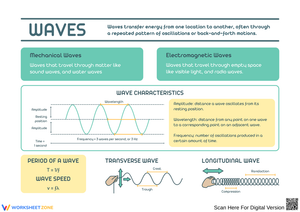
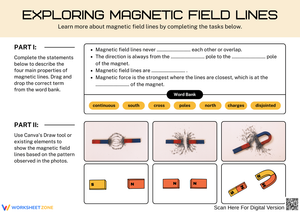
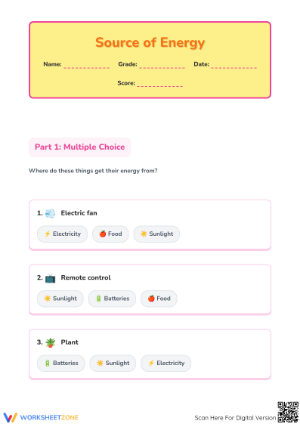
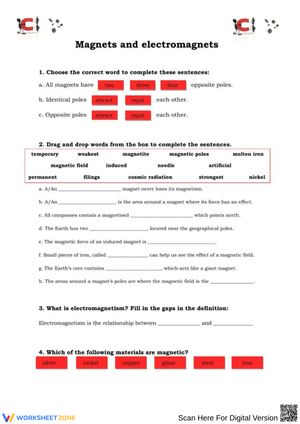
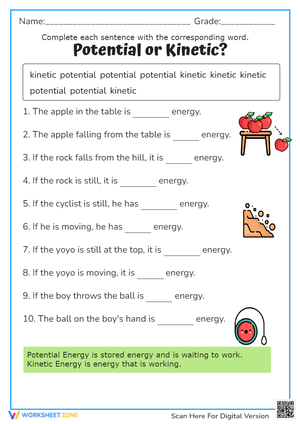
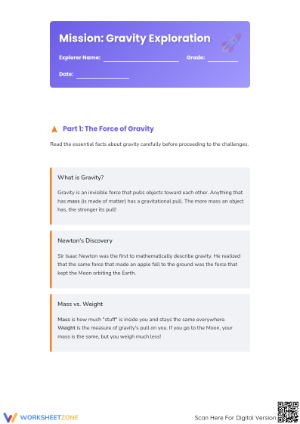
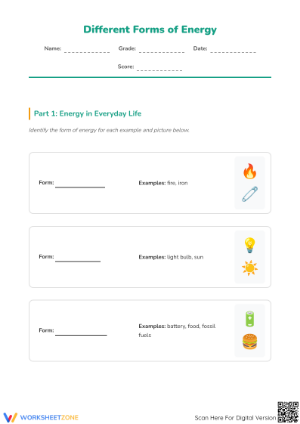
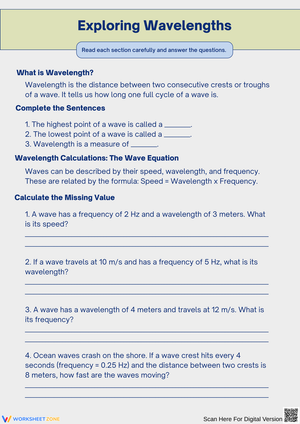
These energy sound and light worksheets give teachers in grades 1 through 5 a concrete way to handle the central instructional challenge of this unit: sound and light are both invisible, so every concept in the sequence depends on students being able to read and produce accurate diagrams and use precise scientific vocabulary. The set includes labeled wave anatomy activities, sorting tasks, vocabulary matching, and informational reading passages with text-dependent questions — formats that work for science stations, formative exit checks, and independent practice.
The Specific Skills Targeted
Each worksheet isolates a single concept so students can build understanding one step at a time rather than confronting the full complexity of wave properties and energy transfer at once. Across the set, students work with:
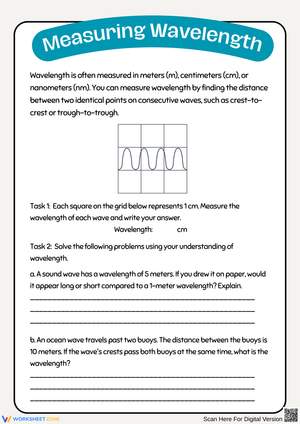
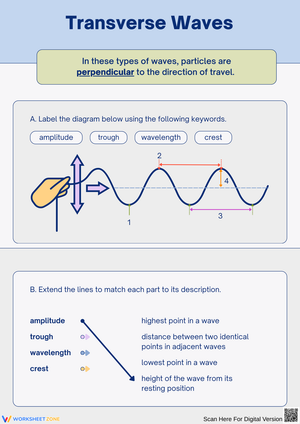
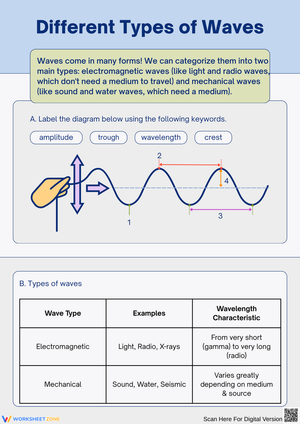
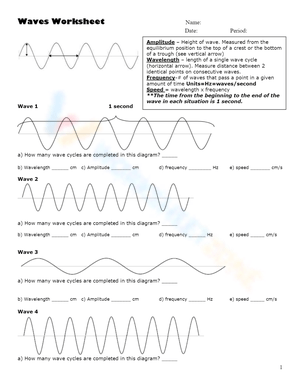
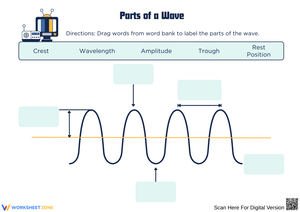
- Labeling transverse wave diagrams — identifying the crest, trough, wavelength, and amplitude of drawn wave models
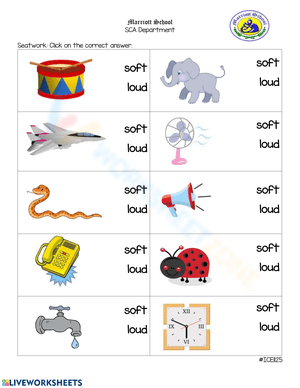
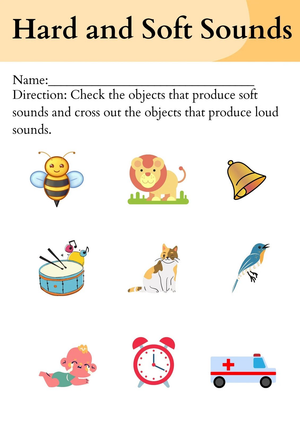
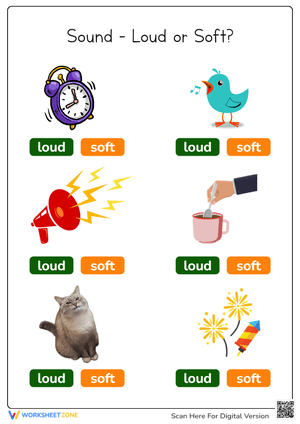
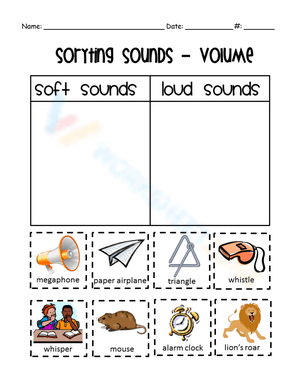
- Sorting everyday objects and materials by whether they are transparent, translucent, or opaque
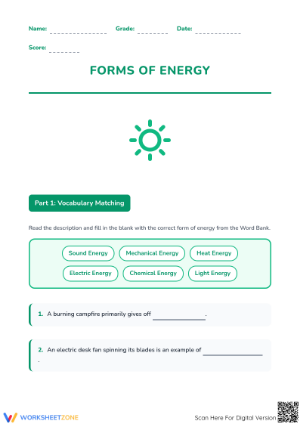
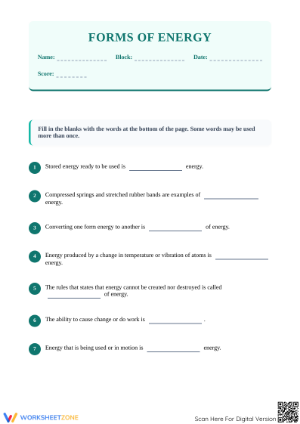
- Matching key vocabulary terms — vibration, medium, pitch, reflection, refraction, absorption — to definitions and visual examples
- Identifying the medium through which sound travels in given scenarios (air, water, solid)
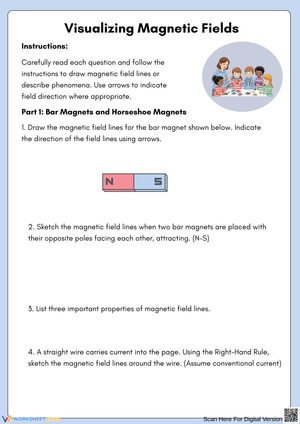
- Annotating ray diagrams to show how light reflects off a surface or bends when passing from air into water
- Reading short informational passages and answering text-dependent questions that require citing evidence from the text
The reading comprehension worksheets integrate science content with literacy practice, which makes them useful when the science block runs short or when a language arts co-teacher needs material that aligns with an ongoing science unit. That said, these passages work less smoothly for students who freeze in front of dense science text without visual support — pairing those students with a labeled diagram or a brief glossary before they read independently makes a notable difference.
Frequent Student Mistakes Worth Anticipating
Because sound and light behave differently in several important ways, students generate a predictable set of misconceptions. The most persistent involves medium dependency. Students who correctly learn that sound requires a medium — air, water, or a solid — almost always overgeneralize. When asked whether light can travel through space, a significant number write that it cannot, reasoning that there is no air to carry it. That error directly mirrors the explanation they just gave for why sound cannot travel in a vacuum. The wave diagram worksheets force the distinction explicitly: sound diagrams are labeled as mechanical waves requiring a medium, while light diagrams are labeled as electromagnetic waves that do not.
The amplitude-frequency confusion is nearly universal in fourth grade, and it persists even after diagram instruction. A student who can correctly label the crest and trough of a wave will still write that a louder sound has a higher pitch, equating the visual height of the drawn wave with the speed of its oscillation. Catching that specific error during a labeling activity — before it solidifies into an assessment answer — is one of the clearest arguments for using these worksheets mid-unit rather than as a summative check.
The transparent/translucent/opaque sorting activity produces a third consistent pattern: translucent gets filed under opaque. Students associate "you cannot see clearly through it" with "it blocks all light," which is close enough to be convincing to an eight-year-old. The vocabulary matching worksheet addresses this directly by asking students to match each term to a specific real-world example and explain in one sentence why frosted glass is not the same as a brick wall.
Standard Alignment
The worksheets align most directly with three NGSS performance expectations in the Physical Sciences domain. Standard 1-PS4-1 asks first graders to use observations and measurements to produce data supporting an explanation of how vibrations cause sound — the early-grade vibration diagrams and sorting activities address this directly. Standard 4-PS4-1 requires students to develop a model of waves that describes patterns in terms of amplitude and wavelength; the wave anatomy labeling worksheets are built to serve this expectation specifically, asking students to construct and annotate diagrams rather than simply recall definitions. Standard 4-PS4-2, which targets information transfer using wave patterns, connects to the reading comprehension worksheets through their focus on how patterns in wave behavior carry meaning.
In lesson-planning terms, placement matters here. The wave diagram worksheets belong after at least one physical demonstration — a slinky stretched across a classroom floor, a tuning fork touching the surface of water in a bowl — and before the unit summative. They occupy the consolidation phase of instruction: students have seen the phenomenon, and the worksheet makes the abstraction stick by asking them to reproduce it in labeled form. Using these worksheets before any direct instruction produces guessing rather than retrieval.
How to Build These Worksheets Into a Physical Science Unit
The energy sound and light worksheets work at different points in a unit depending on the format. Sorting and vocabulary matching activities serve well as warm-up work on the second or third day of a concept, after one lesson of direct instruction has given students enough shared language to attempt independent classification. Wave diagram labeling belongs mid-unit, once students have seen the concept demonstrated but before the terminology has fully settled. Reading comprehension passages fit best at the end of a concept cycle, reinforcing vocabulary and requiring students to retrieve what they have already been taught in a new modality — a straightforward application of spaced retrieval practice that reduces end-of-unit cramming.
For a three-rotation station structure: set one station as the hands-on demonstration (tuning forks, flashlights, a prism or a glass of water), one as partner reading, and one as independent worksheet work. This structure gives the teacher a natural window for pulling a small group during the eight or nine minutes students spend at a worksheet station — enough time to work through the amplitude-frequency distinction with three or four students who showed gaps on the previous day's exit ticket. Exit ticket use is direct: a five-question labeling sheet after a wave properties lesson takes under ten minutes to collect and scan, and it tells you immediately which students have the crest/trough/amplitude distinction and which are still guessing from context.
Adjusting the Worksheets Across Ability Levels
For students who are still developing reading fluency, the diagram-heavy worksheets serve better than the reading comprehension passages, which assume a certain level of independent reading ability. On vocabulary matching activities, provide a word bank and limit the required matches to the three or four highest-priority terms — vibration, reflection, and pitch — rather than the full set. On wave anatomy worksheets, reduce the required labels to the three most critical terms (crest, trough, wavelength) and build toward the full diagram once those three are secure.
For students working above grade level, extend the wave anatomy activity by asking them to draw a second wave alongside the original with a different amplitude or frequency and write one sentence explaining how the waves differ in what a listener or observer would experience. That addition shifts the task from recall to analysis without requiring a separate resource. On the reading comprehension passages, ask advanced students to annotate the text — underlining evidence, circling technical terms, writing a brief marginal summary of each paragraph — before answering the questions. The energy sound and light worksheets then serve a dual function: the same worksheet operates as both a science content check and a reading-across-the-disciplines exercise.
Frequently Asked Questions
What grade levels are these worksheets designed for?
The set spans grades 1 through 5. Sorting and vibration activities are calibrated for first and second grade, where NGSS standard 1-PS4 introduces the basics of sound and light. Wave diagram labeling, reflection and refraction diagrams, and the multi-term vocabulary matching worksheets are strongest in fourth and fifth grade, where standard 4-PS4 formally targets wave properties. Middle school teachers have also used the wave anatomy worksheets as a review entry point before moving into electromagnetic spectrum content in sixth grade.
Do these worksheets require direct instruction first, or can students complete them independently?
Most of the diagram activities require at least one introductory lesson before students can use them productively. A student who has never encountered a wave diagram cannot label one — the activity becomes guessing rather than practice. The sorting and basic vocabulary worksheets are somewhat more accessible without prior instruction, but students who have heard the vocabulary in context first produce noticeably more accurate responses. The intended sequence is instruction or demonstration first, worksheet for consolidation and practice, then assessment.
Can these be used for both quick formative checks and end-of-unit review?
Yes, and the two uses call for different framing. As formative tools, the labeling and sorting worksheets work as exit tickets — five to eight questions, collected at the end of class, scanned for patterns in a few minutes. As review tools, the energy sound and light worksheets work best when assigned across multiple class periods rather than all at once, giving students repeated exposure to the same vocabulary and diagrams through spaced practice rather than a single review session the night before a test.












 Interactive Worksheet Maker
 Quiz Maker
 Word Search Maker
 Crossword Puzzle Maker
 Word Scramble Generator
 Sentence Scramble Generator
 Handwriting Worksheet Generator
 Name Tracing Generator
 Fill In The Blank Generator