




























Views
Downloads

Essential Reversible and Irreversible Changes Grade 5

Paste this activity's link or code into your existing LMS (Google Classroom, Canvas, Teams, Schoology, Moodle, etc.).
Students can open and work on the activity right away, with no student login required.
You'll still be able to track student progress and results from your teacher account.
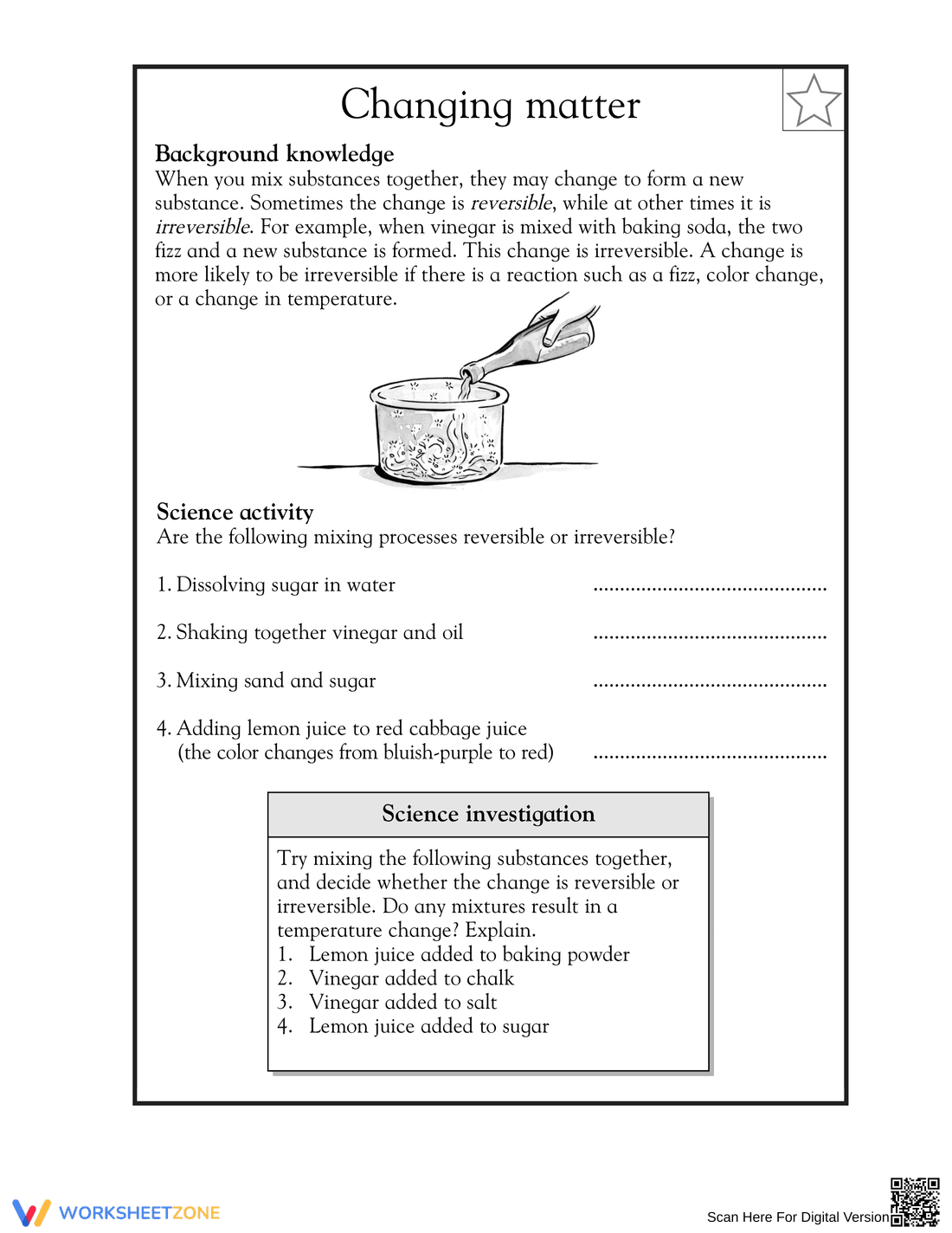
This Grade 5 science worksheet empowers students to distinguish between physical and chemical changes through observation. By analyzing mixing processes, learners identify indicators of irreversible reactions like gas production and temperature shifts. This resource ensures students can confidently predict if a substance can return to its original state or has formed a new substance.
At a Glance
- Grade: 5 · Subject: Science
- Standard:
5-PS1-4— Conduct an investigation to determine if mixing substances results in new substances- Skill Focus: Reversible and irreversible changes
- Format: 1 page · 8 problems · Answer key included · PDF
- Best For: Physical science units on matter
- Time: 20–30 minutes
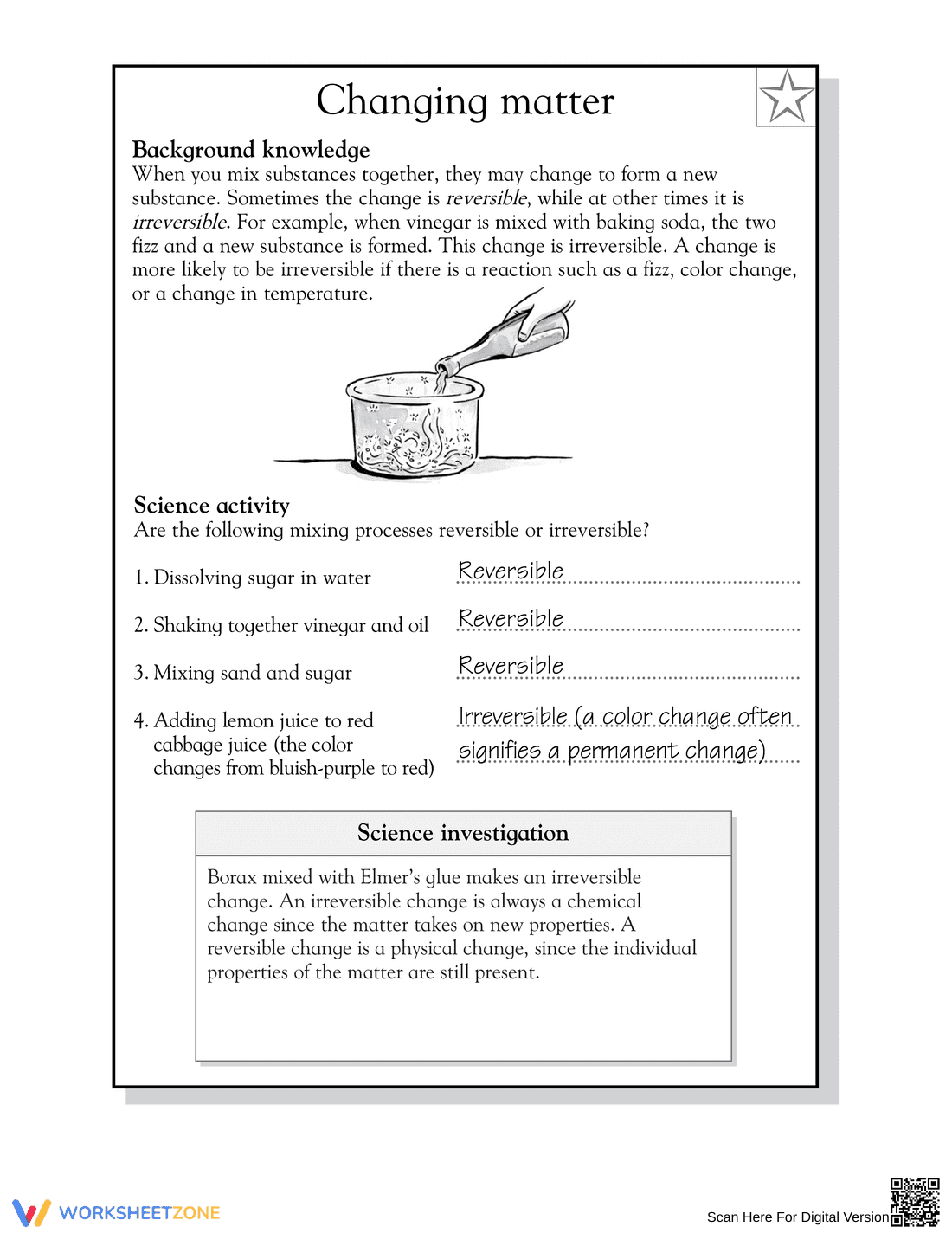
What's Inside: This single-page science resource features a concise background knowledge section that defines reversible and irreversible changes with concrete examples like vinegar and baking soda. The worksheet is divided into two main sections: a four-item science activity focusing on common mixtures and a four-item science investigation that prompts students to explain the reasoning behind their observations, including temperature and color changes.
Zero-Prep Workflow: The workflow for this resource is designed for maximum efficiency. First, print the single-page PDF (30 seconds). Next, distribute the worksheet to students as a standalone activity or lab guide (1 minute). Finally, review the eight responses using the included answer key to identify misconceptions about chemical reactions (5 minutes). This makes it an ideal choice for emergency sub plans or quick formative assessments.
Standards Alignment: This worksheet is specifically aligned to the Next Generation Science Standard `5-PS1-4`: "Conduct an investigation to determine whether the mixing of two or more substances results in new substances." By focusing on the observable outcomes of mixing, the tasks directly address the evidence-based requirements of the NGSS framework. This standard code can be copied directly into lesson plans, IEP goals, or district curriculum mapping tools.
How to Use It: This resource is ideal for use during the "Explore" or "Explain" phases of a 5E lesson cycle on matter. After a brief direct instruction on physical vs. chemical changes, assign the first section as a quick check for understanding. Use the Science Investigation section as a lab guide for a small-group rotation where students can observe these reactions in real-time. Expect students to complete the written portions in approximately 25 minutes.
Who It's For: Designed primarily for Grade 5 science classrooms, this worksheet is also appropriate for Grade 4 students ready for advanced concepts or Grade 6 students requiring a refresher on properties of matter. The clear vocabulary and provided background information offer built-in scaffolding for English Language Learners. Pair this with a physical demonstration of dissolving sugar versus mixing vinegar and baking soda for maximum impact.
This Grade 5 science worksheet focuses on 5-PS1-4, requiring students to observe and categorize reversible and irreversible changes in matter. By analyzing eight distinct mixing processes—ranging from dissolving sugar to chemical reactions between vinegar and baking powder—students develop critical thinking to distinguish physical mixtures from new substances. Research from EdReports 2024 indicates that hands-on investigation of chemical properties significantly improves long-term retention of NGSS core ideas when paired with structured reflection. This resource provides a clear instructional pathway for identifying indicators like color change and gas production, ensuring students justify scientific claims with evidence. The integration of background knowledge with practical application aligns with modern inquiry-based learning standards, providing a robust foundation for middle school physical science curricula and assessment preparation.


