These writing worksheets for 9th grade give teachers a set of print-ready resources for the year when ELA expectations shift most sharply — away from tidy five-paragraph summaries and toward sustained argument, multi-source analysis, and literary interpretation that names and unpacks what a text is actually doing. The set covers all three major composition modes, grammar in the context of revision, and research skills many 9th graders are encountering seriously for the first time. Materials are built to fit inside real lesson-planning constraints: bell-ringers, mid-workshop stations, peer review sessions, and independent drafting days.
What Each Worksheet Targets
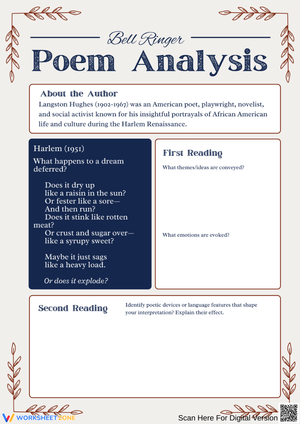
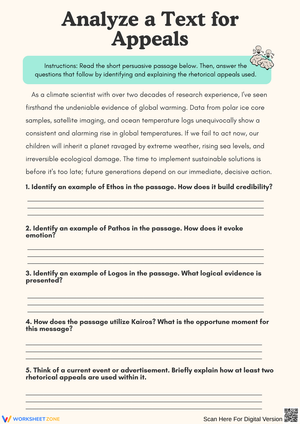
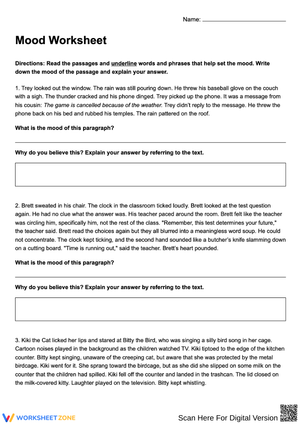
Three composition modes drive 9th grade ELA instruction, and each worksheet isolates a specific skill within one of them. The argumentative resources move students through building a debatable thesis, selecting evidence that directly supports the claim, constructing a counterclaim that genuinely engages the opposing view rather than just acknowledging it exists, and structuring a rebuttal with logical — not emotional — momentum. The informative worksheets focus on organizing multi-source material without losing a controlling idea, using transitions that signal logical relationships rather than chronological sequence, and holding an objective tone even when the topic is contentious. Narrative worksheets push past plot into the craft decisions that distinguish strong personal and creative writing: scene versus summary control, character interiority developed through action rather than direct statement, and selective sensory detail.
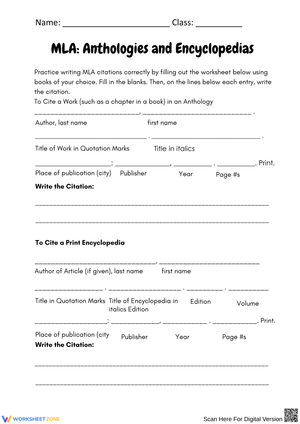
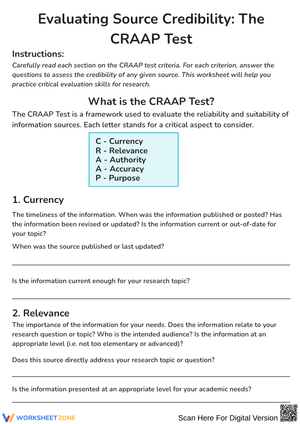
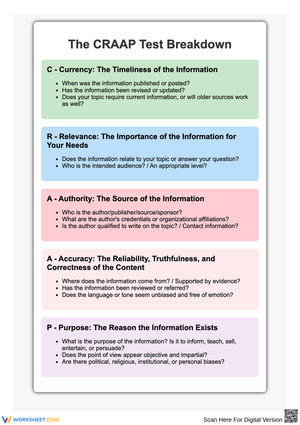
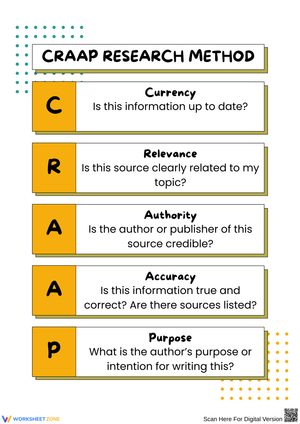
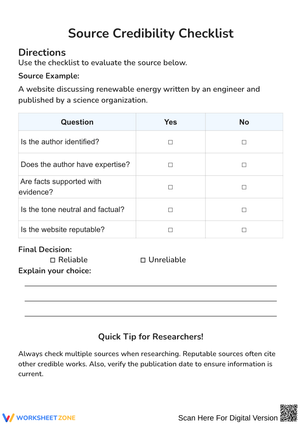
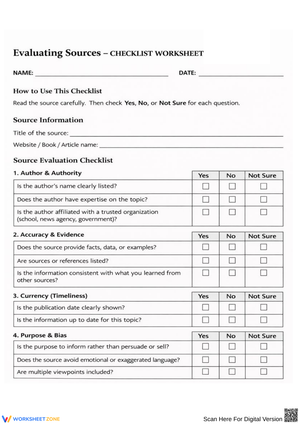
Beyond the three modes, several worksheets address grammar and syntax as stylistic choices rather than error-correction exercises. Students practice parallel structure, add subordinate clauses to vary sentence rhythm, and revise informal drafts for academic register. A dedicated research sequence covers source evaluation and MLA format — from in-text citations to Works Cited construction — skills most 9th graders have heard of but have never had to produce with any real precision.
Errors Teachers Should Expect and Address Early in the Year
The most persistent 9th grade composition problem is not grammar — it's the thesis that describes instead of argues. Students write "This essay will explore how Shakespeare uses literary devices in Romeo and Juliet" and genuinely believe that qualifies as an arguable claim. The argumentative worksheets address this directly: students read five sample thesis statements, rank them by specificity, and rewrite the two weakest. That single exercise surfaces the misunderstanding faster than direct instruction does.
The second consistent breakdown point is what composition teachers sometimes call quote-dropping. Students paste a line of text into a paragraph and move on, leaving the quotation to do the analytical work they were supposed to do. Worksheets targeting evidence integration use a three-step model — quote, context, connection — requiring students to write each step as a separate sentence before combining them into paragraph form. The error-spotting tasks in this writing worksheets for 9th grade set are particularly useful here during second-draft revision: students who execute the three-step model correctly in a structured exercise often revert to quote-dropping in their actual essays, and catching that before a final grade is recorded makes a real difference.
Parallelism errors are easy to miss in your own writing. A student who correctly writes "She enjoyed reading, writing, and hiking" will, two paragraphs later, write "The senator called for tax reform, cutting spending, and that education funding should be increased locally." These worksheets give students practice identifying and naming the error pattern before asking them to find it in their own drafts — a sequencing choice that matters because students cannot reliably edit for a pattern they cannot yet recognize.
How to Build These Worksheets Into Your Lesson Plans
The grammar and syntax exercises do their best work during drafting days, not as homework. Set up a printed copy of the parallel structure worksheet at a designated revision station — a desk in the corner, a spot by the window. Before submitting a draft for teacher feedback, students visit the station, complete the exercise, and then find and fix one parallelism error in their own essay. The immediate application loop is what makes the practice transfer; the isolated exercise rarely does on its own.
Thesis evaluation worksheets work well as bell-ringers. A five-minute session of ranking and rewriting thesis statements at the start of class creates a focused transition and gives teachers a fast formative read on individual students. By mid-October, the patterns in those responses reliably show which students are ready to draft arguments independently and which ones still need more guided practice with claim construction. The citation worksheets serve a different function — they work best as reference tools students keep accessible during research drafts, not as timed exercises with a clock running.
Standard Alignment
These resources address the following Common Core State Standards for ELA Writing and Language, Grades 9-10:
- CCSS.ELA-LITERACY.W.9-10.1 — Write arguments to support claims using valid reasoning and sufficient evidence. The argumentative worksheets target claim construction, evidence integration, and counterclaim development — the three skill areas where students most frequently fall short on assessed writing tasks.
- CCSS.ELA-LITERACY.W.9-10.2 — Write informative and explanatory texts to convey complex ideas clearly. The informative worksheets address multi-source organization, objective voice, and the transition types that signal logical rather than chronological relationships.
- CCSS.ELA-LITERACY.W.9-10.3 — Develop narratives using effective technique, descriptive detail, and well-structured event sequences. Narrative worksheets concentrate on pacing control and character interiority — the technique elements most explicitly named in this standard's performance descriptors.
- CCSS.ELA-LITERACY.W.9-10.5 — Strengthen writing through planning, revising, and editing. The revision-focused exercises — particularly those targeting grammar in context and evidence integration — directly support the recursive writing process this standard describes.
- CCSS.ELA-LITERACY.L.9-10.1 — Demonstrate command of standard English grammar and usage. The parallelism, clause construction, and register exercises address the specific language conventions identified in the Grade 9-10 language strand.
Differentiating the Set Across Ability Levels
For students who need more structured entry points, the argumentative worksheets work better when paired with a partially completed outline — filling in the topic sentence of each body paragraph before class shifts the student's focus from "how do I organize this?" to "how do I support this claim?" Thesis construction exercises pair well with sentence frames for students who freeze at blank space but can generate ideas once a starting structure is visible. The same principle applies to evidence integration worksheets: pre-fill the quote and context steps, and ask students to supply only the connection sentence.
For students already writing competent arguments, the templates can be stripped away. Assign the argumentative worksheet without the organizer and require synthesis across three or more sources rather than the two provided. The narrative worksheets offer a different kind of challenge for advanced writers: limit the response to a single scene, require that all character emotion be conveyed through action and sensory detail with no direct emotional statements, and set a tight word ceiling. That constraint produces more interesting writing than a wide-open prompt does. Writing worksheets for 9th grade that build in both structured entry points and extension options save teachers meaningful planning time on days when the class spans a wider ability range than expected.
Frequently Asked Questions
Can these worksheets support peer editing sessions?
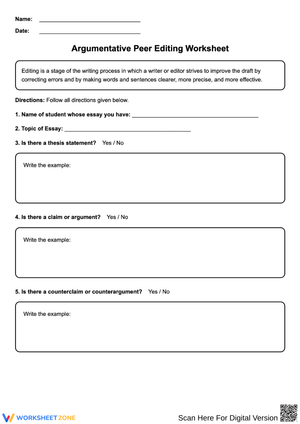
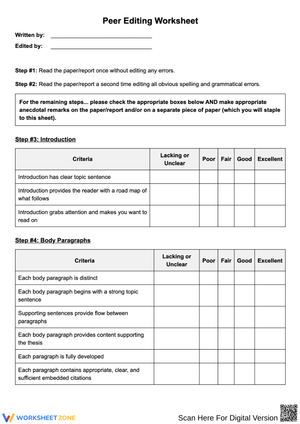
Several worksheets include structured checklists students use during peer review: they mark specific elements — thesis debatability, transitions between body paragraphs, evidence integration, MLA formatting — rather than offering general impressions. A targeted checklist keeps peer feedback concrete and prevents sessions from collapsing into comma hunts. The writing worksheets for 9th grade peer review materials work best when students have already completed at least one argumentative draft, so they're evaluating something with enough substance to actually discuss.
What's the best sequence for introducing the three composition modes across the year?
Most 9th grade pacing guides front-load argument because it carries the heaviest standards weight and appears most frequently on grade-level assessments. Informative writing integrates naturally alongside research units in the second quarter. Narrative often comes first — students have prior experience with it, so it builds early confidence — or returns in the third quarter as part of memoir or personal essay work. Each worksheet in the set stands on its own, so no fixed sequence is required. Place the modes where your existing curriculum creates the opening.
How do the citation worksheets handle MLA formatting?
The research and citation worksheets walk students through in-text citation mechanics, the difference between integrating a block quote and a standard quotation, and Works Cited entries for the source types 9th graders use most often: articles, books, and websites. The sequence follows a model-fix-produce structure: worked examples first, then flawed citations for students to identify and correct, then an original citation students produce from a source they choose. That three-step sequence is more reliable than handing students a style guide and asking them to replicate it cold.
How can I support students who consistently write weak thesis statements?
The thesis evaluation worksheets remove the full essay from the equation. Students read six thesis statements, rank them from most to least arguable, and write a one-sentence explanation of what makes the strongest one work. Students who can articulate why a thesis succeeds build a mental model they can apply to their own drafts. For students who still struggle after that exercise, a brief conference using the worksheet as a reference — "Look at thesis four. What does it do that yours doesn't yet?" — moves things faster than additional written practice alone.












 Interactive Worksheet Maker
 Quiz Maker
 Word Search Maker
 Crossword Puzzle Maker
 Word Scramble Generator
 Sentence Scramble Generator
 Handwriting Worksheet Generator
 Name Tracing Generator
 Fill In The Blank Generator