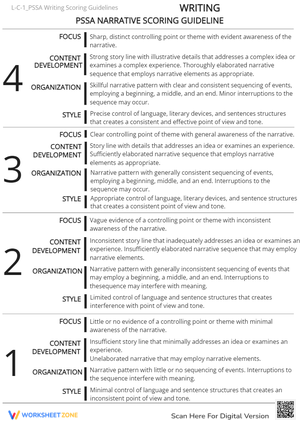
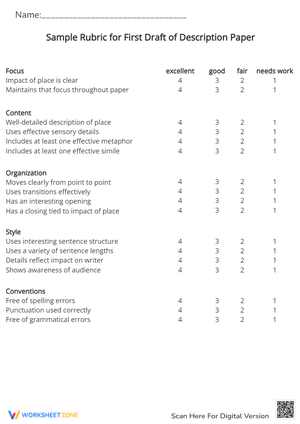
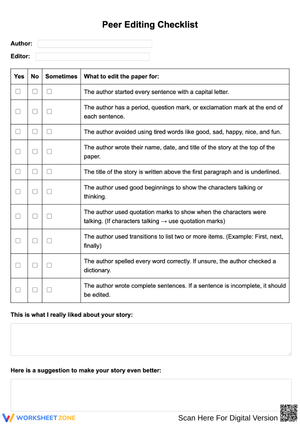
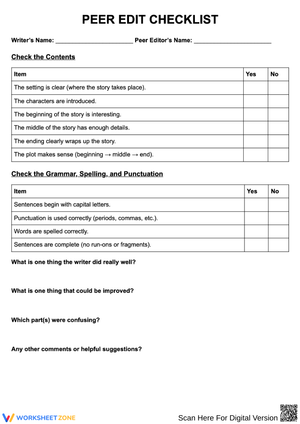
These 9th grade writing process printable worksheets give ELA teachers a way to break large writing assignments into distinct, teachable stages — each worksheet targeting one decision point rather than asking students to draft, revise, and edit all at once. At ninth grade, students are expected to produce literary analysis, argument essays, and research-based writing that demand real structural thinking, not just filling paragraphs. Worksheets that separate planning from drafting from revision give both teachers and students a clearer picture of where the work actually breaks down.
Skills These Worksheets Build
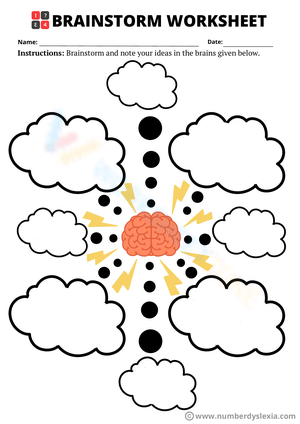
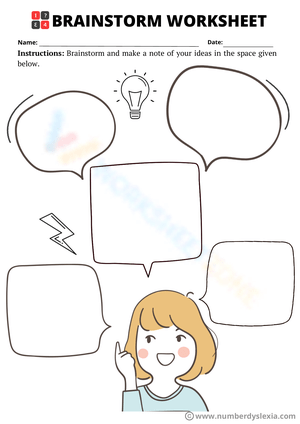
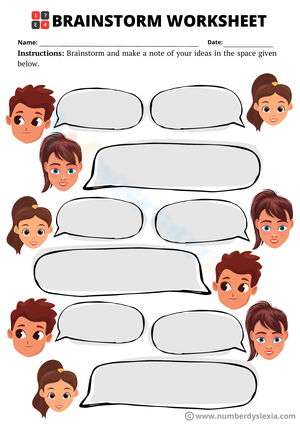
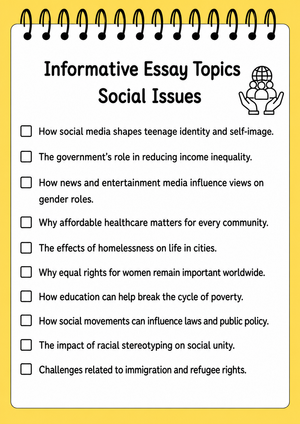
The set covers each stage of the writing process with a purpose-built worksheet. Prewriting worksheets walk students through prompt analysis, audience and purpose identification, and brainstorming — the stage most ninth graders rush past or skip entirely. Planning worksheets include claim-and-evidence organizers, outline frames, and paragraph sequencing tools that match the structural demands of extended high school essays.
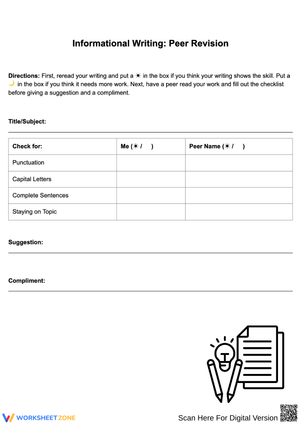
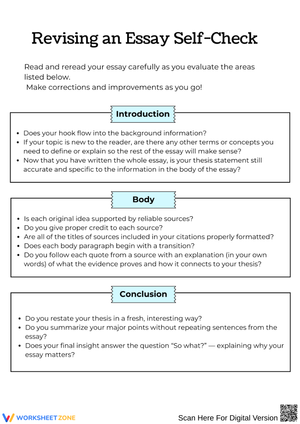
Drafting worksheets provide sentence starters and thesis or topic sentence guidance without doing the thinking for students. Revision worksheets focus on ideas, organization, evidence strength, and elaboration — not grammar. Editing worksheets handle correctness: punctuation, usage, spelling, and formatting. Keeping these two stages on separate worksheets is the clearest way to teach students that fixing a comma is not the same thing as improving an argument. Reflection worksheets close the loop, asking students to name one strength, one change they made, and one goal for the next piece.
When teachers use 9th grade writing process printable worksheets sets across a full writing unit, students begin to internalize the process as recursive rather than linear — returning to planning when they discover a structural gap mid-draft, or returning to revision after editing reveals a paragraph that does not belong where it sits.
Matching the Worksheet to the Writing Task
A general planning worksheet handles warm-ups and shorter tasks, but genre-specific organizers produce stronger first drafts on extended assignments.
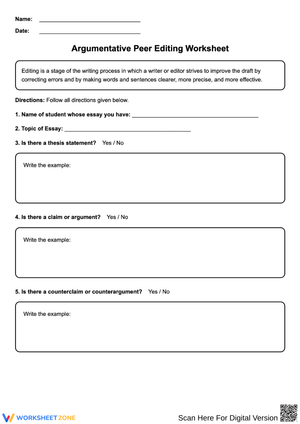
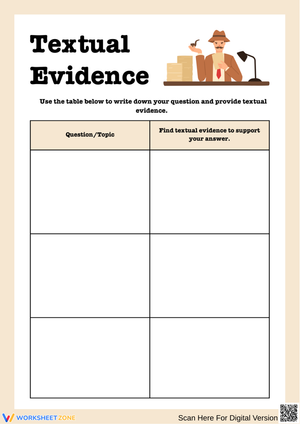
Argument writing worksheets include space for claim development, counterclaim identification, evidence selection, and reasoning. Students who complete one before drafting write body paragraphs that connect evidence to an argument rather than simply listing facts. Literary analysis worksheets guide students to pair a text-based claim with quoted evidence and commentary — essential at ninth grade, where the expectation shifts from summarizing a story to analyzing what an author is doing and why. A student who fills out a character analysis organizer before drafting is far less likely to spend three paragraphs retelling the plot.
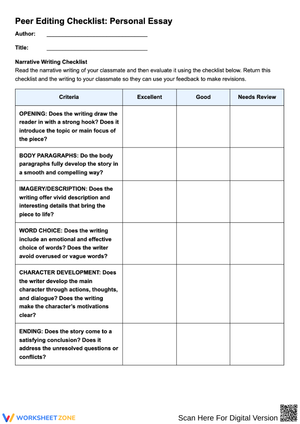
Narrative worksheets address pacing directly. Ninth graders frequently move through every scene at the same speed, rushing moments that deserve attention and lingering on scenes that need a sentence. A worksheet that asks students to identify key scenes and plan how much space each receives forces that structural decision before the draft is written. Research writing worksheets support question development, source note-taking, and evidence grouping — keeping students from losing their strongest material between the library period and the drafting session.
Frequent Student Errors That These Worksheets Help Surface
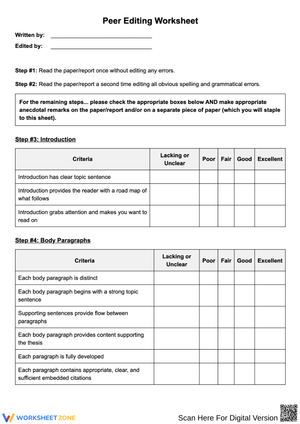
The most predictable ninth-grade writing error is collapsing revision and editing into one pass — students fix comma placement and consider the draft revised. Physically separating these stages onto two different worksheets addresses this directly. A practical classroom move: print revision worksheets on one color of paper and editing worksheets on another. Students stop conflating the steps when the two tasks do not look the same.
A second pattern worth anticipating is students who complete a planning organizer and then transcribe it into paragraphs almost word for word. The worksheet has done its job — the thinking happened — but the draft reads like an outlined list with conjunctions added. Look for body paragraphs that open with "One reason is" and close without elaboration or analysis. The revision worksheet is where that gets corrected, not during planning.
Thesis errors at this grade level almost always come down to topic versus argument. Students write "The Great Gatsby explores the American Dream" and believe they have produced a thesis. They have named a subject. A planning worksheet that explicitly asks students to state a position — not describe a topic — pushes them toward a claim like "Fitzgerald uses Gatsby's failure to escape his origins to argue that the American Dream punishes ambition rather than rewarding it." That distinction is teachable. The worksheet has to make the demand visible before students will feel it as a requirement.
Standard Alignment
These worksheets align directly with CCSS.ELA-LITERACY.W.9-10.5, which requires students to "develop and strengthen writing as needed by planning, revising, editing, rewriting, or trying a new approach." In classroom terms, that standard does not simply describe a process — it asks teachers to present each stage as a deliberate, learnable skill. A worksheet set that treats planning, drafting, revision, and editing as separate acts gives that standard a usable structure for daily instruction. Teachers can point to the specific worksheet in use that day and connect it to the standard with precision, which matters during curriculum reviews and instructional walkthroughs.
How to Build These Worksheets Into Your Writing Week
The most effective approach is distributing one worksheet per day rather than handing out the full set at once. A five-day writing block can run like this:
- Day 1: Prewriting or prompt analysis worksheet, used during a mini-lesson and independent planning time.
- Day 2: Outline or planning organizer, completed before students begin drafting.
- Day 3: Drafting support worksheet, used during workshop or small-group time.
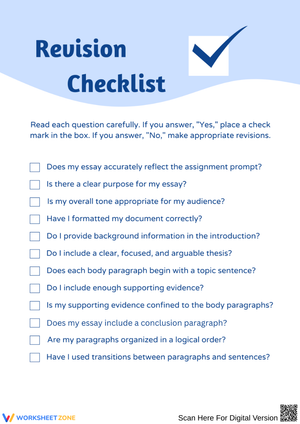
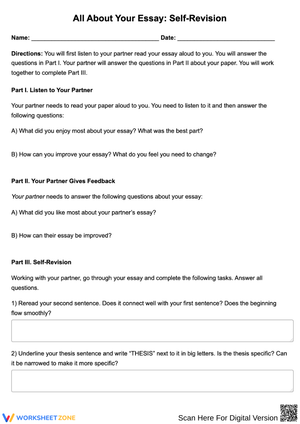
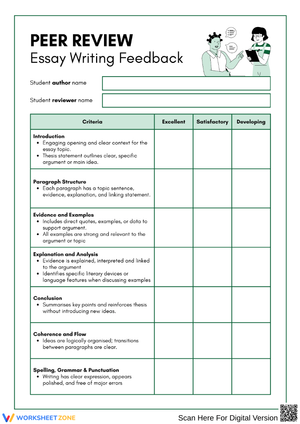
- Day 4: Revision checklist, paired with peer review or self-assessment.
- Day 5: Editing checklist followed by the reflection worksheet.
Students who know exactly what they are doing that day write more deliberately than students who open a packet and try to determine where to start. One caveat worth naming: a revision checklist works only as well as the instruction that precedes it. Students who have never been walked through what "strengthen your evidence" means will treat any checklist as a box-checking exercise. The first time through, the revision worksheet is most effective when introduced during a model lesson — not handed out cold during independent work time.
These worksheets also sharpen conferencing. Because each one targets a single stage, a teacher scanning a student's revision worksheet during a four-minute check-in can see immediately whether the student has addressed organization, evidence, or elaboration — rather than diagnosing the problem from scratch. The set also works for peer review stations and substitute lesson plans. A structured peer-review worksheet runs itself; the directions are on the paper, and a substitute does not need ELA expertise to supervise the activity. For students in writing intervention, pulling the specific worksheet that corresponds to where the student stalls is more effective than assigning the full process from the beginning. These 9th grade writing process printable worksheets resources work in those targeted pulls precisely because each one is self-contained.
Adjusting the Set for Writers at Different Stages of Development
Students who need more support benefit most from worksheets that include sentence frames and partially completed models. On a claim-and-evidence organizer, a sample claim shown alongside the blank demonstrates what the finished product should look like without giving students the answer. That kind of worked example reduces the freeze response — the long stare at a box labeled "thesis" that produces nothing. For these students, the editing worksheet also works better when errors are grouped by type so the review has structure rather than asking them to check "grammar" in the abstract.
Students who are ready for less guidance work well with open-ended versions: fewer sentence starters, more writing space, and revision questions that push argument quality rather than basic checklist items. A revision prompt that asks "Does your evidence support your exact claim, or does it support a slightly different one?" produces different thinking than "Did you include evidence?" Both questions are useful. They belong in different hands on the same class day.
Frequently Asked Questions
Do these worksheets cover all writing genres or only argument essays?
Planning, revision, and editing worksheets apply across genres. For stronger results on extended assignments, pair a general process worksheet with a genre-specific organizer — a claim-and-evidence chart for argument, or a text-evidence-commentary organizer for literary analysis. The genre-specific worksheet handles structural demands particular to that essay type, while the process worksheet keeps students moving through stages without skipping steps.
How do I get ninth graders to actually use the revision checklist instead of skimming it?
Model the checklist on a shared student sample before assigning it independently. Students who have watched a teacher work through "Does this paragraph's evidence connect directly to the claim?" on a sample essay understand what the question is asking. Without that model, revision checklists become a box-checking exercise. Running the revision worksheet during class — rather than assigning it as homework — also keeps students from treating it as optional.
How many stages of the writing process should one lesson address?
One, in most cases. In an extended block of 80 minutes or more, combining two connected stages works — planning into drafting, or revision into reflection. The tighter the focus per lesson, the more targeted the feedback teachers can give. These 9th grade writing process printable worksheets resources are structured around that principle: each worksheet keeps students working on one task long enough to actually move their writing forward, rather than touching every stage too briefly for any of it to matter.












 Interactive Worksheet Maker
 Quiz Maker
 Word Search Maker
 Crossword Puzzle Maker
 Word Scramble Generator
 Sentence Scramble Generator
 Handwriting Worksheet Generator
 Name Tracing Generator
 Fill In The Blank Generator