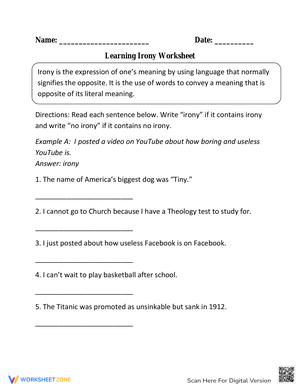
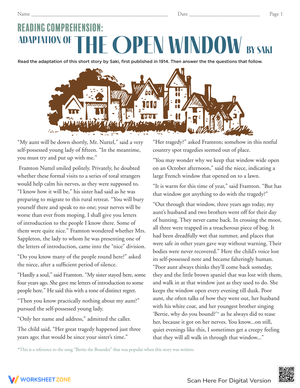
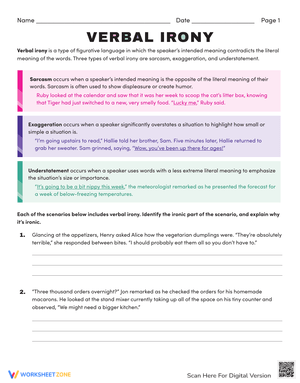
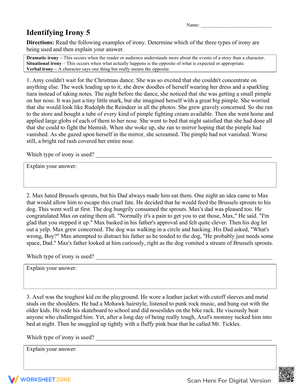
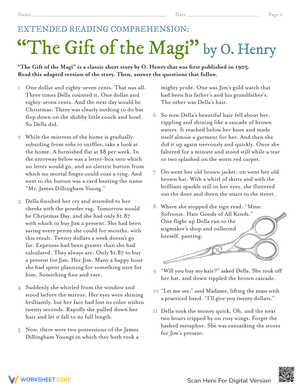
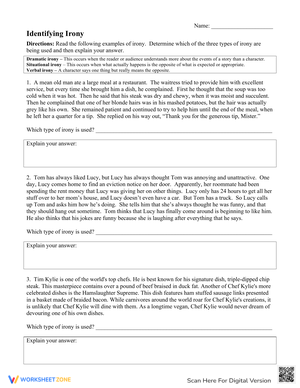
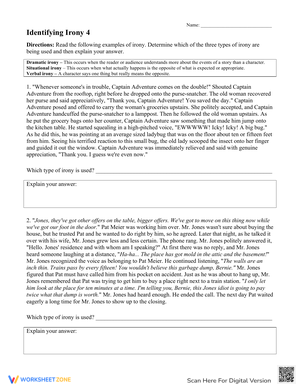
These 9th grade genre writing printable worksheets give ELA teachers precise practice resources for one of the most demanding transitions in secondary writing instruction — the point where genre shifts from an incidental label on an assignment to its primary organizing principle. Each worksheet addresses a specific, bounded skill within narrative, argumentative, or informative writing, which means teachers can pull individual worksheets where they fit in a unit without committing to a fixed sequence. The collection is built around the three writing modes the Common Core State Standards formally separate at the 9th–10th grade level, each treated as a distinct rhetorical discipline with its own conventions, purpose, and audience demands.
The Specific Skills These Worksheets Target
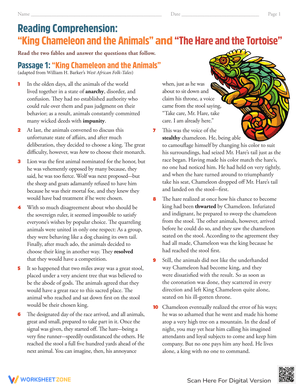
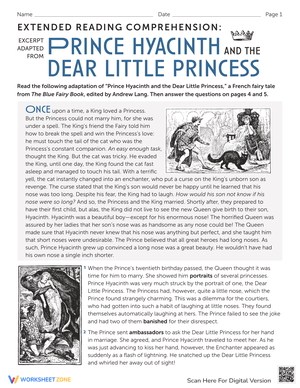
Narrative worksheets focus on the skills 9th graders most often lack coming out of middle school: purposeful pacing and thematic coherence. Students annotate short published passages for sentence-level decisions — where did the author slow down, and why? — then rewrite a flat version of the same scene using the techniques they identified. In medias res openings and non-linear timeline exercises move students past the five-part plot pyramid many learned in 6th grade. Character motivation work asks students to trace how a character's internal state drives an external decision, and how that decision drives consequence — the kind of thematic awareness the narrative standard requires at this level.
Argumentative worksheets work through the full Claim-Evidence-Reasoning (CER) chain rather than stopping at claim-writing. Students practice the counter-argument move in isolation first: identifying the strongest objection to a given claim, then writing a concession-refutation sentence using precise transition language. Source evaluation exercises ask students to assess credibility, bias, and relevance for a specific argument, which is more useful than domain rules about .gov versus .com. Ethos, pathos, and logos appear in the context of real arguments students read and respond to — not as textbook definitions they memorize and promptly forget.
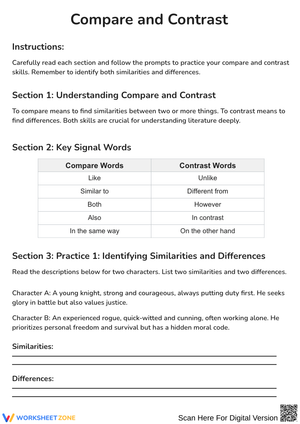
Informative worksheets emphasize the organizational structures most commonly tested in this genre: cause-effect, compare-contrast, and classification. One reliable exercise asks students to read short excerpts, identify which structure is operating, and then replicate each in a short paragraph of their own. Register-conversion practice — taking informal explanations and rewriting them in academic prose — is particularly diagnostic, because students who struggle here are usually not failing to understand their topic; they're failing to recognize that their phrasing is informal in the first place.
Mistakes Students Make That These Worksheets Help You Catch
In argumentative writing, the most persistent 9th-grade error is mistaking anecdote for evidence. A student who has been told to support a claim will often write "for example, my cousin got in a car accident because of texting" — and believe the job is done. The CER worksheet makes this gap immediately visible: when students fill in the Evidence field and reach for a personal story, the structure itself signals that something is wrong. That in-the-moment signal is more useful than a comment on a returned essay a week later.
Narrative writing surfaces a different and less obvious problem. Students who have internalized "show don't tell" as a rule often apply it too rigidly — they cut the purposeful telling that gives a scene meaning, producing writing that is cinematically vivid but thematically empty. The reader sees a broken window; they don't know why it matters. Annotation exercises that ask students to find moments where a professional author tells rather than shows give students permission to use both modes, which is closer to what sophisticated narrative writing actually does.
The register confusion in informative writing is hardest to address through lecture alone. Students who write "Social media has damaged teen mental health" in an informative essay believe they are explaining, not arguing. That sentence requires a claim, evidence, and counter-argument — not a definition and some examples. A worksheet that asks students to label the purpose of each sentence they write (explaining, defining, arguing, narrating) catches this early in the process. Working with 9th grade genre writing printable worksheets exercises that foreground register and purpose during drafting prevents the full-draft version of this problem, which takes considerably longer to untangle after the fact.
How to Build These Worksheets Into Your Lesson Plans
The most effective use of this set is the genre-switching sequence: take one topic students already know something about — school discipline policies, a local environmental issue, a current event from another class — and assign a worksheet from each of the three genre categories over the course of a week. What students include, exclude, and emphasize changes substantially across the three modes, and that contrast makes genre feel real rather than theoretical. Run this at the start of a writing unit and the class develops a shared vocabulary for genre that subsequent lessons can refer back to throughout the semester.
Individual worksheets also earn their place as low-stakes pre-writing tools. Running the CER worksheet before students begin a first argumentative draft reduces the draft-phase confusion that comes when students are simultaneously figuring out structure and trying to generate ideas. The pacing worksheet is worth assigning the week before a narrative unit starts — it gives students concrete technique language ("your pacing slows down here, and I think you meant this moment to feel fast") that noticeably improves the quality of peer feedback once the unit is underway.
A less obvious but high-value use: revision. A student who has written a full informative draft can map what they actually wrote onto the organizational structure worksheet and compare it to what they planned. The gap between the planned structure and the actual draft is often exactly where the revision conversation needs to go next. The 9th grade genre writing printable worksheets resources, used this way, sit at the intersection of instruction and assessment rather than functioning as a separate practice activity dropped into a unit and then set aside.
Differentiating These Worksheets Across Student Readiness Levels
Students who come in behind on sentence-level control find the register-conversion exercise in the informative worksheets frustrating for a reason worth understanding before intervening: they don't know their phrasing is informal. Pointing to a vocabulary list doesn't fix that. What works better is asking them to read their rewritten sentence aloud, then asking, "Would this sentence appear in a textbook?" That single question activates a kind of register intuition most students already have, even when they can't articulate any rules. Students who freeze when facing an unfamiliar prompt respond better when the worksheet is paired with a short mentor text — for the CER worksheet, reading a published editorial first means students can extract a claim and evidence from what they've already read before attempting an original argument, which removes the content-generation demand from the structure-learning task.
For students ready to move past the structural basics, the open-ended reasoning and rebuttal sections in the argumentative worksheets accommodate more developed responses without requiring a separate resource. A strong writer builds a full two-paragraph rebuttal in the counter-argument section where another student writes a single sentence. The narrative worksheets similarly allow students attempting more complex approaches — non-linear timelines, multiple-perspective scenes — to grow those structures out of the same in medias res exercise that another student uses simply to practice beginning a story somewhere other than the very beginning.
Standard Alignment
These worksheets address CCSS.ELA-LITERACY.W.9-10.1 (argument), W.9-10.2 (informative/explanatory), and W.9-10.3 (narrative) — the three writing production standards that anchor 9th–10th grade ELA instruction. They also connect to W.9-10.4, which covers producing writing appropriate to task, purpose, and audience, the conceptual spine of any genre-focused unit. The counter-argument section of the argumentative worksheets maps specifically to W.9-10.1b, which requires students to develop claims and counterclaims fairly and with relevant evidence. Source evaluation connects to W.9-10.8. Teachers assessing argument writing on rubrics that score claim, evidence, reasoning, and counter-argument as separate dimensions will find the CER worksheet tracks those criteria directly, which also makes it a useful tool for explaining rubric expectations to students before they begin drafting.
Frequently Asked Questions
Do all three genre categories need to be used in sequence?
No — each worksheet stands alone and targets a specific skill. Most teachers pull from the collection based on what their current unit requires rather than working through all three genre categories in order. A class in the middle of an argumentative unit uses the CER and counter-argument worksheets without touching the narrative resources until later in the semester.
Can these worksheets function as formative assessment rather than just practice?
Several of them are most useful in exactly that role. The CER and organizational structure worksheets show precisely where student thinking breaks down — a student who can state a claim but cannot complete the reasoning section is giving a teacher diagnostic information about where to focus instruction next. Building that use into the beginning of a unit, not just after a draft is returned, gives earlier and more actionable data than a rubric score on a finished piece.
How do I handle students who complete every worksheet quickly and correctly?
The open-ended sections expand to accommodate more sophisticated responses without requiring a different resource. In the argumentative set, a strong student develops a full multi-sentence rebuttal where another student writes a clause. In the narrative set, the in medias res exercise that one student uses to practice a non-chronological opening becomes the starting point for a more complex structural experiment in another student's hands. The depth ceiling in the reasoning and craft sections is high enough that students who take the task seriously rarely hit it.
How do I introduce genre-focused practice at the start of the year without overwhelming freshmen?
Start with one worksheet from one genre — narrative works well first because the task feels lower stakes than argument. Students are making craft decisions with no single right answer, which invites discussion rather than anxiety about being wrong. Once students see that a worksheet defines a specific task in a bounded space, resistance to the format drops considerably. That's the practical value of the 9th grade genre writing printable worksheets format at the start of the year: the task is defined, the space is bounded, and students don't face a blank page waiting for permission to begin.












 Interactive Worksheet Maker
 Quiz Maker
 Word Search Maker
 Crossword Puzzle Maker
 Word Scramble Generator
 Sentence Scramble Generator
 Handwriting Worksheet Generator
 Name Tracing Generator
 Fill In The Blank Generator