




























0
Views
0
Downloads

0.0
0
Save
0 Likes
Share
Poem Analysis Bell Ringer: Harlem by Langston Hughes
0 Views
0 Downloads

Paste this activity's link or code into your existing LMS (Google Classroom, Canvas, Teams, Schoology, Moodle, etc.).
Students can open and work on the activity right away, with no student login required.
You'll still be able to track student progress and results from your teacher account.
Information
Description
What It Is:
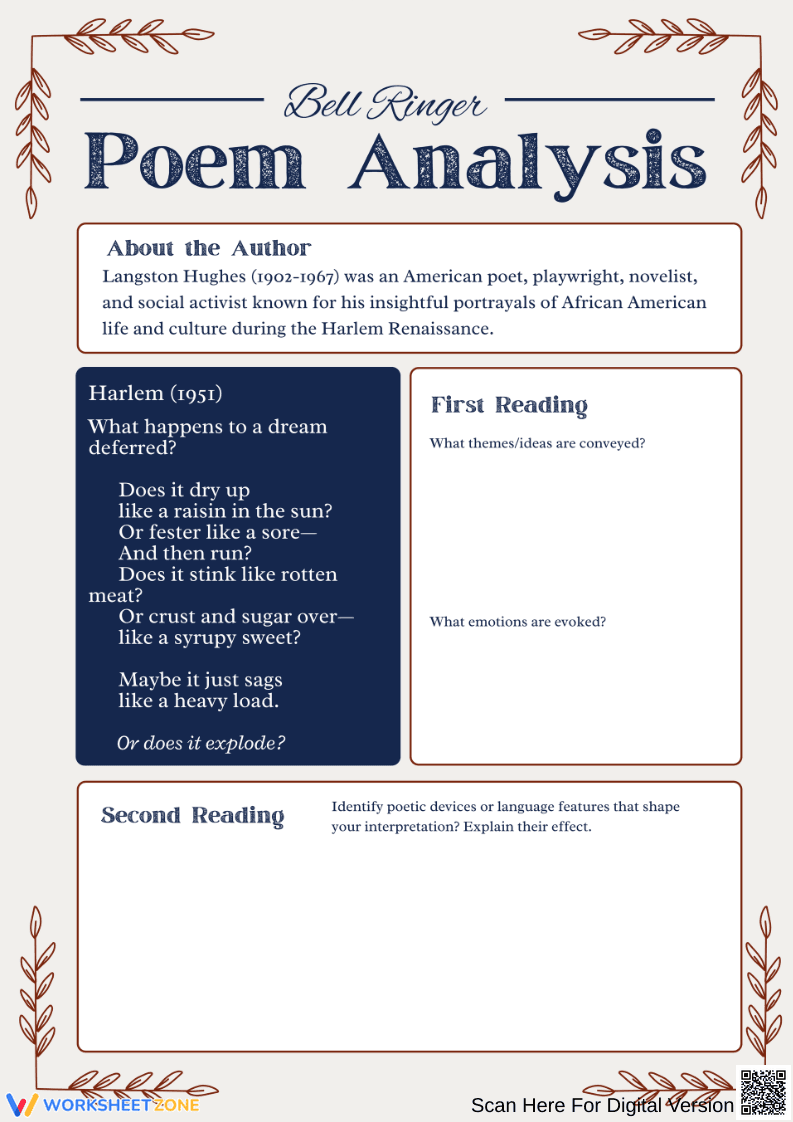
A structured poem analysis bell ringer activity featuring Harlem (1951) by Langston Hughes. Students read the poem, annotate key ideas, and respond to guided questions that deepen comprehension and critical analysis. Includes sections for author background, first reading impressions, and a second reading focused on poetic devices.
Why Use It:
This worksheet encourages close reading, critical thinking, and literary analysis skills. It helps students connect historical context with poetic meaning, identify literary devices, and articulate emotional responses. Perfect for warm-ups that build strong ELA routines.
How to Use It:
• Begin with a quick read of the poem and author bio.
• Students complete the “First Reading” box by identifying themes and emotional responses.
• On the second reading, students analyze poetic devices and explain how they shape meaning.
• Use as a bell ringer, exit ticket, literature lesson opener, substitute plan, or poetry unit activity.
Grade Suitability:
Best suited for Grades 7–12.
• Works for whole-class instruction, small-group discussion, or individual analysis.
• Ideal for poetry units, American literature, and enrichment or intervention settings.
Target Users:
Middle and high school ELA teachers, tutors, and homeschool educators seeking high-quality poetry analysis activities.
A structured poem analysis bell ringer activity featuring Harlem (1951) by Langston Hughes. Students read the poem, annotate key ideas, and respond to guided questions that deepen comprehension and critical analysis. Includes sections for author background, first reading impressions, and a second reading focused on poetic devices.
Why Use It:
This worksheet encourages close reading, critical thinking, and literary analysis skills. It helps students connect historical context with poetic meaning, identify literary devices, and articulate emotional responses. Perfect for warm-ups that build strong ELA routines.
How to Use It:
• Begin with a quick read of the poem and author bio.
• Students complete the “First Reading” box by identifying themes and emotional responses.
• On the second reading, students analyze poetic devices and explain how they shape meaning.
• Use as a bell ringer, exit ticket, literature lesson opener, substitute plan, or poetry unit activity.
Grade Suitability:
Best suited for Grades 7–12.
• Works for whole-class instruction, small-group discussion, or individual analysis.
• Ideal for poetry units, American literature, and enrichment or intervention settings.
Target Users:
Middle and high school ELA teachers, tutors, and homeschool educators seeking high-quality poetry analysis activities.


