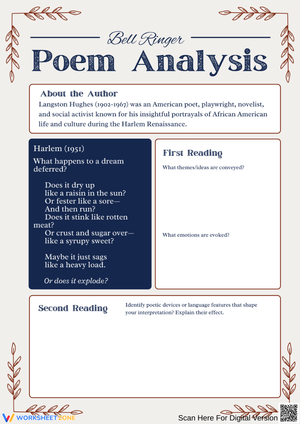
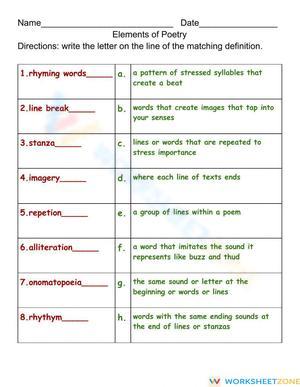
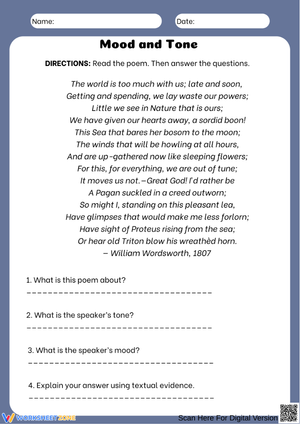
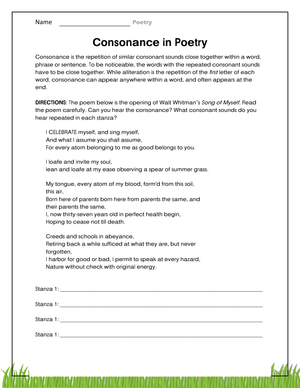
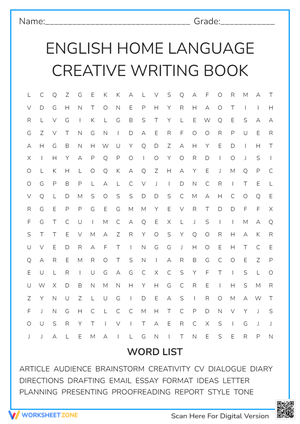
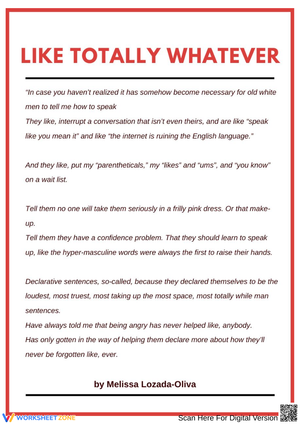
These fiction writing printable worksheets for 9th grade give teachers a structured entry point into narrative craft at exactly the moment students need it — the start of high school, when expectations for written storytelling jump and students are expected to produce complex, character-driven work with little formal preparation in how that's actually done. The set addresses character development, plot architecture, dialogue mechanics, and revision as distinct, teachable stages. Each worksheet isolates one aspect of the writing process so students are not trying to solve every problem at once.
Core Skills Across the Set
Character profile worksheets push students past physical description and into internal conflict — specifically, the gap between what a character wants and what that character actually needs. That tension is where ninth-grade writers consistently fall short, and naming it on paper before drafting prevents the flat, motivation-free protagonists that fill student notebooks every fall.
Plot mapping worksheets use the five-stage narrative arc — exposition, rising action, climax, falling action, resolution — but ask students to do more than label. They allocate relative weight to each stage, which confronts a real and recurring problem: freshmen who write four pages of setup and half a page of climax. Setting worksheets use five-sense prompts to ground the story in a specific time and place before the action starts. Dialogue worksheets address correct punctuation and attribution, varied speech tags, and the hardest skill at this level — making each spoken exchange do actual work in the story rather than simply filling space.
The set also includes revision tools: self-evaluation checklists that prompt students to examine pacing and character consistency, plus peer feedback forms built around targeted questions. Asking "Where did the story lose momentum?" returns far more usable feedback than "What did you like?"
How to Sequence These Worksheets Through a Short Story Unit
Running character development before plot mapping is the more effective order. When students know their protagonist's fear, want, and core contradiction, plot decisions come more naturally. It also gives the class a low-stakes starting point — filling out a profile sheet requires no narrative commitment, which helps reluctant writers get something on paper before the pressure of drafting arrives.
The show-don't-tell worksheet lands hardest mid-unit, after students have a first draft in hand. It asks them to find one sentence in their own story that names an emotion directly — "she was terrified," "he felt ashamed" — and rewrite it using only physical reaction and sensory detail. Working from their own prose rather than a teacher-supplied example makes the lesson stick differently. The dialogue worksheet pairs naturally with a read-aloud: students annotate a published exchange to identify what each line accomplishes before returning to revise their own scenes. These friction points in the unit are where fiction writing printable worksheets for 9th grade do their most specific work, giving students a structured place to slow down rather than racing through a draft they'll abandon at the end of the period.
Peer feedback forms work best in the last ten minutes of a revision day. Students who have to answer precise questions about someone else's pacing and dialogue come back to their own drafts with noticeably sharper attention.
Errors Freshmen Make That Are Worth Anticipating
The most persistent problem is underdeveloped motivation. Students write characters who act — run away, confront a villain, make a sacrifice — without establishing why. The character profile worksheet addresses this directly by asking students to answer "What does your protagonist stand to lose?" before they write a single scene. When that question gets skipped, a plot that feels arbitrary tends to follow.
Dialogue punctuation is the other consistent trouble spot. Students who handle sentence-level mechanics reasonably well in expository writing will produce exchanges like: "I don't know what to do." She said quietly. The dialogue worksheet includes a short error-correction section — students fix eight broken exchanges before writing their own. That analyze-then-apply structure reduces carry-through errors more reliably than presenting a rule list does.
A subtler pacing error shows up when students treat every scene with equal urgency, giving a character's walk to school the same prose real estate as a confrontation scene. The plot-mapping worksheet asks students to mark the emotional peak of their story and then compare how many words they've planned for it against earlier sections. That single comparison prompts most students to rebalance their outlines without additional instruction.
Standard Alignment
These worksheets align with CCSS.ELA-LITERACY.W.9-10.3, which requires students to write narratives that develop real or imagined experiences using effective technique, well-chosen details, and well-structured event sequences. Sub-standard W.9-10.3a specifies that students engage and orient readers by establishing a point of view and introducing a narrator or characters — work the character development and opening-scene worksheets address directly. W.9-10.3b covers narrative techniques including dialogue, pacing, description, reflection, and multiple plot lines, which maps cleanly to the dialogue mechanics and plot-mapping worksheets in the set. Teachers in states that have adapted these standards into their own frameworks will find the underlying narrative competencies consistent enough across versions that the alignment holds.
Adapting the Set for Writers at Different Entry Points
When using fiction writing printable worksheets for 9th grade in a mixed-ability class, small adjustments in task framing produce meaningful differences in challenge level without requiring separate materials. For students who arrive with strong narrative instincts, the character profile worksheet becomes more demanding when they build an antagonist rather than a protagonist. Students who write dimensional heroes but flat villains are often working from unexamined assumptions about which characters deserve interiority — naming that gap explicitly becomes productive.
Students who find open-ended creative tasks overwhelming do better when the plot-mapping worksheet is completed as a class exercise first, applied to a story everyone has already read. Filling in the arc for a published narrative removes the generative pressure and lets these students practice recognizing structure before they apply it to their own work. The dialogue worksheet's error-correction component is also a stronger entry point for anxious writers than the character profile, since identifying problems in someone else's exchange requires analytical rather than inventive thinking.
For English language learners, the sensory detail worksheet for setting works well as a speaking activity before any writing begins. Students describe a familiar place aloud to a partner, the partner records specific details they hear, and the student drafts from those notes. Verbalizing a known place bypasses some of the vocabulary retrieval burden while still producing the concrete sensory language the worksheet builds toward.
Frequently Asked Questions
Do these worksheets fit a three-week unit or do they require more time?
The set fits comfortably into a three-to-six-week narrative unit. Each worksheet targets a discrete skill, so character development and plot-mapping worksheets run in the opening week while revision and peer feedback materials arrive later when students have a draft to work with. Teachers running a semester-long creative writing elective can spread them across multiple projects without the sequence breaking down.
How do I handle students who refuse to plan and want to start drafting immediately?
Let them write a page of their story first, then ask them to complete the character profile worksheet based on what they've already written. Most students discover mid-exercise that they haven't actually committed to their protagonist's core motivation — the worksheet makes that gap visible before the draft wanders too far. Once students see what the planning tool is catching, resistance to using it upfront tends to drop on the next project.
Can I run peer editing without the session collapsing into spell-checking?
Set one rule before the session starts: reviewers may not mark on the writer's draft until they've completed the feedback form. The form asks specific questions about narrative content — pacing, character consistency, dialogue authenticity — so reviewers have to engage with the story at the level of craft before they pick up a pen. Fiction writing printable worksheets for 9th grade function best in peer review when the feedback structure demands more than surface-level error-spotting; the specificity of the questions is what drives that.












 Interactive Worksheet Maker
 Quiz Maker
 Word Search Maker
 Crossword Puzzle Maker
 Word Scramble Generator
 Sentence Scramble Generator
 Handwriting Worksheet Generator
 Name Tracing Generator
 Fill In The Blank Generator