


























1 / 2
0
Views
0
Downloads

0.0
0
Save
0 Likes
Share
Compare and Contrast Reading Skills Worksheet
0 Views
0 Downloads
Paste this activity's link or code into your existing LMS (Google Classroom, Canvas, Teams, Schoology, Moodle, etc.).
Students can open and work on the activity right away, with no student login required.
You'll still be able to track student progress and results from your teacher account.
Information
Description
What It Is:
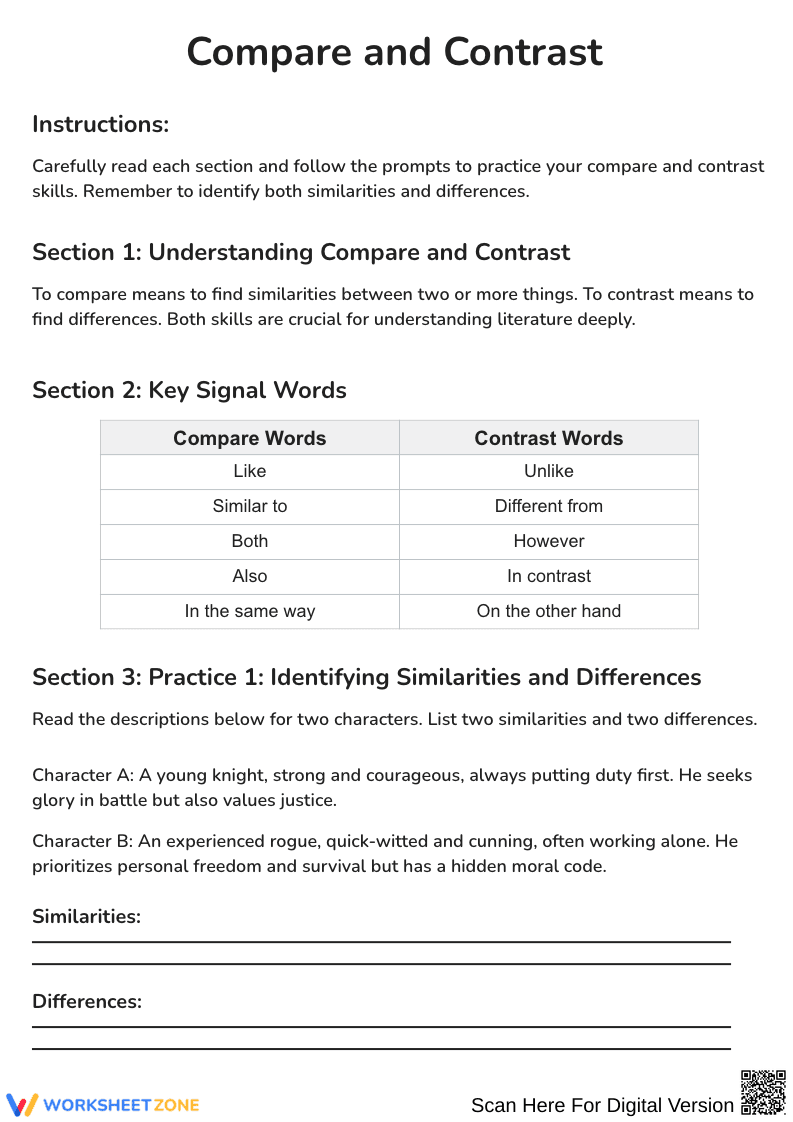
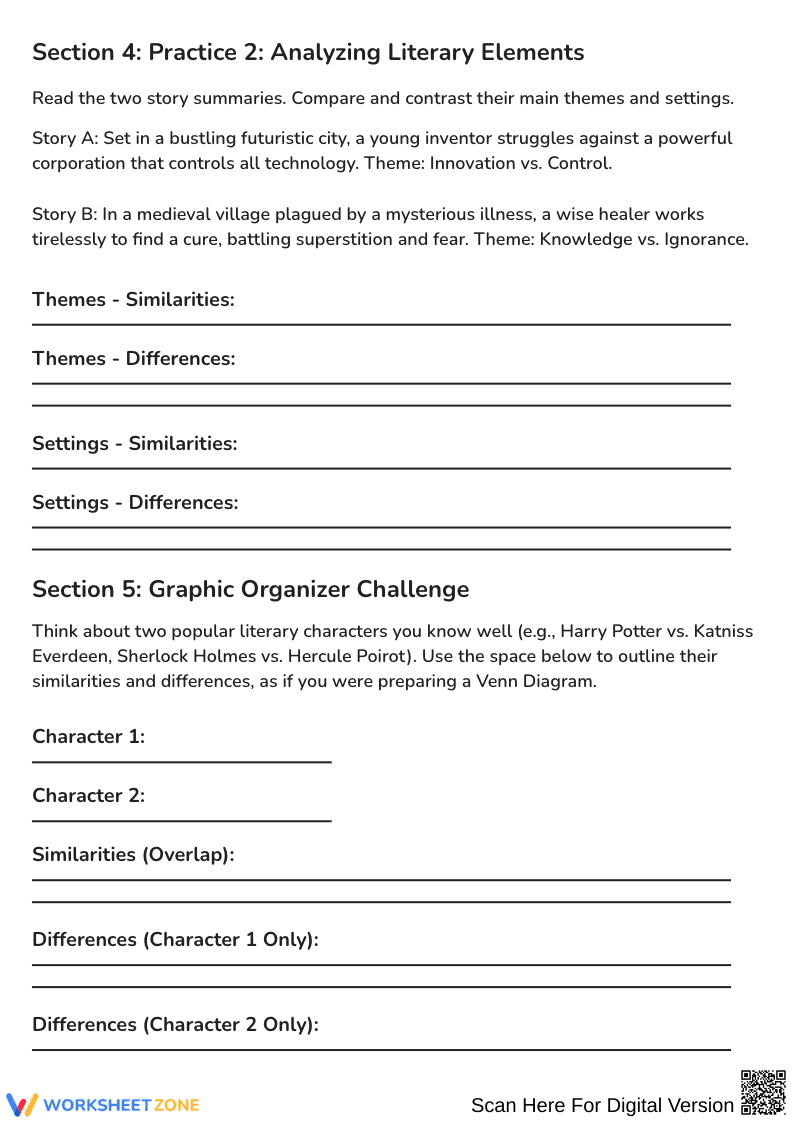
A structured ELA worksheet designed to help students understand and practice compare and contrast skills. The worksheet explains the meaning of comparing and contrasting, introduces key signal words, and provides a guided practice activity where students analyze two characters to identify similarities and differences.
Why Use It:
This worksheet builds critical reading and thinking skills by teaching students how to analyze texts more deeply. Learning to recognize similarities and differences helps students understand characters, themes, and ideas, and supports clear, organized written responses aligned with ELA standards.
How to Use It:
• Review the definitions of compare and contrast with students.
• Study the signal words table and discuss how these words guide reading and writing.
• Have students read the character descriptions carefully.
• Ask students to list similarities and differences using evidence from the text.
Grade Suitability:
Best suited for Grades 6-9.
• Upper elementary students learning comparison strategies.
• Middle school students strengthening literary analysis skills.
Target Users:
ELA teachers, reading specialists, homeschool parents, tutors, and students practicing compare-and-contrast comprehension skills.
A structured ELA worksheet designed to help students understand and practice compare and contrast skills. The worksheet explains the meaning of comparing and contrasting, introduces key signal words, and provides a guided practice activity where students analyze two characters to identify similarities and differences.
Why Use It:
This worksheet builds critical reading and thinking skills by teaching students how to analyze texts more deeply. Learning to recognize similarities and differences helps students understand characters, themes, and ideas, and supports clear, organized written responses aligned with ELA standards.
How to Use It:
• Review the definitions of compare and contrast with students.
• Study the signal words table and discuss how these words guide reading and writing.
• Have students read the character descriptions carefully.
• Ask students to list similarities and differences using evidence from the text.
Grade Suitability:
Best suited for Grades 6-9.
• Upper elementary students learning comparison strategies.
• Middle school students strengthening literary analysis skills.
Target Users:
ELA teachers, reading specialists, homeschool parents, tutors, and students practicing compare-and-contrast comprehension skills.


