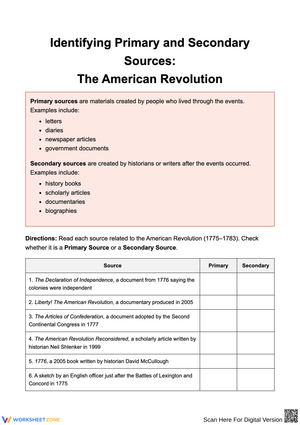
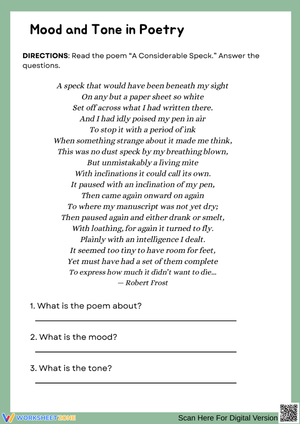
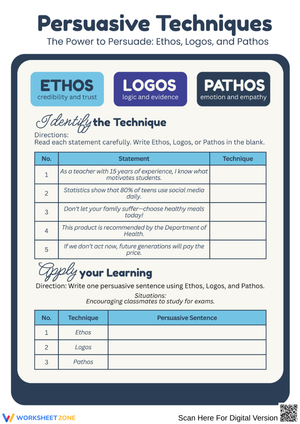
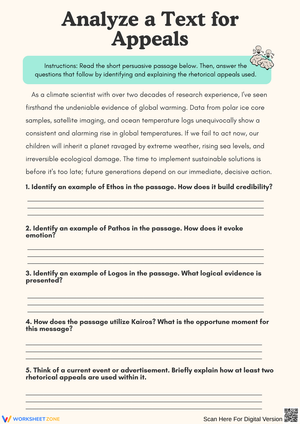
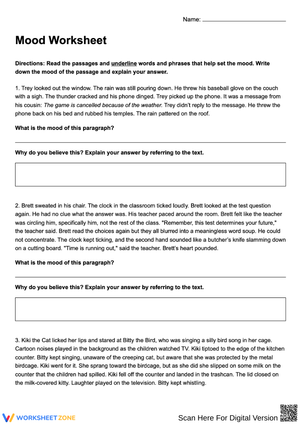
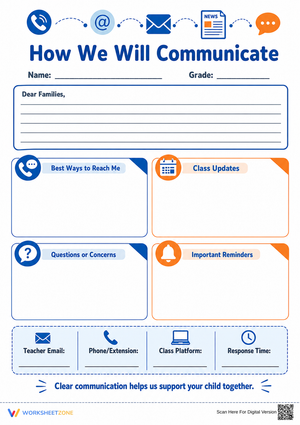
These 9th grade nonfiction writing printable worksheets address one of the sharpest transitions in K-12 English — the moment students must stop summarizing what a text says and start building arguments about what it means. Each worksheet targets a specific skill within one of five nonfiction genres: argumentative writing, informative and explanatory writing, rhetorical analysis, narrative nonfiction, and technical communication. Together, the set covers the full arc of freshman writing instruction, from unit-opening diagnostics to final-draft revision tasks.
The Specific Skills Each Worksheet Targets
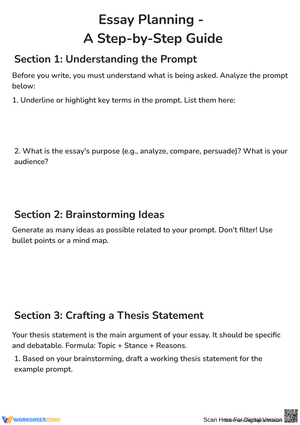
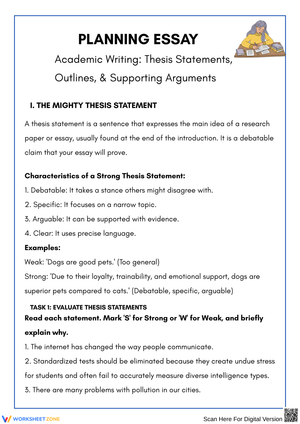
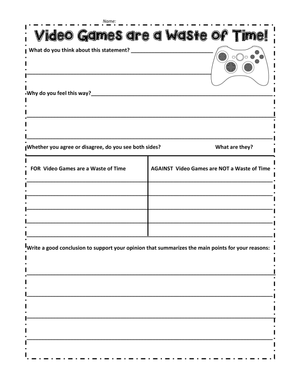
Argumentative worksheets ask students to construct claims, locate credible evidence, and draft counterargument responses — in that sequence, because students who skip to refutation before sharpening their own claim produce weak paragraphs on both sides. These exercises separate claim-writing from evidence-selection so students practice each as a distinct cognitive task before combining them in a full draft.
Informative and explanatory worksheets focus on synthesis: pulling information from two or more sources, ranking details by relevance, and organizing them without a thesis to lean on. Students discover quickly that objectivity is harder than argumentation. Writing clearly about what happened — without editorializing — is a discipline that requires repetition, not just explanation.
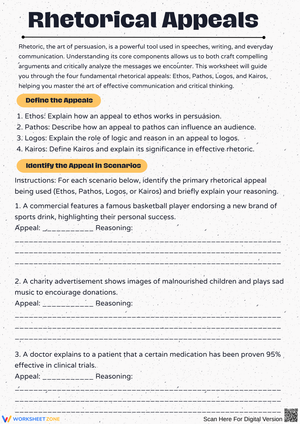
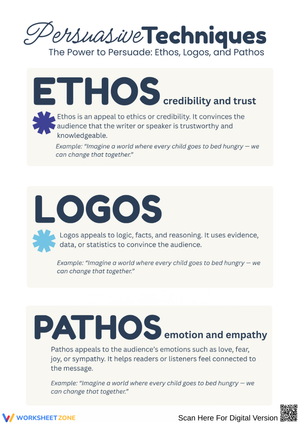
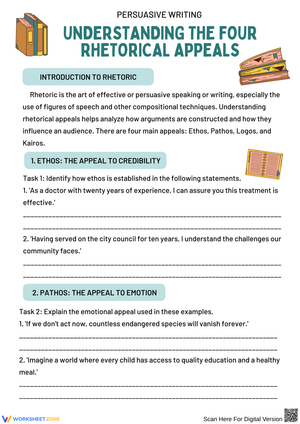
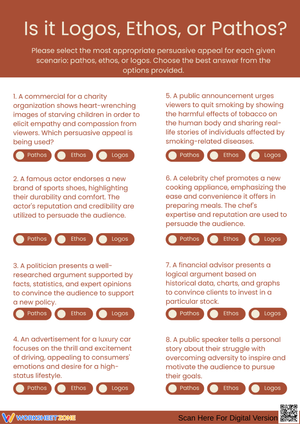
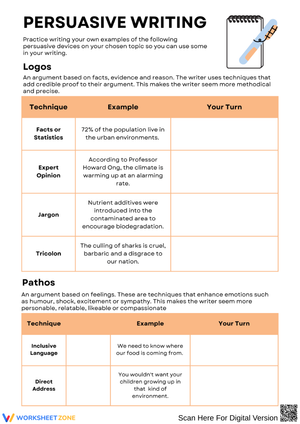
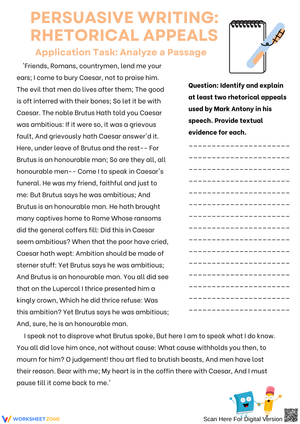
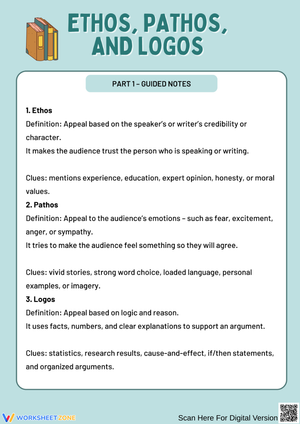
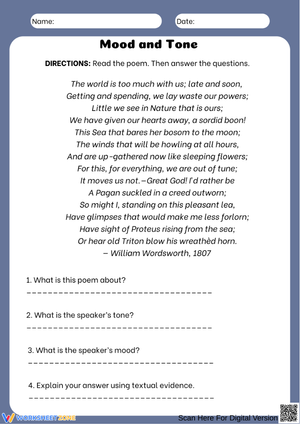
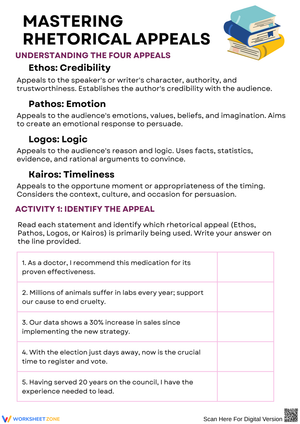
Rhetorical analysis worksheets walk students through ethos, pathos, and logos using historical speeches and contemporary essays. Students underline appeals directly on the worksheet, annotate their function in the margins, and trace how a single paragraph can shift between modes mid-sentence. The remaining worksheets address narrative nonfiction techniques — pacing, sensory detail, scene structure — and technical writing tasks: instructions, objective summaries, and professional correspondence formats.
Errors Worth Watching For as Students Work Through the Set
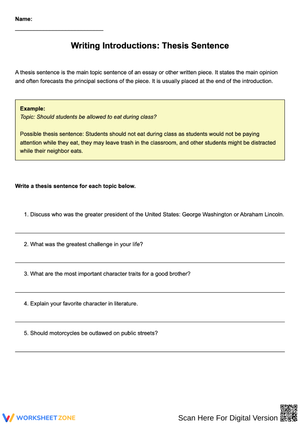
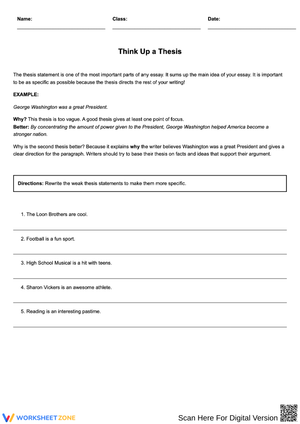
The most consistent error in ninth-grade argumentative writing is the "because I said so" thesis — a claim that states a position without embedding any analytical reasoning. Students write "Social media is harmful to teenagers" and consider the job done. A worksheet that requires students to complete the sentence frame "[Subject] [does/is] [claim], which reveals/demonstrates that [larger significance]" forces them to articulate why their position matters before a single body paragraph gets drafted.
Rhetorical analysis produces a different and equally predictable problem: students identify an appeal correctly but describe it in purely emotional language rather than analytical language. "The author uses pathos here to make you feel sad" names the device without analyzing it. The revision tasks these worksheets include — converting that sentence into "the author uses pathos to position the reader as morally obligated to act" — make the analytical pivot concrete rather than abstract. A speech that uses a physician's testimony to raise fears about long-term health outcomes is a useful classroom example, because the ethos and pathos are so entangled that students who treat them as separate boxes get stuck.
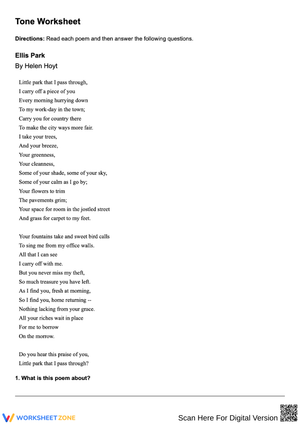
A third pattern appears in informative writing. Students who maintain formal tone in their argumentative pieces revert to casual phrasing the moment they feel they aren't "arguing" anything — words like "basically" and constructions like "you can see that" creep back in. Exit-ticket worksheets focused specifically on tone consistency catch this before it calcifies into a drafting habit.
Standard Alignment
These 9th grade nonfiction writing printable worksheets align with CCSS W.9-10.1 and W.9-10.2 — the two standards that mark the clearest break between middle school and high school writing expectations. W.9-10.1 requires students to write arguments using valid reasoning and sufficient evidence, including formal style and addressed counterclaims. W.9-10.2 shifts to informative and explanatory writing, with sub-standards specifying how students should select, organize, and analyze content from multiple sources. The argumentative worksheets target the counterclaim and formal-style demands of W.9-10.1 directly; the informative worksheets address the evidence-selection and organizational requirements of W.9-10.2b and 2c in particular.
Fitting These Worksheets Into the Week
Run a short worksheet at the start of each new unit as a diagnostic, not as a follow-up after instruction. A five-minute thesis-writing exercise on the first day of an argumentative unit immediately tells you which students are ready to draft and which need a direct-instruction session on claim construction first. That data is worth more than any pre-unit vocabulary quiz.
The rhetorical analysis worksheets work particularly well as Monday bell-ringers. Students returning from a weekend haven't been writing, and a short speech excerpt paired with a single annotation task gives them an analytical entry point before the full lesson opens. The first eight minutes accomplish something real: close reading and marginal annotation, completed before whole-class discussion even begins.
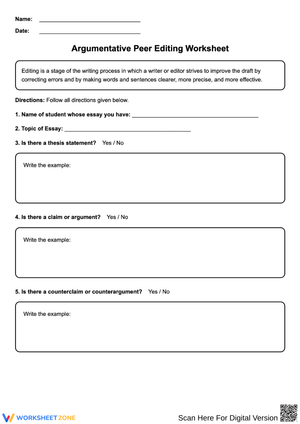
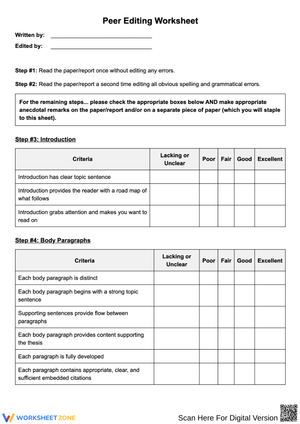
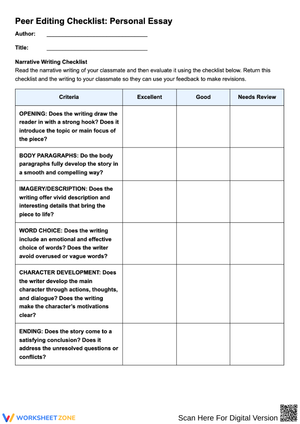
Peer review benefits from a structured worksheet rather than a vague instruction to "give feedback." A worksheet that asks reviewers to locate the claim, flag the weakest evidence sentence, and mark any moment the tone slips from formal to casual keeps editing focused on learning targets instead of surface grammar corrections. These 9th grade nonfiction writing printable worksheets also double as exit tickets at the end of a drafting session — a quote-integration task completed independently at the bell shows whether students can apply the day's instruction without a prompt from the teacher.
Meeting a Range of Learners With the Same Set
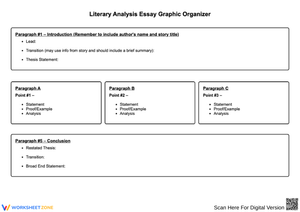
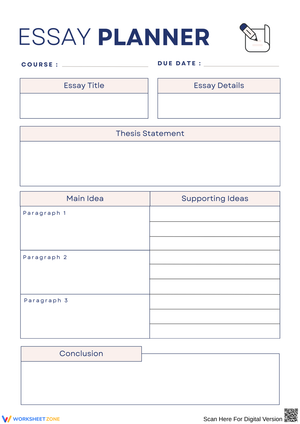
For students who arrive in ninth grade still writing at a sixth- or seventh-grade level, the argument-mapping organizers provide a visible structure: claim goes in this box, evidence goes in this box, analysis goes here. That spatial organization reduces the cognitive load of managing content and structure at the same time. Sentence starters on these worksheets — "One piece of evidence that supports this claim is..." and "This matters because..." — function as temporary support structures. Once a student has internalized the move, the frame becomes unnecessary and can be set aside.
Advanced students hit a ceiling with linear organizers quickly. Pull them off the fill-in-the-blank exercises and assign the rhetorical analysis worksheets that require tracing an argument's structural shifts across multiple paragraphs, or the narrative nonfiction tasks that demand a consistent authorial voice across a longer account. Students ready for AP-level thinking in ninth grade get the most from synthesis tasks — worksheets that require constructing a position from two contradictory sources rather than finding evidence that confirms a predetermined claim.
English Language Learners often bring strong analytical reasoning but struggle with academic register. The technical writing worksheets are a productive entry point because the genre conventions are explicit: format, tone, and vocabulary are visibly consistent in model documents. Pairing each worksheet with a briefly annotated mentor text helps ELL students connect the structural expectations on the page to actual English writing conventions, rather than treating the form as arbitrary rules to memorize.
Frequently Asked Questions
How do these worksheets help students move past the five-paragraph essay?
The five-paragraph structure gives middle schoolers a cognitive handle on multi-paragraph writing for the first time — it solves a real problem at that stage. By ninth grade, it becomes a constraint. These worksheets introduce alternative organizational patterns — problem/solution, compare/contrast, chronological analysis — by asking students to identify the structure in a published essay first, then apply it to their own writing. Seeing the pattern in real nonfiction before producing it is more effective than simply telling students the five-paragraph form is too rigid.
Can the argumentative writing worksheets be used in history or science classes?
The claim-construction, evidence-integration, and counterargument worksheets transfer directly to history essays, science lab conclusions, and social studies position papers. The argument-mapping organizers require no ELA-specific background knowledge to complete. Some worksheets use phrasing like "the author" that can be swapped for "the data" or "the source" depending on context, but the underlying structure — claim, evidence, analysis, rebuttal — stays the same across disciplines.
How should MLA citation practice be built into nonfiction writing tasks?
The evidence-integration worksheets include a parenthetical citation prompt alongside every quote and paraphrase task. Students practice formatting a citation in the same moment they are making a writing decision about how to introduce and follow up on evidence — which is more effective than isolated citation drills, because it ties the format to its actual function. For works-cited entries across different source types, the Purdue OWL remains the clearest reference students can consult alongside these 9th grade nonfiction writing printable worksheets.












 Interactive Worksheet Maker
 Quiz Maker
 Word Search Maker
 Crossword Puzzle Maker
 Word Scramble Generator
 Sentence Scramble Generator
 Handwriting Worksheet Generator
 Name Tracing Generator
 Fill In The Blank Generator