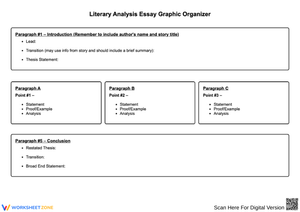
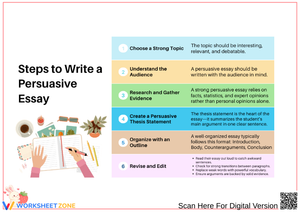
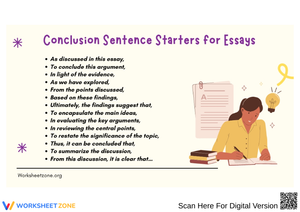
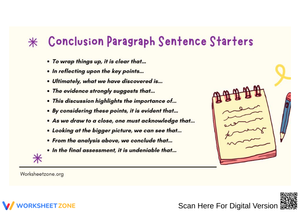
These 9th grade organization and structure worksheets address a gap that shows up consistently in early high school writing: students arrive knowing how to produce sentences and paragraphs, but not how to build an argument that holds its shape from thesis to conclusion. The set includes graphic organizers for essay planning, paragraph unity exercises, transition word practice sorted by logical function, and reverse-outlining tasks that force students to audit what they actually wrote — not what they intended to write.
What Each Worksheet Builds
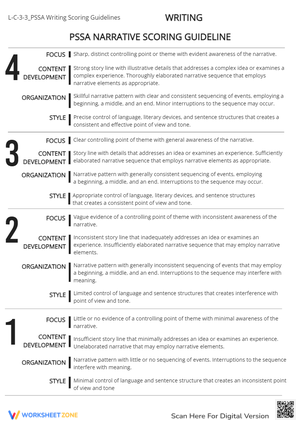
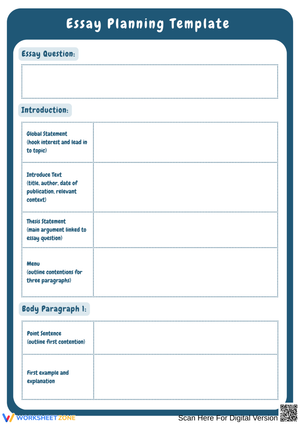
The 9th grade organization and structure worksheets in this set target five distinct skills, each tied to a stage where 9th graders typically stall or produce work that technically follows directions without demonstrating real structural thinking.
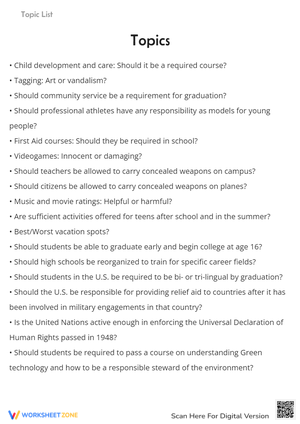
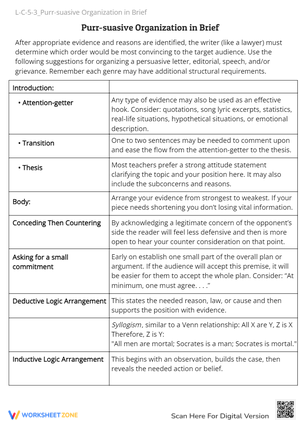
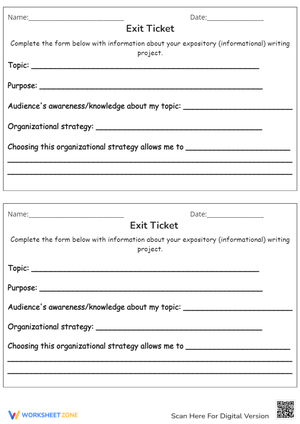
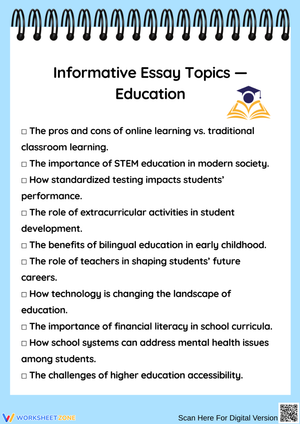
- Thesis development: Students draft thesis statements and test them against a single question — does this statement require a logical argument to support it, or is it merely an observation? That distinction is one many freshmen can articulate only after direct instruction.
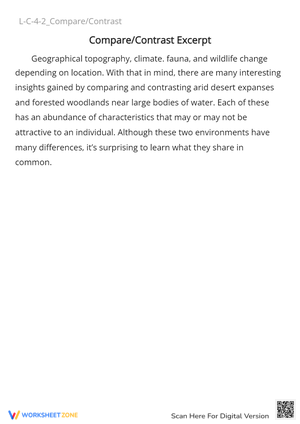
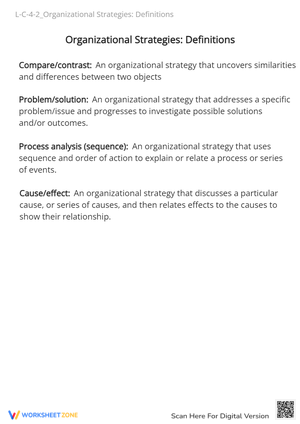
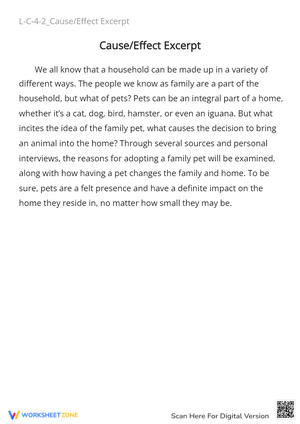
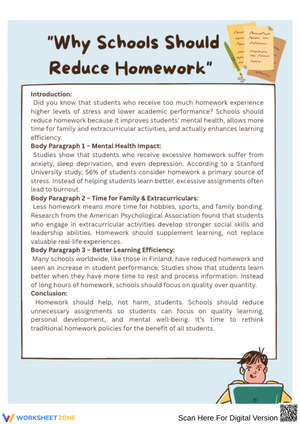
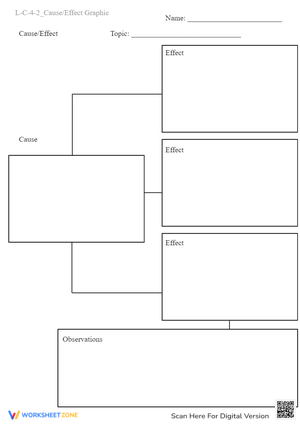
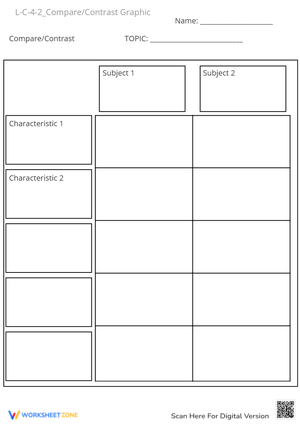
- Structural pattern practice: Four organizational frameworks — chronological order, cause and effect, compare/contrast, and problem/solution — each appear with a brief mentor text excerpt that students mark and label before applying the pattern in their own planning.
- Paragraph unity: Students underline the topic sentence, bracket the evidence, and annotate whether each sentence in a paragraph genuinely advances that paragraph's claim. This works best when students bring a paragraph from their current draft rather than a generic example.
- Transitions by logical function: Rather than a vocabulary list, the exercises group transitions by what they do — signal contrast, add evidence, show causation, mark concession. Students practice choosing transitions for meaning, not register.
- Reverse outlining: After a draft exists, students outline what they actually produced — not what they planned — paragraph by paragraph, then check whether each paragraph's main idea logically connects back to the thesis.
Mistakes Students Make That These Worksheets Help You Catch
The most persistent error across 9th grade writing is topic sentences that announce a subject rather than make a claim. Students write "The next reason is the economy" instead of "Economic instability during the 1930s deepened the social divisions the author depicts." The first introduces a category; the second advances an argument. Students can often identify the difference when asked directly, but they don't catch it in their own drafts without the paragraph unity exercise pulling their attention there explicitly.
Transition misuse runs a close second. Students reach for "however" as a signal of academic register, then deploy it even when the relationship between ideas is additive rather than contrastive. A pattern we see frequently: "The author uses vivid imagery. However, he also uses dialogue to develop character." Nothing in that sentence pair involves contrast. Transition exercises that categorize by function — not just list words — are what actually move students past this error, because they require students to name the relationship before choosing the word.
A third pattern surfaces specifically during reverse outlining: paragraphs that contain two distinct claims, neither developed fully. Students often think a paragraph is coherent because every sentence addresses the same general topic. The reverse outlining worksheet makes the structural problem undeniable — when a student tries to write a single topic sentence for a paragraph that actually carries two separate arguments, the mismatch becomes visible in a way that no amount of teacher feedback achieves on its own.
Putting These Worksheets to Work in Your Unit Plan
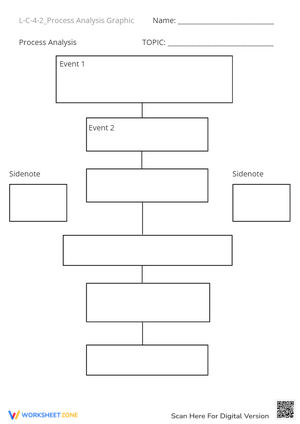
The most effective sequencing pairs each worksheet with the writing stage it supports. Graphic organizers belong before drafting, not during it — asking students to plan and compose simultaneously creates cognitive overload that neither task survives well. Collecting completed graphic organizers as a formative check before students begin drafting lets you redirect structural problems before they're baked into a full draft. Ten minutes at the end of a planning period reviewing a handful of organizers will tell you more about what a class misunderstands about thesis development than any post-draft revision session.
Reverse outlining fits naturally into a mid-draft revision day. Give students 20 minutes to outline their existing draft paragraph by paragraph, then hold a short whole-class debrief where students share what they discovered. In practice, most classes surface the same two or three structural problems — wandering paragraphs, missing topic sentences, evidence without analysis — which makes the debrief feel like a genuine shared discovery rather than a lecture. The 9th grade organization and structure worksheets in this set make that conversation concrete because students have a written artifact of their own structural audit, not just a vague impression of what went wrong.
Transition exercises work well as a Monday warm-up or a 10-minute entry task during a revision block. The risk is that they become isolated vocabulary drill disconnected from real writing. The more productive approach: after students complete a transition exercise, have them immediately return to one paragraph from their current draft and apply the same logic. That transfer step is where the learning sticks.
Standard Alignment
These worksheets address CCSS.ELA-LITERACY.W.9-10.1a, which requires students to introduce precise claims and create organization that establishes clear relationships among claims, reasons, and evidence. The thesis development and graphic organizer worksheets speak directly to this standard. The paragraph unity exercises address W.9-10.2a, which asks students to organize complex ideas so that connections and distinctions are apparent to the reader. The reverse outlining worksheet supports W.9-10.5 — developing and strengthening writing through planning and revising — because it positions revision as structural analysis rather than surface-level correction. Most teachers introduce these standards across the first two formal writing units of the year, making this set most useful in the first and second quarters.
Differentiating These Worksheets Across Writing Levels
For students who freeze at a blank organizer, use a partially completed version: the thesis is already placed, the number of body sections is predetermined, and sentence starters prompt the first supporting point. This keeps the cognitive demand on structure — how does each section connect to the thesis? — rather than on generating content from nothing. The goal is to remove the blank-page paralysis without removing the structural thinking the worksheet is built around.
On-level students work through the standard graphic organizers and transition exercises without additional prompting. The paragraph unity worksheet functions well as independent practice once the concept has been introduced in a brief direct-instruction sequence.
For students who are already strong writers, the most challenging application is structural deconstruction. Give them a well-organized mentor text and ask them to deliberately break it — reorder three paragraphs, strip out the topic sentences, substitute vague transitions — then write an explanation of which structural principles the original followed that the broken version violates. This extension develops metalinguistic awareness of structural choices, not just the ability to execute them.
Frequently Asked Questions
When in a writing unit should I introduce these worksheets?
The graphic organizer and thesis development worksheets belong in the pre-writing phase, before students touch a draft. The paragraph unity and transition exercises fit best mid-unit, once students have a working draft to draw from. Reverse outlining belongs in the revision phase, ideally after a first complete draft exists. Running the set across a single unit gives students structured practice at each stage of the writing process without clustering everything into one session.
What do I do with students who complete the graphic organizer and then ignore it when they draft?
This is one of the most common frustrations with pre-writing tools. The fix is usually procedural: collect the graphic organizer before drafting begins, hold a brief one-on-one or small-group check to confirm the plan is coherent, then return it as a required reference during the drafting session. When students know the organizer will be compared against the draft, they treat it as an actual plan rather than a compliance task.
Do these worksheets apply to literary analysis, or only to argument writing?
The 9th grade organization and structure worksheets in this set work across writing modes. The graphic organizers and reverse outlining worksheets are mode-agnostic — they apply equally to a literary analysis of The Odyssey and to a policy argument about school schedules. The structural pattern exercises do distinguish between argumentative and informative frameworks, but even there, most teachers find the patterns transfer across assignments without modification. The transition exercises are built around logical relationships that appear in any analytical writing, not just formal argument.
Can students use these worksheets independently, or does the set require teacher facilitation?
Most worksheets include enough built-in direction for students to work through them independently after a brief introduction. The reverse outlining worksheet is the exception — it produces better results when a teacher models the process on a shared class text first, because students initially resist the idea that their draft might not say what they think it says. One 10-minute modeling session is usually enough to make independent use productive from that point forward.












 Interactive Worksheet Maker
 Quiz Maker
 Word Search Maker
 Crossword Puzzle Maker
 Word Scramble Generator
 Sentence Scramble Generator
 Handwriting Worksheet Generator
 Name Tracing Generator
 Fill In The Blank Generator