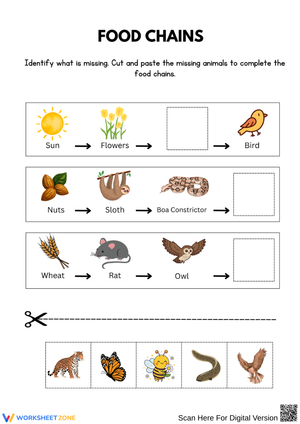
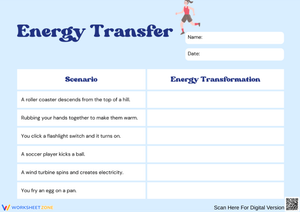
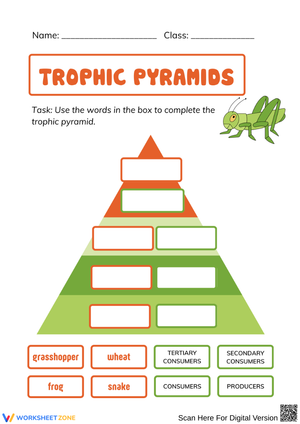
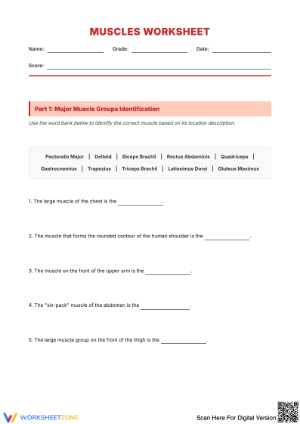
These 8th grade human body systems worksheets resources give teachers a print-ready set built around where middle school life science actually lands — organs, functions, and the connections between systems that students struggle most to explain clearly. The collection on Worksheetzone covers the digestive, circulatory, nervous, muscular, and skeletal systems, with tasks that move students from recognizing a term to explaining what it does in the body.
What These Worksheets Actually Ask Students to Do
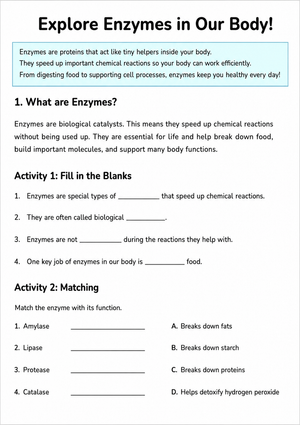
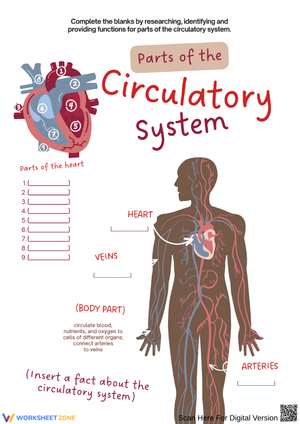
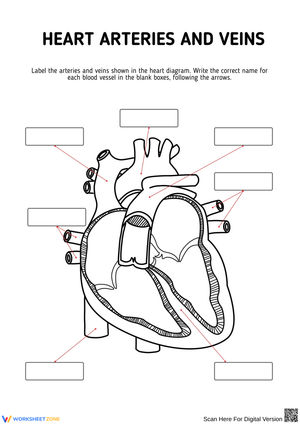
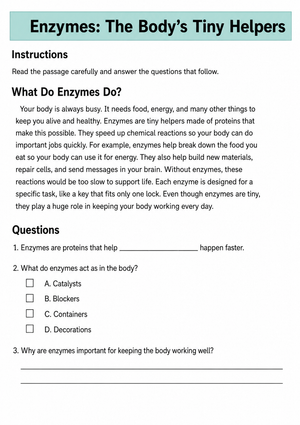
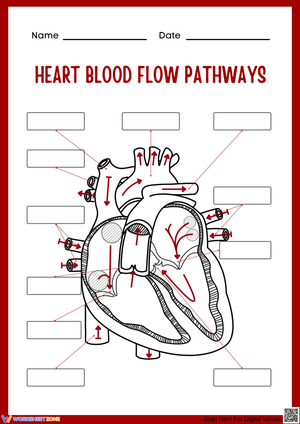
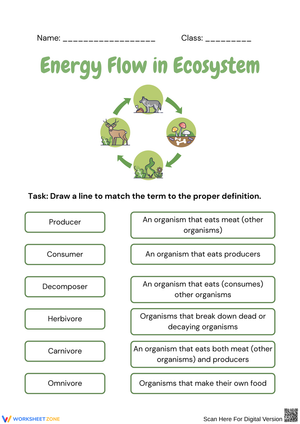
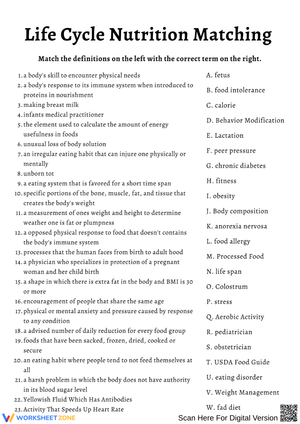
The task types matter as much as the topics. Labeling activities anchor vocabulary to structure — students mark the parts of the digestive tract or identify chambers of the heart rather than just reading a definition. Matching and fill-in tasks give quick checks on terminology without requiring extended writing. Short reading passages followed by function questions raise the cognitive demand: students have to extract information and connect it to a system's role in the body.
The strongest worksheets in a body systems set also include compare-and-contrast prompts. At 8th grade, students are developmentally ready to move past "the stomach breaks down food" and into explaining why the stomach's role matters for what the circulatory system does next. That analytical step — tracing how one system's output becomes another system's input — is exactly where middle school life science is supposed to land. A set that builds toward that kind of thinking through deliberate progression gives teachers something genuinely useful, not just review filler.
- Digestive system: students trace the sequence of organs and explain what happens to food at each stage
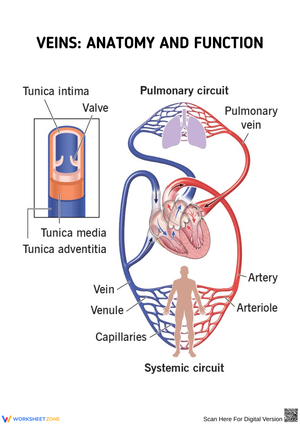
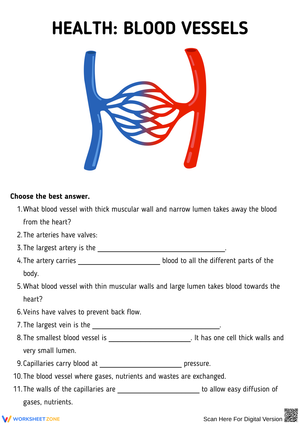
- Circulatory system: students identify structures — heart, arteries, veins, capillaries — and describe how materials move through the body
- Nervous system: students explain stimulus-response pathways and how the brain and spinal cord coordinate signals
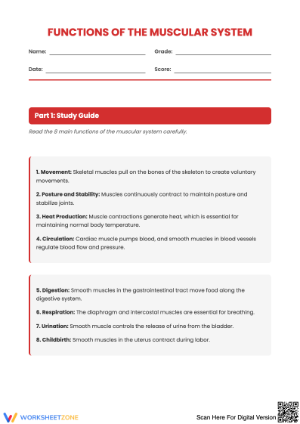
- Muscular and skeletal systems: students compare functions — support versus movement, voluntary versus involuntary — and explain how those systems operate together
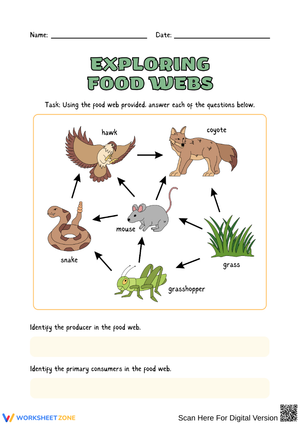
- System interactions: students explain how digested nutrients reach cells only because the digestive and circulatory systems work in sequence, or how the nervous system triggers muscular response
Frequent Student Errors Worth Watching For
The most consistent pattern in 8th grade body systems work is accurate vocabulary with hollow understanding. A student writes "the heart pumps blood" — technically correct, but they cannot say what the blood carries, where it goes, or why that delivery matters. Worksheets that ask students to follow a nutrient from the small intestine through the bloodstream to a muscle cell catch that gap immediately. The answer is not one word; it requires students to name the system, name the pathway, and name the outcome.
A second pattern shows up around system names versus organ names. Students who can identify the liver on a diagram often write "the digestive system is the liver" rather than understanding that the liver is one organ within a larger system. Questions that ask "which organ performs this function within which system" help students keep those two levels of organization distinct — a distinction that matters when test questions ask about either level specifically.
Students also struggle with the direction of interaction. They can often state that the muscular and skeletal systems work together, but they reverse the dependency or describe it in circular terms: "muscles need bones and bones need muscles." A compare-and-contrast worksheet that asks what skeletal muscles cannot accomplish without a rigid frame — and what a frame cannot do without contractile tissue pulling against it — forces students to get the relationship right rather than restating it vaguely.
Fitting These Worksheets Into the Week Without Rebuilding Your Plans
The printable PDF format earns its place here specifically because the content repeats well across different classroom contexts. A teacher can hand out a labeling worksheet at the start of a unit to assess baseline vocabulary, use the same system's function-matching worksheet three days later as partner review, and pull a system-interaction worksheet for a Friday formative check — all without creating new materials. The 8th grade human body systems worksheets set supports that kind of repeatable, low-prep use across a three- to four-week unit without requiring teachers to redesign tasks between lesson phases.
For station rotations, the task variety across the set is genuinely useful. One group labels the circulatory system while another answers reading-based questions about nervous system function and a third completes a short comparison of skeletal and muscular roles. The science content stays consistent across all three stations; what varies is the task format, which reduces the time students spend re-reading directions and keeps the period moving.
Sub plans are another strong fit. The expectations on each worksheet are explicit — label this, match these terms, explain this function — which means a class can work through the material without the classroom teacher present. Teachers who keep a small organized folder of these worksheets sorted by system can hand a sub a complete review sequence in about two minutes of prep.
Standard Alignment
These worksheets align with NGSS MS-LS1-3, which expects students to use evidence to support claims about how living organisms function, and with the disciplinary core idea LS1.A: Structure and Function — the principle that body systems interact to carry out life functions. At 8th grade, that standard asks students to explain how systems work together rather than simply name their parts, which matches exactly what the compare-and-contrast and system-interaction worksheets ask students to produce. Teachers working in states that follow the Next Generation Science Standards will find these resources fit the middle school life science strand without reframing the content.
Differentiating These Worksheets Across Ability Levels
For students still building vocabulary, a labeling worksheet becomes more accessible when teachers provide a word bank. That single addition removes the retrieval demand and lets students focus on placing terms correctly rather than simultaneously recalling and locating. Once those students can label accurately with support, they are ready for the function-matching worksheet, which adds one more cognitive step without jumping to open-ended explanation.
Students who move quickly through identification tasks benefit from the interaction and comparison prompts without modification. For those students, a written extension works well: after completing a system-interaction worksheet, they write two or three sentences predicting what would happen to the body if one system failed. That prediction task pushes toward cause-and-effect reasoning that appears on standardized assessments and carries directly into high school biology.
The 8th grade human body systems worksheets set also works for targeted re-teaching after a unit assessment. If results show students understand individual systems but cannot explain how those systems interact, teachers can pull the paired-system worksheets specifically — rather than repeating the full unit — and address exactly that gap. That kind of precise follow-up is easier when the resources are organized by task type and system rather than bundled as one undifferentiated block.
Frequently Asked Questions
What body systems do these worksheets cover?
The set covers the digestive, circulatory, nervous, muscular, and skeletal systems, with each worksheet targeting organ identification, system function, or interactions between systems. Teachers can pull individual worksheets by system or use the full set as a sequenced unit review.
Can these worksheets serve as formative assessments?
Yes. A well-chosen worksheet surfaces three things at once: whether students can identify major organs, whether they can describe what those organs do, and whether they can explain how a system connects to others. Collecting that worksheet as an exit task gives teachers a clear read on where the class stands before the next lesson. The 8th grade human body systems worksheets format makes it easy to scan responses quickly because all students answer the same structured prompts.
How do these worksheets fit into station-based instruction?
The task variety across the set — labeling, matching, reading response, comparison — makes stations straightforward to organize. Assign one task type per station, keep the system content consistent across all rotations, and students move through different formats without the science content shifting underneath them. That structure keeps cognitive load manageable and helps teachers notice which task format reveals gaps that whole-class discussion did not.
Which worksheets work best for homework versus in-class work?
Labeling and matching worksheets travel home well because students can complete them independently and check their own answers against notes. Interaction and comparison worksheets work better in class, where a teacher can redirect a student who is reversing a system dependency or confusing organ names with system names. Saving the analytical worksheets for class time also preserves that work as formative data — homework returned the following day is harder to act on than an exit task collected at the end of a period.