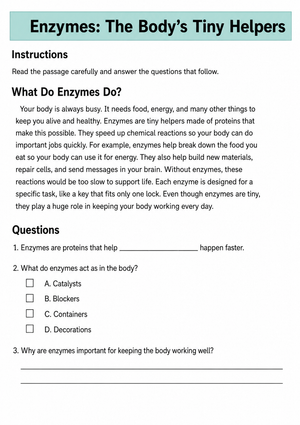
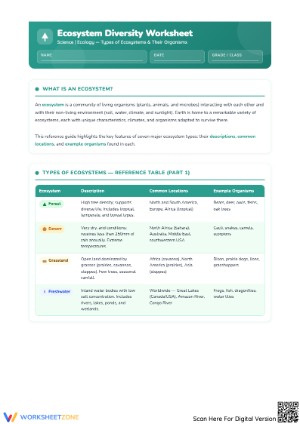
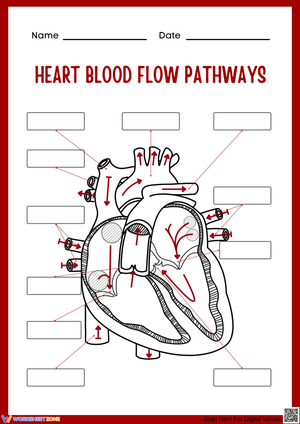
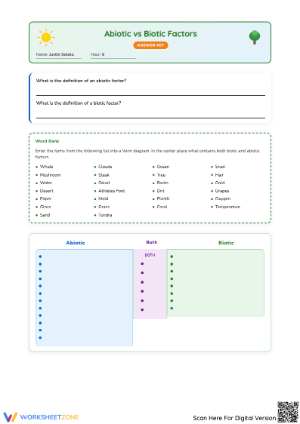
These biology worksheets for 8th grade give teachers a ready supply of printable life science practice without building handouts from scratch. The set covers body systems, ecosystems, cell processes, and biodiversity — the content that shows up most often in middle school life science units and that asks students to move between vocabulary, diagram labeling, and short written explanation across the same lesson sequence.
What Students Practice in Each Worksheet
Each worksheet targets a defined concept rather than mixing unrelated topics together. That specificity matters in grade 8, where the shift from naming parts to explaining how those parts interact is exactly what the standards and the NAEP assessment expect. The task types across the set include:
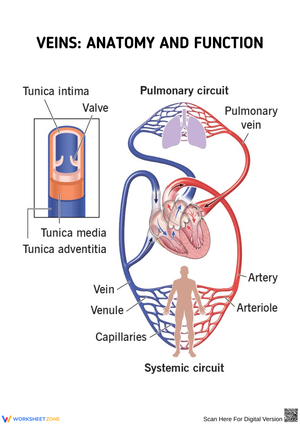
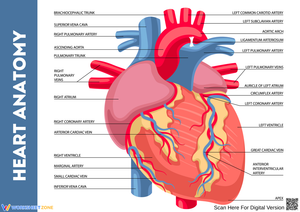
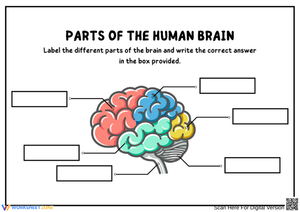
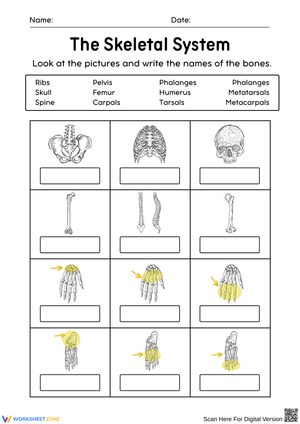
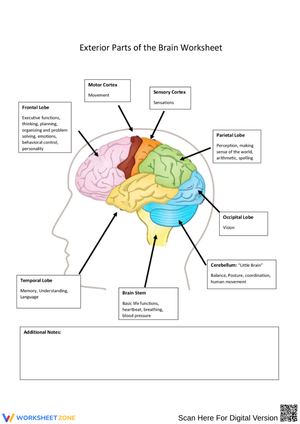
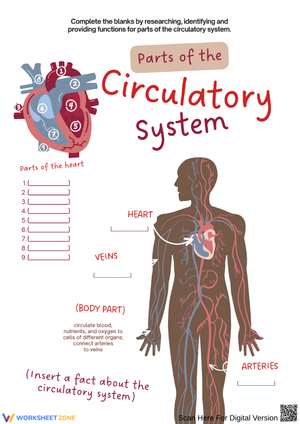
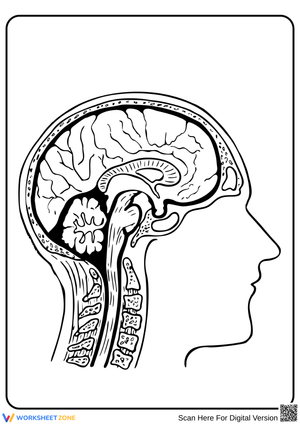
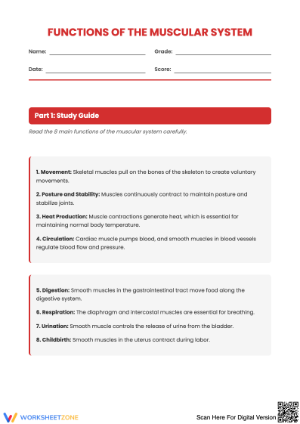
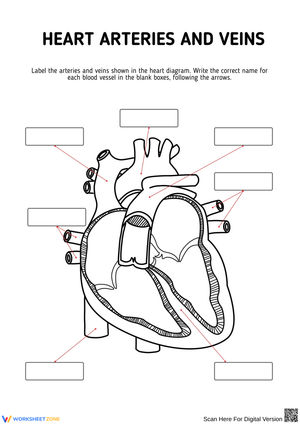
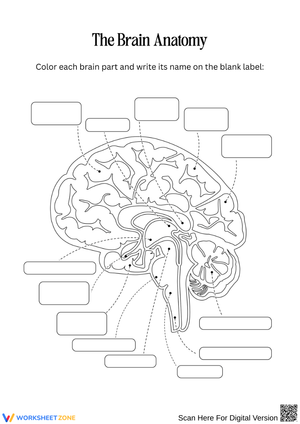
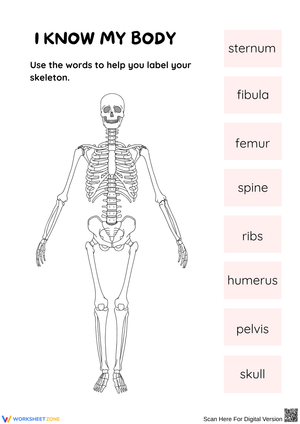
- Anatomical diagram labeling — body systems, cell organelles, plant structures
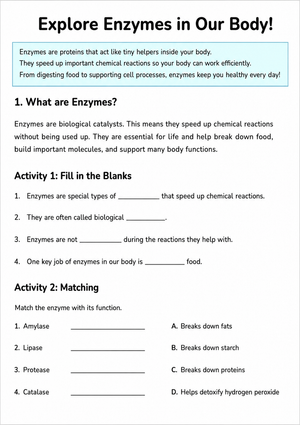
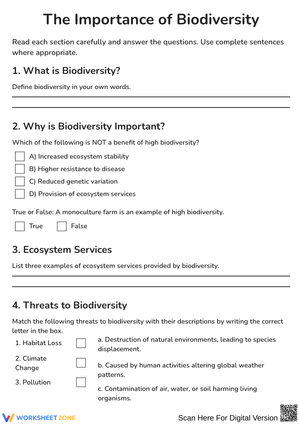
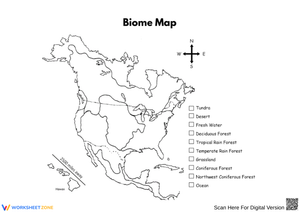
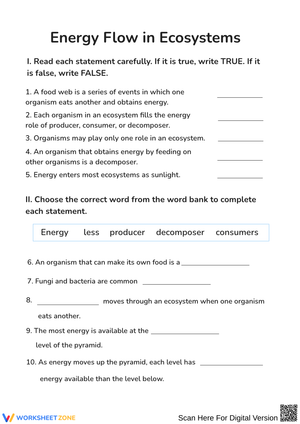
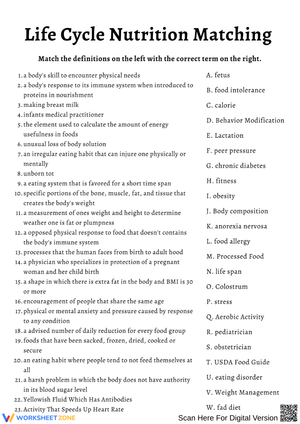
- Vocabulary matching and sorting — macromolecule terms, ecological vocabulary, cellular process language
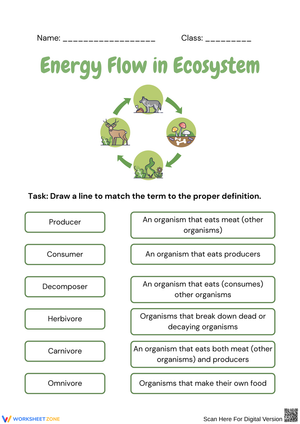
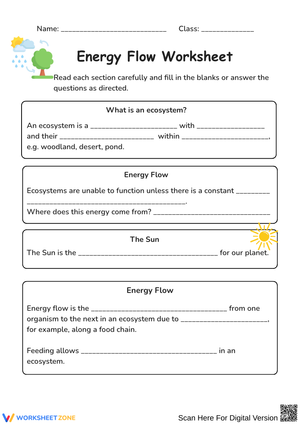
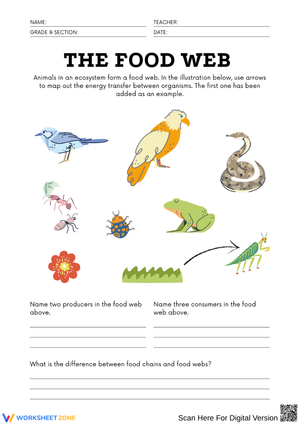
- Sequencing tasks — transcription and translation steps, digestive pathway, energy flow through a food web
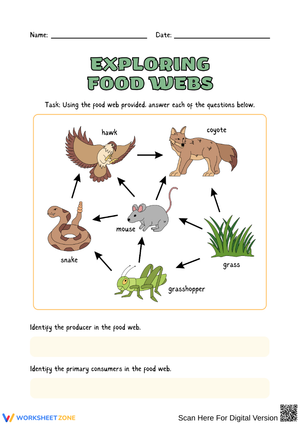
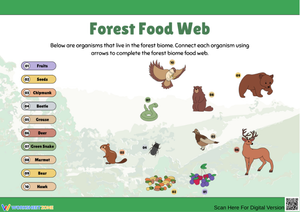
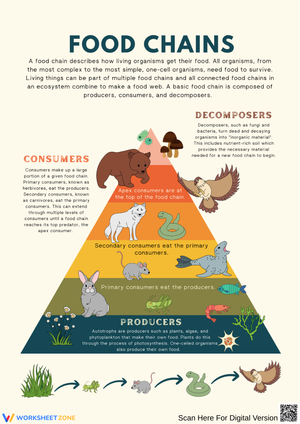
- Relationship analysis — food web tracing, organism role identification, predator-prey and producer-consumer dynamics
- Compare-contrast prompts — plant cells vs. animal cells, producers vs. consumers, mitosis vs. meiosis
- Short constructed responses — explaining how a structure supports its function, predicting what happens to energy flow when a population is removed from an ecosystem
When selecting biology worksheets for 8th grade, matching the task type to where students are in the unit sequence matters more than topic coverage alone. A vocabulary sort belongs early in a unit; a constructed response on structure and function belongs after students have worked with the terms for a few days.
Standard Alignment
The topics in this set align directly with the NGSS middle school life science disciplinary core ideas — MS-LS1 (From Molecules to Organisms), MS-LS2 (Ecosystems: Interactions, Energy, and Dynamics), and MS-LS4 (Biological Evolution). The 2024 NAEP grade 8 science assessment identifies life science as one of three core content areas nationally assessed at this grade level, which means students encounter these ideas in formal assessments, not only in class.
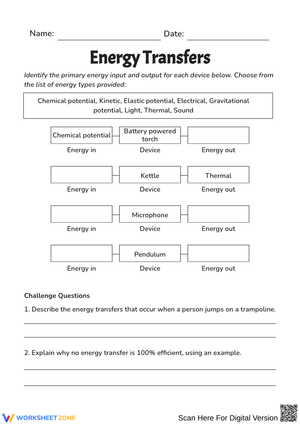
The practical alignment check is less about matching codes and more about what students are actually asked to do. A worksheet that has students trace energy through three trophic levels and then explain what happens at each step addresses MS-LS2-3 more usefully than a basic producer-consumer matching exercise. The NSTA framework emphasizes crosscutting concepts — structure and function, matter and energy flows — and those show up directly in the body systems and ecosystem worksheets in this set.
How to Build These Worksheets Into Your Lesson Plans
The most effective use pattern in middle school is anchoring each worksheet to a specific instructional moment rather than pulling one out as generic filler. A labeling worksheet on the digestive system works well as the five-minute retrieval task on day two of a body systems lesson — after the initial introduction, but before students are ready for written explanation. A food web tracing worksheet fits naturally at a center while the teacher works with a small group on a reteach concept. That combination — independent practice running alongside small-group instruction — is one of the cleanest uses for any printable set in a middle school class.
These worksheets also hold up as sub plans in a way that vague "read and answer" activities do not. Because each one focuses on familiar science content with clear directions, a substitute can manage the task without background knowledge of where the class is in the unit. The completed worksheets double as a formative check the next morning — something to scan during prep to see where students are and what still needs direct instruction before moving forward.
- Bell ringers: diagram retrieval or vocabulary check from the previous lesson
- Center stations: one printable task running while the teacher leads a small group
- Homework: brief review that reinforces class instruction without requiring devices
- Sub plans: self-contained enough to run without teacher explanation
- Mid-unit check: a focused concept worksheet before a quiz or lab
Common Misconceptions These Worksheets Help Surface
The most consistent error pattern in grade 8 biology appears at the vocabulary-to-concept gap. Students learn the names of cell organelles or body system structures without connecting those names to function — so when a worksheet asks how the structure of the small intestine supports nutrient absorption, many students restate the label instead of explaining the relationship. Sequencing tasks catch this before open-response prompts do: when students order the steps of digestion and mark which organ carries out each step, gaps in understanding show up in their ordering rather than in vague written sentences that are easy to misread as correct.
Ecosystem worksheets reveal a different recurring problem. Even after explicit instruction on food webs, students revert to linear food chain thinking when they draw or complete a diagram independently. A student who correctly labels a deer as an herbivore in a multiple-choice item will still draw a single grass-to-deer-to-wolf arrow when given a blank diagram, leaving out decomposers, competing herbivores, and omnivores entirely. Worksheets that ask students to add a missing organism to an existing web — rather than construct one from scratch — expose this gap earlier and give teachers a concrete correction point before the unit assessment. In transcription and translation sequencing tasks, the parallel error is reversing which molecule is produced at which stage, particularly when students first encountered the process through lecture alone.
Differentiating These Worksheets Across Ability Levels
The labeling and matching worksheets in this set give students who need more structured practice a clear entry point before they move into written explanation. A student who can correctly label the chambers of the heart has already handled the recall work — which means when they write about blood flow, they can focus on the logic of the sequence rather than hunting through notes for vocabulary. Using those more structured worksheets as first-pass practice reduces the cognitive demand of open-response tasks by handling vocabulary retrieval beforehand.
For students who are ready to move past recall, the same worksheet supports extension without requiring a separate handout. Ask them to annotate a food web diagram with a written note explaining what would change if the primary consumer population were cut in half. Have them add a second body system to a diagram and describe how the two interact. These additions require only a verbal direction while the rest of the class works on the core task. The biology worksheets for 8th grade in this set support both approaches because the core tasks are specific enough to complete independently and the format leaves room for written additions without feeling cluttered.
Selecting Worksheets Unit by Unit
Unit-level planning works best when you start from the end: what do students need to explain or demonstrate by the final lesson? For a human body systems unit, prioritize worksheets that move past labeling into short explanation prompts — connecting structure to function is the actual standard, not term recognition. For an ecosystems unit, look for food web and energy flow tasks that ask students to predict, trace, or justify rather than just identify. For cell biology, vocabulary and sequencing activities bridge initial instruction and concept understanding in a way that open-response questions alone cannot.
A simple organizational move saves time across the year: sort downloaded worksheets into three folders — instruction, review, and extension. The instruction folder holds worksheets for first exposure or structured practice within a lesson. The review folder holds concept checks to pull mid-unit or before an assessment. The extension folder holds tasks that push beyond the core idea for students who are ready. When lab time runs short or pacing shifts unexpectedly, the right worksheet is already sorted rather than buried in a general download folder.
That system also makes sharing across a department straightforward. When teams use biology worksheets for 8th grade from a shared sorted set, they can coordinate pacing across sections without holding separate planning meetings every unit — the folder structure does the coordinating work.
Frequently Asked Questions
What biology topics do these worksheets cover?
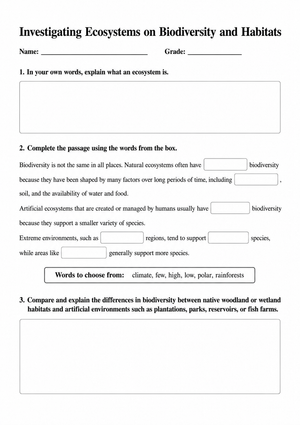
The set covers human body systems, cell organelles and processes, macromolecules, plant structures, biodiversity, food webs, and ecosystems. Those topics reflect the core of what most 8th grade life science units address across a full school year.
How closely do these worksheets align to NGSS middle school life science standards?
The topics map directly to MS-LS1 through MS-LS4 performance expectations. The stronger alignment signal, practically speaking, is whether the worksheet moves students from label recall into concept explanation — and most worksheets in this set do. Teachers using the NSTA framework will find structure-and-function and matter-and-energy-flow crosscutting concepts embedded in the body systems and ecosystem tasks.
Can students who struggle with reading-heavy materials still use these worksheets?
Several worksheets in the set are diagram-first rather than text-first, which gives students with lower reading fluency a workable entry point. Assigning those worksheets early in a unit — when vocabulary is still new — tends to work better than holding them back as support materials, because students who work with diagrams first often retain the terms more reliably than students who encounter a definition block first.
Do the worksheets include answer keys?
Answer key availability varies across the set. Treat it as a feature to verify before downloading rather than something guaranteed. For diagram-labeling worksheets, a quick teacher key takes about three minutes to mark the first time through and is worth keeping for future use across all sections.
How many worksheets should a teacher use per unit?
Three to five tends to work well — one for structured practice early in the unit, one or two for centers or reteach groups mid-unit, and one for review before the assessment. More than that and the format becomes repetitive for students; fewer and there may not be enough task variety to address the range of readiness in a typical class.












 Interactive Worksheet Maker
 Quiz Maker
 Word Search Maker
 Crossword Puzzle Maker
 Word Scramble Generator
 Sentence Scramble Generator
 Handwriting Worksheet Generator
 Name Tracing Generator
 Fill In The Blank Generator