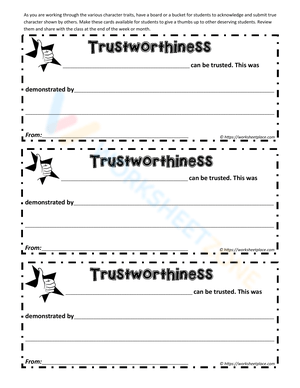
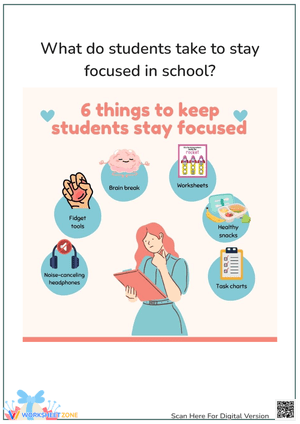
Social skills for middle school worksheets for 6th grade carry a specific job: preparing students for the peer situations that make the first year of middle school genuinely hard. Sixth graders are managing new class schedules, shifting peer groups, and more collaborative academic work — often all at once. These resources give teachers concrete, short-cycle tasks that fit into advisory blocks, homeroom, counseling sessions, and pre-collaboration routines without needing a separate unit plan.
Skills Covered Across the Set
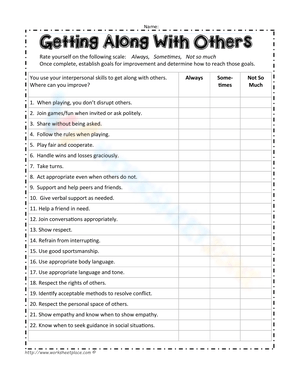
Each worksheet targets one visible, teachable behavior rather than a broad attitude like "being respectful" or "working well with others." The skills addressed across the set include:
- Active listening — distinguishing attentive behavior from passive presence during class discussion and partner work
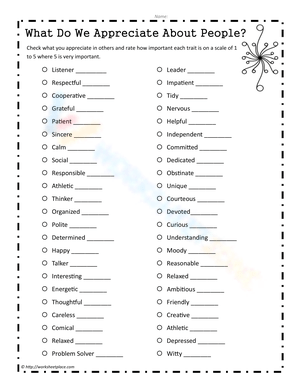
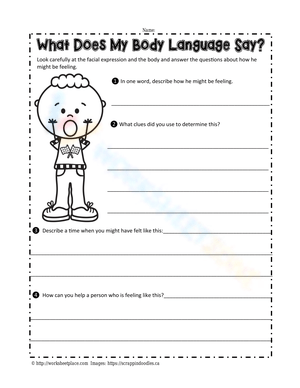
- Empathy and perspective-taking — identifying how another person likely feels, not just how the student would feel in the same situation
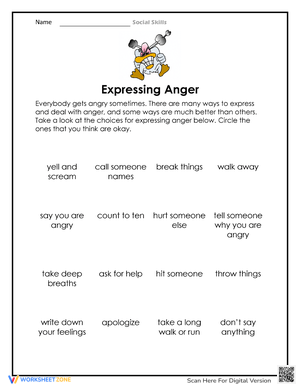
- Self-management under pressure — recognizing emotional triggers before a reaction, especially during group tasks and peer feedback
- Teamwork and participation roles — naming what equal contribution looks like and what to say when a partner goes silent or takes over
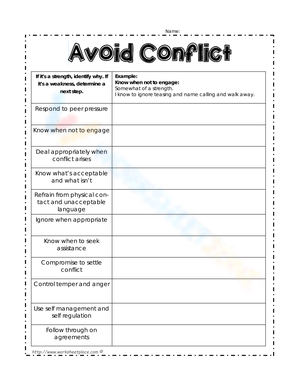
- Conflict resolution sequencing — pausing, describing the problem without blame, listening, and agreeing on a next step
- Handling peer pressure — practicing refusal and redirection in scenarios that sound like actual middle school, not cautionary tales
- Digital communication norms — applying tone awareness to texts and group chats, which is where a significant number of 6th grade conflicts begin
Narrowing each worksheet to one behavior matters at this grade level. Sixth graders who are still building self-monitoring skills get overwhelmed when a single task asks them to reflect on listening, empathy, and tone simultaneously. One clear target per worksheet also makes it easier to revisit the skill right before a specific activity where it will actually be needed.
Frequent Student Mistakes Worth Watching For
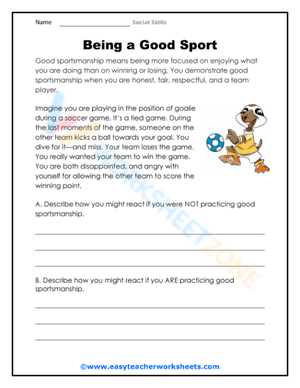
The most persistent error in 6th grade SEL work is confusing recognition with application. A student can underline the "respectful" response in a scenario and still use a dismissive tone with a partner ten minutes later. Scenario-based worksheets expose this gap — when students have to explain why a response is effective rather than simply mark it, the reasoning becomes visible. A student who writes "because it doesn't hurt their feelings" is at a different instructional starting point than one who writes "because it names the problem without blaming anyone."
Empathy prompts reveal a different pattern. When asked "how would you feel if this happened to you?", most students answer accurately. When the prompt shifts to "how do you think they felt?", a meaningful number of 6th graders project their own reaction rather than considering the other person's position or history. The stronger worksheets make that distinction explicit by asking students to name one way the two perspectives might differ.
Conflict resolution practice produces its own predictable stumble: students write out a calm, step-by-step response on the worksheet and then front-load blame the moment a real disagreement starts. The sequence collapses because tone — which a worksheet cannot fully capture — is where the skill actually lives. Pairing written practice with even two minutes of partner rehearsal closes more of that gap than additional written reflection alone.
Smart Ways to Work These Worksheets Into Your Week
The most sustainable approach is a recurring short routine rather than a standalone lesson. In advisory or homeroom, one worksheet per week — used as a bell-ringer or opening activity — builds a vocabulary students carry into their content classes. Connecting the week's worksheet to something students are about to do makes the practice feel purposeful: run the teamwork worksheet before a group project launches, not after it falls apart.
For content teachers, these resources work well as a five-to-ten minute pre-collaboration setup. Before a literature circle or partner research task, a short conflict-response or active-listening worksheet primes students to notice the skill in action. Exit tickets reverse the process — a brief reflection after group work asks students to name one moment when they used the skill and one moment when they missed it.
Social skills for middle school worksheets for 6th grade also hold up as reteach tools. After a classroom incident, a behavior reset, or a group project that went sideways, a targeted worksheet gives structure to the conversation without requiring a full lesson. The student reads a parallel scenario, identifies the better choice, and explains the reasoning — which often tells a teacher more about what actually happened than a direct question does.
Using the Set in Counseling and Behavior Intervention
School counselors and behavior support staff often need materials that hold up in one-on-one and small-group settings without much prep. Scenario-based worksheets are especially effective in counseling groups because students can respond to a fictional situation before connecting it to their own. A student processing a hallway conflict can analyze a parallel scenario — describe the problem, name both sides, suggest a next step — and then decide whether that sequence fits what happened to them. That indirect entry point reduces defensiveness.
In check-in/check-out support, brief self-monitoring worksheets give students a concrete tool to return to across the day. A student working on impulse control marks whether they used a pause strategy at each transition; a student working on tone during group work notes one specific moment where they adjusted. These are formative tools, not summative assessments — their purpose is to tell the support adult exactly where to focus the next five-minute check-in.
Social skills for middle school worksheets for 6th grade are reusable across these settings precisely because the skill focus stays narrow. The same conflict-resolution worksheet works as independent written practice before a counseling session, as a group discussion starter, or as a reset task after an incident. That flexibility makes the resources worth keeping in multiple places — the classroom, the counselor's office, and the behavior intervention binder.
Adjusting for a Range of Learners in Mixed Groups
Students who are still developing reading fluency can work through the same social skill using an oral response format: a teacher or paraprofessional reads the scenario aloud, the student responds verbally, and written portions are kept brief — one sentence or a marked choice followed by a spoken explanation. The social skill itself does not change; the response format does.
For students who move through scenarios quickly, the extension is rarely "do more." A stronger challenge is to flip the perspective: after completing the standard task, the student rewrites the scenario from the other person's point of view and identifies one detail that would change the best response. That reversal demands genuine perspective-taking rather than pattern recognition.
Students with IEPs or 504 plans that include social-emotional goals often get the most use from the conflict resolution and self-management worksheets because completed tasks can double as documentation of skill practice — a teacher or counselor attaches the worksheet to a progress note, which connects the task to a measurable goal and saves tracking time. Regardless of support level, the language across each worksheet stays age-appropriate. Sixth graders notice quickly when a resource reads like it was made for someone younger.
Frequently Asked Questions
Which skills in this set matter most for 6th grade group work?
Teamwork participation roles, conflict resolution sequencing, and active listening are the highest-value starting points because they come up in nearly every collaborative task. Students who know what equal participation looks like — and who have practiced one sentence for redirecting a dismissive comment — are better prepared for literature circles, project groups, and structured class discussions.
How do these worksheets fit into a 10-minute advisory block?
A practical structure: students complete the task independently for five to six minutes, then partners share one answer and explain their reasoning for two to three minutes. That combination delivers both written practice and oral rehearsal without running past the block. Keeping the directions short and the prompt focused to one situation is what makes the timing work.
Can counselors use these with individual students, not just whole classes?
Social skills for middle school worksheets for 6th grade are formatted to work in both whole-class and pull-out settings. Scenario-based tasks give a student something external to analyze, which makes it easier to discuss a real situation without requiring immediate self-disclosure. Counselors often find that a student who resists talking directly about an incident will engage readily with a parallel scenario on the worksheet.
Are these appropriate for students receiving behavior support services?
They fit naturally into behavior intervention work. The self-management and conflict resolution worksheets give students a concrete practice structure, and completed worksheets can serve as documentation of skill rehearsal tied to SEL goals in a behavior plan — which is useful during progress monitoring and during IEP meetings when teams need evidence of what a student has practiced.












 Interactive Worksheet Maker
 Quiz Maker
 Word Search Maker
 Crossword Puzzle Maker
 Word Scramble Generator
 Sentence Scramble Generator
 Handwriting Worksheet Generator
 Name Tracing Generator
 Fill In The Blank Generator