


























Views
Downloads
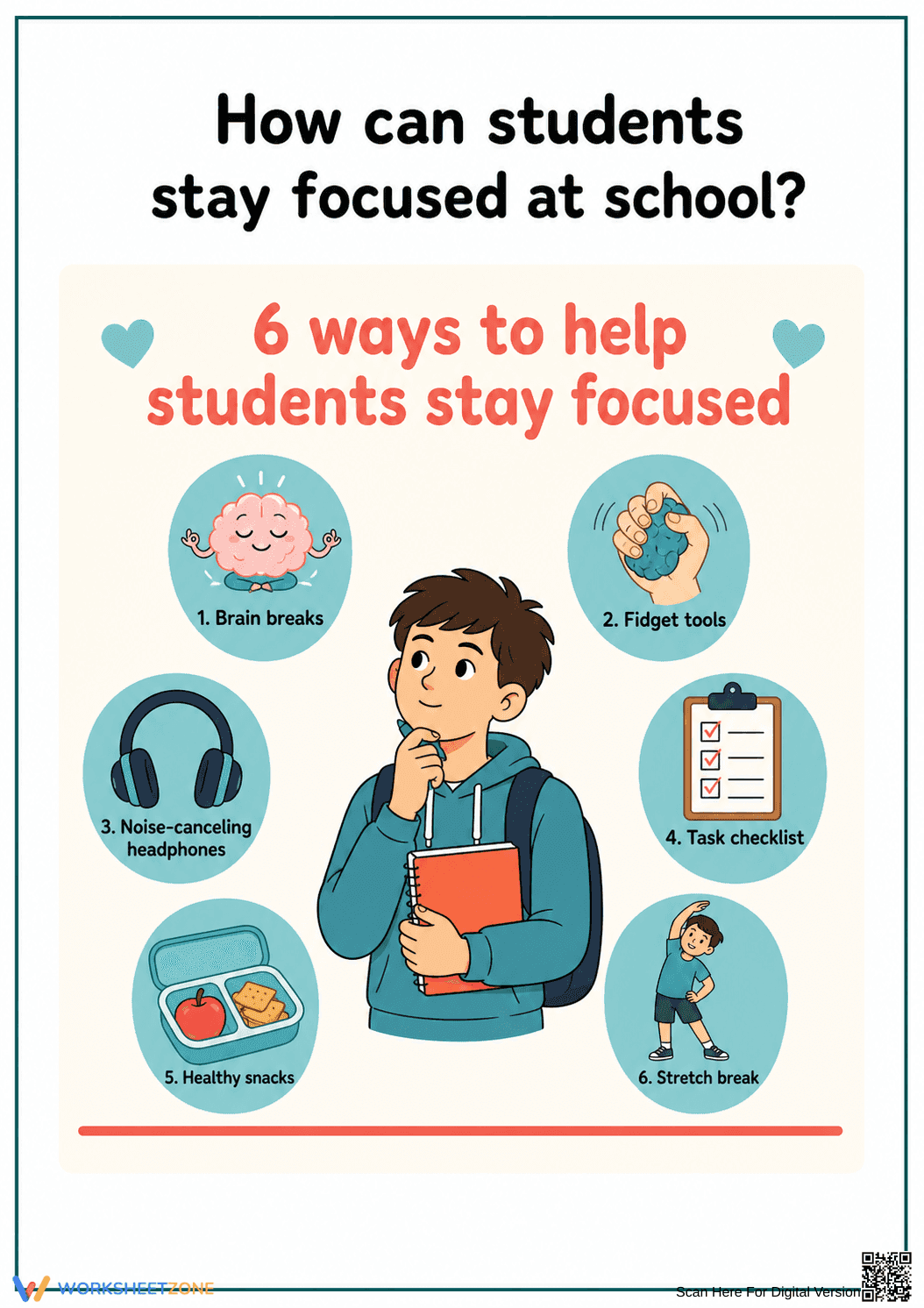

Focus Strategies Poster | Grade 5-7 Printable
Paste this activity's link or code into your existing LMS (Google Classroom, Canvas, Teams, Schoology, Moodle, etc.).
Students can open and work on the activity right away, with no student login required.
You'll still be able to track student progress and results from your teacher account.
This visual resource helps middle school students identify and utilize effective self-regulation tools to maintain attention during class. By presenting six concrete strategies for staying on task, this poster empowers learners to take ownership of their academic habits and build independence in managing their daily classroom behavior.
At a Glance
- Grade: 5-7 · Subject: Social Skills
- Standard:
ASCA.B-SMS.7— Demonstrate effective coping skills when faced with a problem- Skill Focus: Self-regulation and focus
- Format: 1 page · 6 strategies · No answer key needed · PDF
- Best For: Classroom management and SEL
- Time: 5–10 minutes
This single-page infographic clearly outlines six practical tools students can use to sustain their attention and manage sensory needs. The visual guide features accessible illustrations for strategies including brain breaks, fidget tools, noise-canceling headphones, task charts, healthy snacks, and structured worksheets. The clean layout makes it an ideal reference point for students who need quick reminders about how to reset their focus without disrupting the learning environment.
Zero-Prep Workflow
Implementing this resource requires minimal effort.
- Print (1 minute): Download the PDF and print in color, or project it onto your smartboard.
- Distribute (1 minute): Hand out copies for binders or display in a calm-down corner.
- Review (3 minutes): Discuss the six tools, establishing expectations for use.
Total teacher prep time is under two minutes, making it a perfect addition to a sub plan.
Standards Alignment
This resource aligns with ASCA.B-SMS.7: Demonstrate effective coping skills when faced with a problem. It also supports general self-management competencies by encouraging students to monitor their own engagement and select appropriate interventions. Both standard codes can be copied directly into lesson plans, IEP goals, or district curriculum mapping tools.
How to Use It
Introduce this poster during the first weeks of school as part of your direct instruction on classroom routines and expectations. It serves as an excellent visual anchor when discussing self-advocacy. Alternatively, use it during individual student check-ins when a learner is struggling to complete assignments. As a formative assessment observation tip, watch which tools students gravitate toward during independent work time to better understand their sensory and cognitive needs. Expected completion time for a review session is 5 to 10 minutes.
Who It's For
This poster is designed for upper elementary and middle school students, particularly those in grades 5 through 7. It is highly beneficial for neurodivergent learners, including students with ADHD or sensory processing differences, who require explicit instruction in self-regulation. Pair this visual guide with a direct instruction lesson on executive functioning or a dedicated classroom calm-down kit to maximize its effectiveness.
Explicitly teaching self-regulation strategies is a critical component of middle school social-emotional learning. When students understand how to apply the ASCA.B-SMS.7 standard to demonstrate effective coping skills when faced with a problem, they experience fewer behavioral disruptions and higher academic engagement. According to a RAND AIRS 2024 report on classroom management interventions, providing students with a menu of acceptable focus tools—such as brain breaks, fidgets, or task charts—significantly reduces off-task behavior and increases student autonomy. By displaying these six strategies visually, educators reduce the cognitive load required for students to remember their options during moments of frustration or fatigue. This proactive approach to behavior management shifts the dynamic from teacher-directed correction to student-led self-monitoring, fostering a more supportive and productive classroom environment for all learners.


