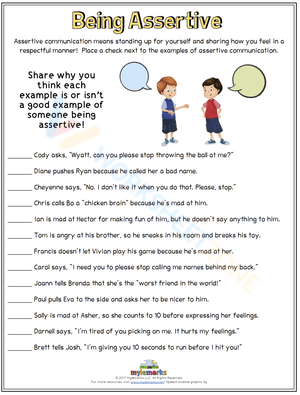
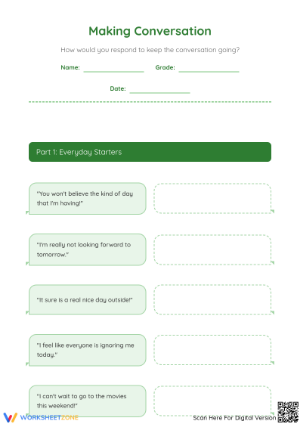
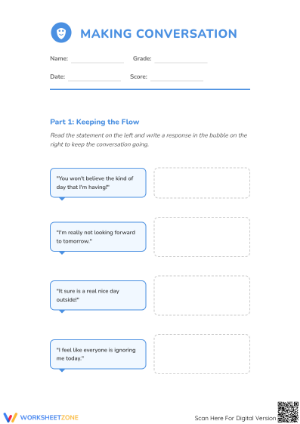
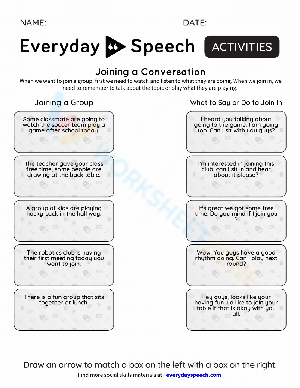
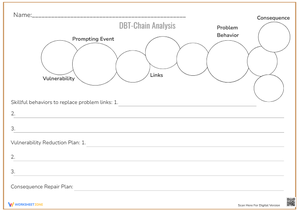
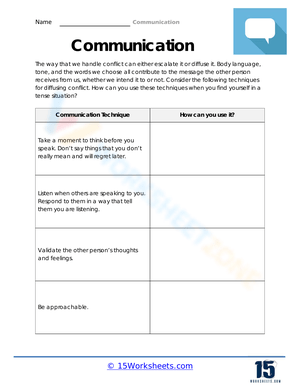
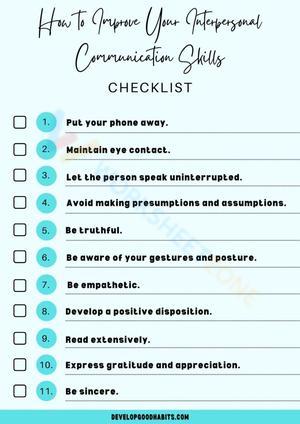
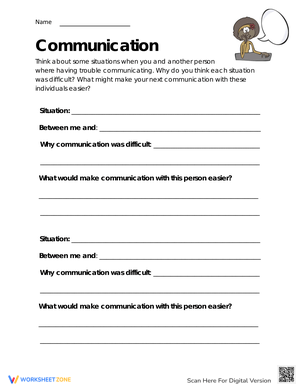
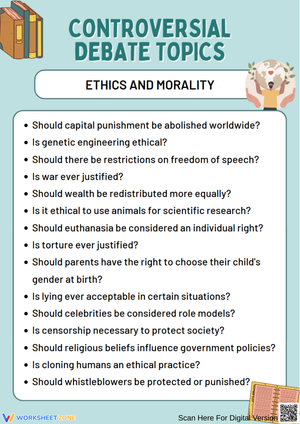
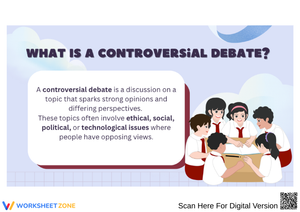
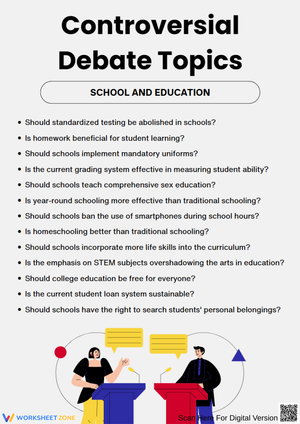
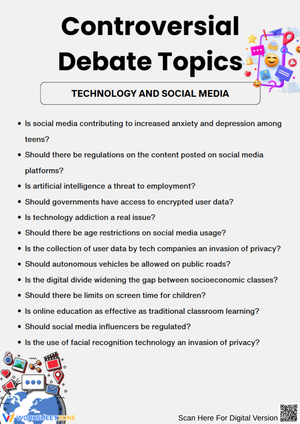
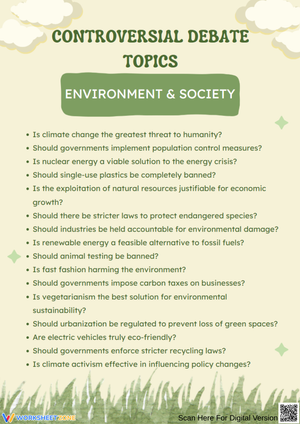
These 6th grade teaching communication skills worksheets pdf resources target the specific moves sixth graders are expected to make in academic discussion — paraphrasing a peer's point, posing a follow-up question, and disagreeing with reasoning rather than volume. Each worksheet gives students one behavior to practice at a time, which keeps the instruction concrete enough to transfer into live conversation. Teachers reach for this set in ELA, advisory, and small-group behavior support because the format holds up across all three settings without modification.
The Specific Skills These Worksheets Build
Sixth grade is the year when "participate in discussion" stops meaning "raise your hand" and starts meaning something considerably more precise. Students at this level are expected to listen actively, take turns without shutting others out, paraphrase before responding, ask questions that sharpen meaning, and present their own ideas in a sequence others can follow. Each worksheet in this set isolates one of those behaviors so teachers can address the exact gap slowing their class down rather than reteaching broad discussion rules the class already nominally knows.
- Active listening — tracking a speaker's main idea, not just waiting for a turn
- Turn-taking and discussion stamina during partner and small-group exchanges
- Paraphrasing a peer's point before adding a response
- Asking follow-up or clarifying questions when meaning is unclear
- Respectful disagreement backed by evidence or specific reasoning
- Organizing ideas into a clear sequence for partner, group, or whole-class talk
A class that struggles to paraphrase does not need a lesson on presentation order. A class that shuts down during disagreement needs targeted work on respectful pushback, not a general review of communication habits. Separating these behaviors into individual worksheets makes that kind of targeted instruction practical during a normal class period.
Frequent Mistakes Students Make That These Worksheets Help You Catch
The most common error pattern at this grade level is not what most teachers expect. Students often fail at the transition point between listening and responding — not during the first share. A student hears a partner correctly, may even nod along, and then immediately pivots to their own idea without paraphrasing, connecting, or questioning. The conversation looks active but is functionally two separate monologues. Worksheets that break listening and responding into visible sequential steps — listen, restate, then respond — give teachers a much sharper picture of where the breakdown is actually happening.
A second pattern involves sentence frames. When teachers supply frames like "I agree because..." or "I want to add to what you said...", some students treat the frame as a script to complete rather than a genuine communication tool. They fill in the blank without understanding why the frame exists. Worksheets that include a brief reflection prompt — asking students to explain why they chose a particular phrase — make the purpose of the frame explicit rather than decorative.
Disagreement is its own challenge. Students who are comfortable agreeing with a partner will go quiet or deflect the moment they actually hold a different view. The social cost of visible disagreement in sixth grade is real. Worksheets that ask students to commit to a contrary position in writing before any live conversation reduce that avoidance — they have already said it on paper before they have to say it aloud to a peer.
Building These Worksheets Into Daily and Weekly Routines
The most effective use of a 6th grade teaching communication skills worksheets pdf set is short-cycle rehearsal immediately before a discussion task. A five- to eight-minute window — before literature circles open, before a Socratic seminar begins, or at the start of advisory — gives students one focused prompt to complete with a partner. They identify the target behavior, practice it in writing, try it in a brief exchange, and carry the expectation into the longer conversation. That sequence takes less time than re-explaining discussion norms from scratch and produces noticeably more focused student talk.
Beyond pre-discussion warm-ups, these worksheets fit naturally into several recurring grade 6 slots:
- Bell ringers that set a single discussion norm before the period begins
- Advisory mini-lessons where the goal is one repeatable peer interaction skill
- Partner centers where students rotate through listening and response moves
- Exit tickets asking students to mark how consistently they used the target skill
- Small-group intervention where a counselor or support teacher uses one worksheet per session to build conversation stamina
Worth making explicit: these worksheets produce useful information only if students talk after completing them. If the worksheet stays on paper with no live conversation following it, teachers lose the most important feedback opportunity — whether a student can transfer a written rehearsal into real-time exchange. The worksheet starts the loop; the conversation closes it.
Standard Alignment
These worksheets connect directly to CCSS.ELA-LITERACY.SL.6.1, which asks sixth graders to engage effectively in collaborative discussions across a range of partners, topics, and texts. The standard breaks into four sub-standards that map cleanly onto skills in this set: preparing for discussion (SL.6.1a), following agreed-upon discussion rules and fulfilling defined roles (SL.6.1b), posing and responding to questions to clarify or extend understanding (SL.6.1c), and reviewing key ideas to show understanding of multiple perspectives (SL.6.1d). CCSS.ELA-LITERACY.SL.6.4 adds presentation clarity — sequencing ideas logically and selecting detail that supports the listener's comprehension.
The instructional implication is practical. Communication skill practice is not a detour from grade-level ELA work; it sits inside the standards. A teacher who spends eight minutes on a paraphrasing worksheet before a collaborative text discussion is addressing SL.6.1c and SL.6.1d while also building the habits that make the literary conversation more productive. Advisory and SEL applications share those same standards-connected behaviors, so using these resources across contexts reinforces the same small set of moves rather than fragmenting instruction across the week.
Adjusting the Set for a Range of Learners
Students who need more support benefit when the worksheet includes sentence stems alongside the open prompt. Instead of a blank that reads "Restate your partner's idea in your own words," a more supported version offers three possible starts — "My partner said...", "What I heard was...", "If I understood correctly..." — and asks the student to complete one. That structure reduces the cognitive demand of producing new language while still requiring genuine listening comprehension rather than copying.
Students who are ready to push further can treat the same worksheet as a starting position rather than a finished task. After completing the written prompts, those students can extend a listening-and-response exercise into a short spoken presentation, turn a disagreement prompt into a structured mini-debate with a partner, or write a reflection on which communication move cost them the most effort and why. No additional materials are needed — the worksheet becomes an entry point into a harder version of the same skill.
In social-skills groups or behavior intervention settings, committing to one worksheet per session — and returning to the same format across two or three sessions — builds more durable habits than introducing a different skill each time. Students in those groups often need the predictability of a familiar routine as much as they need the skill instruction itself.
Frequently Asked Questions
What communication behaviors does this set target?
Each worksheet focuses on one observable move: active listening, paraphrasing, turn-taking, asking follow-up questions, sequencing ideas for presentation, or disagreeing respectfully with evidence. The behaviors are drawn from grade-level speaking and listening expectations and from the patterns we see most consistently in actual sixth-grade classroom discussion.
How do these resources fit into advisory or SEL blocks?
Because each worksheet addresses one behavior at a time, they slot cleanly into advisory mini-lessons, check-in routines, or peer interaction practice without requiring a full lesson plan rebuild. A teacher running a 15-minute advisory block can use one worksheet to model the target skill, practice it with a partner, and close with a brief reflection — that's a complete instructional loop in a short window.
How do these worksheets connect to ELA speaking and listening standards at Grade 6?
The tasks in this set connect to CCSS.ELA-LITERACY.SL.6.1 (collaborative discussion) and SL.6.4 (presenting claims and findings clearly). Teachers using 6th grade teaching communication skills worksheets pdf resources during ELA can count them toward speaking and listening instruction without treating them as supplemental material separate from the curriculum.
Can these support students receiving social-skills or behavior intervention?
They work well in those settings because expectations are visible, repeatable, and easy to model. A support teacher or counselor can return to the same worksheet across multiple sessions, gradually reducing guided support as students internalize the behavior. The focused format means students spend their energy on actual conversation practice rather than decoding directions. When teachers integrate 6th grade teaching communication skills worksheets pdf resources into behavior plans, they can point to a specific, named skill on the worksheet rather than giving vague feedback about needing to "communicate better."












 Interactive Worksheet Maker
 Quiz Maker
 Word Search Maker
 Crossword Puzzle Maker
 Word Scramble Generator
 Sentence Scramble Generator
 Handwriting Worksheet Generator
 Name Tracing Generator
 Fill In The Blank Generator