Advice to Youth Worksheets That Make 6th Grade SEL Practice Useful
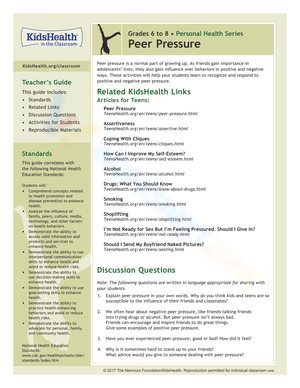
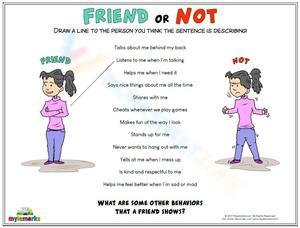
These advice to youth worksheets for 6th grade give teachers a fast, focused entry point for the kinds of decisions students actually face in middle school — group chat conflicts, pressure to copy work, being left out of a friend group — without turning a twenty-minute advisory block into a counseling session. Each worksheet centers on one realistic scenario and asks students to name the problem, write reasoned advice, and think through what happens next. The format travels across advisory, ELA, and health without losing instructional purpose in any of them.
What Students Practice When They Reason Through Advice
The core skill is not empathy in the abstract — it is the ability to read a social situation, separate what happened from how it felt, and then build a response that sounds respectful rather than reactive. Sixth graders often know the "right" answer to a character lesson, but their written advice reveals a different picture. Many students can say that honesty matters; fewer can write two sentences that are honest, kind, and actionable at the same time.
Across the set, students work on:
- Reading a short scenario closely enough to identify the actual problem, not just the surface complaint
- Distinguishing between feelings and facts before forming a response
- Supporting advice with a reason — not a rule, but a real consequence or another person's perspective
- Predicting short-term outcomes versus what happens if a situation continues without resolution
- Revising their own language when a first draft comes out preachy, vague, or one-sided
Advice to youth worksheets for 6th grade also give teachers a formative window that a behavior chart cannot. A student who writes "just ignore them" across every scenario is showing something different from a student who writes "ask what happened privately before assuming the worst." Those responses tell you more about social reasoning than a rubric score typically will.
Where Student Reasoning Tends to Break Down
The most predictable error is collapsing advice into a single command. Students write "Be nicer" or "Tell the teacher" without any reasoning attached, and they are genuinely surprised when a partner calls that thin. They have not yet learned that advice without a reason is just an opinion with authority borrowed from nowhere. These worksheets surface that gap fast because the prompts ask students to explain why their suggestion would work, not just name what it is.
A second pattern shows up in consequence thinking. Most sixth graders predict one step forward — "if she apologizes, the friendship will be fine" — but skip the conditional layer: what if the apology lands badly? What if the other person is not ready to receive it? Students who have not practiced multi-step thinking write advice that sounds reasonable in the best-case scenario but falls apart anywhere else. Prompts like "What could go wrong with this advice?" push past that, and for many students it is the first time they have encountered that question in a structured way.
There is also a subtler tone problem that surfaces in scenarios about trust or honesty. Students occasionally write advice that is technically correct but would be devastating to hear: "You should have known better than to share that." That kind of response is all accountability and zero support. Teachers reading for reasoning quality should watch for it specifically — it appears most often when the scenario involves a mistake the student has probably made themselves, which means they are processing their own guilt rather than actually advising the person in the prompt.
When and Where These Worksheets Fit Into the School Week
The format earns its place as a consistent bell-ringer more than a standalone lesson. Ten minutes at the start of advisory, one scenario, individual writing, a two-minute partner share — that structure runs without prep once students know the routine. The writing is short enough that students who are not morning people still finish, and the scenario gives quieter students a text to point at instead of having to generate a topic cold.
For ELA, advice to youth worksheets for 6th grade fit naturally inside an opinion-writing unit. Teachers can ask students to underline the claim in their written advice, circle the reason, and mark where they considered consequences. That three-part annotation makes the response-writing standard visible in a text the student actually produced. The revision cycle is short enough to complete in one class period — students swap, evaluate whether a partner's advice would actually help the person in the scenario, and write one improvement sentence.
Health teachers have used the same worksheet during a unit on stress or self-management by shifting the closing question. Instead of "What would you say to this person?" the debrief becomes "What would make this advice harder to follow?" That change moves the task from peer coaching toward personal reflection without altering the worksheet itself.
One of the strongest moves available here: recycle one scenario from early in the year toward the end of the term, and ask students to write new advice without looking at their original response. Students see their own thinking change. A student who wrote "don't hang out with them anymore" in September often writes something considerably more considered in April. That growth is visible in a way that summative scores rarely capture.
What Makes a Scenario Worth the Instructional Time
Age-appropriate does not mean tame. Sixth graders are navigating real pressure — being tagged in something unkind, being told to stay quiet about a situation, deciding whether to speak up when a friend is being treated poorly. Worksheets that only address mild friction ("your group member forgot the poster supplies") miss the moment. The stronger resources stay close to the emotional territory students are actually in while keeping the language concrete and the decision realistic.
The scenarios that generate the most honest writing tend to involve competing loyalties: a student knows something that could hurt a friendship but is also the right thing to say. Those prompts work because there is no clean answer, and students know it. The worksheet is not asking them to pick the obviously correct choice — it is asking them to reason out loud about a genuinely hard one. That tension is what makes the writing real rather than performative.
One practical limit to keep in mind: scenarios that involve family crises or mental health warning signs belong to a different resource entirely. The advice format works when students can offer useful peer-level guidance. When a situation clearly requires adult intervention, that should be stated directly in the prompt — not left implied — so students learn that getting help is sometimes the most responsible answer available to them.
Tiering the Task When Your Class Has Mixed Readiness
Students who struggle with open-ended writing do better when each worksheet includes a response frame. "One step I would suggest is ___ because ___" is not limiting — it teaches structure that students can eventually drop once it is internalized. The blank keeps the thinking theirs; the frame prevents the response from stalling at the first line. Teachers should withdraw the frame after three or four uses rather than keeping it in place indefinitely, because the goal is independent reasoning, not permanent guided support.
Students who finish quickly and write strong first drafts benefit from a second-layer prompt: write advice for the opposite position. If they told the student to speak up, write the best case for staying quiet. That task is harder than the original because it requires arguing against their own instinct. It builds the kind of perspective-taking that separates considered social judgment from reflexive problem-solving, and it usually catches these students off guard in a productive way.
For students still developing English fluency, scenario vocabulary matters more than most teachers anticipate. Words like "confrontation," "accountability," or "digital footprint" can block comprehension before a student even reaches the reasoning task. Previewing three or four content words before distributing the worksheet — not during it — keeps language from becoming an obstacle to the thinking the activity is actually trying to develop.
Standard Alignment
These worksheets align to CASEL's Responsible Decision-Making competency, which includes identifying problems, analyzing situations, evaluating options, and reflecting on outcomes. For sixth grade specifically, the Relationship Skills competency is equally active — students practice communication and navigating social situations, both of which CASEL identifies as developing through repeated, guided practice rather than single-exposure instruction. Running one worksheet per week across a semester is the kind of distributed practice that social-emotional learning research consistently supports.
In ELA, each worksheet supports CCSS.ELA-LITERACY.W.6.1, which asks students to write arguments that introduce a claim, support it with relevant reasons and evidence, and acknowledge counterarguments. The advice structure maps directly to those demands: students state a position, draw support from the scenario, and address what might go wrong with their suggestion. Teachers who want to count these worksheets toward writing instruction do not need to stretch the alignment — it is already there.
Frequently Asked Questions
Can advisory teachers use these without any SEL training?
Yes. Each worksheet does the structural work — students have a scenario to read, questions to answer, and a clear format for writing reasoned advice. A teacher managing advisory alongside a full teaching schedule does not need a specialist background to run the routine. Having one debrief question ready ("Which advice in the room would actually be hardest to follow?") is enough facilitation for most groups.
How often should these worksheets come up in a rotation?
Once a week works well as a standing routine. Twice a week is reasonable during a focused unit on peer relationships, digital citizenship, or decision-making. Less than twice a month and the format never becomes efficient — students spend too much of each session relearning the routine rather than getting into the reasoning itself.
Do these worksheets work well in small counseling groups?
Advice to youth worksheets for 6th grade work especially well in that setting. A printed scenario reduces the pressure on students to generate topics on their own, which is one of the main barriers to honest conversation in a group. The worksheet gives the counselor a shared text to refer to, which keeps discussion from turning personal in ways that cause students to shut down before the conversation finds its footing.
How long should a scenario be?
Three to five sentences is the range that works at this level. Shorter and students lack enough detail to reason carefully. Longer and the task shifts into reading comprehension before it becomes a social reasoning task. Each worksheet in a well-designed set stays inside that window so students can focus their attention on what to say rather than on decoding what happened.
Clear All