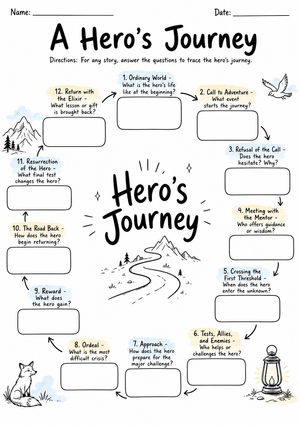
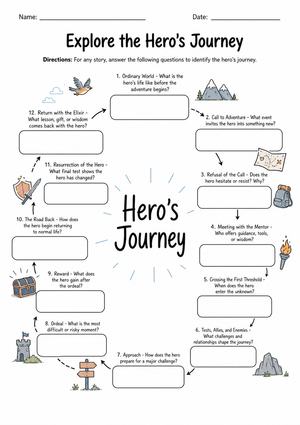
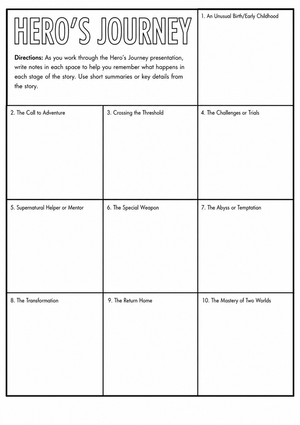
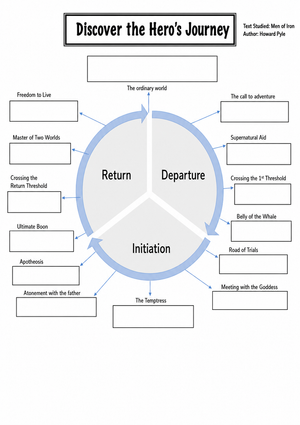
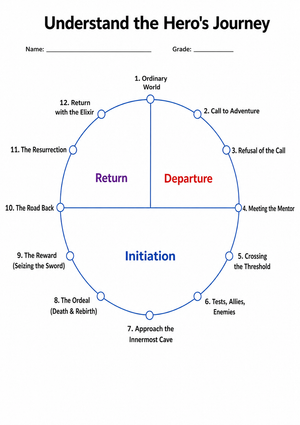
Teachers who search for 6th grade heros journey worksheets pdf are typically after something more targeted than a generic story map — an organizer that moves sixth graders past plot retelling and into the episodic analysis that grade 6 ELA actually requires. These worksheets give students a visible structure for tracking both turning points and character response, which frees class time for the interpretive discussion that simple retell tasks can't reach.
What Students Work Through in Each Worksheet
The central skill at sixth grade is moving from "this happened, then this happened" to "this event mattered because the protagonist made a choice that changed the direction of the story." A hero's journey format supports that shift by separating the narrative into labeled stages students can examine individually before connecting them to the larger arc.
Each worksheet asks students to work through a sequence of reading moves:
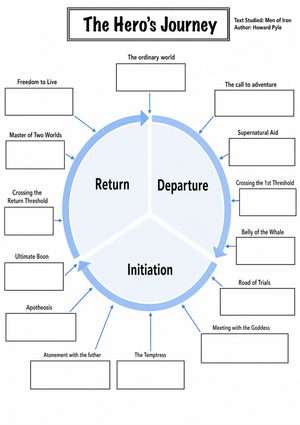
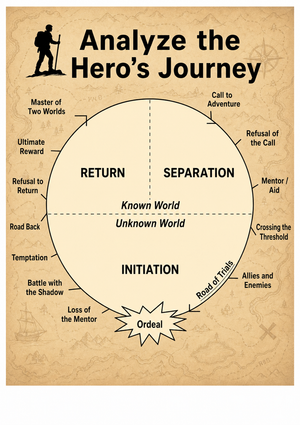
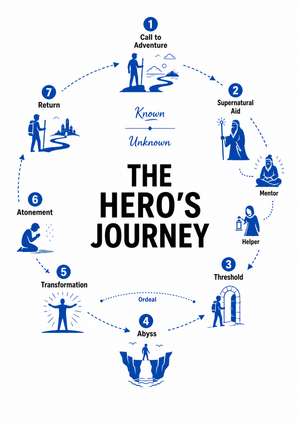
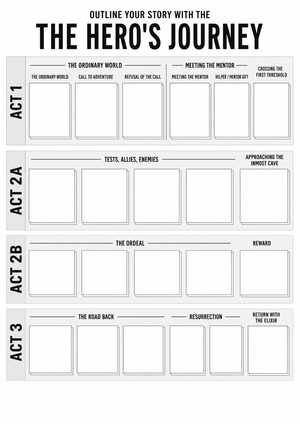
- Locating the ordinary world and identifying what disrupts it at the call to adventure
- Tracking trials, helpers, and setbacks across the middle stages of the story
- Explaining how the protagonist responds under pressure, not just what externally occurs
- Noting what the protagonist carries back by the end — new understanding, a revised belief, or a hard-won skill
- Connecting the arc of the journey to a central theme through a short written claim
That final move — theme connection — is what separates a useful organizer from a stage-labeling exercise. The strongest worksheets in this set include a synthesis prompt that pushes students to explain what the journey reveals about the protagonist's values or beliefs, not just that the story had a rising and falling action.
Stories and Sources That Hold the Pattern
One practical advantage of this format is how many text types carry the hero's journey structure without forcing the fit. Classical myths are a natural entry point — the stages are visible, the conflicts are clear, and the language works for whole-class annotation. Quest-arc folktales, adventure fiction, and fantasy novels all map onto the structure well. Film excerpts are worth including occasionally, not as a shortcut, but because they give students a chance to see how a director handles the threshold crossing differently than a novelist does. That comparison work sharpens analytical thinking in ways that single-text units often miss.
The structure does have limits worth naming. Stories with ensemble casts, nonlinear timelines, or flat character arcs make stage identification genuinely difficult. For sixth graders still building analytical stamina, a text where the protagonist faces a clear challenge sequence and arrives at an ending that shows change gives the worksheet the traction it needs. When the text doesn't fit the pattern, the worksheet reveals that quickly — which is itself a useful teaching moment.
Getting the Most From These Worksheets in Your ELA Planning
A 45-minute period has a natural rhythm for this material. The first 8 minutes work best as direct instruction on one stage — not defining the term in isolation, but showing students how to pull a specific moment from the text and explain what it reveals about the protagonist. The next 20 minutes hold well as partner or small-group work on two or three stages in the middle of the journey. The final stretch, roughly 10 minutes, should push toward synthesis rather than labeling: one written sentence about what changed for the protagonist and why it matters for the theme. That timing prevents the worksheet from becoming a box-filling exercise and makes it much easier to see during review who can move from identification to explanation.
When teachers use 6th grade heros journey worksheets pdf this way — as a three-phase thinking progression rather than a completion checklist — the follow-up discussion is noticeably more specific. Students arrive at whole-class conversation having already committed to evidence, which raises the quality of claims considerably. Each worksheet also works reliably as a bell ringer when students need to revisit assigned reading, in intervention groups narrowed to three or four major plot episodes, and in sub plans because the directions are concrete and the task is self-contained.
Student Errors That Show Up Consistently in This Work
The most persistent error at sixth grade is not mislabeling stages — it's treating every story event as equally significant. A student who lists the hero's first conversation with a mentor and the climactic battle under the same label has not yet learned to distinguish a minor complication from a turning point. The fix is to build a follow-up prompt directly into the worksheet: "What changed because of this event?" That question forces students to evaluate consequence, not just sequence.
The return stage produces a second, equally predictable problem. Students write "the hero goes home" and consider the section complete. What they miss — what actually matters for grade-level reading analysis — is explaining what the protagonist now carries back: revised understanding, a new capacity, or a hard-won belief. A single prompt like "What does the protagonist know now that they didn't at the start?" redirects attention toward transformation rather than location and prevents this from being a correction you make only after grading.
A third pattern worth watching: students conflate the road of trials with the climax because both involve difficulty. Asking which specific event forces the clearest and most irreversible choice — rather than which was simply the hardest — helps students sort those stages accurately and moves them toward the causal reasoning the standard requires.
Standard Alignment
Common Core ELA Reading Literature standard RL.6.3 asks sixth graders to describe how a plot unfolds in a series of episodes and explain how characters respond or change as the story moves toward a resolution. These worksheets address that standard directly — they ask students to locate the turning points, describe how the protagonist responds at each one, and connect the final stage to character transformation. RL.6.2, which covers theme, enters the picture at the synthesis stage, when students articulate what the journey reveals about the protagonist's core values or beliefs.
Teachers sorting through 6th grade heros journey worksheets pdf for standards-aligned options will find this set fits naturally into a RL.6.3 instructional sequence. Each worksheet asks for evidence at every stage rather than simple identification, which means a completed organizer gives teachers a concrete record of whether a student can connect plot episodes to character change — the exact analytical move RL.6.3 targets. The ReadWriteThink framework for hero myth study reinforces the same instructional logic: students who can name the call, the trials, and the return are better prepared to discuss why those parts matter, not just that they occurred.
Making These Worksheets Work Across Reading Levels
For students who need more guided support, narrowing the task to three stages — the call to adventure, the most significant trial, and the return — keeps the analysis intact without overwhelming a student who struggles with sustained close reading. Adding a sentence stem like "This stage matters because..." directs attention toward interpretation without substituting your thinking for theirs.
On-level readers work well with the full stage sequence and open-ended evidence prompts. For students who finish early, the most productive extension is comparison: ask them to choose a hero from a different text and explain how that character handles the same stage differently. That task requires applying the same analytical vocabulary to new material, which is more genuinely rigorous than adding more boxes to fill in. It also generates real material for whole-class discussion if you want to bring everyone together at the close of the period.
Frequently Asked Questions
What is a hero's journey worksheet for sixth grade?
A hero's journey worksheet at this grade level is a printable or digital organizer that helps students map the major stages of a narrative, track how the protagonist responds to challenges, and connect those responses to theme. Teachers who download 6th grade heros journey worksheets pdf in this set get a format that works across myths, novels, and selected film scenes without requiring a separate organizer for each text type. The best versions ask for short, evidence-based notes at each stage rather than simple matching, and they end with a synthesis prompt that moves students toward interpretation rather than identification.
How do these worksheets fit into a standard ELA unit?
They work at multiple points in a unit. Some teachers use each worksheet during a first read to keep students oriented to the structure. Others wait for a second read, when students are better positioned to explain why a particular trial matters rather than just noting that it occurred. Either approach is workable — the key difference is whether you want the worksheet to build comprehension or assess it. Second-read applications generally produce cleaner evidence of analytical thinking.
Can I use these worksheets with myths, novels, and film?
Yes, and that flexibility is one of the practical strengths of the format. Classical myths, quest folktales, fantasy novels, and adventure fiction all fit. Film excerpts work too, particularly when you want students to compare visual and written storytelling choices. The consistent requirement is that the text needs a protagonist who faces a visible challenge sequence and arrives at an ending that shows genuine change. Stories without that arc make stage identification more guesswork than analysis.
How is a hero's journey organizer different from a standard story map?
A standard story map records events in order — beginning, middle, end. A hero's journey organizer asks students to evaluate why each stage matters, how the protagonist changed because of it, and what the arc of the journey suggests about a larger theme. That difference is not cosmetic. Sixth graders who work through this format regularly develop a habit of reading for cause and consequence rather than sequence alone, which transfers to analytical writing and discussion tasks across the rest of the year.












 Interactive Worksheet Maker
 Quiz Maker
 Word Search Maker
 Crossword Puzzle Maker
 Word Scramble Generator
 Sentence Scramble Generator
 Handwriting Worksheet Generator
 Name Tracing Generator
 Fill In The Blank Generator