Why 4th Grade Measurement Worksheets Need to Target Unit Conversion
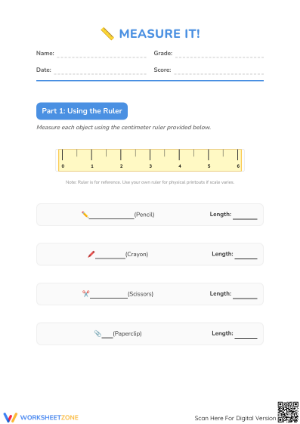
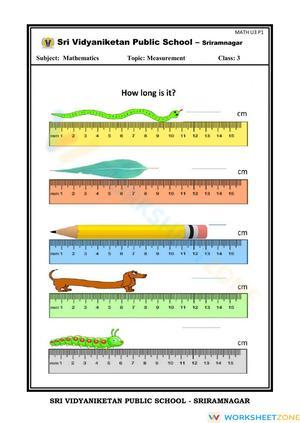
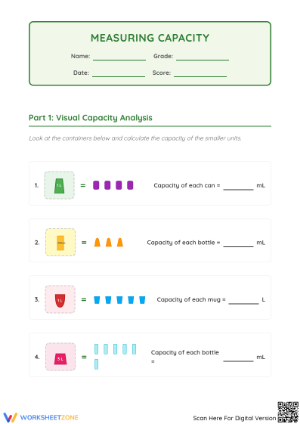
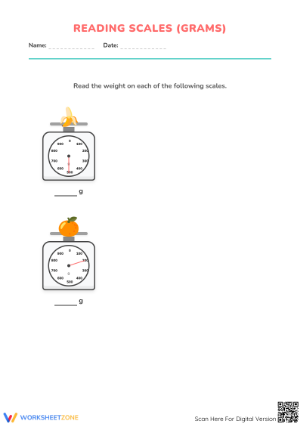
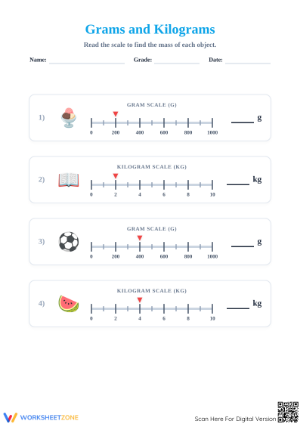
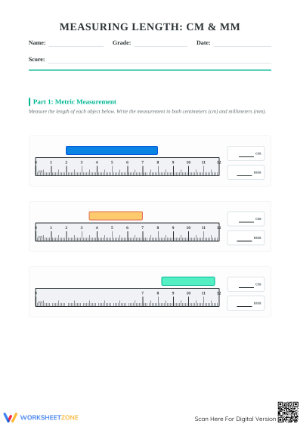
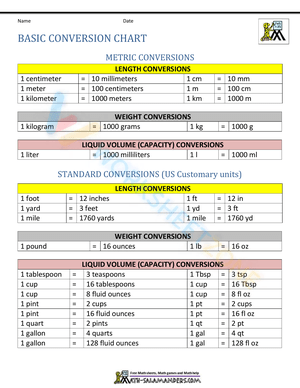
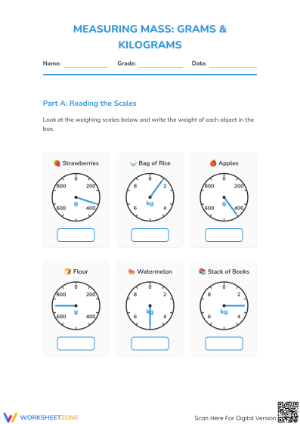
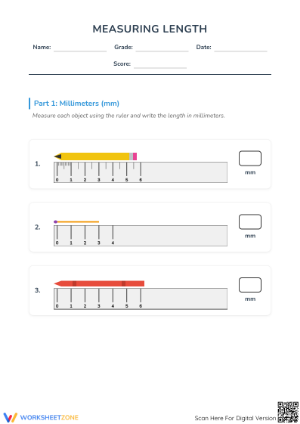
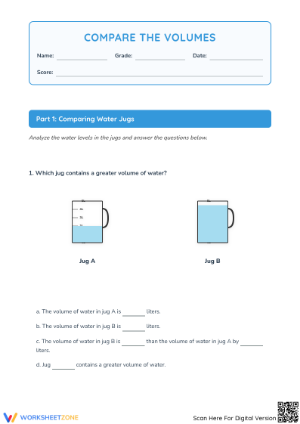
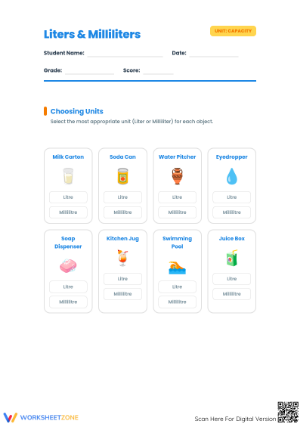
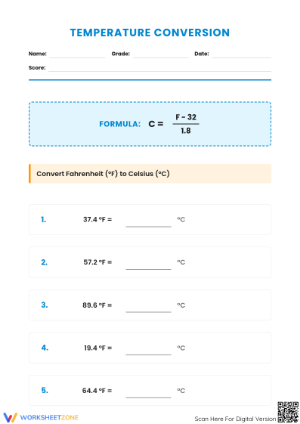
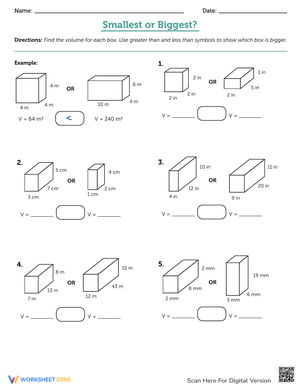
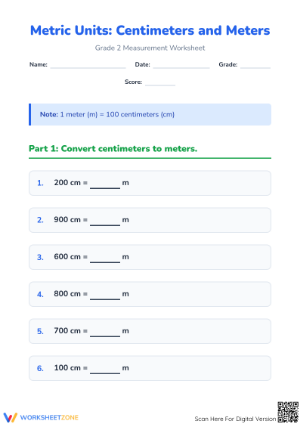
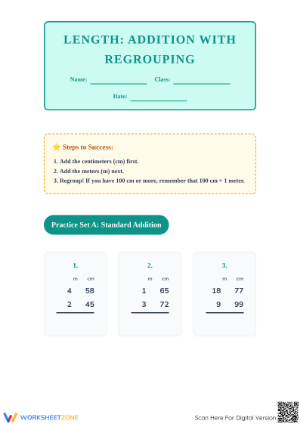
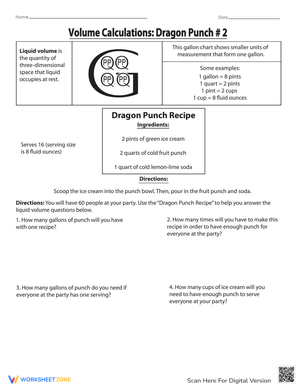
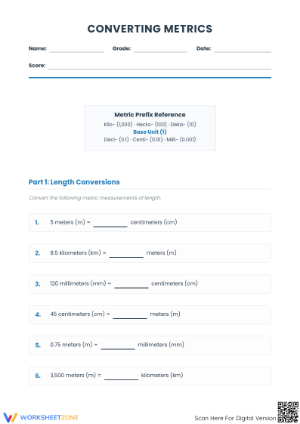
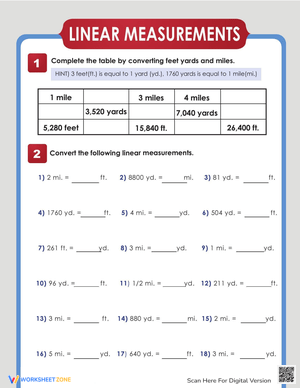
Grade 4 measurement work centers on CCSS.MATH.CONTENT.4.MD.A.1, which asks students to know the relative sizes of measurement units within one system and to express larger units in terms of smaller units. That means worksheets built for this grade should move past simple estimation and into structured conversion tasks involving km, m, and cm, kg and g, lb and oz, l and ml, and hr, min, and sec.
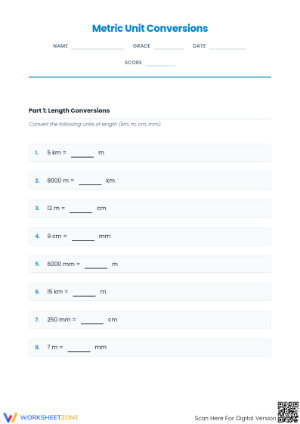
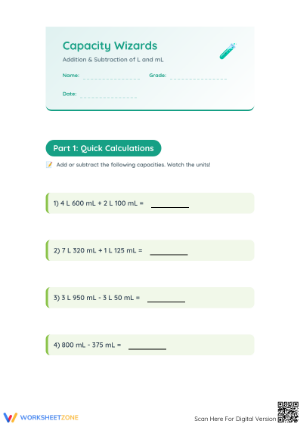
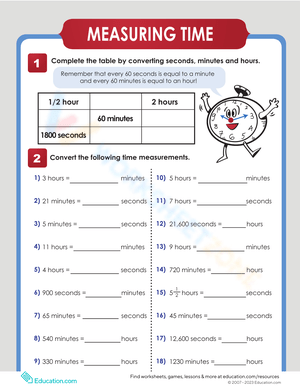
A worksheet that only asks students to circle the larger unit or match a picture to a measurement is not doing the job for fourth grade. Students at this level need repeated practice building two-column conversion tables, where they record a measurement in one unit and then calculate the equivalent in another unit. This is the anchor skill for everything else in the 4.MD domain, so any set of worksheets you choose for this grade should lead with it.
Classroom Implementation
For daily instruction, conversion table worksheets work well as short warm-ups or exit tickets, since a single table with three or four rows can be completed and checked in under five minutes. This gives a quick formative read on whether students understand the direction of the conversion before moving into longer word problems.
- Use a short conversion table as an entry ticket before introducing a new unit pair, such as pounds and ounces.
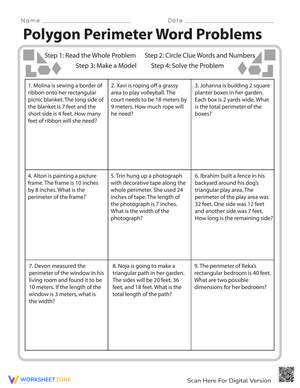
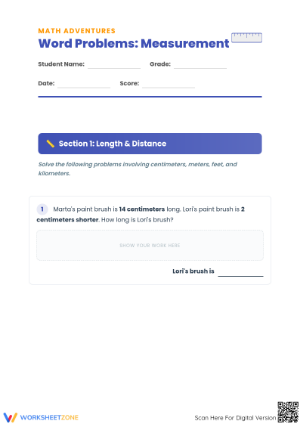
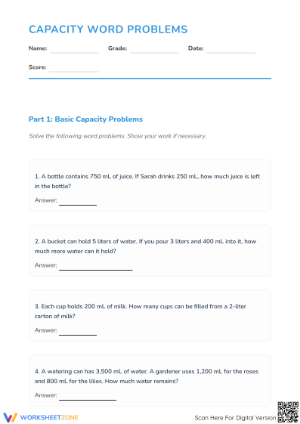
- Reserve multi-step word problem worksheets for small-group intervention, where you can talk through the conversion step before the arithmetic step.
- Pair line plot worksheets with a quick fraction review, since plotting fractional data depends on solid fraction placement skills.
- Use a station rotation model, with one station on conversion tables, one on word problems, and one on line plots, so students get repeated exposure to all three parts of the standard in a single class period.
- Save word problem worksheets that combine two conversions, such as feet to inches and pounds to ounces in the same problem, for enrichment groups who have already shown mastery of single-step conversions.
This kind of rotation also gives you a natural way to differentiate without creating separate materials from scratch. The same worksheet set can serve as review for students still building conversion fluency and as enrichment for students ready to combine conversion with more complex word problems.
Frequently Asked Questions
1. What measurement units should 4th graders be able to convert between?
Fourth graders should be able to convert within a single measurement system, including km to m and m to cm, kg to g, lb to oz, l to ml, and hr to min to sec, per CCSS.MATH.CONTENT.4.MD.A.1.
2. How do 4th grade measurement worksheets differ from earlier measurement practice?
Fourth grade worksheets add structured two-column conversion tables and formal unit relationships, along with early angle concepts, moving beyond the estimation-based tasks used in earlier grades.
3. How can teachers use measurement worksheets for small-group intervention?
Use conversion table worksheets to check unit fluency first, then move to multi-step word problem worksheets in small groups so you can talk through the conversion step before students tackle the arithmetic.
4. What role do line plots play in 4th grade measurement standards?
Line plots let students display measurement data recorded in fractions of a unit, such as halves, quarters, and eighths, and then practice addition and subtraction using that plotted data.













 Interactive Worksheet Maker
 Quiz Maker
 Word Search Maker
 Crossword Puzzle Maker
 Word Scramble Generator
 Sentence Scramble Generator
 Handwriting Worksheet Generator
 Name Tracing Generator
 Fill In The Blank Generator