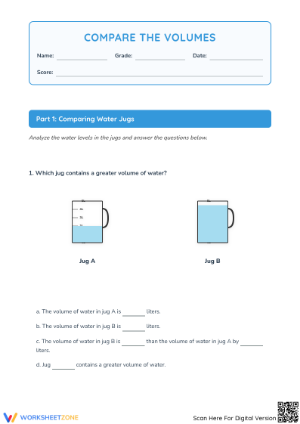
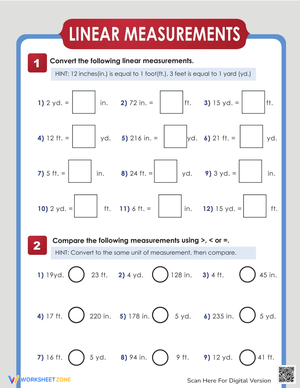
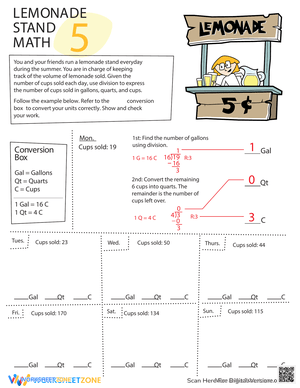
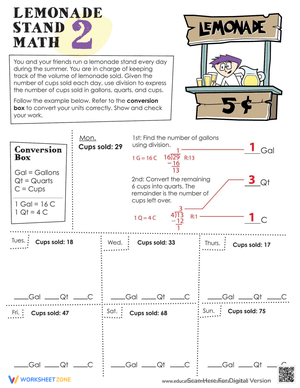
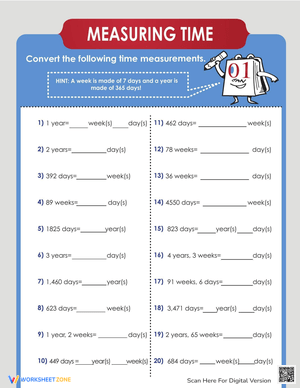
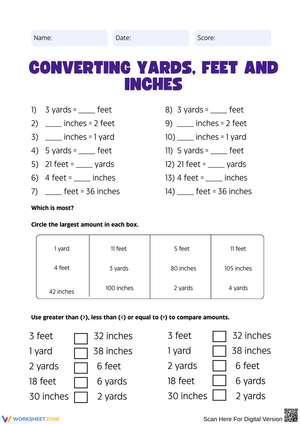
Comparing measurement worksheets give students repeated, low-stakes reps at this exact skill before it shows up buried inside a multi-step word problem. If you teach 4th grade math, you've likely seen students who can add and subtract confidently but freeze the moment a problem asks them to compare 3 feet to 40 inches.
These worksheets work best when they isolate the comparison skill first, then layer in the word-problem context. That sequencing matters more than most published materials acknowledge, and it's the reason a dedicated measurement-comparison set often outperforms a general measurement review packet for students who are still shaky on unit relationships.
What CCSS 4.MD.A.1 and 4.MD.A.2 Require of Your Students
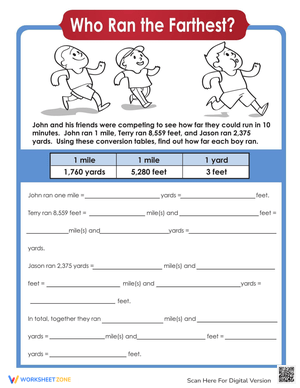
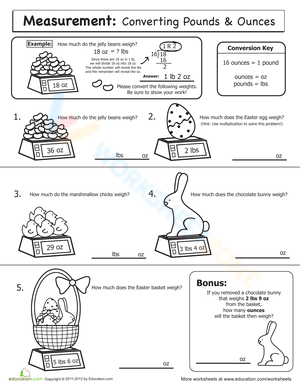
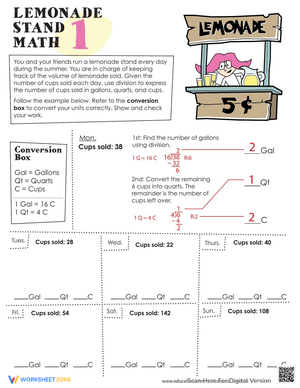
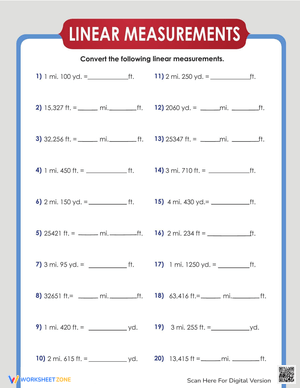
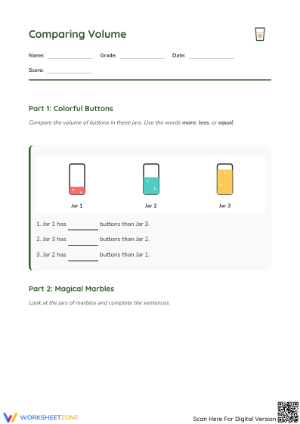
Two standards anchor this unit. CCSS.MATH.CONTENT.4.MD.A.1 asks students to know the relative sizes of measurement units within one system - kilometers, meters, and centimeters; kilograms and grams; pounds and ounces; liters and milliliters; hours, minutes, and seconds - and to express larger units in terms of smaller ones using a conversion table. CCSS.MATH.CONTENT.4.MD.A.2 then asks students to use the four operations to solve word problems involving distances, time intervals, liquid volumes, masses, and money, including problems that involve simple fractions or decimals.
A worksheet set that targets both standards should move from unit knowledge to applied problem solving in that order. Students who skip straight to word problems without first internalizing that 1 foot is 12 times as long as 1 inch tend to guess at operations instead of reasoning through them.
Building Conversion-Table Fluency Before Word Problems
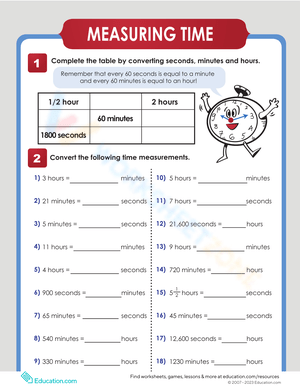
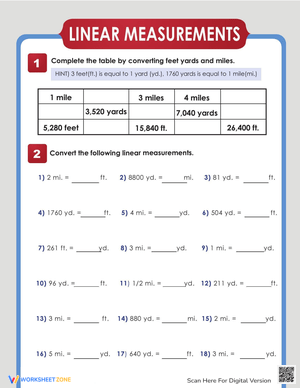
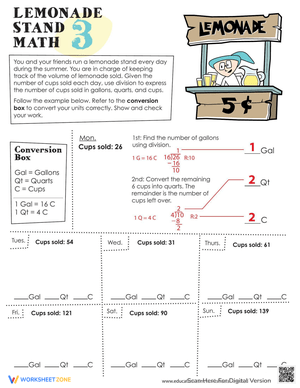
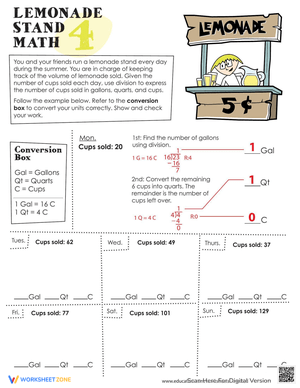
One of the most useful features in a comparing measurement worksheet is a partially filled conversion table that students complete themselves. Generating pairs like (1, 12), (2, 24), and (3, 36) for feet-to-inches conversions forces students to notice the multiplicative pattern rather than memorize a single isolated fact. This table-building habit transfers across every unit family students will meet this year.
In practice, most comparison errors in grade 4 classrooms don't come from weak arithmetic - they come from cross-unit confusion, where a student multiplies when they should divide because they've lost track of which unit is larger. Worksheets that require students to circle or label the larger unit before performing any calculation cut this error type down noticeably, because the labeling step forces a moment of reasoning before computation begins.
Classroom Implementation
A practical weekly rhythm works well for most 4th grade classrooms: introduce one unit family with a conversion-table worksheet on day one, pair it with a small-group or partner comparison activity on day two, and move to a word-problem worksheet blending 4.MD.A.1 and 4.MD.A.2 by day three or four. Close the week with a short quick-check to confirm retention before starting the next unit family.
According to the Common Core State Standards Initiative's Grade 4 Measurement & Data domain, students must know that within one system, larger units convert to smaller ones through multiplication - for example, 1 foot equals 12 inches, so a 4-foot object measures 48 inches, a benchmark fact 4th graders apply across length, weight, and volume tasks.
Keep a running classroom anchor chart of the unit relationships from CCSS.MATH.CONTENT.4.MD.A.1 posted near your math area. Students who can reference it during independent work build fluency faster than those who have to hold every conversion in memory from day one.
Frequently Asked Questions
1. What measurement skills should 4th graders master before comparing units?
Students should already be comfortable measuring length, weight, and volume with standard tools, and should understand place value well enough to multiply and divide by 10, 12, or other conversion factors without a calculator.
2. How do these worksheets align to CCSS 4.MD.A.1 and 4.MD.A.2?
Worksheets built around unit comparison and conversion tables target 4.MD.A.1 directly, while sets that embed those conversions inside distance, time, volume, mass, or money scenarios extend into 4.MD.A.2's word-problem expectations.
3. How can teachers use comparing measurement worksheets for intervention groups?
Isolate one unit family at a time, keep a conversion table visible during early sessions, and use short, focused worksheets rather than long mixed sets so struggling students can build the reasoning pattern before adding complexity.
4. What's the difference between comparing units and converting units in 4th grade math?
Comparing asks students to judge which measurement is larger or smaller across units, such as 3 feet versus 40 inches, while converting asks them to compute an equivalent value in a different unit, such as changing 4 feet into inches.
5. How often should teachers assess measurement comparison skills in grade 4?
A short quick check after each new unit family, followed by a longer mixed-problem assessment at the end of the measurement unit, gives enough data to catch gaps early without over-testing.













 Interactive Worksheet Maker
 Quiz Maker
 Word Search Maker
 Crossword Puzzle Maker
 Word Scramble Generator
 Sentence Scramble Generator
 Handwriting Worksheet Generator
 Name Tracing Generator
 Fill In The Blank Generator