


























Views
Downloads

Essential Metric Conversion Worksheet | Grades 4-7 Aligned
Paste this activity's link or code into your existing LMS (Google Classroom, Canvas, Teams, Schoology, Moodle, etc.).
Students can open and work on the activity right away, with no student login required.
You'll still be able to track student progress and results from your teacher account.
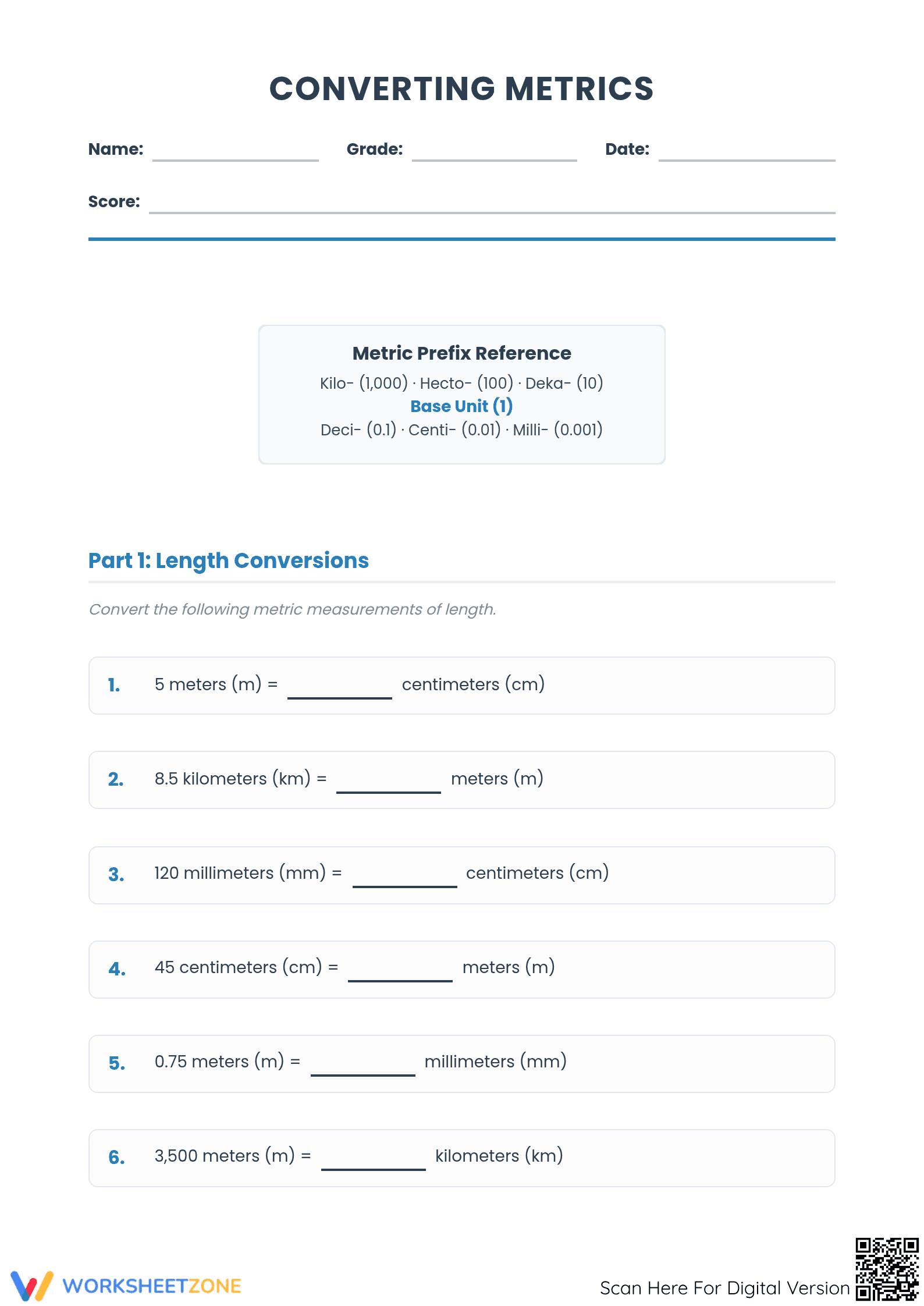
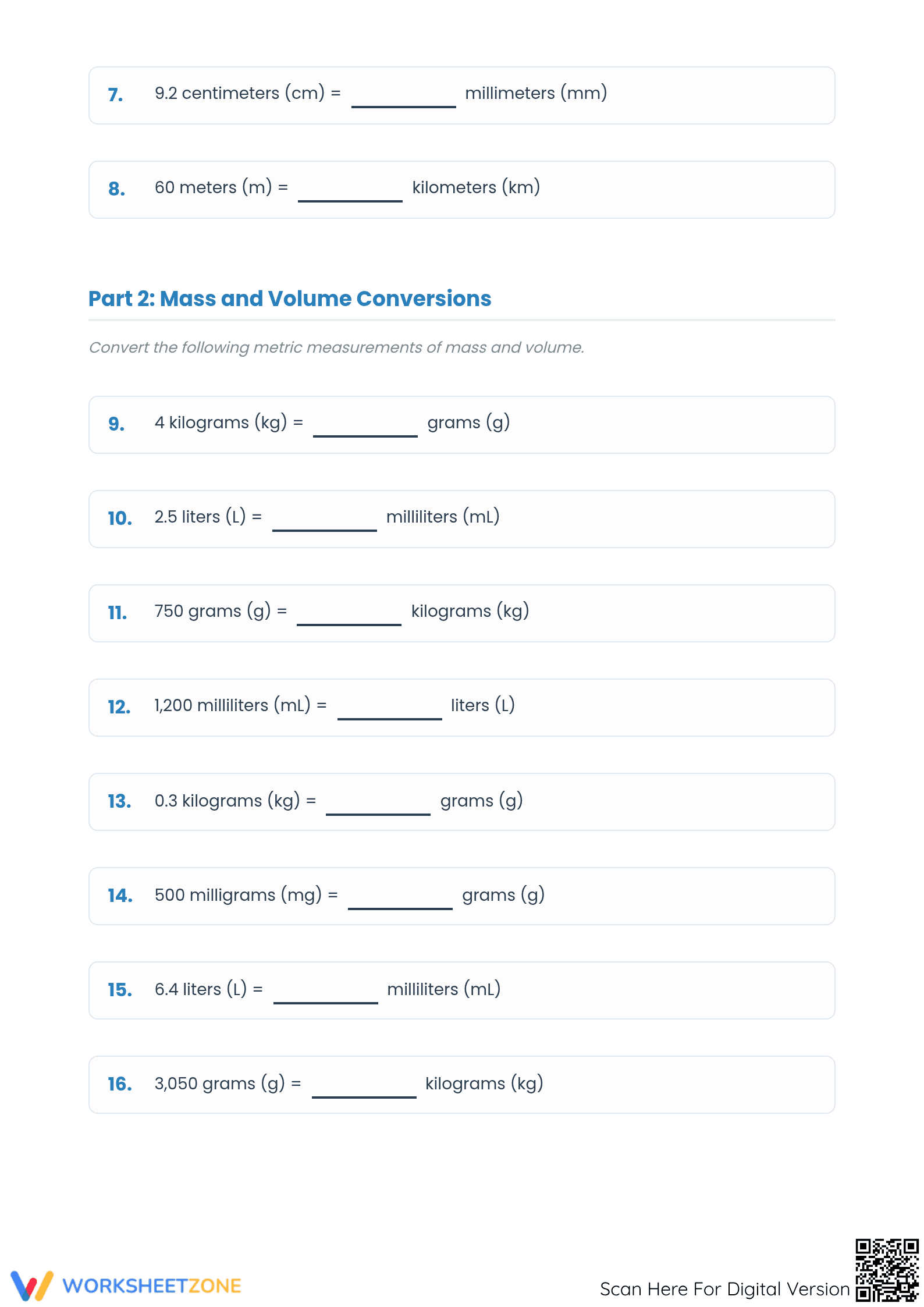
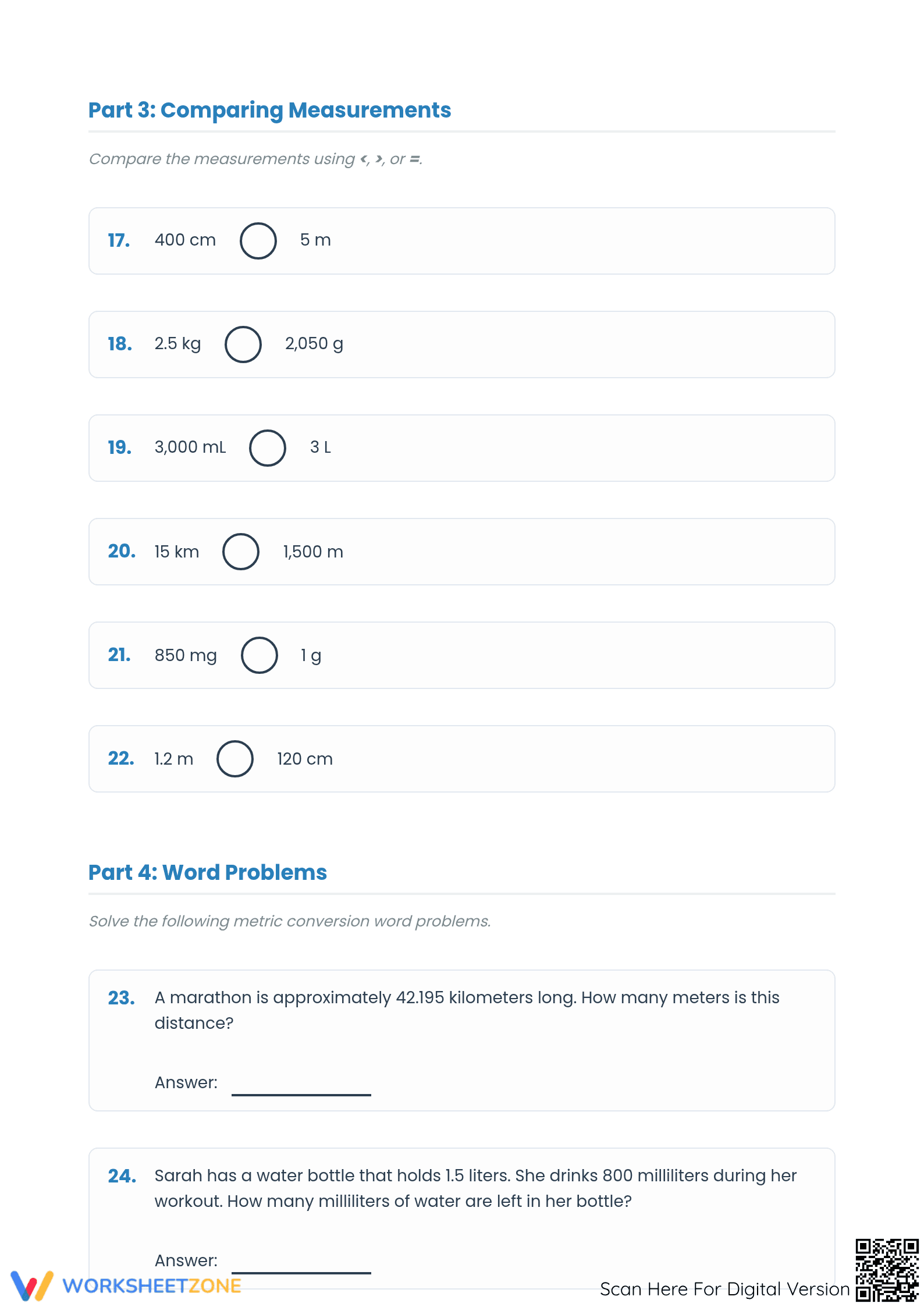
Students master the metric system through targeted practice in length, mass, and volume conversions. This comprehensive three-page worksheet facilitates a smooth transition between units like kilometers, meters, and millimeters using a built-in prefix reference guide. By solving 24 structured problems, learners build the computational fluency required to handle real-world measurement challenges with confidence.
At a Glance
- Grade: 5 · Subject: Mathematics
- Standard:
CCSS.MATH.CONTENT.5.MD.A.1— Convert among different-sized standard metric measurement units to solve multi-step problems- Skill Focus: Multi-unit metric conversions
- Format: 3 pages · 24 problems · Answer key included · PDF
- Best For: Independent practice and formative assessment
- Time: 25–35 minutes
This resource features four distinct parts designed to build mastery. It includes length conversions, mass and volume calculations, comparison tasks using inequalities, and high-level word problems. Students benefit from a clear metric prefix reference table on the first page, which acts as a scaffold for decimal shifts. The packet includes a full answer key for efficient grading and three pages of high-quality PDF content.
Zero-Prep Workflow
The zero-prep design allows teachers to implement this lesson in under two minutes. The workflow follows three simple steps: Print (60 seconds), Distribute (30 seconds), and Review (using the answer key). This streamlined process makes it an ideal choice for emergency sub plans or quick bell-ringer activities. The clear layout ensures students can work independently without constant teacher intervention.
Standards Alignment
The worksheet is strictly aligned to CCSS.MATH.CONTENT.5.MD.A.1: "Convert among different-sized standard measurement units within a given measurement system and use these conversions in solving multi-step, real-world problems." It also supports Grade 4 foundations in measurement scaling. Both standard codes can be copied directly into lesson plans, IEP goals, or district curriculum mapping tools.
How to Use It
Assign this worksheet during the "Independent Practice" phase of a measurement unit to solidify understanding of decimal movement. It serves as an excellent formative assessment tool; observe how students use the prefix guide to identify common errors in decimal placement. Expect most fifth-grade students to complete the 24 tasks within a 30-minute instructional block.
Who It's For
This packet is tailored for fifth-grade classrooms but provides excellent remediation for sixth graders or extension for advanced fourth graders. It pairs naturally with a metric unit anchor chart or a short direct instruction lesson on the powers of ten. The inclusion of word problems makes it suitable for students who have mastered basic computation and are ready for application.
The effective teaching of the metric system requires a balanced approach between procedural fluency and conceptual understanding of base-ten relationships. According to Fisher & Frey (2014), the use of scaffolded reference tools, such as the prefix guide included here, supports the gradual release of responsibility by providing temporary support during independent practice. Research indicates that students who regularly engage with multi-step conversion tasks, like the ones involving CCSS.MATH.CONTENT.5.MD.A.1 on this worksheet, develop higher levels of measurement sense and are better prepared for secondary-level science curriculum. By integrating computation with comparison and word problems, this resource ensures that the plain-English skill of converting metric units is grounded in rigorous application. This evidence-based design aligns with findings from ScienceDirect TpT Analysis regarding high-impact instructional materials that reduce cognitive load while maintaining academic rigor for diverse learner populations.


