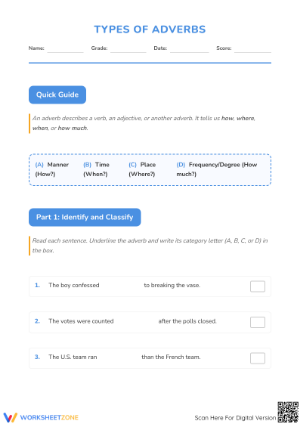
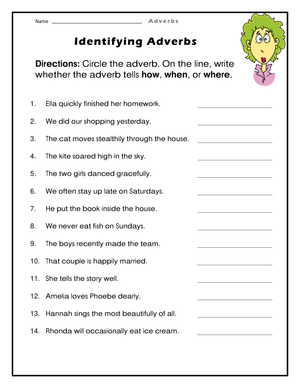
These 3rd grade verbs printable worksheets give teachers a ready set of focused exercises covering the full verb instruction arc of the third-grade Language strand — from action verb identification and irregular past tense forms to helping verbs, linking verbs, and tense consistency in multi-sentence student writing. Third grade is when this instruction genuinely gets complicated: students who spent first and second grade calling verbs "action words" now have to account for is, were, and has been. The set moves through that full range, from the most concrete identification tasks to the editing work that shows up in their narrative drafts.
What the Set Covers
Each worksheet targets a single concept, which makes them practical for unit sequencing as well as targeted pull-out review. The skills addressed across the set include:
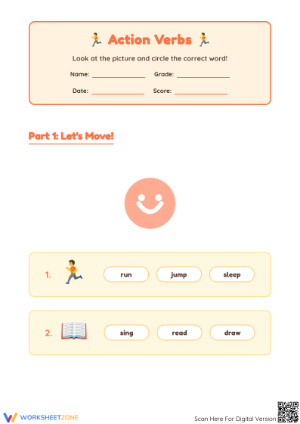
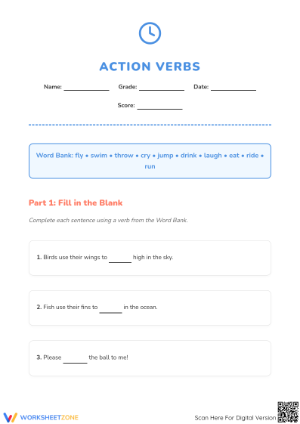
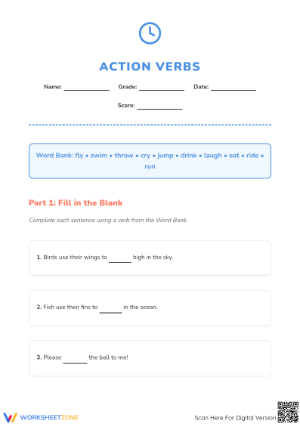
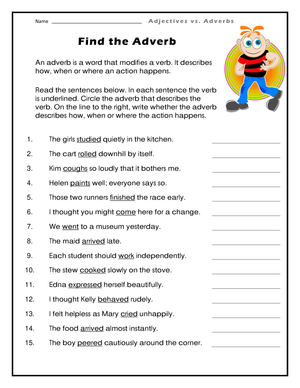
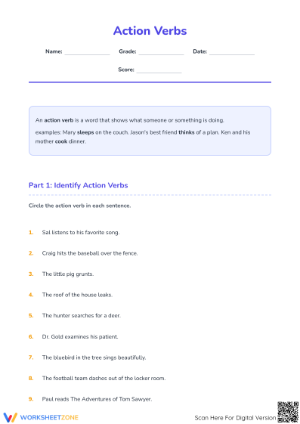
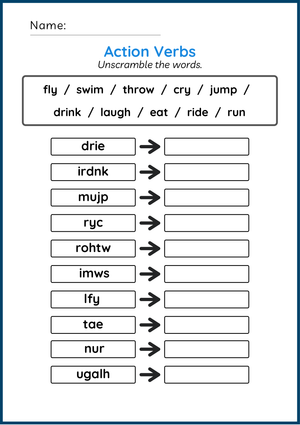
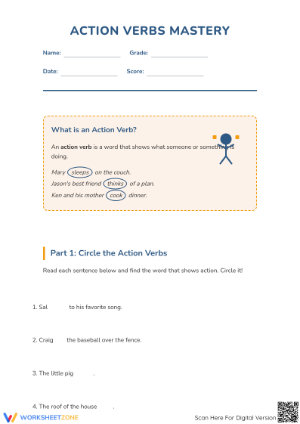
- Action verbs — identifying them in sentences, then replacing weak verbs with more precise alternatives using a guided word bank
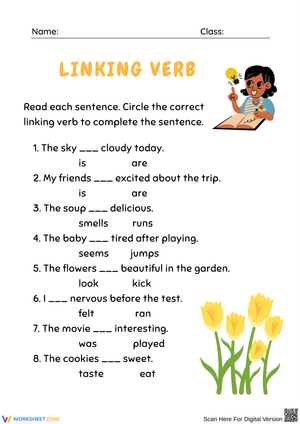
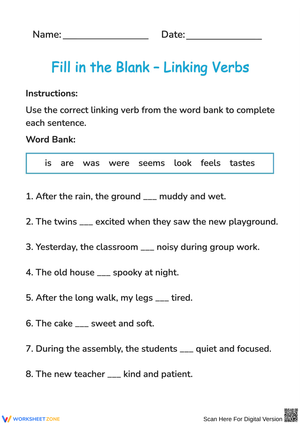
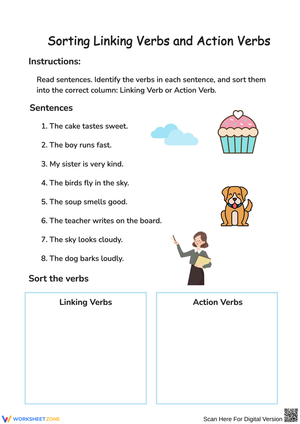
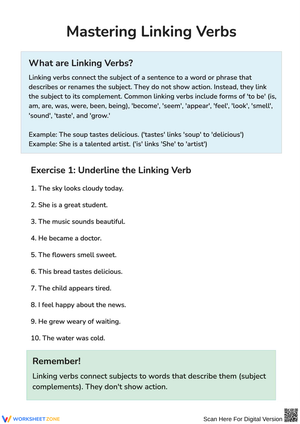
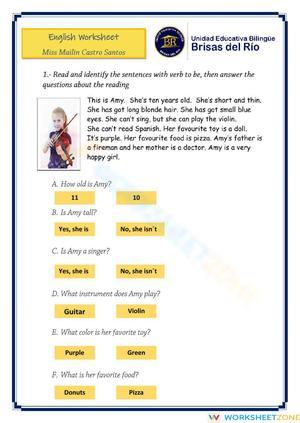
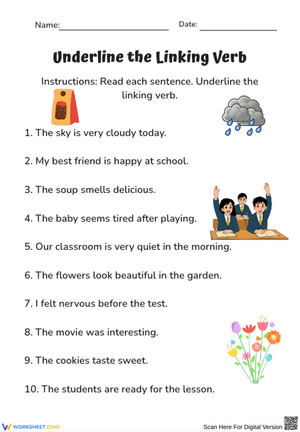
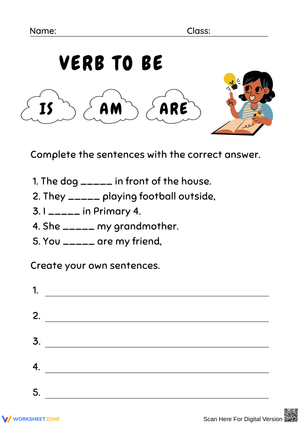
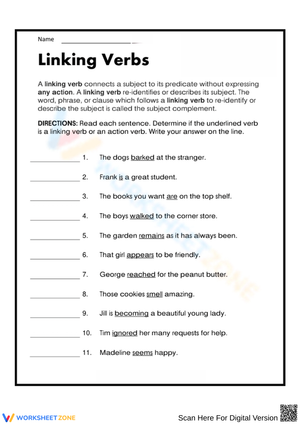
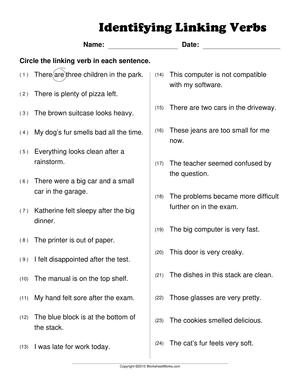
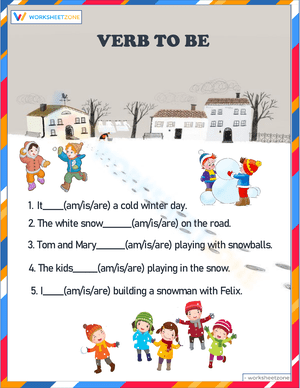
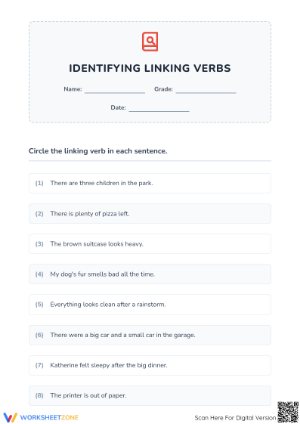
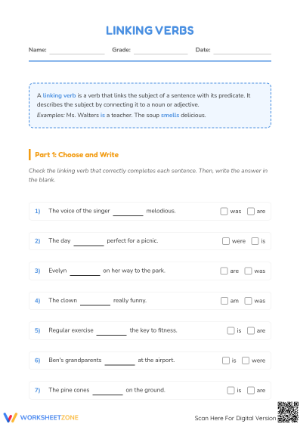
- Linking verbs — distinguishing am, is, are, was, and were from action verbs, and completing sentences with the correct linking form
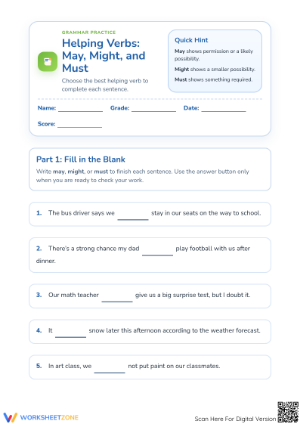
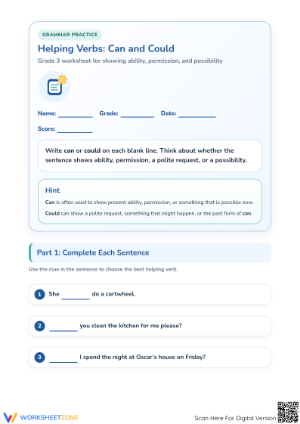
- Helping verbs — identifying the helping verb within a verb phrase and understanding how it shifts the timeline of an action (I run versus I will run versus I have run)
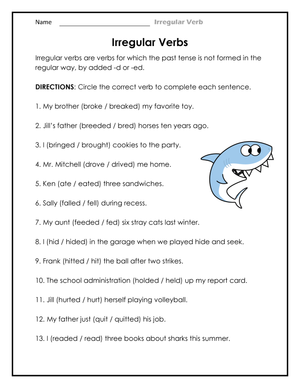
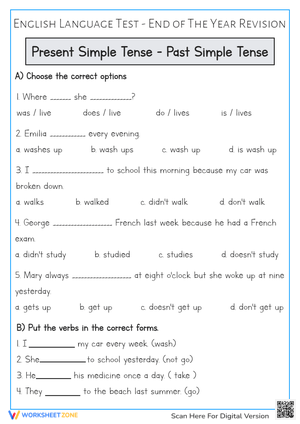
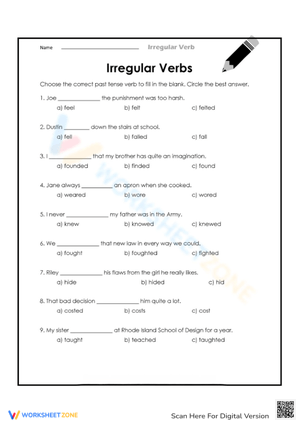
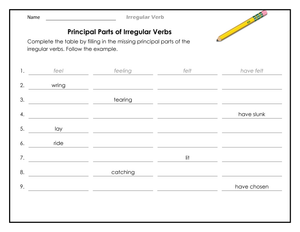
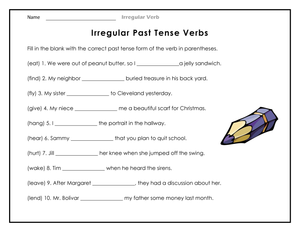
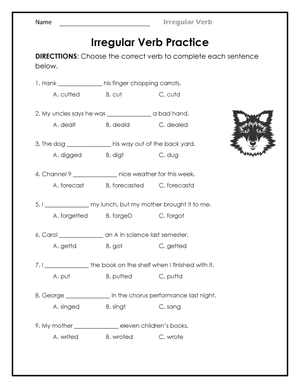
- Irregular past tense — fill-in exercises, sentence rewriting, and matching columns that address high-frequency irregular forms
- Tense consistency — editing short paragraphs that mix past and present tense, then rewriting them with one consistent tense throughout
What Makes Irregular Verbs the Most Demanding Part of This Unit
Unlike regular verbs, which follow a predictable -ed pattern students can apply automatically, irregular verbs demand memorization because there is no underlying rule. Go becomes went, see becomes saw, bring becomes brought — each form has to be learned on its own terms. The irregular verb worksheets address this by cycling through the same target words in different task formats. One worksheet asks students to fill in the blank in a sentence; another has them rewrite a sentence from present to past; a third presents matching columns connecting base forms to past forms. That variety in task type — rather than simply repeating the same exercise — builds the kind of flexible recall students need when they are writing a story and have to retrieve wrote without stopping to think about it.
The worksheets concentrate on the irregular verbs students encounter most often in third-grade chapter books and use most often in their own narrative writing: run/ran, give/gave, eat/ate, come/came, take/took, see/saw, write/wrote, say/said. Tying the practice to reading-level vocabulary means students start noticing the correct forms in context, which reinforces the written production tasks.
Mistakes That Surface Across Every Class
The single most consistent error with irregular verbs is overapplication of the -ed rule. A student who correctly writes walked and laughed will produce goed, comed, and bringed without hesitation because adding -ed is the logic they trust. The important instructional note is that this is not confusion — it is a generalization being applied too broadly. The correction is refinement, not reteaching the concept of past tense.
Linking verbs generate a different pattern. Many students interpret "find the verb" as "find the action," so they skip right past was and is and mark the nearest noun or adjective instead. The student who circles happy in She was happy has correctly identified the predicate adjective but missed the verb entirely. Number agreement is another reliable trouble spot: students write the dogs was barking because singular was feels like the default past form of be, regardless of the subject. The linking verb worksheets target both patterns — identification tasks catch the first error, and sentence-completion items with plural subjects surface the second.
With tense consistency, the pattern we see most often in student writing is a drift from past into present tense at a moment of narrative excitement. A student writing a story in past tense will shift to present when the action peaks — Then the dog runs out the door and I chase it down the street — because present tense feels urgent. The editing worksheets train students to underline every verb, check that they all carry the same tense, and rewrite the ones that don't. That explicit step-by-step process transfers directly to revision work on their own drafts.
Standard Alignment
Three CCSS Language standards for Grade 3 anchor the content of these worksheets. CCSS.ELA-LITERACY.L.3.1.A asks students to explain the function of verbs both generally and within specific sentences — the identification and analysis tasks across the set address this standard directly. CCSS.ELA-LITERACY.L.3.1.D requires forming and using regular and irregular verbs; the irregular past tense worksheets target this through high-frequency forms in varied production tasks. CCSS.ELA-LITERACY.L.3.1.E covers simple tense construction in present, past, and future — the helping verb and tense-consistency worksheets carry that standard into actual sentence-level writing rather than definition exercises. In terms of instructional timing, most third-grade classrooms work through action verbs and simple tense construction in the fall, move into irregular verbs mid-year, and revisit tense consistency once narrative writing units require extended student-authored text.
Building These Worksheets Into Your Week
The most effective placement for most of these tasks is not a dedicated grammar block but the smaller margins of the day — the ten minutes before writing workshop opens, the transition between reading groups, the last few minutes of a morning block. Used consistently in those slots, the 3rd grade verbs printable worksheets become a recurring thread through the week rather than an isolated lesson, which means students encounter the same irregular forms and tense patterns multiple times without any single session feeling like a grammar drill.
For writing workshop specifically, the strong-verb replacement worksheets fit naturally as follow-up to mentor text study. After a whole-class discussion where you have pointed out how a published author chose lurched rather than walked, students can apply the same thinking immediately — marking the weak verb in a worksheet sentence, then rewriting with a stronger choice from a word bank or from memory. The tense-consistency worksheets belong in the revision stage of a writing unit, when students already have a full draft and are ready to look at sentence-level decisions rather than content. Working through an edited paragraph on a worksheet first primes them to apply the same proofreading moves to their own writing.
Adjusting the Worksheets for a Range of Learners
The range of tasks in the 3rd grade verbs printable worksheets supports adjustment for different student readiness levels without requiring a separate set of materials. Students who are still building basic recognition work best with the identification tasks — underlining verbs in sentences — paired with a reference card listing common linking and helping verbs. The reference card removes the retrieval demand so that the cognitive work stays on recognition rather than memory.
Students working beyond grade level move past identification quickly and need production tasks: writing original sentences using a given verb in all three simple tenses, or editing a longer paragraph for tense consistency without any word bank support. The irregular verb worksheets extend naturally for these students — rather than completing the fill-in, they write a short paragraph that requires six specific irregular past tense forms, which forces application rather than simple recall. That extension requires no new materials; a different task prompt on the board is enough.
Frequently Asked Questions
What order makes sense for introducing verb types across the third-grade year?
Action verbs belong first because students already carry that concept from second grade — the review builds fluency and confidence rather than introducing something new. Helping verbs follow naturally because they appear alongside action verbs in the sentences students are already reading and writing. Linking verbs fit best after students are secure with the distinction between action and non-action words. Irregular past tense practice runs throughout the year; introducing six to eight forms at a time, cycling back to review them in later weeks, produces better retention than addressing all irregular verbs in a single unit block.
Which irregular verbs should I prioritize first?
Start with the forms students are already encountering in their chapter books and using in their own writing drafts. Went, saw, said, came, gave, took, wrote, and ran carry the most instructional return because errors with these words show up in student writing constantly. High-frequency forms also reinforce reading fluency — when a student has drilled see/saw through repeated practice, they read saw in text without any pause to decode it.
How do I help students who keep mixing up was and were?
The most direct fix is connecting number agreement to something students already know about subjects. If a student can identify a singular versus plural subject, they have the information they need — the rule becomes: singular subjects take was, plural subjects take were. Students often know this abstractly but do not slow down enough in practice to apply it. The linking verb worksheets include sentences with plural subjects specifically to surface this error and give students repeated practice at that exact decision point.
Can these worksheets serve as a quick formative check?
Each worksheet focuses tightly enough on one skill that it reads clearly as a formative snapshot. A student's performance on the irregular past tense fill-in tells you exactly which forms they have secured and which still need review — without the noise of a mixed-skill assessment. The 3rd grade verbs printable worksheets work well in that role at the end of a short instructional sequence: assign one worksheet, scan for error patterns, and pull the students who share the same gap into a brief small group while the rest of the class moves on.












 Interactive Worksheet Maker
 Quiz Maker
 Word Search Maker
 Crossword Puzzle Maker
 Word Scramble Generator
 Sentence Scramble Generator
 Handwriting Worksheet Generator
 Name Tracing Generator
 Fill In The Blank Generator