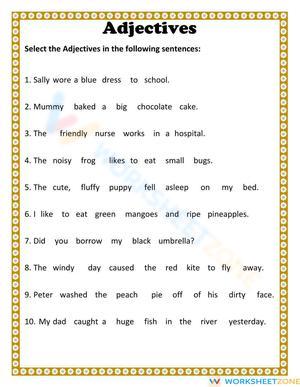
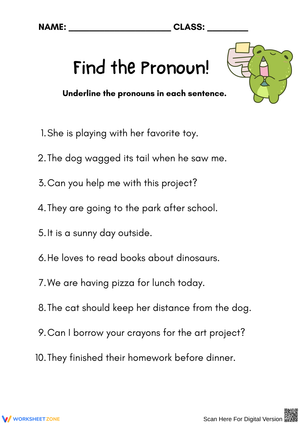
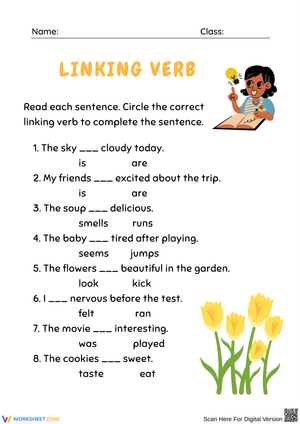
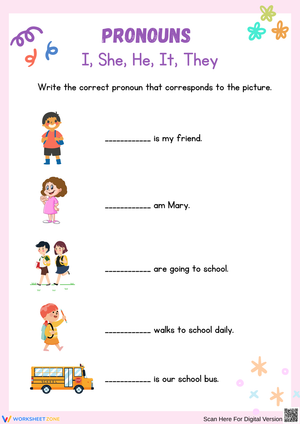
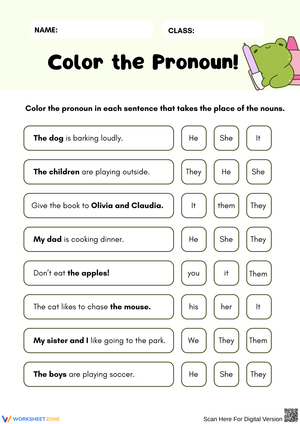
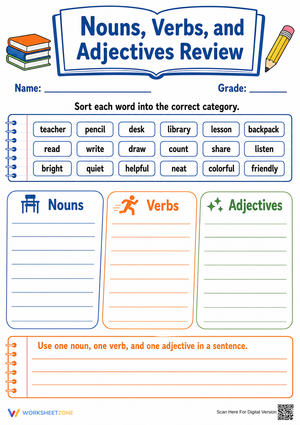
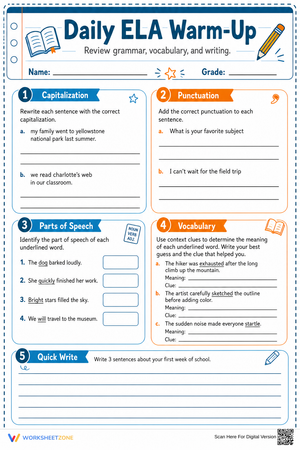
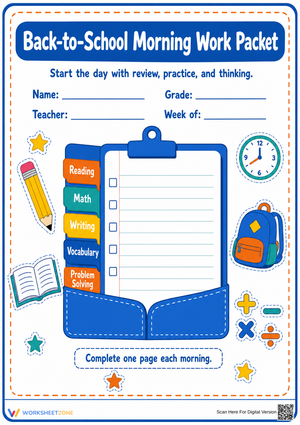
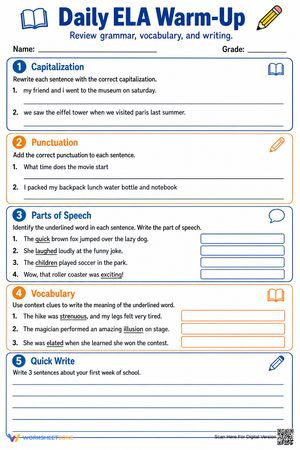
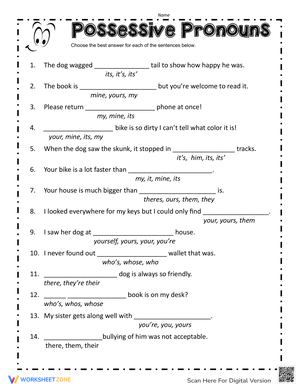
These 3rd grade grammar and mechanics printable worksheets target a specific tension that shows up in most third-grade language arts blocks: students already know what sentences are, but they still need repeated, low-stakes practice to apply conventions correctly when writing on their own. The set addresses verb tense and irregular verb forms, plural noun rules, pronoun-antecedent agreement, comparative adjectives and adverbs, sentence-type identification, comma placement, apostrophe use, and capitalization — organized by skill so teachers pull what they need rather than working through a fixed sequence.
Skills Covered Across the Set
Each worksheet focuses on one skill in enough depth to make the practice meaningful — not a single example sentence but enough varied items to surface the underlying pattern. The grammar worksheets and mechanics worksheets run parallel rather than mixed together, so teachers can assign them in whatever order matches the current unit. The full list of skill targets:
- Irregular plural nouns — students sort, complete, and rewrite sentences using forms like children, geese, and teeth, which third graders consistently overgeneralize by adding -s
- Verb tense consistency — rewriting sentences and short paragraph-length prompts where tense shifts mid-sentence, a pattern that appears constantly in third-grade writing conferences
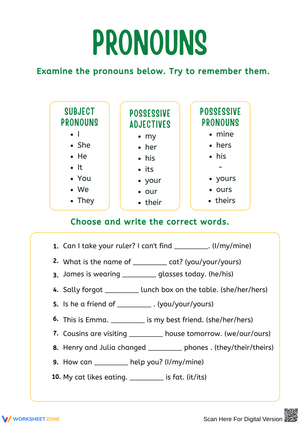
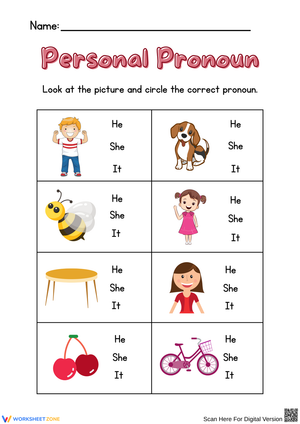
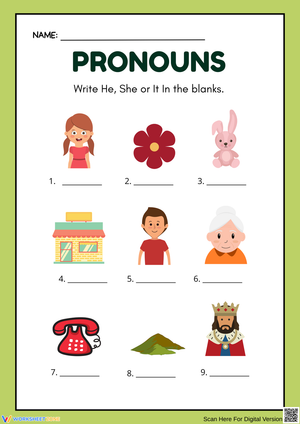
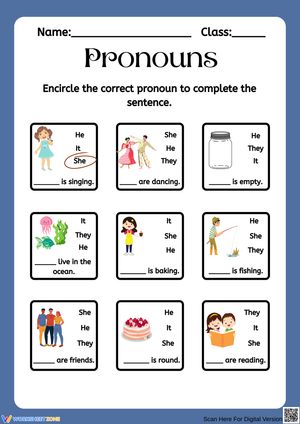
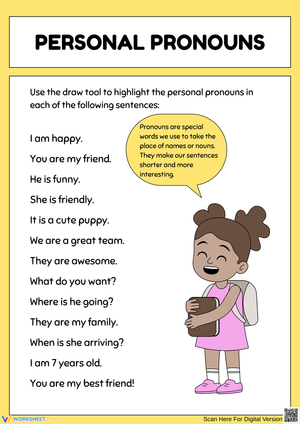
- Pronoun-antecedent agreement — identifying mismatches and rewriting with clear, correct pronoun choices
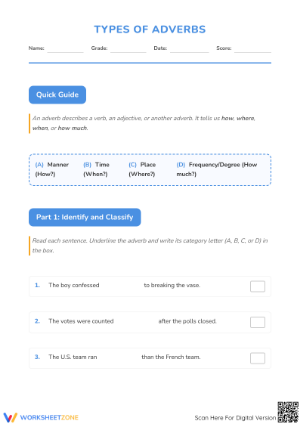
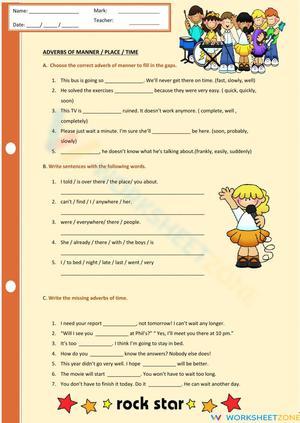
- Comparative and superlative forms — adjectives and adverbs in both regular patterns and exceptions like good/better/best and bad/worse/worst
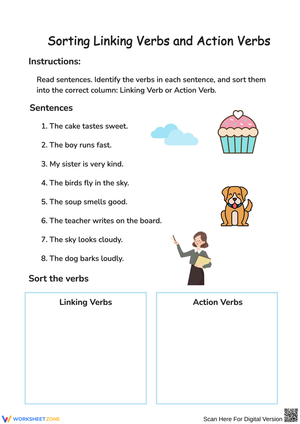
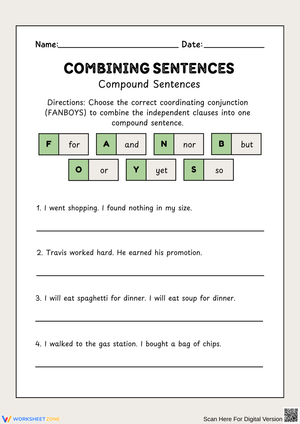
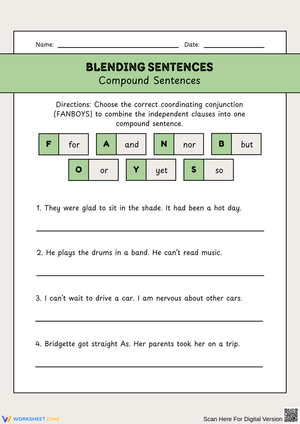
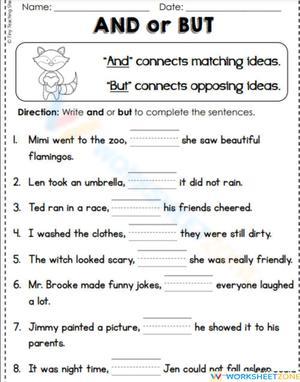
- Sentence types and structure — labeling simple, compound, and complex sentences, plus identifying and correcting run-ons and fragments
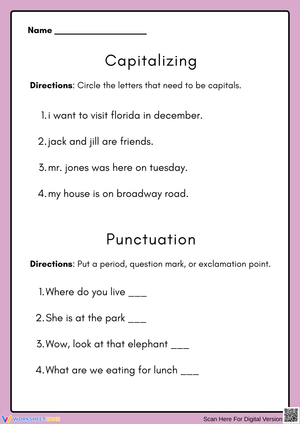
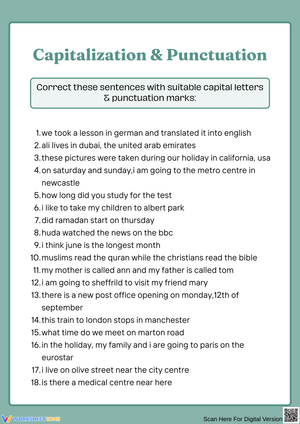
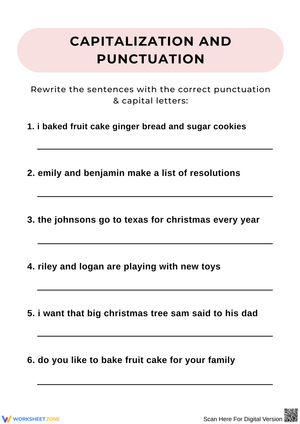
- Capitalization — titles, geographic names, holidays, and product names, with sentences that mix correctly and incorrectly capitalized words in the same item
- Apostrophes — contractions and possessives practiced separately before appearing together on mixed-use review worksheets
Student Errors Worth Catching Before They Become Habits
The apostrophe produces the most durable errors at this level, and the confusion is structural rather than careless. Students who correctly write don't and can't will still write the dog's ran away because they've internalized "apostrophe means something belongs" and they apply that rule indiscriminately. The set handles this by keeping contractions and possessives on separate worksheets first, then combining them on a review worksheet where students must slow down and read for context rather than pattern-match on sight.
Verb tense inconsistency is harder to catch in isolation because it often sounds fine when read aloud quickly. A student who writes She walked to school and then she sees her friend has probably heard both tenses in spoken language without noticing the shift. The rewriting tasks on these worksheets require students to correct full sentences rather than fill in blanks, which means holding the tense choice in mind across the whole sentence. Irregular verb forms generate their own category: I goed, she runned, and we thinked appear in student writing at this level even after direct instruction, which is why irregular verbs return across more than one worksheet in the set rather than appearing as a single teachable moment.
Placing These Worksheets Where They Actually Get Used
The most reliable slot for this kind of practice is the first eight minutes of the language arts block, before any new instruction starts. Students settle, re-engage with the previous day's skill, and you get a visible, gradeable artifact without burning instructional time. A single worksheet on comma placement at the start of a writing lesson on informational paragraphs functions as a quick formative read — you know whether students are ready to apply the skill or still need reteaching. That's more useful than a unit quiz at the end of the week when there's no room left to adjust.
Literacy centers are the other strong placement. A writing station with a small stack of mechanics worksheets gives students purposeful independent work while you run a guided reading group. The tasks are clear enough that students rarely interrupt — especially after you've modeled one worksheet from the set under the document camera as a whole class, completed the first few items together, then sent them to finish independently. For teachers who use these 3rd grade grammar and mechanics printable worksheets as homework, sending home a skill practiced two or three days earlier rather than the same afternoon reduces parent frustration noticeably. Students with enough classroom exposure handle review tasks on their own; students who missed the instruction need more school-time support, not a harder homework assignment.
Standard Alignment
These worksheets align to two Language strand standards in the Common Core State Standards for English Language Arts. L.3.1 covers grammar and usage — irregular verb forms, pronoun-antecedent agreement, comparative and superlative adjectives and adverbs, and sentence-type production all sit under this standard. L.3.2 addresses the mechanics conventions: capitalization of specific word categories, comma placement in addresses and dialogue, apostrophe use for both contractions and possessives, and grade-level spelling generalizations. Both standards treat language conventions as skills students demonstrate in their writing, not in isolation. These worksheets provide the isolated practice piece; the instructional loop closes when teachers connect that practice back to students' own drafts and ask them to apply the same editing moves there.
Adjusting the Work for a Range of Learners
For students who are still shaky on foundational skills, the most effective move is often keeping the same worksheet but reducing volume — assign the first half of the problems, then review together before continuing. This maintains a consistent format without overwhelming students who shut down when a worksheet looks full. Pairing those students with a short reference card listing irregular plurals or common contractions before they begin also removes the memory load enough to let them actually practice the target skill instead of spending all their effort on retrieval.
Students who move through these tasks quickly benefit from a production challenge: after completing a worksheet on comma placement, ask them to write three original sentences that each use a comma in a different context. That task demands genuine application rather than correction by pattern recognition, and it's harder than anything on the worksheet. On verb tense work, advanced students can hunt for additional errors the worksheet didn't flag — an editing move that sharpens their instincts without requiring separate materials. The 3rd grade grammar and mechanics printable worksheets in this set lend themselves to these extensions because the skill targets are specific enough that you know exactly what to push on for each student.
Frequently Asked Questions
What grammar and mechanics skills should third graders have solidly in place by the end of the year?
By the end of Grade 3, students should write with correct end punctuation consistently, use commas in lists and in dialogue, form contractions and possessives with apostrophes without confusing the two, capitalize titles and proper nouns correctly, and use regular and irregular verb tenses without overgeneralizing. They should also produce simple, compound, and complex sentences and catch fragments and run-ons during editing. These are the L.3.1 and L.3.2 benchmarks, and teachers who use 3rd grade grammar and mechanics printable worksheets for regular review across the year typically see students arrive at those benchmarks with stronger automaticity than students who received grammar instruction only embedded in whole-class writing lessons.
How do I use grammar worksheets without turning practice into busywork?
The busywork feeling almost always comes from volume and timing — assigning a long worksheet on a skill students already control, or sending home practice on something taught that same afternoon. Keep sessions short: eight to twelve minutes is enough for a well-built worksheet at this level. Use practice right after direct instruction to build initial familiarity, then return to the same skill two or three days later with a second worksheet or a mixed review. That spacing is what builds durability. The first pass gets students familiar with the rule; the spaced return is what makes it stick.
Is it better to teach grammar and mechanics together or in separate units?
Most third-grade teachers find the skills work better when kept connected, because they appear side by side in actual student writing. A week focused on comma placement might open with two days of pure comma correction tasks, then shift to a mixed worksheet where students also check capitalization and verb tense in the same sentences. That combination moves students toward editing as a whole-sentence habit rather than a single-rule check — which is much closer to what their own writing actually requires when they sit down to revise a draft.












 Interactive Worksheet Maker
 Quiz Maker
 Word Search Maker
 Crossword Puzzle Maker
 Word Scramble Generator
 Sentence Scramble Generator
 Handwriting Worksheet Generator
 Name Tracing Generator
 Fill In The Blank Generator