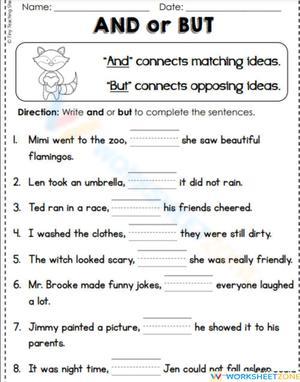
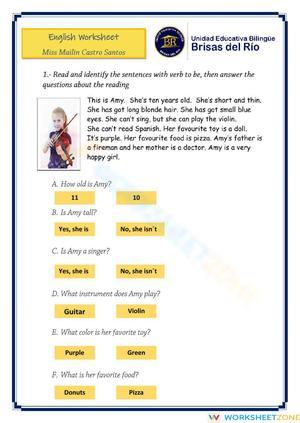
These 3rd grade parts of speech worksheets give teachers targeted, print-ready practice for the five word classes third graders must control by year's end: nouns, verbs, adjectives, adverbs, and pronouns. Each worksheet works with full sentences rather than isolated vocabulary lists — because the students who can label "adverb" on a terms list still write "He ran quick" and "She feels badly" when composing on their own. The set addresses that gap directly.
Skills These Worksheets Build
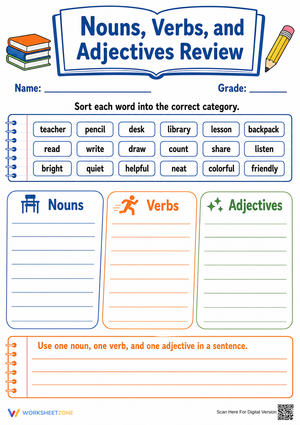
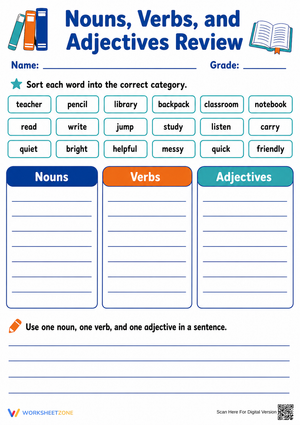
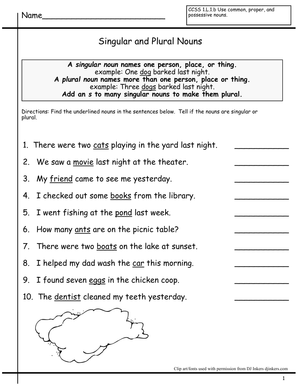
Nouns get the most careful treatment because the category runs wider than students expect. Students sort and identify common, proper, collective, and abstract nouns in context. Abstract nouns genuinely trip third graders up — kids grasp dog and city without much trouble, but courage or honesty require a different kind of thinking. Each abstract noun worksheet asks students to write a sentence using the target word, forcing them to demonstrate meaning rather than just circle an answer.
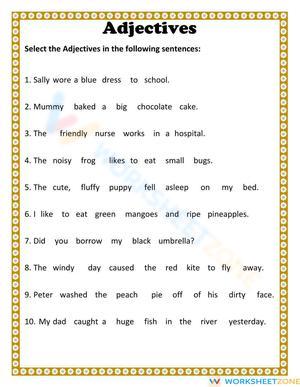
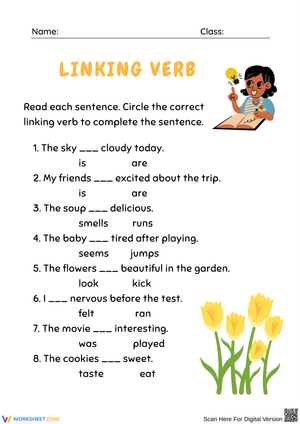
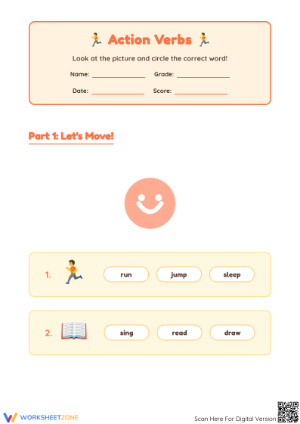
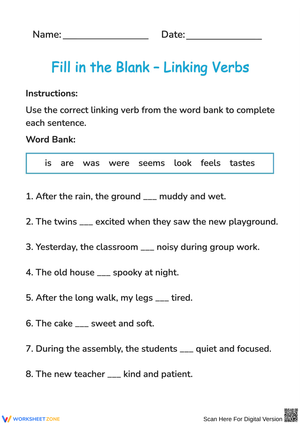
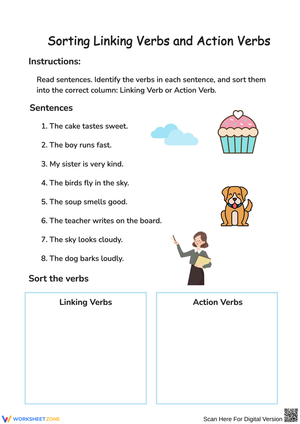
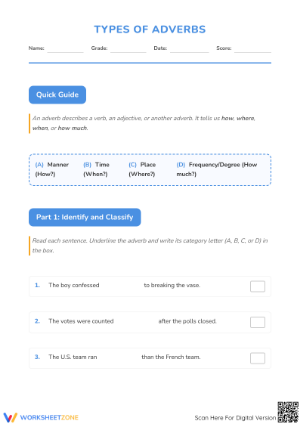
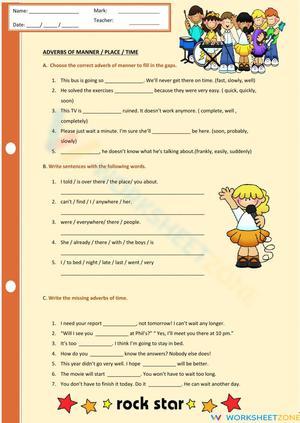
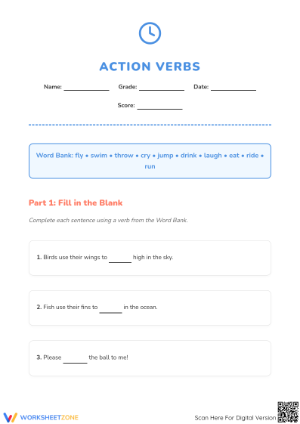
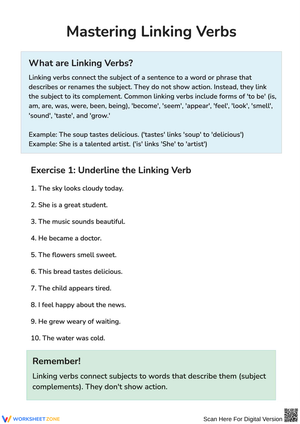
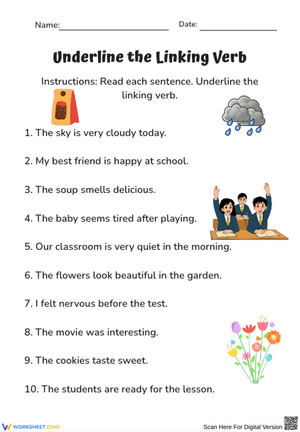
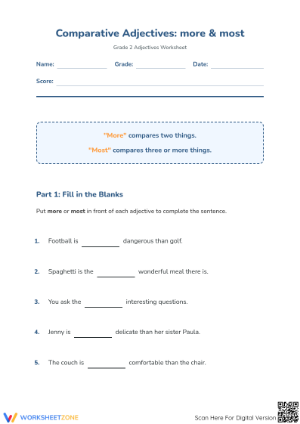
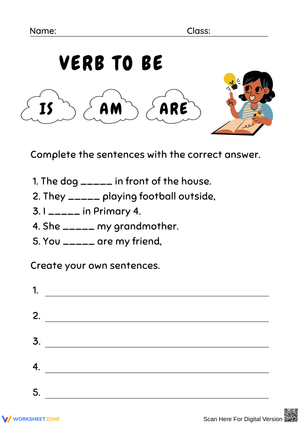
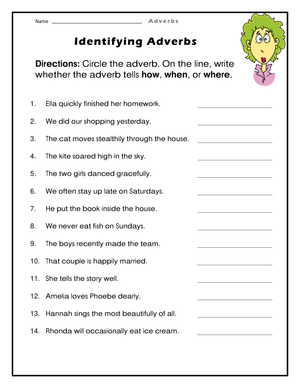
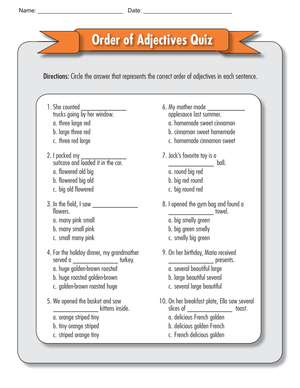
Verb work covers action, linking, and helping verbs alongside tense consistency within a passage. Students rewrite sentences to fix tense shifts — a real error pattern in third-grade writing, where a student narrates in past tense and slips into present mid-paragraph without noticing. Adjective and adverb worksheets keep the grammatical relationship visible: students underline the adverb and draw an arrow to the verb it modifies, rather than answering true-or-false questions about definitions.
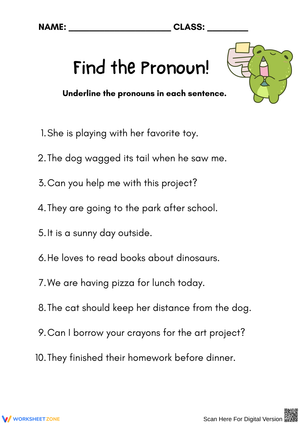
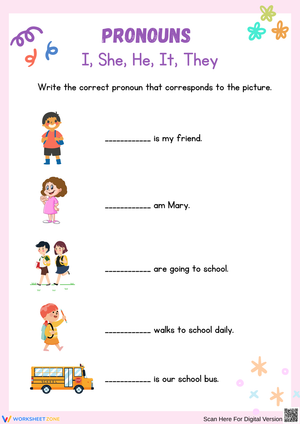
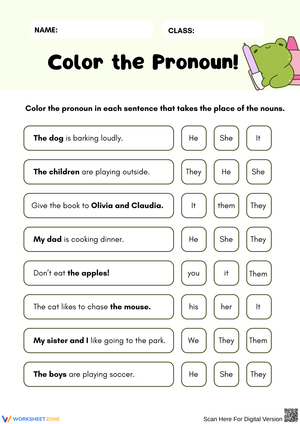
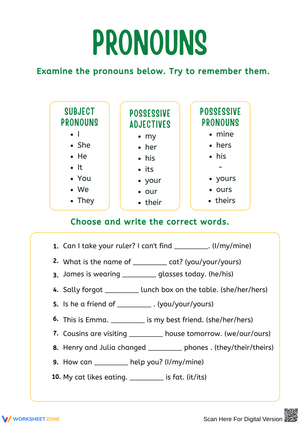
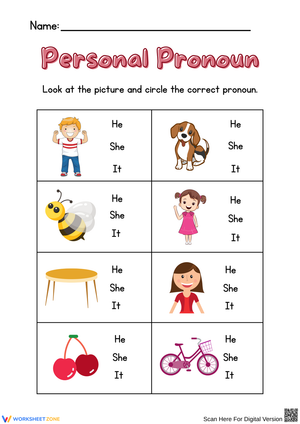
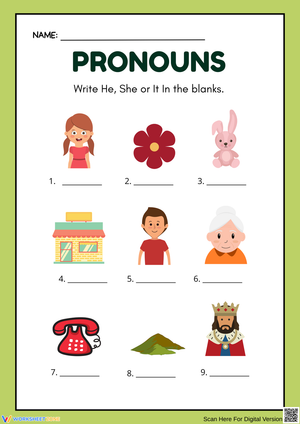
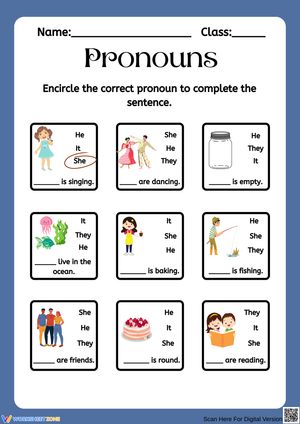
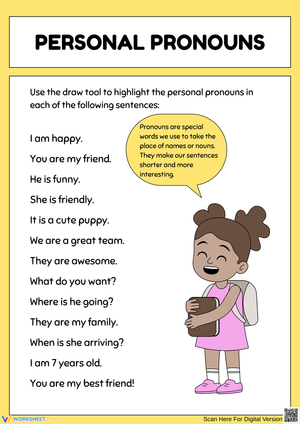
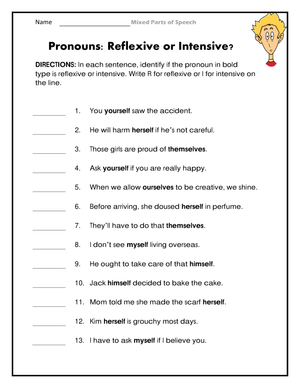
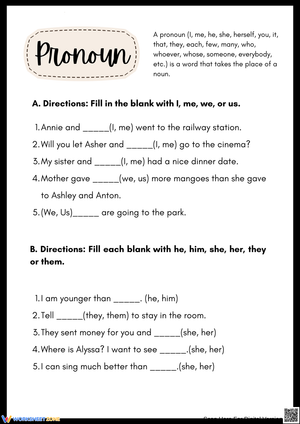
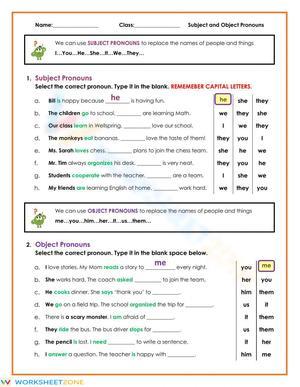
Pronoun worksheets give direct attention to pronoun-antecedent agreement. A sentence like "Marcus and Jayla went to the store. She bought chips." reads as perfectly clear to most third graders. Exercises flag that ambiguity explicitly, asking students to rewrite so the reference is unambiguous. Subject, object, and possessive forms are covered in separate worksheets so teachers can isolate a student's specific confusion before moving on.
Patterns in Student Work Worth Watching
The most consistent error across all five word classes is the recognition-production gap: a student correctly sorts quickly into the adverb column on a categorizing worksheet, then writes "She danced quick" in the sentence-writing task on the same worksheet. That gap is the actual instructional target. When you see it, the student has the label but not the grammatical sense — use the error as a discussion point during whole-class review, not just a red mark.
Collective nouns create a different kind of confusion. Students who have learned that nouns name things will insist that team and class are not nouns at all because "you can't touch a team." These worksheets address that by placing collective nouns inside sentences with clear action verbs, making the noun role visible through function rather than definition. Watch also for students who reflexively add an -s to a collective noun already understood as a group — a spelling instinct that overrides the grammar logic.
How to Work These Worksheets Into Your Instruction
Morning warm-up is the most natural home for a 3rd grade parts of speech worksheets activity — six to eight minutes while attendance is taken and morning meeting wraps up, using one worksheet that reviews whatever word class was taught the previous day. This places practice close enough to instruction that students retain the teaching point, and it establishes a weekly rhythm so no one spends the first three minutes re-reading directions from scratch.
Grammar centers are well-suited to the sorting and color-coding worksheets. Slide printed worksheets into dry-erase sleeves and supply wet-erase markers so students can complete, check, and wipe clean for the next group. The partner-check routine works particularly well here: both students complete the task independently, then compare answers and talk through disagreements before confirming against an answer key. That conversation — "why did you mark that word as an adjective?" — surfaces misconceptions faster than any exit ticket.
After any worksheet covering a specific word class, a four-minute grammar hunt closes the loop between controlled practice and authentic text. Students pull out their independent reading book and mark two examples of the target part of speech with a sticky note. Transfer is where the skill actually takes hold, and this step makes it visible to both the teacher and the student.
Standard Alignment
These worksheets align to CCSS.ELA-LITERACY.L.3.1, which requires third graders to demonstrate command of standard English grammar in both writing and speaking. The most directly relevant sub-standards are L.3.1a (explaining the function of nouns, pronouns, verbs, adjectives, and adverbs), L.3.1b (forming regular and irregular plural nouns), and L.3.1f (ensuring subject-verb and pronoun-antecedent agreement). L.3.1f deserves particular instructional attention at this grade level: pronoun agreement errors tend to persist into fourth and fifth grade if left unaddressed, and they are far easier to correct before students become fluent writers who have made the error automatic.
Adapting the Set for a Range of Learners
For students reading below grade level, the fill-in-the-blank worksheets work best when paired with a short reference list of target words at the top. This reduces working memory demand without changing the grammatical task — students still determine which word class fills the blank; they just aren't also asked to retrieve vocabulary under time pressure. For advanced students, sentence-rewriting tasks can be extended: ask them to add two adjectives and one adverb to a given sentence, then swap with a partner and label each addition by part of speech.
English language learners often struggle specifically with pronoun gender in English. Many students whose home language does not distinguish he and she use them interchangeably — not because they misunderstand pronoun reference, but because gender marking on pronouns feels arbitrary without a grammar rule they can apply. A brief reference note on pronoun worksheets — "he = boy or man, she = girl or woman" — removes a surface confusion that otherwise masks what the student actually understands about antecedents.
Frequently Asked Questions
What parts of speech does CCSS require third graders to know?
CCSS L.3.1 covers nouns (common, proper, plural, and abstract), pronouns (subject, object, possessive), verbs (action, linking, tense consistency), adjectives, and adverbs. Students must both identify these forms and use them correctly in writing — recognition on a matching task does not satisfy the standard on its own.
How often should students practice parts of speech in third grade?
Three to four short sessions per week outperform a single long grammar block. A 3rd grade parts of speech worksheets used as Monday warm-up practice, a Wednesday center activity, and a Friday review covers the spaced repetition that helps students retain grammatical concepts across a unit rather than just through a post-test.
What if some students finish the worksheet quickly while others are still working?
A short extension prompt written on the board handles this well: "Write your own sentence using the same part of speech you just practiced." Students who finish early apply the skill productively, and you collect an informal writing sample that shows whether they can produce the form — not just recognize it.
How do I manage these worksheets in a center without reprinting every week?
Print each worksheet once, laminate it or slide it into a dry-erase sleeve, and store the set in a labeled folder at the center. A 3rd grade parts of speech worksheets set handled this way can run through a full six-week grammar unit without a single reprint, and students return to the same worksheets for review without the activity feeling entirely new each time.












 Interactive Worksheet Maker
 Quiz Maker
 Word Search Maker
 Crossword Puzzle Maker
 Word Scramble Generator
 Sentence Scramble Generator
 Handwriting Worksheet Generator
 Name Tracing Generator
 Fill In The Blank Generator