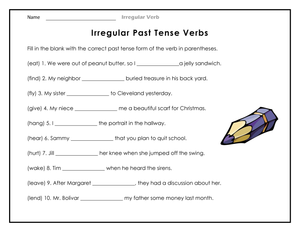
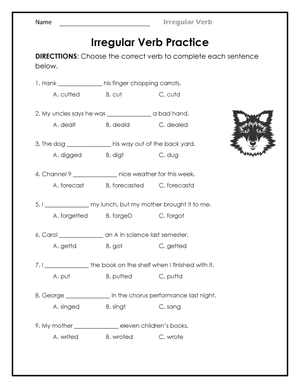
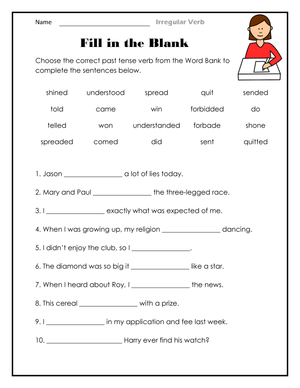
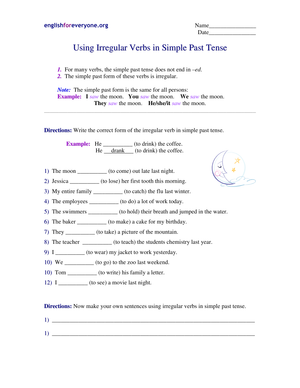
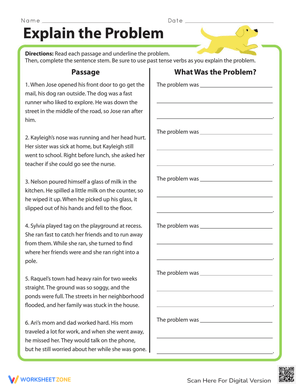
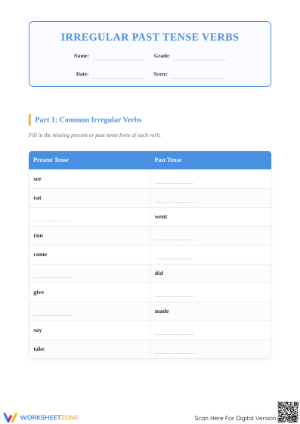
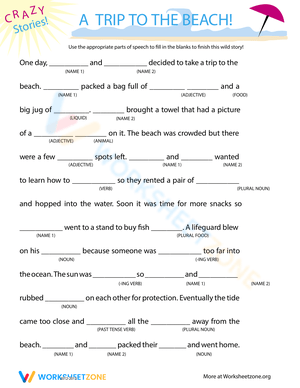
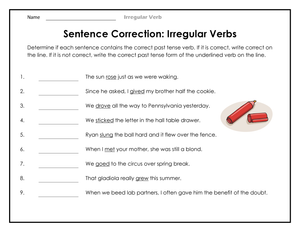
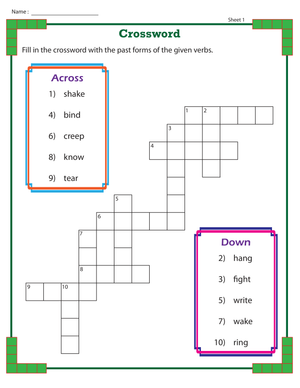
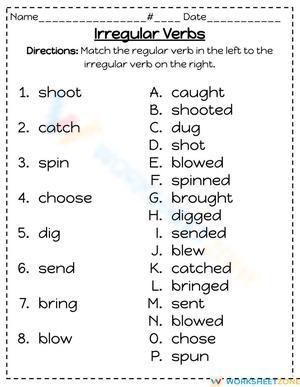
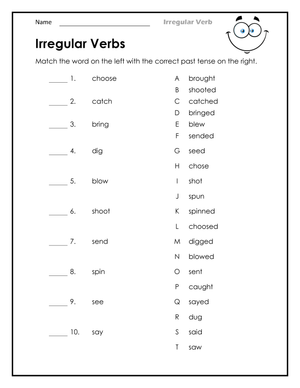
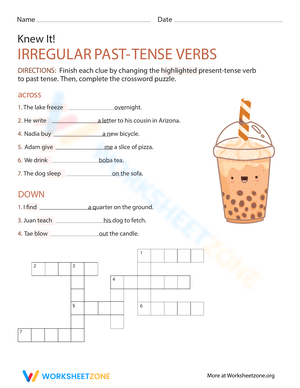
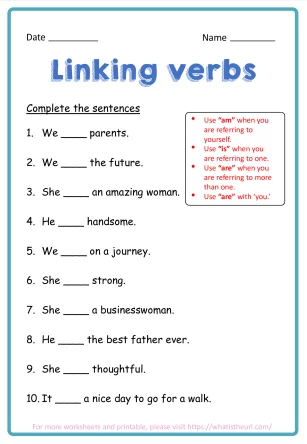
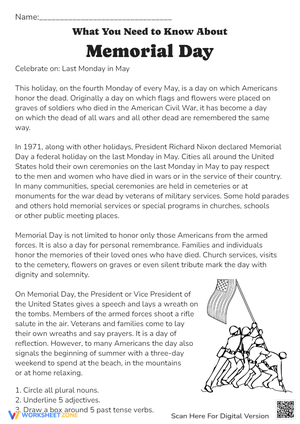
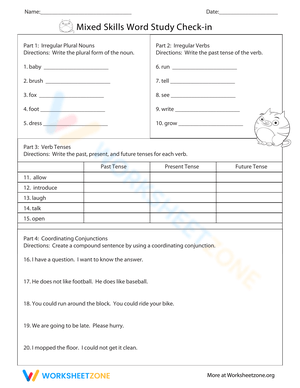
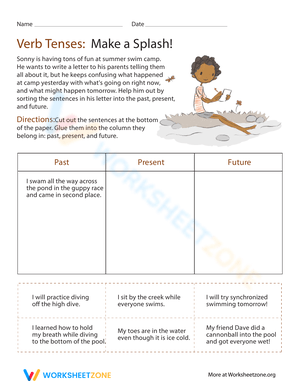
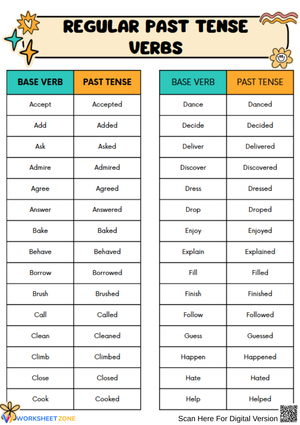
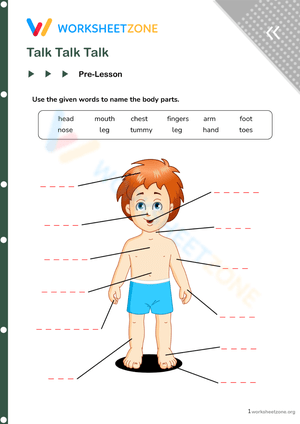
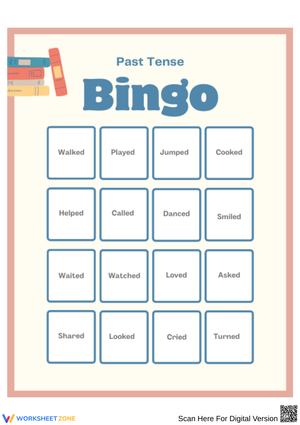
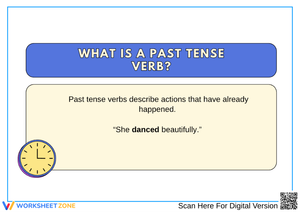
These past tense verbs worksheets for 3rd grade address both sides of a challenge teachers meet every year: students who have memorized that -ed marks the past tense but have not yet sorted out when that rule stops working, and students who write "goed" or "thinked" well into November because they have not had enough structured repetition with irregular forms. The set covers regular and irregular past tense verbs across several activity formats—sentence rewriting, verb sorting, fill-in-the-blank with context sentences, and short passage correction.
Concepts Targeted Across the Set
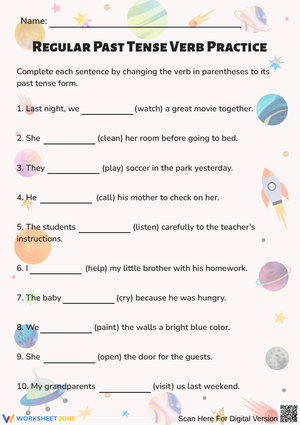
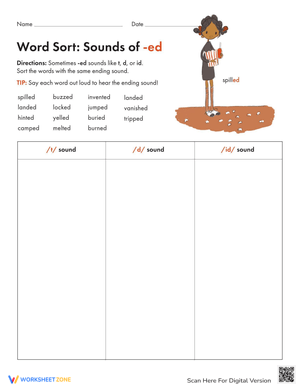
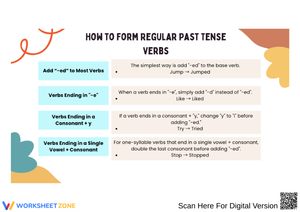
For regular verbs, the worksheets go beyond simple -ed attachment. Three spelling patterns get dedicated practice: verbs ending in silent -e (like smile becoming smiled), verbs ending in a single short-vowel syllable before a single consonant where the consonant doubles (drop becomes dropped), and verbs ending in a consonant plus -y where the -y shifts to -i before -ed (hurry becomes hurried). Students sort, rewrite, and fill in blanks to build pattern recognition before they apply the forms in their own writing.
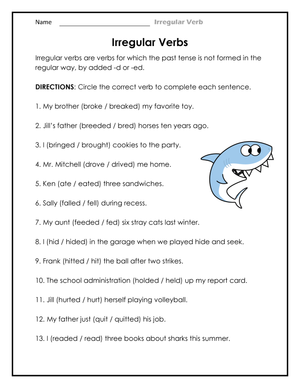
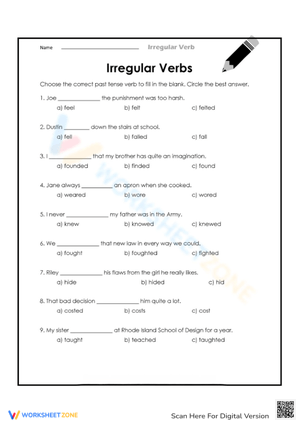
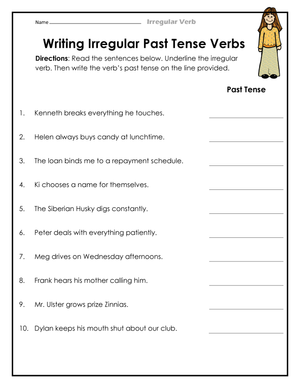
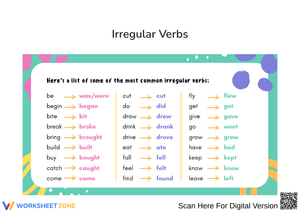
The irregular verb worksheets take a different approach. Rather than presenting all irregular verbs at once—a layout that overloads working memory—each worksheet focuses on a tight cluster of high-frequency forms: go/went, see/saw, run/ran, eat/ate, tell/told, come/came, make/made. Students encounter these verbs inside short reading passages, identify the past tense form in context, and then use it in an original sentence. That repeated contextual exposure does more for retention than a single drill ever will.
Common Student Errors Worth Watching For and Correcting
Over-regularization is the most persistent problem. A student who correctly writes "jumped" and "carried" will still write "eated" or "runned" in a narrative three weeks later. This is not carelessness—it is a developmental stage where the brain applies its strongest available rule to every case. The correction worksheets in this set include short passages written from a child narrator's perspective, seeded with over-regularization errors. Students read, locate the mistake, and rewrite the correct form. That active correction—rather than simply recognizing a flagged error—is where the habit actually begins to change.
A subtler error appears with the consonant-doubling rule. Once students learn that some verbs require doubling, they start doubling where it does not belong: openned, listened. They have learned the rule exists but have not internalized the CVC condition that triggers it. Each worksheet in the doubling-rule section includes a brief check step where students mark whether the verb's final syllable contains a short vowel before a single consonant—giving them a decision point before they commit to a spelling. That small structural move catches a lot of errors before they become habits.
Building These Worksheets Into Your Lesson Plans Effectively
The most reliable use of past tense verbs worksheets for 3rd grade during a grammar unit is as a Monday warm-up, followed by a brief class share where two or three students read their rewritten sentences aloud. That oral moment matters: students catch each other's over-regularization errors faster in spoken form than in silent written work. By Friday, a passage-correction worksheet works as an informal check—who can now spot the irregular verb errors that slipped past them at the start of the week.
Small-group instruction is where these worksheets do their most useful work. Sitting with four or five students while they work through an irregular verb worksheet lets you hear the thinking behind the errors, not just the errors themselves. When a student writes "catched," you find out whether they simply do not know the form "caught," or whether they knew it in isolation but could not retrieve it under the cognitive load of composing a complete sentence. That distinction changes how you respond—and changes what you assign next.
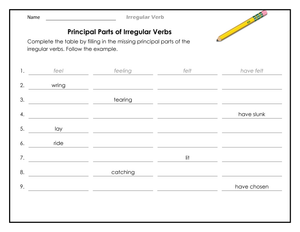
The verb-sorting worksheets are good candidates for a literacy center. Laminate them for use with dry-erase markers, and students can sort a set of 12 to 16 verb forms by spelling pattern, record the past tense form, and self-check. Low prep, genuinely repeatable, and useful for the five-minute pockets of time that open up before transitions.
Adjusting the Set for Students at Different Levels
For students still consolidating basic -ed addition, start with the regular verb worksheets that involve only the straightforward pattern—no consonant doubling, no y-to-i shift. Check for mastery before introducing the spelling-variation worksheets. Rushing to irregular verbs before regular patterns are stable creates confusion that takes longer to undo than the initial instruction would have taken.
Students ready for extension benefit most from the passage-based worksheets, where tense errors are embedded across longer text and students must locate every instance rather than work from a prompted list. Adding a second step—having those students rewrite the corrected passage in present tense—pushes them toward tense consistency across a full piece of writing, which is the actual skill the standard is after.
For students receiving ELL support, the worksheets that pair a present-tense sentence with a past-tense parallel are the most useful starting point. Students working in two languages simultaneously often over-apply -ed because English's irregular verb system has no direct equivalent in many other languages. Explicit, repeated exposure to the base form alongside the past form—rather than isolated lists of past-tense words—gives those students a more workable reference frame.
Standard Alignment
These resources address CCSS ELA-Literacy L.3.1.d, which requires third graders to form and use regular and irregular verbs. In classroom terms, this standard sits inside the broader Language strand alongside pronoun agreement and sentence combining—meaning most teachers address it during the first half of the school year, when narrative writing units are already underway. That timing makes past tense accuracy immediately relevant to students' own work. When a student is writing about a weekend camping trip and needs to decide between "run" and "ran," the grammar lesson stops being abstract. The past tense verbs worksheets for 3rd grade that include short narrative passages capitalize on exactly that connection—students see verb tense as a tool for telling time in a story, not just a grammar rule to memorize.
Frequently Asked Questions
Which irregular verbs should I teach first?
Start with the ones students use most often in their narrative writing: go/went, see/saw, say/said, and eat/ate. These four appear in almost every personal narrative a third grader writes, so errors surface quickly and correction pays off immediately. Once those forms are stable, worksheets targeting less frequent pairs—hold/held, build/built, bring/brought—give you a natural second tier. Past tense verbs worksheets for 3rd grade organized around frequency clusters let you sequence instruction this way without having to sort the materials yourself.
How do I respond when a student keeps writing "eated" or "goed" after multiple practice sessions?
The most effective move is oral correction in the moment combined with immediate written correction—not just circling the error and returning the paper. When a student reads a sentence aloud and you say, "Ate—she ate the sandwich. Try that sentence again," the student produces the correct form immediately. That active production is a different kind of practice than editing a marked error silently. The correction worksheets in this set are built around the same principle: students rewrite the sentence using the correct form rather than simply underlining the mistake.
Can I use one of these worksheets as a pre-assessment before starting the unit?
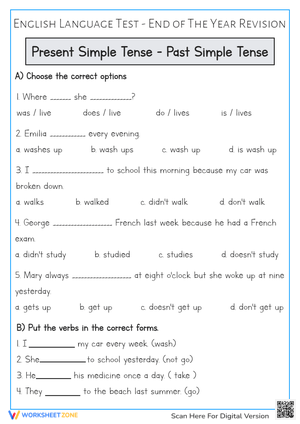
Yes. The sentence-rewriting worksheet—where students convert present-tense sentences to past tense with no word bank provided—gives clear pre-assessment data in about 90 seconds of review. You can see which students already distinguish regular from irregular forms, which students apply -ed to everything, and which students have no stable rule at all. That grouping informs how you structure the first week of instruction without requiring a formal test or a separate diagnostic tool.












 Interactive Worksheet Maker
 Quiz Maker
 Word Search Maker
 Crossword Puzzle Maker
 Word Scramble Generator
 Sentence Scramble Generator
 Handwriting Worksheet Generator
 Name Tracing Generator
 Fill In The Blank Generator