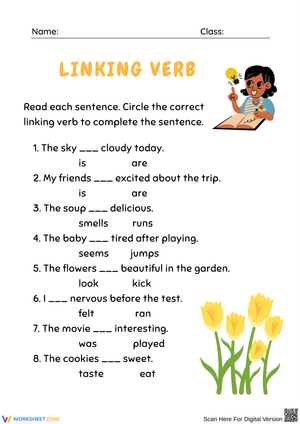
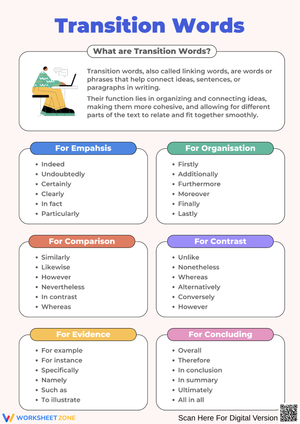
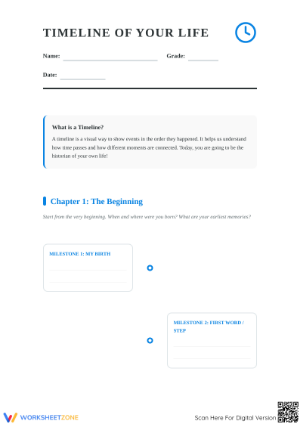
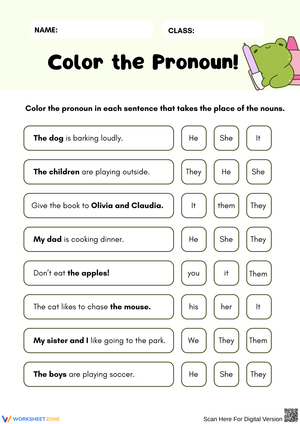
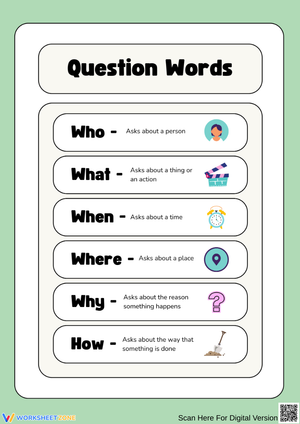
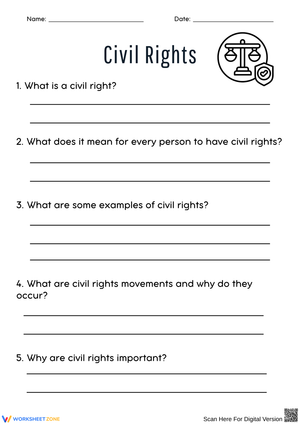
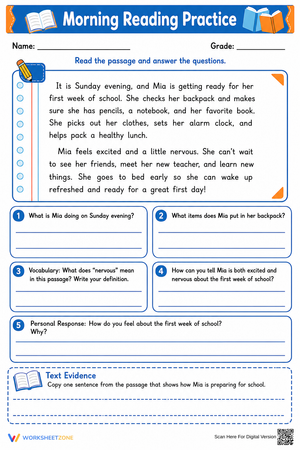
These english printable worksheets for 3rd grade address the full ELA scope of a year defined by a significant instructional shift — students who spent K–2 learning to decode now need sustained practice reading for meaning, writing in structured forms, and applying grammar rules in their own sentences rather than isolated exercises. The set covers grammar mechanics, reading comprehension, vocabulary strategy work, and multi-paragraph writing, with enough range that teachers can pull individual worksheets for targeted practice or cluster them across a unit.
Grammar Mechanics the Set Covers
Irregular verbs are a persistent sticking point in 3rd-grade writing. Students who correctly conjugate regular verbs by adding -ed will confidently write "runned" or "goed" until they've had enough exposure to internalize the correct forms — and a surprising number will produce "was go" as a hybrid attempt, combining the linking verb with the infinitive. Each worksheet in the irregular verbs cluster asks students to supply the past tense form of a given verb and then use it in a complete sentence. That second step matters because it forces application rather than passive recognition from a memorized list.
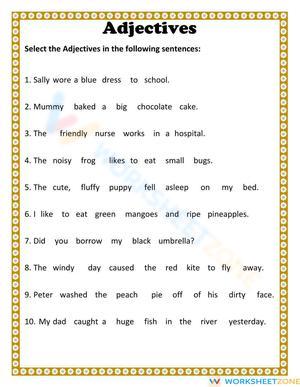
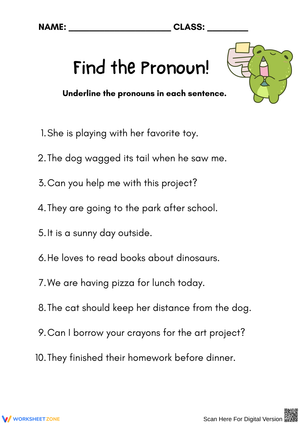
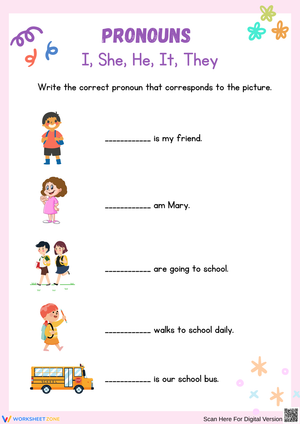
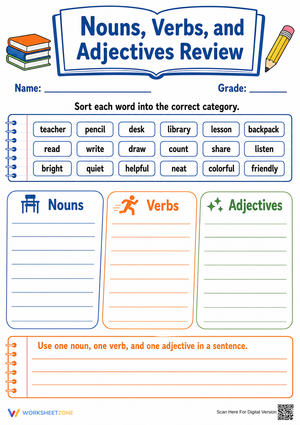
Abstract nouns represent a genuinely new category at this level. Younger students work with nouns they can point to — "chair," "dog," "school" — so the shift to words like courage, justice, or envy can feel disorienting. Several worksheets ask students to sort nouns into concrete and abstract columns, then write sentences that make the meaning of the abstract noun visible through context. Coordinating conjunctions round out the grammar coverage: students practice joining two independent clauses using and, but, or, so, and yet, which directly addresses the string of short, choppy sentences common in 2nd-grade writing.
Reading Comprehension and Vocabulary Strategy Work
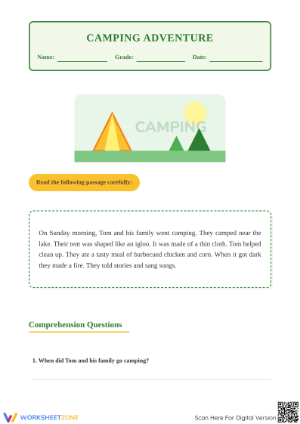
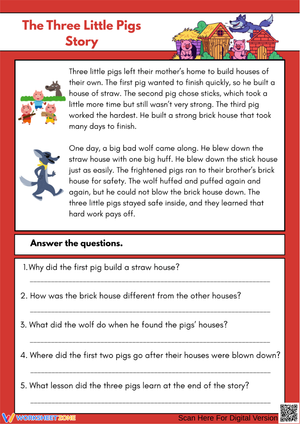
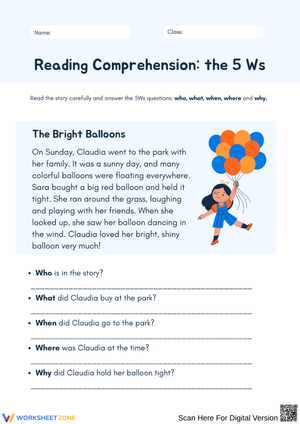
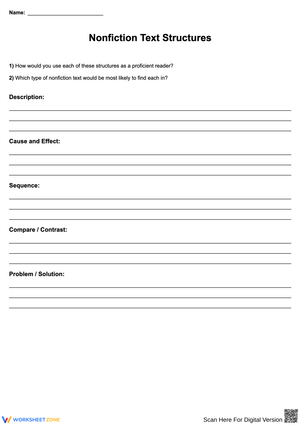
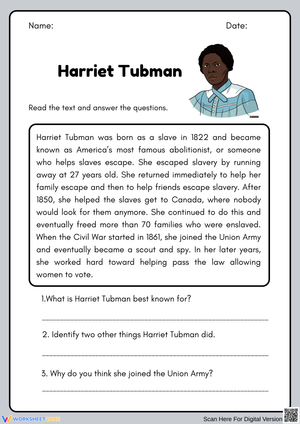
The reading worksheets treat text evidence as a non-negotiable habit rather than an occasional prompt. Third grade is the first year students are expected to cite a specific paragraph or sentence that supports their answer rather than relying on inference or personal connection alone. Each reading worksheet pairs a short passage with text-dependent questions, and students are directed to underline the relevant evidence before writing their response — building a physical habit around the analytical skill. Fiction passages focus on how character decisions drive events; nonfiction passages focus on how authors organize ideas to support a central claim.
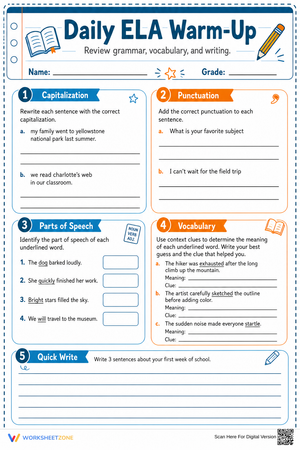
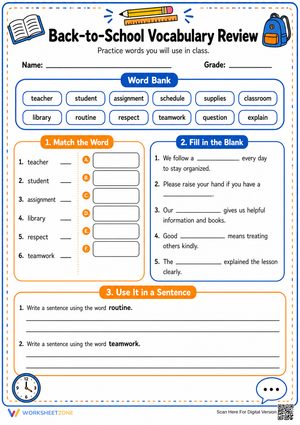
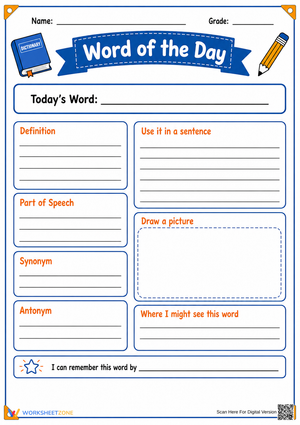
For vocabulary, english printable worksheets for 3rd grade use two complementary approaches: context clues and morphological analysis. Context clue exercises present a short paragraph with a bolded word and ask students to explain what the surrounding sentences reveal about its meaning — not just circle a definition from a multiple-choice list. The affix work takes a different angle: students break words into root and prefix or suffix, then explain how the affix shifts the base word's meaning. Knowing that un- signals negation or reversal lets a student make a reasonable guess at unfamiliar or unfinished even when the word appears for the first time.
What the Writing Worksheets Ask Students to Do
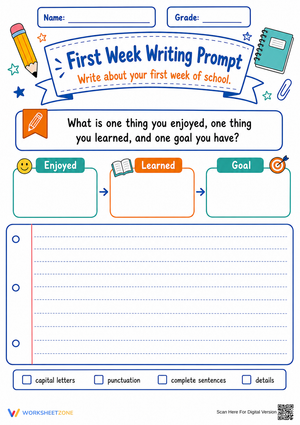
Opinion, informative, and narrative writing each get their own worksheet clusters, and the formats differ deliberately. Opinion worksheets ask students to state a clear position in the first sentence, then provide at least two reasons with a sentence of explanation for each — this sounds simple until you watch a class of 8-year-olds write "I think recess should be longer because it's fun" three times in a row. The worksheets push students to distinguish between a reason and an elaboration by giving each its own labeled line. Informative worksheets focus on grouping related facts under sub-topics, introducing paragraph organization without requiring students to construct an argument. Narrative worksheets are structured around a before/during/after sequence with sentence starters that fade as the series progresses, moving students toward independent story control by the final worksheet in that cluster.
Where These Worksheets Fit in the Teaching Day
The most efficient use pattern we've found is a gradual release model built around individual worksheets rather than full clusters handed out at once. Introduce a skill — say, coordinating conjunctions — through direct instruction, then use one worksheet as a partner activity the same day so misconceptions surface before students attempt independent writing. Revisit the skill two or three days later with a second worksheet as a warm-up check. For reading comprehension worksheets, the 15 minutes before a read-aloud works particularly well: students read the short passage cold, answer the text-dependent questions, and then discuss — the discussion is sharper because they've already done the thinking in writing. English printable worksheets for 3rd grade also function well as exit tasks at the end of a focused grammar lesson, giving teachers a concrete look at who needs re-teaching before the next day's instruction.
Where Student Errors Cluster in 3rd-Grade ELA Work
Irregular verb errors are predictable but still worth flagging explicitly. Most students overgeneralize the regular past tense rule — "runned," "sitted," "goed" — and catching these in a controlled worksheet setting takes two minutes, compared to finding them buried in a paragraph draft three weeks later when the writing habit has calcified.
Abstract noun work reveals a different kind of confusion. Students often conflate the abstract noun with an adjective form — asked to use bravery in a sentence, some students write "The soldier was very bravery," recognizing it as meaningful vocabulary but not yet controlling its syntactic role as a noun. Opinion writing errors tend to cluster around the reason/elaboration distinction: students list the same reason twice in slightly different words and consider their argument supported. The worksheets' structured format — a separate line for the reason, a separate line for the explanation — makes that gap visible to both student and teacher immediately, rather than during a writing conference.
Pacing and Adapting for a Mixed-Readiness Classroom
Students who are still consolidating phonics can work through the grammar and vocabulary worksheets without modification — the tasks operate at the word and sentence level, so decoding load is low. For students who need more support with the reading comprehension worksheets, reading the passage aloud together before they answer independently removes the decoding barrier and lets you assess comprehension directly. English printable worksheets for 3rd grade at the upper end of the skill range can be extended by removing the word bank from vocabulary exercises or asking students to write a second, more complex sentence after completing the structured prompt. For the writing worksheets, removing sentence starters from the narrative formats challenges students who are ready to draft without built-in structural support. None of these adjustments require creating new materials — they are modifications to how existing worksheets are presented.
Standard Alignment
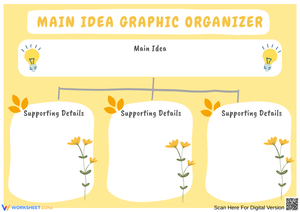
These worksheets align to the Common Core State Standards for English Language Arts, Grade 3. Grammar mechanics worksheets address L.3.1, which covers forming and using regular and irregular verbs, producing simple and compound sentences, and using coordinating conjunctions; abstract noun work falls specifically under L.3.1a. Reading comprehension worksheets address RI.3.2 (determining the main idea of informational text and explaining how key details support it) and RL.3.3 (analyzing how characters respond to challenges). The text evidence habit built across the reading worksheets supports RI.3.1 and RL.3.1, both of which require students to ask and answer questions using explicit textual evidence. Writing worksheets address W.3.1, W.3.2, and W.3.3 for opinion, informative, and narrative forms respectively. Teachers in non-CCSS states will find the skill coverage aligns closely with most state-level 3rd-grade ELA standards, though cross-referencing the specific standard codes against local frameworks takes about ten minutes.
Frequently Asked Questions
Are these worksheets intended to replace core reading instruction, or are they supplementary?
These are supplementary materials. Each worksheet reinforces a skill introduced through direct instruction, shared reading, or a writing lesson — they are not a standalone reading program. Teachers who distribute them without prior instruction typically see weaker completion quality and more confusion than teachers who use them as the practice component of a lesson already underway.
How long does a typical worksheet take for a 3rd grader to finish?
Grammar and vocabulary worksheets generally run 10–15 minutes for students working at grade level. Reading comprehension worksheets — passage plus four to six questions — typically take 15–20 minutes. Writing worksheets vary more: a structured opinion outline may take 12 minutes, while a narrative worksheet with a full draft section may need closer to 25. Students who write slowly or need multiple re-reads of the passage will run longer, so building in a few extra minutes for reading comprehension work is worth it rather than cutting the task short.
Are the reading passages written at a specific Lexile level?
The passages are written at a mid-3rd-grade reading level, roughly Lexile 520–620. They are not Fountas and Pinnell leveled. Teachers working with students reading significantly below grade level may want to read the passage aloud or pair students for the initial read-through, so the comprehension task doesn't collapse into a decoding task. The goal of those worksheets is text analysis, not independent reading fluency practice.












 Interactive Worksheet Maker
 Quiz Maker
 Word Search Maker
 Crossword Puzzle Maker
 Word Scramble Generator
 Sentence Scramble Generator
 Handwriting Worksheet Generator
 Name Tracing Generator
 Fill In The Blank Generator