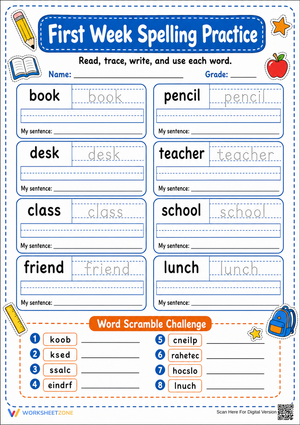
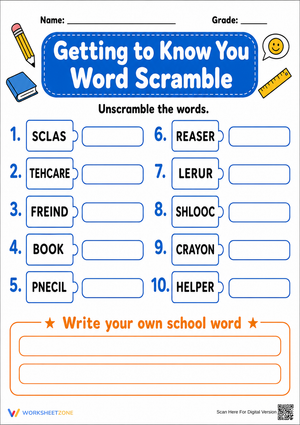
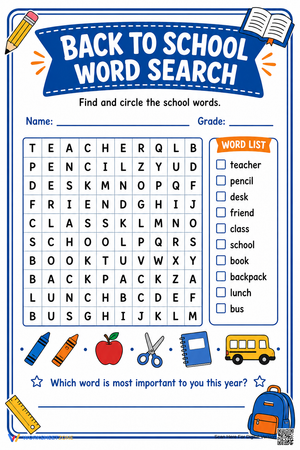
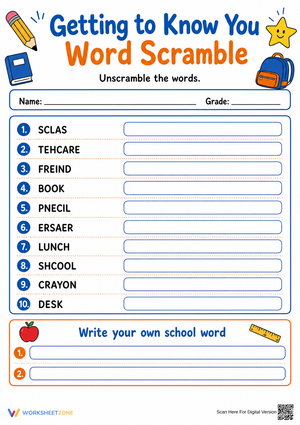
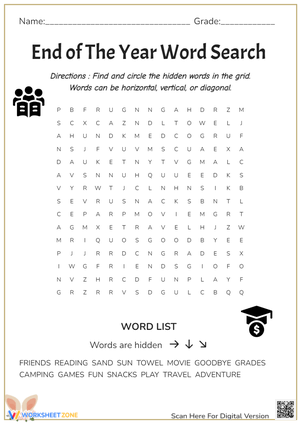
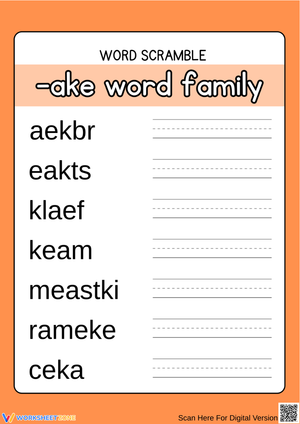
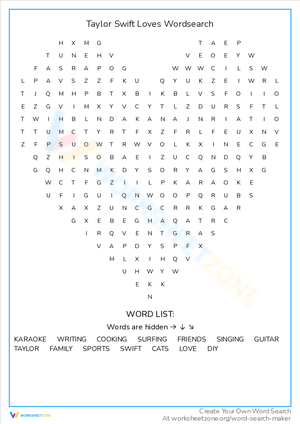
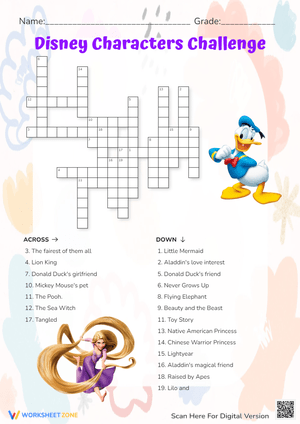
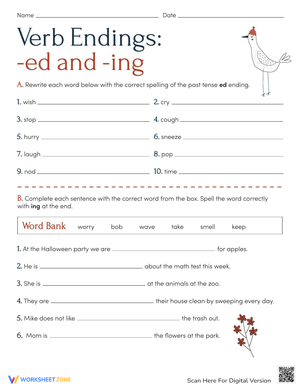
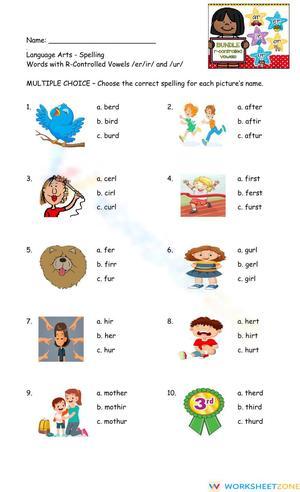
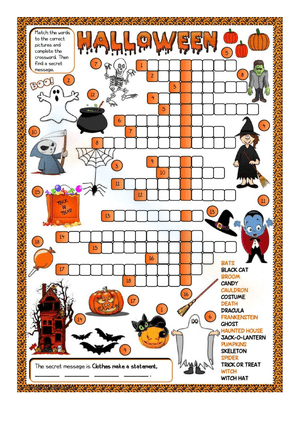
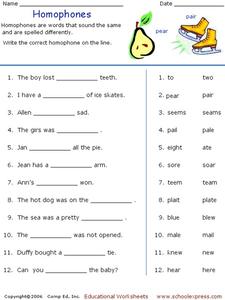
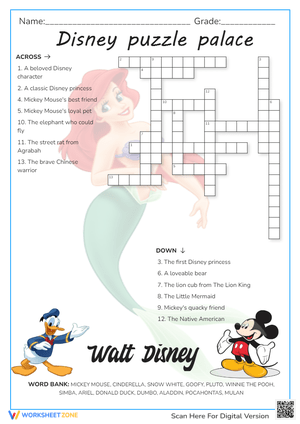
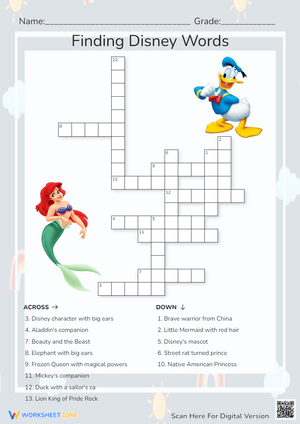
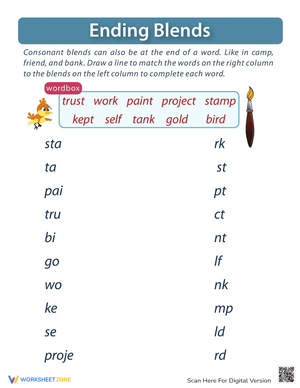
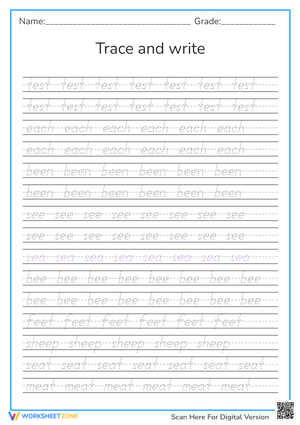
3rd grade spelling printable worksheets give teachers targeted practice material for the year students make the biggest leap in word knowledge — from sounding out individual letters to understanding how English builds meaning through patterns, prefixes, and derived word forms. This set addresses the orthographic and morphological concepts central to Grade 3 spelling instruction: diphthongs, r-controlled vowels, silent consonants, and the most common prefixes and suffixes. The formats include word sorts, sentence completion tasks, crossword puzzles, and dictation templates, so practice doesn't collapse into the same activity every time.
The Skills and Patterns in Each Worksheet
Grade 3 is the year spelling instruction stops being mostly about phonics and starts requiring students to hold sound, pattern, and meaning in mind at the same time. Each worksheet targets one of the following skill areas:
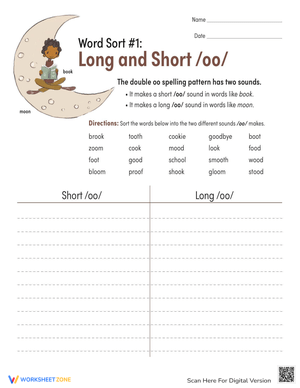
- Vowel diphthongs and variant vowels: sorting and writing words with oi, oy, ou, and ow patterns, with attention to which spelling appears in which position within a word
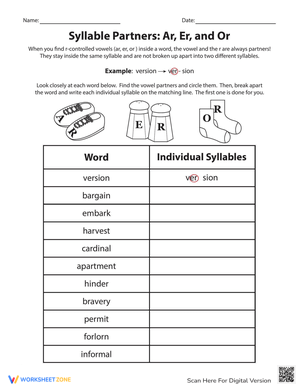
- R-controlled vowels: distinguishing between ar, er, ir, or, and ur in context, including in multisyllabic words where stress affects the vowel sound
- Silent consonants: words with silent k (kneel, knock), silent w (wrap, write), and silent b (thumb, lamb)
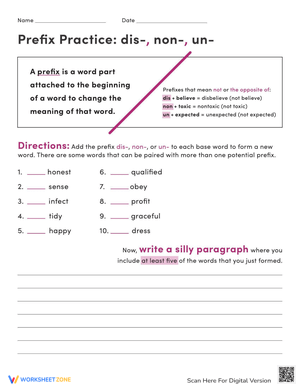
- Common prefixes: un-, re-, dis-, pre- attached to familiar base words, with tasks that ask students to articulate how meaning shifts
- Common suffixes: -ly, -ful, -less, -er, -ness — including spelling changes when a suffix follows a base word ending in a consonant-vowel-consonant pattern or a silent e
- Base word derivatives: tracing a single root through its spelled-out family (e.g., care → careful → careless → carefully) so students see that spelling follows a system rather than a list of isolated words
Misspellings Students Make Predictably — and What to Watch For
The r-controlled vowel worksheets surface a confusion that appears in almost every Grade 3 class: students can spell bird correctly in isolation on a Friday test but write "berd" or "burd" the following Tuesday while drafting a paragraph about habitats. Three different spellings — er, ir, ur — produce the same vowel sound, and without retrieval practice in actual writing, the correct choice doesn't hold. The fill-in-the-blank and sentence-based tasks on these worksheets force students to access the spelling without a visual prompt, which is where retention actually builds.
Suffix worksheets surface a different error pattern. When adding -ing to short-vowel words like run or sit, students frequently write "runing" or "siting" — they add the suffix without doubling the final consonant. A parallel error shows up with -ly: students who confidently spell happy will write "happyly" instead of happily, not yet internalizing that a y shifts to i before a vowel suffix. The derivative exercises in this set group base words with their spelled-out variants side by side, so students see the comparison rather than treating each form as a separate memorization task.
Building These Worksheets Into Your Spelling Week
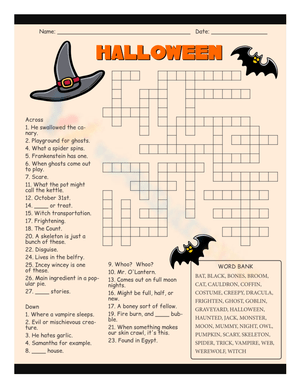
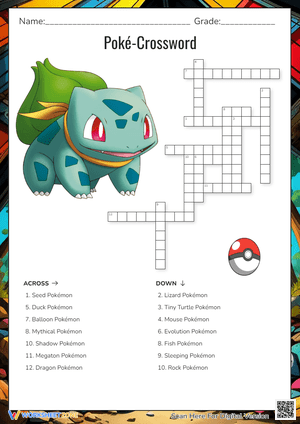
A Monday word sort works well as the week's opening move. Students handle the new words physically — sorting, resorting, discussing — and the process gives you an immediate read on who already grasps the pattern and who doesn't. By midweek, a sentence completion or crossword task shifts the work from recognition to recall. Friday's assessment feels fair because students have encountered the words in at least two different task types rather than just re-reading a list.
The most practical activity in this set is the dictation template. Instead of distributing the worksheet for independent seat work, read sentences aloud that embed the target words and have students write from hearing rather than seeing. A student who can copy discomfort from a printed word bank and a student who can spell it correctly in the middle of a sentence are not at the same level. Dictation closes that gap — and it simultaneously gives you data on capitalization and punctuation without a separate assessment.
These 3rd grade spelling printable worksheets also fit naturally into cross-curricular planning. If the class is running a science unit on plants or animals, pulling that unit's vocabulary into the prefix and suffix exercises means students encounter those words in two subjects the same week — reinforcing both the content knowledge and the spelling without doubling instruction time.
Standard Alignment
These resources address CCSS.ELA-LITERACY.L.3.2, the Grade 3 language standard covering conventions of standard English spelling. Two sub-standards apply directly: L.3.2.e requires students to use conventional spelling for high-frequency and studied words and to add suffixes to base words correctly; L.3.2.f requires using spelling patterns and generalizations when writing words. In classroom terms, L.3.2.e is the standard being tested every time a student edits a draft — not just on Fridays. L.3.2.f is what makes word sort and derivative exercises defensible as more than test prep: they directly build the generalization knowledge the standard names.
Adjusting the Work for a Range of Learners
For students still consolidating foundational phonics, narrow the pattern focus before broadening it. Instead of introducing all five r-controlled spellings at once, start with ar and or — the two most consistent and most frequently encountered in early reading material. Pairing 3rd grade spelling printable worksheets with letter-tile work or asking students to trace words while saying each sound aloud adds a physical layer to a task that otherwise stays entirely visual. Reducing the weekly word count from 18 to 10, and choosing the 10 most common words in current classroom reading, keeps students working on real patterns without the volume becoming an obstacle.
Students who consistently outpace the rest of the class benefit from depth, not just more words. Have them trace a base word through every derivative they can generate, then look up the root's origin — unknown leads back to Old English; preview connects to Latin videre. That kind of investigation takes about 10 minutes per session and produces word knowledge that transfers into reading comprehension, not just spelling accuracy. It also keeps strong spellers from coasting through the same tasks as everyone else.
Frequently Asked Questions
How many spelling words should Grade 3 students be working with each week?
Most Grade 3 programs land between 15 and 20 words per week — a mix of pattern words, high-frequency words, and sometimes content-area vocabulary from science or social studies. The worksheets in this set work with lists in that range. For students who need extra support, 10 to 12 words following a single pattern is a reasonable lower bound without abandoning pattern instruction entirely.
Do these worksheets work in literacy center rotations?
Word sort and crossword worksheets work well as center activities because students can move through them independently after a brief whole-class introduction to the pattern. Sentence completion and dictation formats are better suited to teacher-led small groups, where you can observe whether students are retrieving the correct spelling or guessing from context clues in the sentence.
How do the worksheets handle the overlap between er, ir, and ur — three spellings for the same sound?
The r-controlled vowel exercises introduce each spelling in isolation first, then mix them in later tasks so students must discriminate without visual grouping to rely on. Starting with sorted practice gives students a memory anchor before they hit the mixed set, which is exactly the point where confusion surfaces in independent writing. These 3rd grade spelling printable worksheets sequence that exposure deliberately: pattern-grouped first, then mixed retrieval.
Can these resources be used alongside a structured literacy or intervention program?
They work as supplemental practice alongside an intervention, not as a replacement for it. If a student is in a structured literacy program, the classroom worksheets reinforce the same phonics and morphology concepts — particularly for r-controlled vowels, diphthongs, and suffix rules. Check that the pattern focus of each worksheet matches where the student currently is in their intervention sequence before assigning it independently.












 Interactive Worksheet Maker
 Quiz Maker
 Word Search Maker
 Crossword Puzzle Maker
 Word Scramble Generator
 Sentence Scramble Generator
 Handwriting Worksheet Generator
 Name Tracing Generator
 Fill In The Blank Generator