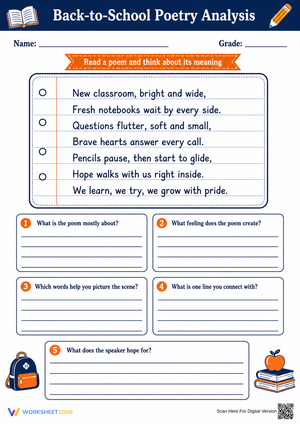
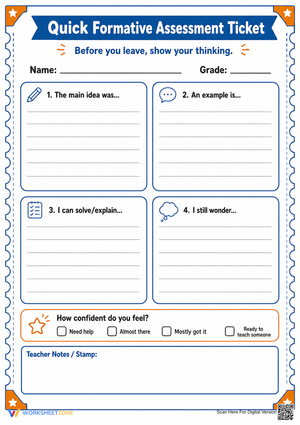
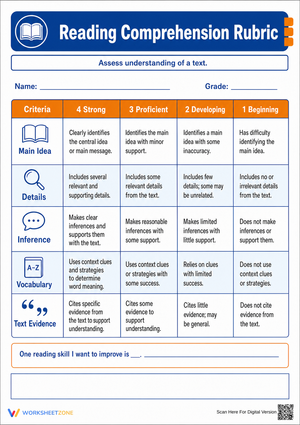
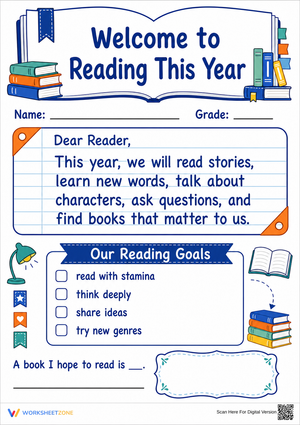
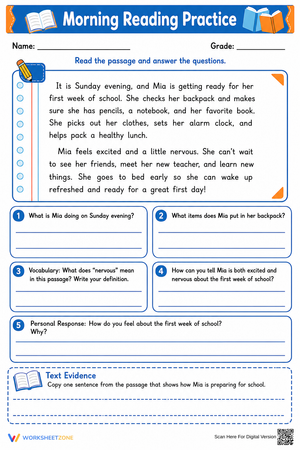
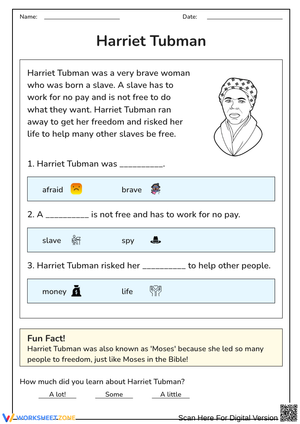
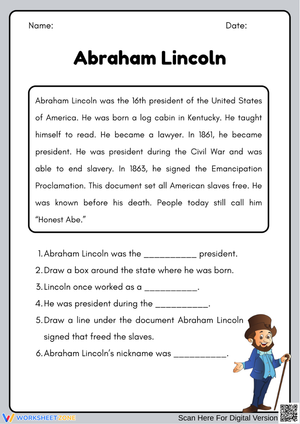
These reading worksheets for 3rd grade give teachers a ready bank of passage-based practice for the year when decoding stops being the main obstacle and comprehension becomes the real work. Each worksheet pairs a leveled passage with structured response tasks: evidence-based questions, graphic organizers, vocabulary exercises, and short written responses. The set covers both literary and informational text, which matters because third graders need exposure to both and practice moving between them.
The Comprehension Shift That Defines Third Grade
Third grade is where the "reading to learn" pivot becomes visible in actual student work. A child who passed second-grade benchmarks by decoding accurately can arrive in third grade with almost no comprehension-monitoring habits — no pausing when confused, no rereading, no internal check that the text should make logical sense from one sentence to the next. Students who would otherwise skim a passage for recognizable words are instead asked to return to specific lines, identify textual evidence, and explain in writing what a passage means, not just what it says. That shift from passive recognition to active sense-making is exactly what these worksheets practice, and it does not happen on its own.
Skills These Worksheets Build
Each worksheet targets one or two skills at a time rather than asking students to juggle everything at once. The skills addressed across the set include:
- Identifying main idea and supporting details — including the frequently confused distinction between a main idea and a topic sentence, which are not the same thing
- Using context clues and word parts to decode vocabulary: prefixes like un- and pre-, suffixes like -ful and -less
- Recognizing non-literal language — idioms, similes, and metaphors that appear in both fiction and informational text
- Analyzing character traits and motivations using evidence drawn from dialogue, action, and internal thought
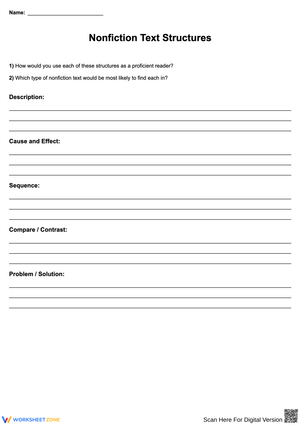
- Identifying nonfiction text structures: cause and effect, compare and contrast, chronological order
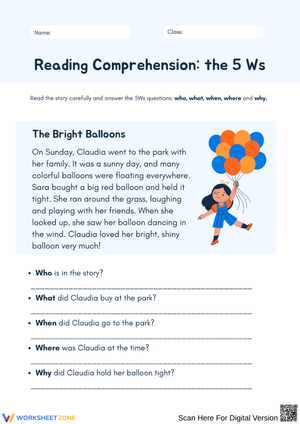
- Asking and answering text-dependent questions that require going back to the passage rather than drawing only on background knowledge
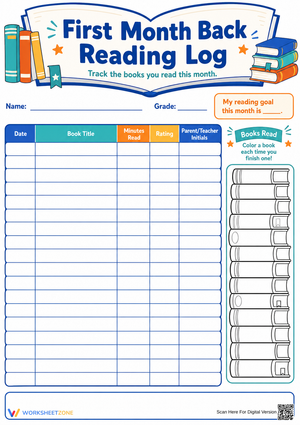
Fluency-focused reading worksheets for 3rd grade in this collection include timed passage readings alongside self-assessment trackers that give students a concrete, weekly record of words read correctly per minute. The end-of-year target for third grade typically falls somewhere in the range of 100 to 140 words correct per minute. A student-facing chart makes that goal visible and creates a quick weekly check-in that takes less than five minutes to run.
Mistakes Students Make That These Worksheets Help You Catch
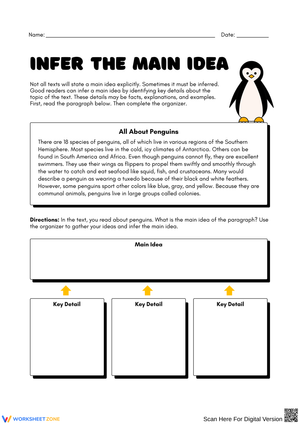
The most persistent comprehension error at this level is not a reading failure — it is a task-understanding failure. When asked to identify the main idea, students almost universally copy the first sentence of the passage, treating "what the text says first" as equivalent to "what the text is mostly about." Several worksheets in the set reverse the usual order: students collect key details first, then derive the main idea from those details. That sequence prevents the copy-the-opener shortcut and actually develops the analytical habit the skill requires.
Vocabulary questions surface a subtler problem. A student who correctly understands that un- means "not" will often write "unfriendly means not friend" rather than "not friendly." They apply the rule to the base word without adjusting for grammatical form. This error shows up consistently enough across classrooms that when you see it in marked worksheets, it warrants a brief whole-group mini-lesson — five minutes spent there pays off across every vocabulary task that follows.
Figurative language produces the most reliable errors and, frankly, the most teachable classroom moments. The idiom "he spilled the beans" generates explanations about dropped food from students who handled the comprehension questions accurately. Using the figurative language worksheets as a discussion launch — rather than just a graded written task — turns those errors into something students remember well past the lesson.
How to Build These Worksheets Into Your Lesson Plans
These work best after direct instruction, not before it. Using a worksheet as a cold introduction to a skill — main idea, for instance, before students have seen a modeled example — tends to produce surface-level guessing rather than practiced thinking. A sequence that holds up well: ten minutes of teacher-led work with a shared text on the projector, then students complete the corresponding worksheet independently or in pairs while you pull a small group for more targeted work.
For literacy centers, the set runs efficiently in dry-erase sleeves — print once, reuse across the week without reprinting. The reverse-worksheet format is worth trying as a Monday warm-up: give students a completed worksheet with several intentionally wrong answers and ask them to act as the teacher, identifying errors and correcting them with textual evidence. It demands closer reading than a standard question-and-answer task and generates discussion that would otherwise require separate prep to create. The last eight minutes before dismissal works well for a quick fluency tracker session — short enough to fit into a packed schedule, long enough to collect data worth using.
Standard Alignment
These worksheets address the following Common Core State Standards for English Language Arts, Grade 3:
- RL.3.1 / RI.3.1 — Ask and answer questions about a text, referring explicitly to the text as the basis for answers. The evidence-citation tasks on each worksheet practice this standard directly.
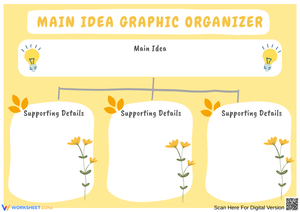
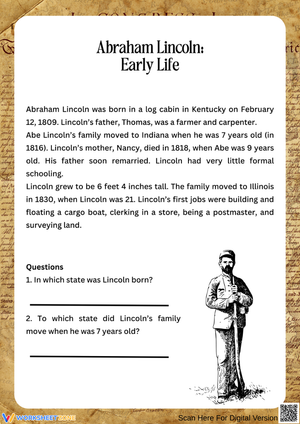
- RL.3.2 / RI.3.2 — Determine main idea or central message and explain how key details support it. Graphic organizer worksheets in the set ask students to gather supporting details first, then name the main idea — making the inferential step visible.
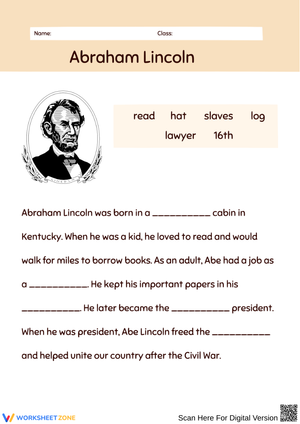
- RL.3.4 / RI.3.4 — Determine the meaning of words and phrases in context, including figurative language in literary texts. Vocabulary exercises and figurative language tasks address this standard across both passage types.
- RL.3.3 — Describe characters, including their traits, motivations, and how their actions move the plot forward. Character analysis worksheets use a three-column format: what the character says, does, and thinks.
- RI.3.5 — Use text features such as headings, captions, and sidebars to locate information. Nonfiction worksheets in the set include questions that point students directly to these features.
Adjusting the Worksheets for a Range of Learners
For students reading below grade level, the most useful adjustment is reducing task load — not replacing the passage. Keep the grade-level text; exposure to complex vocabulary and sentence structure matters regardless of where a student is reading. Limit any given worksheet to two or three response tasks instead of completing every prompt, and allow oral responses in place of written ones for students whose comprehension clearly outpaces their written expression. That gap is more common in third grade than teachers often expect, and written tasks can obscure real understanding.
Advanced readers benefit from the extension prompts distributed across the set: comparing characters across two different passages, rewriting an ending that stays consistent with the text evidence, or analyzing how an author's structural choice shapes the reader's experience. Reading worksheets for 3rd grade that include open-ended analytical tasks give strong readers genuine intellectual work rather than a longer version of the same exercise.
For students acquiring English or students who process text more slowly, a brief vocabulary preview before the reading task makes a measurable difference in how far students get into the passage. Write five key words on the board before distributing a worksheet, give a quick definition for each, and the number of students who disengage mid-passage drops noticeably. Ten minutes of front-loading often produces better results than any amount of intervention after the task is already underway.
Frequently Asked Questions
What types of questions and tasks are included?
Each worksheet typically includes a mix of multiple-choice items for quick literal-comprehension checks, short-answer questions that require textual evidence, and at least one graphic organizer task. That variety matters: multiple-choice alone does not distinguish between a student who understood the text and a student who eliminated wrong answers by process of elimination. The short-answer and graphic organizer tasks make the thinking visible in a way a selected response cannot.
How do I decide if a passage is the right difficulty for a student?
The five-finger rule is a practical in-the-moment check: have the student read a section of the passage aloud and raise one finger for each word they struggle with. Five or more errors in a short section suggests the text is too difficult for independent work. Where Lexile levels are listed on reading worksheets for 3rd grade, the independent reading range for third grade typically falls between 420L and 820L — use that as a starting point, not a hard ceiling, since a student's actual instructional range often sits outside those numbers in either direction.
Can these worksheets take the place of small-group guided reading?
No — and the distinction is worth being direct about. Worksheets handle independent practice well: they reinforce taught skills, give students repetitions with text, and produce a written record of what students can do without support. What they cannot do is give teachers real-time information about a student's reading process — where comprehension breaks down, whether the student self-corrects, how they approach an unfamiliar word mid-sentence. Small-group guided reading does that work. These worksheets belong alongside it, not in place of it.
How can students use these materials to track their own fluency progress?
Several worksheets include a timed reading component with a self-recording chart. Students read for one minute, mark where they stopped, count the words read correctly, and log the number. Running this once a week produces a visible trend line that third graders respond to — watching their own number climb is more motivating than almost any external incentive. Pairing the timed reading with a brief written reflection, something like "What slowed you down today, if anything?" starts to build the habit of noticing their own reading behavior, which carries into all their reading, not just the timed checks.












 Interactive Worksheet Maker
 Quiz Maker
 Word Search Maker
 Crossword Puzzle Maker
 Word Scramble Generator
 Sentence Scramble Generator
 Handwriting Worksheet Generator
 Name Tracing Generator
 Fill In The Blank Generator