Social skills for autism worksheets printable for 12th grade address a specific instructional window that closes the moment a student walks across the graduation stage — and what teachers do with that window matters. These worksheets focus on the transition-age demands that IEPs often name but rarely give enough practice time: professional communication, self-advocacy once school supports end, personal boundary-setting in adult relationships, and the unwritten rules of workplace culture that no job listing ever spells out.
The Specific Skills Each Worksheet Targets
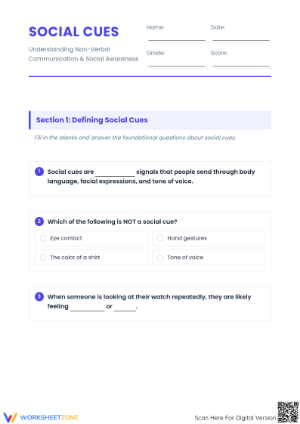
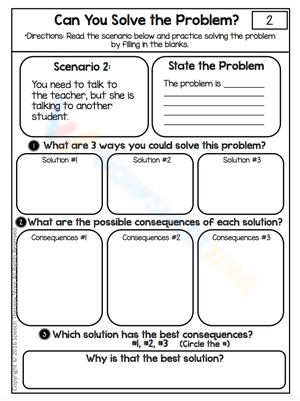
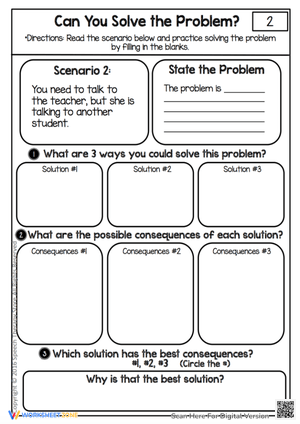
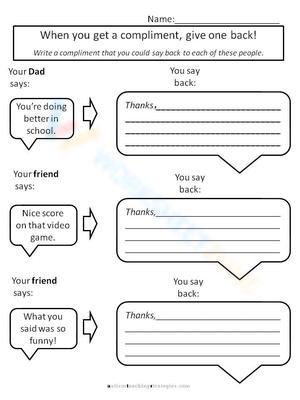
The set covers realistic adult-life scenarios rather than broad social categories. Students work through situations like receiving corrective feedback from a supervisor without shutting down, recognizing when a conversation with a coworker has shifted from collegial to uncomfortable, and identifying the difference in formality between an email to a college professor and a text to a friend. Several worksheets address self-advocacy directly: students write and rehearse the exact sentences they will need when requesting accommodations from a disability services office, where no case manager will prompt them the way one did in high school.
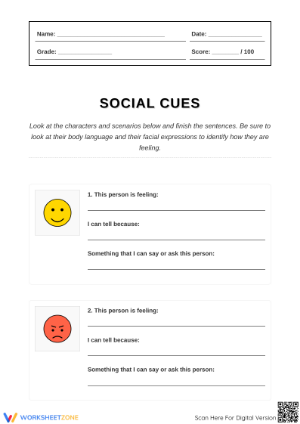
Personal relationships and digital communication are covered as well. For many 12th graders, social media is the primary channel through which they form and maintain friendships outside of a structured school day. Worksheets on digital boundaries ask students to analyze a message exchange and identify where the tone shifted, or to sort social contacts into categories — acquaintance, coworker, close friend — and explain why the same disclosure is appropriate to share with one group but not another.
Errors That Show Up Repeatedly in Student Work
The errors students make on these worksheets reveal how much 12th graders still rely on the implicit supports of a school building. Given a scenario where a supervisor offers vague feedback — "Just redo this part" — most students default to silence or compliance rather than identifying what clarifying question to ask. They understand the concept of asking for help; they have been told to ask for years. But they have not practiced the specific phrasing that reads as competent rather than dependent. That gap between the general principle and the actual sentence is exactly where each worksheet puts the work.
A second pattern worth addressing: students routinely place "boss" and "college professor" in the same authority category and apply identical deference scripts to both. In practice, a college instructor expects a student to advocate and negotiate in ways that would come across as presumptuous in many workplace hierarchies. Students who have not had this distinction made explicit will either under-advocate with faculty or over-share with employers — both errors that carry real costs after graduation.
How to Work These Worksheets Into Your Transition Planning
These worksheets fit naturally into the gaps that already exist in transition-focused schedules. If students are in a work-study or community-based program, use the workplace communication worksheets the day before a new placement begins — not as a lecture, but as a prediction exercise. Ask students which scenario on the worksheet is most likely to come up during their upcoming shift, then debrief afterward. That 15-minute before-and-after structure turns each worksheet into a reflection tool rather than a standalone activity.
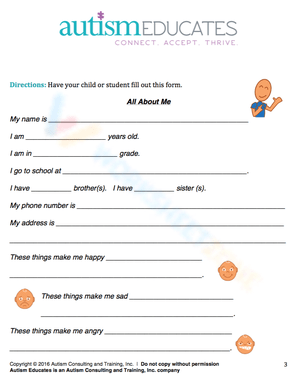
For classes with a dedicated social skills block, the self-advocacy worksheets pair well with mock transition meetings. Once students have spent a session articulating their own learning profiles on paper — which several worksheets in the set ask them to do — they bring sharper language into the transition meeting itself. Teachers who build social skills for autism worksheets printable for 12th grade into structured debrief cycles consistently see students move from vague requests ("I need help") toward specific language ("I need written instructions when a task has more than two steps").
Differentiating Within the Set for Mixed-Level Classes
The scenarios are written at a high school reading level, but the tasks can run at different depths. For students who are strong readers but struggle with social inference, the analysis questions on each worksheet — asking why a character's response might land wrong, or what subtext a message carries — can be extended into longer written responses or serve as discussion starters for the full group. For students who need more support decoding the scenarios, reading the text aloud and pausing to name the "hidden curriculum" moves as they appear gives access to the same cognitive work without requiring a separately adapted version.
Students who communicate via AAC or who have significant language differences need the same conceptual instruction, but the response format shifts. Instead of writing a script, a student might select from a set of possible responses and justify the choice, or work with a partner to act out the scenario before writing anything down. The social skills for autism worksheets printable for 12th grade in this set use open-ended response formats that allow for that kind of flexibility without requiring the teacher to build a separate worksheet from scratch.
Standard Alignment
These worksheets align with the IDEA 2004 transition services requirements, which mandate that IEPs for students aged 16 and older include measurable postsecondary goals and transition services across education, employment, and independent living. The self-advocacy and professional communication worksheets address the employment and independent living domains directly. For states using CCSS ELA standards, the scenario analysis tasks — where students read a situation and construct a written or verbal response — connect to SL.11-12.1 (evidence-based collaborative discussion) and SL.11-12.4 (presenting information clearly and logically across formal and informal contexts). Both connections make the worksheets defensible as part of IEP goals and transition documentation.
Frequently Asked Questions
Why do these worksheets focus on workplace and college scenarios rather than peer interaction?
By 12th grade, most social skills curricula have addressed peer interaction at length. The consistent gap at the transition level is the adult-world scenario — workplaces, college offices, community settings — where the social rules differ significantly and where students have had the least practice. That is the gap each worksheet in this set is built to fill.
Can a paraprofessional or job coach use these worksheets without a special education teacher present?
Yes. Each worksheet is written so the prompts and discussion questions are self-explanatory. A job coach using a workplace communication worksheet during community-based instruction can facilitate the debrief without a separate lesson plan — the follow-up questions printed on each worksheet guide the conversation.
Are these worksheets appropriate for students whose primary transition goal is supported employment rather than college?
They are. The workplace and community living worksheets do not assume a college track. Scenarios include talking to a job coach, explaining a support need to a supported employment specialist, and navigating coworkers who do not understand why a quiet workspace matters. For teachers whose students are on a supported employment pathway, the social skills for autism worksheets printable for 12th grade in this set work across both tracks — just prioritize the workplace and community worksheets before moving to the college self-advocacy materials.
How often should these worksheets appear in a weekly schedule?
One worksheet per week is a workable pace for most transition classes, especially when the debrief discussion runs a full period. Rushing through multiple worksheets in a single session rarely produces the kind of verbal practice that sticks. The scenarios are most useful when students have time to push back on their first responses, revise them, and rehearse a final version aloud before moving on.












 Interactive Worksheet Maker
 Quiz Maker
 Word Search Maker
 Crossword Puzzle Maker
 Word Scramble Generator
 Sentence Scramble Generator
 Handwriting Worksheet Generator
 Name Tracing Generator
 Fill In The Blank Generator