


























0
Views
0
Downloads

0.0
0
Save
0 Likes
Share
What to Do When You Make a Mistake
0 Views
0 Downloads
Paste this activity's link or code into your existing LMS (Google Classroom, Canvas, Teams, Schoology, Moodle, etc.).
Students can open and work on the activity right away, with no student login required.
You'll still be able to track student progress and results from your teacher account.
Information
Description
What It Is:
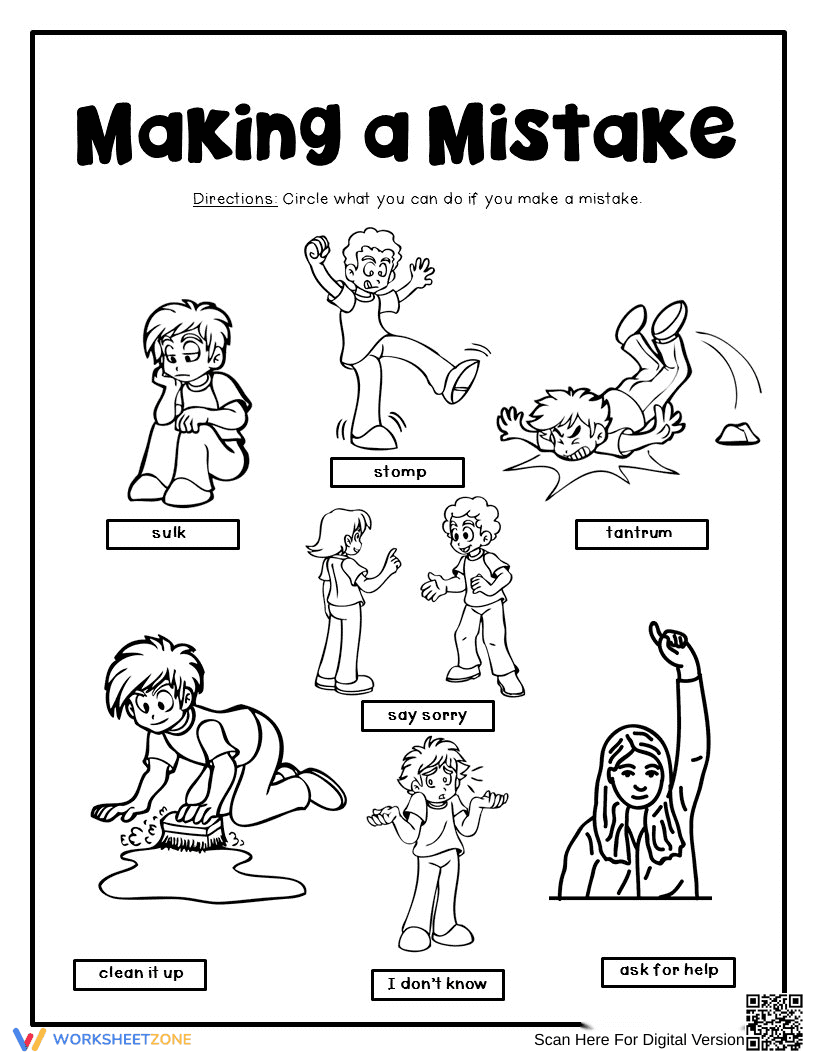
This is a worksheet titled 'Making a Mistake'. It presents several illustrated scenarios depicting different reactions to making a mistake, such as sulking, stomping, having a tantrum, saying sorry, cleaning it up, saying 'I don't know', and asking for help. The instructions are to circle what you can do if you make a mistake.
Grade Level Suitability:
This worksheet is suitable for grades K-2. The simple language and easily understandable illustrations make it accessible for young children learning about emotions and problem-solving.
Why Use It:
This worksheet helps children identify and understand appropriate and inappropriate reactions to making mistakes. It encourages self-reflection and promotes positive coping strategies like apologizing, cleaning up, and asking for help. It can be used to facilitate discussions about emotional regulation and responsibility.
How to Use It:
Students should read the directions and look at each picture. They should then circle the pictures that represent positive and helpful actions to take when they make a mistake. The worksheet can be used individually, in small groups, or as a whole class activity, followed by a discussion about why certain actions are more helpful than others.
Target Users:
This worksheet is ideal for elementary school students, particularly those in kindergarten through second grade. It is also beneficial for children with social-emotional learning needs or those who struggle with managing their reactions to errors.
This is a worksheet titled 'Making a Mistake'. It presents several illustrated scenarios depicting different reactions to making a mistake, such as sulking, stomping, having a tantrum, saying sorry, cleaning it up, saying 'I don't know', and asking for help. The instructions are to circle what you can do if you make a mistake.
Grade Level Suitability:
This worksheet is suitable for grades K-2. The simple language and easily understandable illustrations make it accessible for young children learning about emotions and problem-solving.
Why Use It:
This worksheet helps children identify and understand appropriate and inappropriate reactions to making mistakes. It encourages self-reflection and promotes positive coping strategies like apologizing, cleaning up, and asking for help. It can be used to facilitate discussions about emotional regulation and responsibility.
How to Use It:
Students should read the directions and look at each picture. They should then circle the pictures that represent positive and helpful actions to take when they make a mistake. The worksheet can be used individually, in small groups, or as a whole class activity, followed by a discussion about why certain actions are more helpful than others.
Target Users:
This worksheet is ideal for elementary school students, particularly those in kindergarten through second grade. It is also beneficial for children with social-emotional learning needs or those who struggle with managing their reactions to errors.


