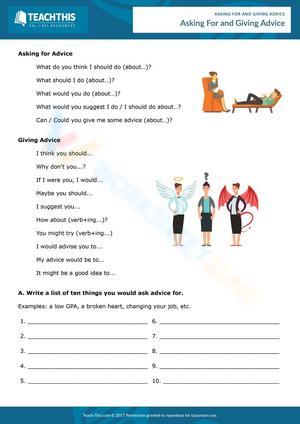
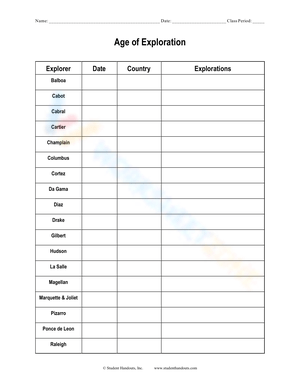
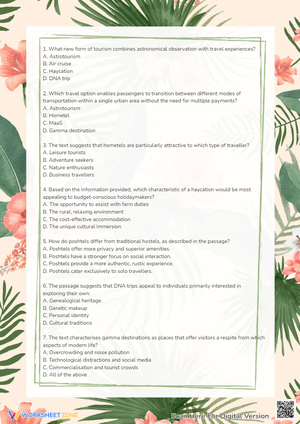
These 12th grade advice to youth worksheets pdf address one of the more underserved gaps in senior-year instruction: the practical social and professional skills students need before graduation but rarely get explicit, structured practice with. The set targets self-advocacy, professional communication, social relationship evaluation, and post-graduation readiness — skills that surface in the first week of college orientation or a new job, not on any standardized test.
What Each Worksheet Targets
The skills covered are deliberately situational rather than abstract. Students do not read about communication — they work through specific scenarios: drafting a message to a professor about a missed deadline, preparing for a salary conversation with a manager, deciding whether to address a conflict with a roommate or let it pass. That situational grounding is what makes the written reflection useful, because students have to take a position and explain it rather than agree in the abstract that communication matters.
The specific skill areas across the set include:
- Self-advocacy — articulating needs in professional and academic contexts without over-explaining or becoming defensive
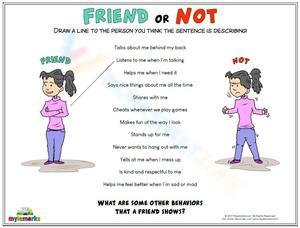
- Social relationship evaluation — distinguishing supportive connections from ones that are draining or drama-driven, and redirecting energy accordingly
- Professional communication — tone calibration, active listening, and non-verbal awareness in workplace and campus scenarios
- Post-graduation goal framing — building a clear, honest answer to "What are you doing after high school?" and getting comfortable saying it
- Conflict de-escalation — the difference between high school conflict patterns and adult-level resolution strategies
One worksheet focuses specifically on the shift from reactive social participation — where school provides the structure and students just show up — to proactive initiation, where students have to build their own networks from scratch. That shift catches a lot of seniors off guard, even ones with strong social skills in familiar contexts.
Frequent Student Errors Worth Watching For and Addressing
The most consistent error in self-advocacy exercises is students writing emotional scripts instead of strategic ones. A student who has been told to "speak up for yourself" for years will produce something like: "It's not fair that I got a B when I worked so hard on this." What they need to write instead sounds like: "I'd like to walk through the rubric with you and understand where my argument missed the mark." These worksheets create a space to practice that reframe before students are sitting across from an actual professor or supervisor.
On active listening exercises, many students check off surface behaviors — nodding, making eye contact — and believe they've completed the task. But when asked to reflect back what they heard, the summary is often garbled or selective. Each worksheet builds in a written reflection step that makes this gap visible: students have to write what the other person said, not just confirm that they were "paying attention."
A subtler pattern appears in social relationship reflection. Students who held high social status in high school — team captains, club presidents, students everyone knew — tend to rate their relationship skills highest, yet they're sometimes the least prepared for initiating connections in unfamiliar environments. The prompts push them to examine how those connections were built — institution-provided context, years of shared history — versus how they'd build new ones without that structure in place.
Building These Worksheets Into the Senior Year Calendar
Timing matters as much as content. Running all of this in one spring semester "life skills" week means students are working through genuine anxiety about the future with no time to revisit or apply what they practiced. A more effective approach runs one or two worksheets per month starting in October, using advisory periods, senior seminar blocks, or even the last 12 minutes of a Friday class. Short, repeated exposure builds the kind of automatic self-reflection habit that actually transfers after graduation — spaced practice over cramming applies here just as much as it does in content courses.
Pairing a worksheet with a small-group discussion — four or five students rather than whole-class — consistently produces more honest responses. Seniors in a full class tend to perform confidence they don't yet have; in a smaller group, they actually name what they're uncertain about. School counselors make strong co-facilitators for the sessions focused on post-graduation planning, because they can connect written reflection to concrete next steps like enrollment deposits, FAFSA follow-up, or job application timelines.
The 12th grade advice to youth worksheets pdf work particularly well as a primer before individual counselor appointments. When students have already written through their concerns about post-graduation plans, they arrive at those meetings with something specific to discuss rather than spending the first five minutes trying to articulate what's worrying them.
Standard Alignment
The self-advocacy and professional communication worksheets align with CCSS.ELA-LITERACY.SL.11-12.1, which calls for students to initiate and participate in collaborative discussions with diverse partners on complex topics — applied here to real-world social and professional scenarios rather than literary texts. The goal-framing and post-graduation reflection worksheets address CCSS.ELA-LITERACY.SL.11-12.4, presenting information clearly for a specific audience and purpose. For schools using the CASEL framework, the set maps directly to the Self-Management, Social Awareness, and Relationship Skills competency clusters, all of which identify senior year as a critical window for developing adult-level social and emotional functioning. Most senior transition and advisory curricula place these skills in the spring semester, but starting in the fall gives students time to practice, reflect, and actually try things between sessions.
Adjusting the Worksheets for a Range of Learners
Students arrive at 12th grade with wildly different baselines. Some have been practicing self-advocacy for years through IEP or 504 meetings; others have never explicitly named their strengths or asked for help in a professional way. For students who need more support, the prompts work well when discussed orally in pairs before students write — not to give them the answers, but to lower the activation energy of staring at a blank page. Writing sentence starters on the board during the activity serves the same function without requiring individual differentiation that disrupts the class flow.
For students who move through the worksheets quickly, each one has natural extension territory. A student who finishes the self-advocacy scenario early can write an alternate version from the perspective of the other party — the professor or the manager — which surfaces assumptions about how authority figures respond to student requests. That reversal tends to produce the sharpest thinking in any room.
The 12th grade advice to youth worksheets pdf also serve students planning paths other than four-year college. The scenarios are written to branch — some explicitly address workplace contexts, trade programs, and military entry. A student heading into an apprenticeship needs to practice the same professional communication skills as a college-bound peer; the stakes and setting look slightly different, and the worksheets reflect that rather than defaulting to campus-only examples.
Frequently Asked Questions
Can these worksheets be used in a virtual classroom?
Yes. Distribute the 12th grade advice to youth worksheets pdf through a learning management system — Google Classroom, Canvas, or similar — and have students complete them asynchronously before a synchronous session. Breakout rooms of three to five students work well for the reflection-sharing component. The written format means asynchronous completion is natural, not a workaround.
How often should transition-focused lessons run during senior year?
One worksheet every two to three weeks, starting no later than October, produces better results than concentrated units. Students need time between sessions to have small real-world experiences they can bring back to the next reflection prompt. Cramming transition work into April means students are processing anxiety without time to actually try anything they've practiced.
Are these worksheets relevant for students not planning to attend college?
The self-advocacy and communication skills addressed apply across every post-graduation path. A student entering a skilled trade, an apprenticeship, the military, or the workforce will need to communicate professionally with supervisors, manage new peer relationships, and advocate for their own needs — in some environments, even more directly and immediately than a college student navigating a large campus bureaucracy.
Can students use these for independent reflection outside of class?
The prompts are clear enough for self-directed use. Students who are anxious about graduation often find solo reflection useful precisely because there's no audience. Encourage students to keep their completed work — a written record of their own answers from October through May gives them a concrete artifact of how their thinking changed across senior year, which turns out to be useful to look back at when the first semester of whatever comes next gets hard.












 Interactive Worksheet Maker
 Quiz Maker
 Word Search Maker
 Crossword Puzzle Maker
 Word Scramble Generator
 Sentence Scramble Generator
 Handwriting Worksheet Generator
 Name Tracing Generator
 Fill In The Blank Generator