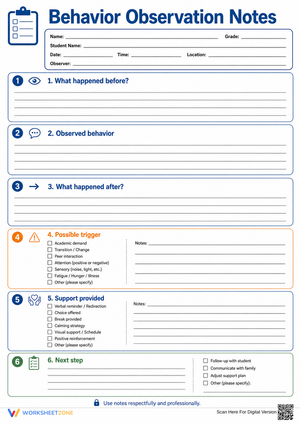
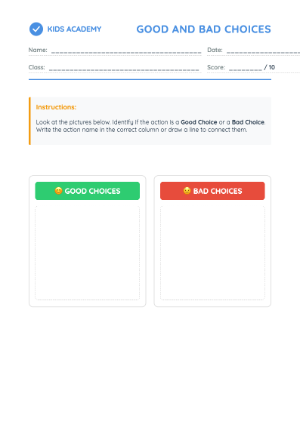
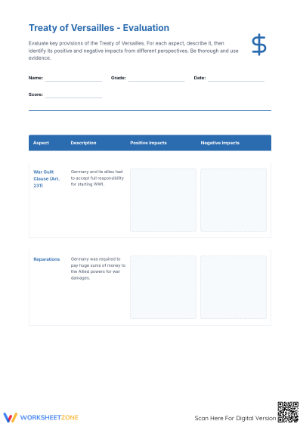
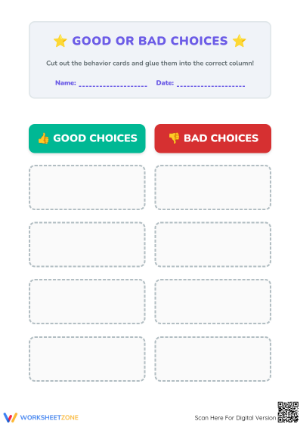
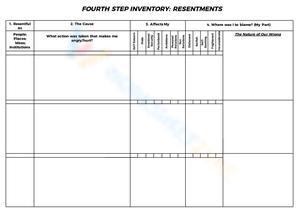
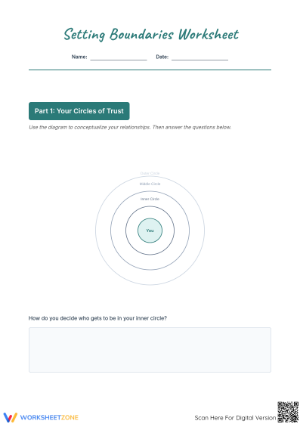
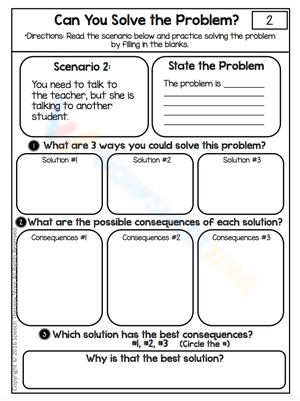
These behavior printable pdf worksheets for 12th grade are built around one expectation that separates senior psychology from every earlier course: students don't just describe what people do — they interrogate the explanations, test where the theories hold up, and decide where they break down. The set covers environmental conditioning, group dynamics, professional conduct, and self-regulation, with critical analysis of behavioral theory running through all of it.
What Students Work Through in Each Worksheet
Some worksheets ask students to map stimulus-response chains using their own recent experiences as data — tracking reactions to social stressors, study environments, or reward structures over several days, then analyzing those records as they would an outside subject's. Others move into group psychology: students deconstruct the bystander effect and the risky-shift phenomenon using documented historical cases rather than generic hypotheticals. A separate cluster addresses professional workplace behavior through case studies that put students inside specific scenarios — analyzing, for instance, whether a manager's use of unpredictable praise constitutes effective motivation, variable-ratio reinforcement, or something ethically questionable, and making a supported argument for their conclusion.
The final portion of the set turns the critical lens directly onto behavioral modification. Students compare techniques used in clinical settings, school discipline systems, and public policy initiatives, then evaluate both the effectiveness and the ethics of each approach. This is the section that generates the most genuine classroom argument — which is the intent.
Mistakes Students Make That These Worksheets Surface
Behavior printable pdf worksheets for 12th grade surface misconceptions that class discussion tends to let slide by. The most consistent one: negative reinforcement is almost universally misread. Students hear "negative" and map it onto punishment regardless of prior instruction. The error shows up clearly in writing — a student will correctly explain that removing an aversive stimulus increases a target behavior in one sentence, then classify a teacher excusing class from Friday homework as "negative punishment" two lines later. Seeing it written down makes the confusion correctable before it costs points on the AP exam.
The second predictable error surfaces in the group dynamics worksheets. When analyzing the bystander effect, students default to moral judgment: "those people just didn't care." They resist the situational explanation — diffusion of responsibility as an environmental variable — because it requires applying the fundamental attribution error to themselves and to the very case they're studying. The worksheet prompts push them through that move deliberately, but expect significant pushback the first time around.
Fitting These Worksheets Into Your Teaching Week
Behavior printable pdf worksheets for 12th grade work best when distributed across a unit rather than assigned in a single block. The stimulus-response mapping worksheets are strong Monday starters — students come in with weekend experiences that count as real data, so the activity opens with material they already own. The behavioral modification ethics worksheets belong at the unit's end, after students have enough theoretical vocabulary to construct an actual argument rather than just expressing a gut reaction.
For AP Psychology sections, the case study worksheets do real work in the three weeks before the May exam. Returning to the Learning unit through written retrieval practice produces better retention at that point than re-reading notes. For senior electives outside AP, the professional conduct worksheets gain traction in January and February — when many students are beginning internship applications and suddenly have a personal stake in what professional behavior actually means.
Standard Alignment
These worksheets align with the APA's National Standards for High School Psychology Curricula, specifically Standard Area 7 (Learning) and Standard Area 8 (Social and Cultural Diversity). Standard Area 7 expects seniors to evaluate the strengths and limitations of behavioral research methods, not simply apply them — a distinction these worksheets hold to throughout. Standard Area 8 connects individual behavior to social and environmental context, which is the explicit focus of the group dynamics and professional conduct worksheets. For AP Psychology courses, the primary alignment is the Learning unit (approximately 7–9% of the AP exam), with secondary support for the Social Psychology unit through the group dynamics content.
Adjusting the Worksheets for Different Student Levels
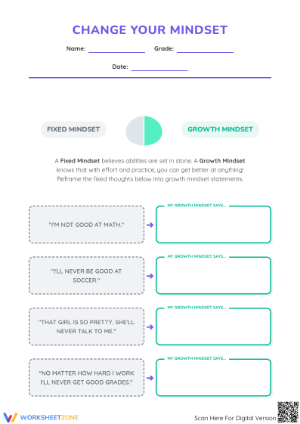
Behavior printable pdf worksheets for 12th grade at this level assume some fluency with psychological vocabulary — operant conditioning, reinforcement schedules, attribution theory — that not every senior arrives with, particularly in non-AP tracks. For students who need that vocabulary explicitly in place before they can analyze, a ten-minute front-loaded term review before the worksheet begins clears that barrier without changing the worksheet itself. The analysis prompts stay the same; the runway into them is just longer.
For students ready to extend, the behavioral modification ethics worksheets open naturally into independent research. Instead of working from the provided case studies, these students select their own — public policy campaigns, behavioral intervention programs, digital platform design choices — and apply the same evaluative criteria the worksheet models. That worksheet then becomes an outline for a longer analytical essay or a seminar presentation, depending on how you want to use the remaining unit time.
Frequently Asked Questions
Are these worksheets suitable for both AP Psychology and non-AP senior electives?
Yes. The critical analysis focus aligns directly with AP Psychology's Learning and Social Psychology units. The professional conduct and self-regulation worksheets also fit senior health, career and technical education, and college and career readiness courses. The two tracks draw on different worksheets within the set rather than using the same materials at different paces.
How do the workplace behavior worksheets stay grounded in psychology rather than becoming generic professionalism advice?
Each scenario is anchored to a specific behavioral mechanism — variable-ratio reinforcement, social facilitation under observation, groupthink in team decision-making — before students evaluate its ethics. That sequence keeps each worksheet inside the course content. Students analyze the psychology of the situation first; the professional conduct question follows from that analysis, not the other way around.
Do these worksheets hold up for students working independently or in hybrid settings?
The PDF format makes distribution straightforward in any setting. The structured prompts on each worksheet provide enough direction for independent work. The group dynamics and behavioral ethics worksheets produce richer written responses when students have some discussion before or after completing them — even a short exchange — but they function as standalone assignments when that isn't possible.