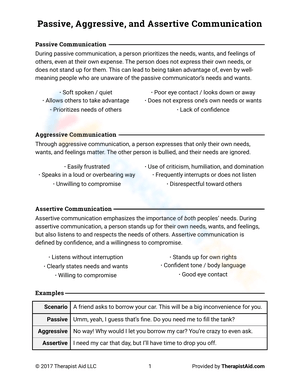
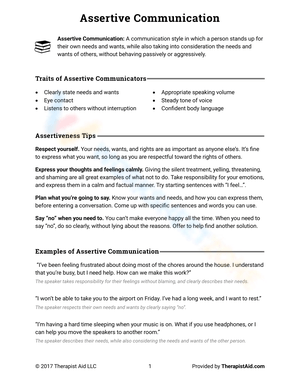
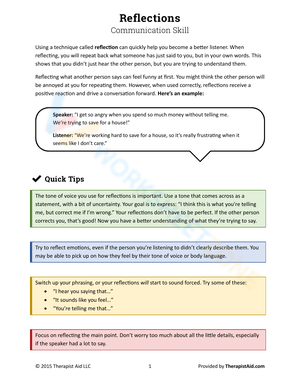
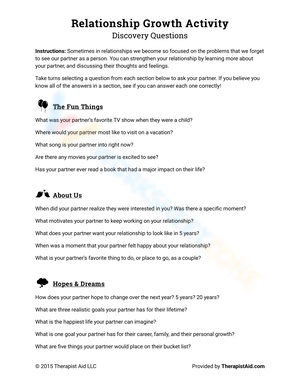
Communication skills pdf worksheets for 12th grade come into their own during a very specific stretch of the school year — the months when seniors are drafting college essays in one window while preparing for scholarship interviews in another, and when getting their message right feels immediate rather than abstract. This set gives seniors structured practice across active listening, tone adjustment, nonverbal awareness, conflict resolution, and professional-context communication. Each worksheet stands alone, so teachers can pull a single exercise for a targeted lesson or run the full set across a semester unit.
What Each Worksheet Targets
Five skill areas run through the set, each with exercises that move from analysis into applied writing practice.
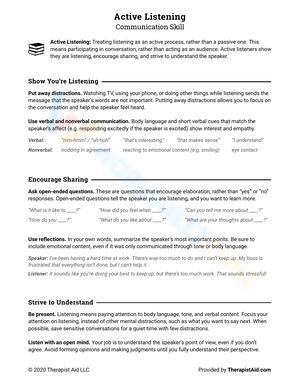
- Active listening: Students track their comprehension in real time — marking where they lose the thread, noting the assumptions they brought into a conversation before the speaker finished, and writing back what they heard before offering any response of their own.
- Tone and audience awareness: Exercises ask students to rewrite the same core message for three different audiences — a peer, a college interviewer, and a workplace supervisor — then compare the shifts in word choice, sentence length, and formality level.
- Nonverbal communication: Students annotate transcripts where body language information accompanies the dialogue, identifying moments where the speaker's physical presence reinforced or directly contradicted their words.
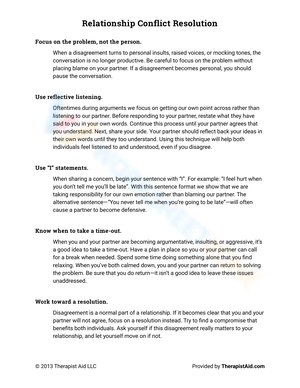
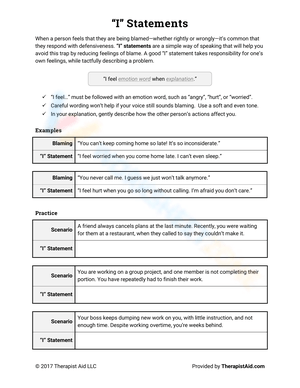
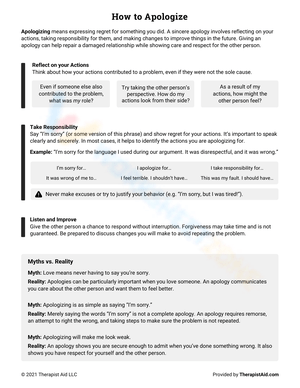
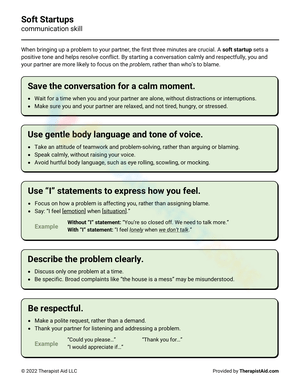
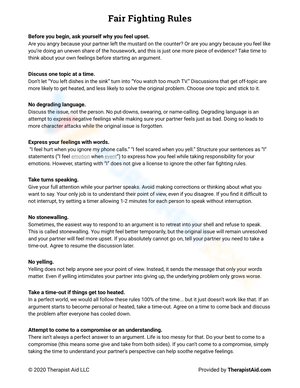
- Conflict resolution: Each worksheet walks through a realistic scenario — a group project dispute, a misread email, a coach-athlete disagreement — and asks students to identify the communication breakdown, then draft a response using "I" statements and perspective-taking steps.
- Interview and professional communication: Students practice structuring STAR-format answers (Situation, Task, Action, Result) in writing before rehearsing them aloud, using the worksheet as a planning tool rather than a script to memorize.
Where Senior Communication Actually Breaks Down
The error that surfaces most reliably at this level is not vocabulary or grammar — it is the inability to separate intent from impact. A student will insist, convincingly, that they said nothing wrong, because in their internal version of the conversation, they did not. Getting them to reconstruct the interaction from the listener's position — what words landed, what tone came across, what the silence after meant — is where these worksheets do their most important work. The conflict resolution exercises are particularly effective at making this gap visible, because they require students to write out both sides of the disagreement before they propose any resolution.
A second pattern: seniors who are strong writers often overcommunicate in spoken or interview contexts, burying the key point under context the listener did not ask for. The STAR-format exercises surface this immediately. Students who fill three-quarters of the answer space with "Situation" detail before reaching "Action" see the imbalance right there on the worksheet, which makes it easier to address than a verbal note delivered after the fact.
Working These Worksheets Into the Senior Year Calendar
Senior year has a different rhythm than any other grade level — application deadlines in the fall, a predictable attention dip in February, and genuine anxiety running underneath both. The active listening and nonverbal communication exercises work well in September and October, when seniors are still in the habit of showing up and the classroom culture is still forming. The interview and professional communication worksheets land better in January and February, when many students have campus visits or internship interviews coming up and the practice feels immediately relevant rather than hypothetical.
For teachers running advisory periods, homeroom blocks, or dedicated senior seminar time, the conflict resolution exercises work well as a short independent warm-up. Students read the scenario, complete the worksheet, and pair-share before opening the full class discussion — the whole sequence runs about twenty minutes and attaches naturally to any existing conversation about group dynamics or collaborative work. Communication skills pdf worksheets for 12th grade also slot into literature units more naturally than teachers expect: asking students to analyze a novel's dialogue through the lens of "what communication breakdown caused this conflict?" gives them a concrete analytical frame and a reason to look closely at the text itself.
Standard Alignment
These communication skills pdf worksheets for 12th grade align most directly with CCSS.ELA-Literacy.SL.11-12.1, which requires students to initiate and participate effectively in collaborative discussions — building on others' ideas and expressing their own clearly and persuasively. The active listening exercises address SL.11-12.1a specifically: coming to discussions prepared, drawing on that preparation to explore ideas, and referring to evidence when making or challenging a claim. The tone and audience awareness exercises connect to SL.11-12.6, which calls on students to adapt speech to a variety of contexts and tasks, demonstrating command of formal English when appropriate. In practice, the speaking and listening standards often get addressed only through presentation assessments. These worksheets give teachers a written-practice pathway into the same skills before any in-person performance task.
Adjusting the Set for a Mixed-Readiness Senior Class
Senior classes in most schools span a wide range of communication readiness. Some students arrive with years of debate, theater, or competitive mock-trial experience; others have successfully avoided any public-facing communication task since middle school. The worksheets handle this range reasonably well because the underlying skill is the same across every exercise — only the entry point differs.
For students who need more structure before jumping into open-ended scenarios, the conflict resolution and tone-shift exercises both include a sentence-level response option: instead of drafting a full reply, students select from three sample responses and explain in writing which one works and why. This keeps them analyzing communication rather than freezing in front of a blank response box. For students who move quickly through the core exercise, an extension prompt on each worksheet asks them to identify how the scenario would change if one variable shifted — a different power dynamic, a different cultural context, a different medium. That prompt regularly generates the most interesting class discussion, regardless of level.
Frequently Asked Questions
Are these worksheets formatted for printing, or can students complete them digitally?
Both. The PDF format allows students to complete each worksheet digitally using annotation tools or a type-into-PDF function, or print it for handwritten work. The conflict resolution and STAR-format exercises tend to produce more thorough student thinking on paper, where students annotate and cross out more freely than they do inside a digital text box.
Can these exercises be used individually, or do they need to be taught in sequence?
Each worksheet stands alone. None of them depend on another being completed first. Teachers regularly pull a single exercise for a targeted lesson — the interview prep worksheet before a mock interview day, for instance — without running the full set.
Do these worksheets work in a co-taught or inclusion classroom?
The sentence-level response option built into several exercises gives students with IEPs or language processing challenges a concrete starting point without reducing the cognitive demand of the analysis. Co-teachers find it useful to use the same worksheet for the whole class, then decide together which students need the structured-response entry point versus the open-ended prompt. The communication skills pdf worksheets for 12th grade format keeps everything on one worksheet rather than spread across multiple materials, which simplifies that coordination considerably.
Are these appropriate for seniors entering the workforce directly, not just college-bound students?
The professional communication and conflict resolution exercises include workplace contexts alongside academic ones — a disagreement with a coworker, a miscommunication with a manager, a job interview rather than a campus visit. Students heading into trades, apprenticeships, or entry-level positions find these exercises as immediately relevant as students preparing for a college admissions interview.












 Interactive Worksheet Maker
 Quiz Maker
 Word Search Maker
 Crossword Puzzle Maker
 Word Scramble Generator
 Sentence Scramble Generator
 Handwriting Worksheet Generator
 Name Tracing Generator
 Fill In The Blank Generator