These social skills for teens worksheets printable for 12th grade address a specific window most teachers recognize but rarely have materials for: the months between college acceptance letters and actual enrollment, when seniors are expected to conduct themselves like adults in professional and collegiate settings but have had almost no structured practice doing so. The set covers professional communication, conflict resolution, networking introductions, personal boundaries, and workplace etiquette — the exact interpersonal competencies that determine how a student comes across in a job interview, a first email to a professor, or a team meeting during an internship.
The Specific Skills Built Across the Set
Each worksheet targets a discrete competency, which means teachers can assign them in a planned sequence or pull individual ones for a specific advisory session or unit. The skills covered include:
- Professional email conventions — crafting subject lines, formal salutations, and requests that do not read as demands
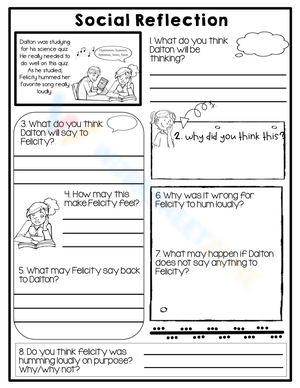
- Active listening in formal contexts — distinguishing attentive engagement from passive hearing, identifying paraphrasing versus interruption, and reading nonverbal cues in high-stakes conversations
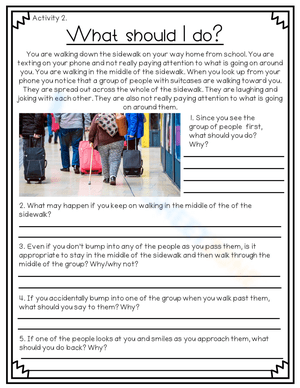
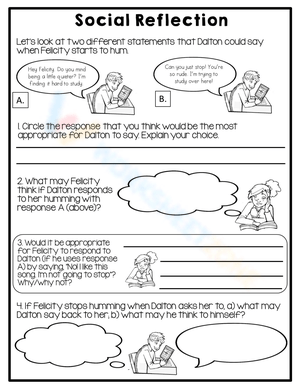
- Assertive communication — producing responses that hold a position without becoming combative, with practice scenarios set in both academic and workplace environments
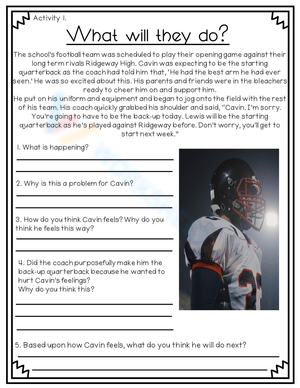
- Conflict resolution with structured frameworks — identifying root causes, applying "I" statements correctly, and reaching compromise without surrendering self-advocacy
- Networking introductions — constructing a brief professional self-presentation centered on interests and goals rather than résumé statistics
- Boundary recognition and articulation — identifying physical, emotional, and digital boundaries and responding clearly when those boundaries are tested
- Transition etiquette — punctuality expectations, hierarchy navigation, and the protocol differences between peer relationships and professional ones
Student Mistakes Worth Catching Before Graduation
The register gap is the most consistent error pattern in this content area. A student who writes a flawless college application essay will still open an email to an admissions counselor with "Hey" — because shifting register between casual and formal contexts is not intuitive. The professional email worksheet surfaces this quickly, and students are often genuinely surprised when their own draft is placed next to a formal version of the same message.
The "I statement" errors are subtler. Seniors learn the formula — I feel... when... because... — but frequently produce sentences like "I feel like you were being unfair," which is still an accusation dressed in the grammatical shape of ownership. The conflict-resolution worksheets require students to rewrite these until the sentence describes an internal state rather than attributing blame. Most seniors need several attempts to get it right, which is exactly why the practice matters before they are negotiating with a supervisor or a roommate.
In the networking exercises, a third pattern appears: students default to quantifying themselves. They lead with GPA, test scores, or AP course count — metrics that feel defensible in academic settings but come across as one-dimensional in professional conversation. The worksheet on professional introductions redirects students toward describing interests, goals, and what they want to contribute. That shift reads very differently to a potential employer or mentor, and students often do not see the difference until it is written out side by side.
Where These Worksheets Fit in Your Week
Advisory periods and senior seminar are the most natural placement. One worksheet assigned on Monday, with a brief written reflection due Wednesday and a 10-minute class discussion on Thursday, creates a rhythm that does not crowd out academic content. The last 8 minutes of a seminar block — after the formal lesson but before dismissal — is when these discussions land best, because students have a completed worksheet in hand rather than a vague open-ended prompt. Social skills for teens worksheets printable for 12th grade drop into content-area classes more naturally than most teachers expect: the communication and active listening worksheets fit alongside an ELA unit on argument or rhetoric, and the conflict and negotiation exercises pair with Social Studies discussions of civic engagement or labor history.
One honest limitation worth naming: the role-play components in the networking and assertiveness worksheets require more class time than a standard 45-minute period with 30-plus students reliably allows. The written portions of each worksheet are self-contained and executable in any format — partner practice works better in longer blocks or in advisory contexts where the pace is less prescribed. Teachers who try to fit both the written work and the role-play into a single compressed period tend to rush the debrief, which is where the most durable learning actually happens.
Adapting These Worksheets Across a Mixed Senior Class
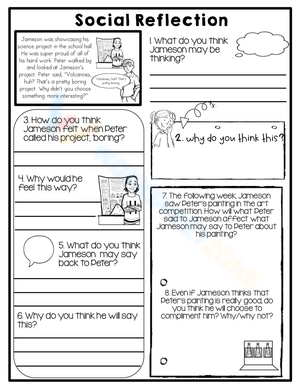
For students managing social anxiety, the written format offers something live role-play cannot: private rehearsal before public performance. Students work through sentence starters and scripted response options on paper first, which reduces the freeze response that comes from being placed on the spot without preparation. The assertiveness and boundary-setting worksheets are particularly useful here — students can annotate example conversations, cross out language that does not fit their voice, and substitute their own phrasing before any class discussion begins.
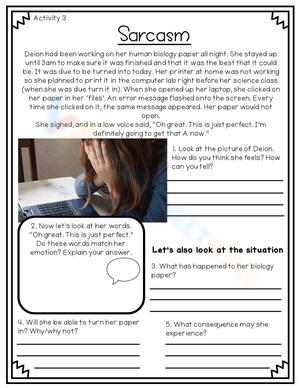
Socially confident seniors often have the opposite blind spot: they underestimate the precision these skills require. The nonverbal communication and email tone worksheets tend to catch them productively. Students who are comfortable in social settings sometimes interrupt while believing they are contributing, or project informality in contexts that read it as disrespect. Seeing that pattern named in a worksheet — rather than pointed out by a teacher — creates a different kind of reflection.
For ELL seniors, brief vocabulary front-loading before assigning these worksheets makes the tasks accessible much more quickly. Terms like "constructive feedback," "mutual benefit," and "follow-up correspondence" carry register-specific meanings that may not transfer directly from everyday English. Five minutes of explicit vocabulary work before the worksheet is assigned is enough. For students entering trades or the workforce directly after graduation, the workplace conflict, supervisor communication, and professional introduction worksheets are more immediately relevant than the college-transition sections — sequencing those first reflects where those students actually are.
Standard Alignment
These worksheets connect most directly to CCSS.ELA-LITERACY.SL.11-12.1, which requires students to initiate and participate in collaborative discussions, building on others' ideas and expressing their own clearly and persuasively. The active listening, professional communication, and conflict-resolution worksheets address this standard's expectation of substantive, purposeful exchange in formal settings. CCSS.ELA-LITERACY.SL.11-12.4 applies to the networking and professional introduction components, which ask students to present information in a manner appropriate to the task, purpose, and audience — a demand that mirrors what professional self-presentation actually requires.
Beyond ELA standards, the set maps onto the CASEL Social-Emotional Learning framework's Relationship Skills and Responsible Decision-Making competencies at the advanced level appropriate for 12th grade. Many schools with SEL documentation requirements find these worksheets satisfy program evidence needs without requiring separate lesson planning. Social skills for teens worksheets printable for 12th grade also align with transition-planning requirements for students whose IEPs include post-secondary social or employment goals, where documented practice with real-world communication scenarios is an explicit service requirement.
Frequently Asked Questions
What if I do not have an advisory period — where do these worksheets fit?
English, Social Studies, and Career & Technical Education classes absorb most of this content without strain. The communication and listening worksheets fit naturally alongside an ELA argument or rhetoric unit. Conflict-resolution and negotiation exercises pair well with Social Studies units on civic responsibility. CTE capstone courses benefit from the workplace etiquette and professional introduction worksheets. Each worksheet runs 15–20 minutes as a focused skill exercise — none require a full class period to be useful.
How do I handle seniors who refuse to engage with partner or role-play tasks?
The written portions of each worksheet stand alone. The scenario analysis and written-response tasks do not require a partner, and those written responses give teachers real formative information about where students are. For reluctant students, requiring only the written portion first — and making the role-play optional — removes the performance pressure without losing the core practice. Many students who resist the live component engage fully with the written exercises.
Are the boundary-setting worksheets appropriate for whole-class use, or might they prompt personal disclosures?
The scenarios are framed in third person — "a student named Alex experiences..." — rather than asking students to reflect directly on their own situations. This keeps the discussion analytical rather than confessional and reduces the likelihood of sensitive disclosures during a whole-class lesson. Teachers who work with students who have experienced trauma may want to preview the scenarios in advance; they are written to be specific and realistic without being graphic.
Can students use completed worksheets as references later, or are they just one-time practice?
Teachers who assign social skills for teens worksheets printable for 12th grade consistently report that students return to their completed worksheets before high-stakes real-world moments — college orientation, first job interviews, initial meetings with new professors. Keeping the full set in a folder through graduation turns the exercises into a personal reference rather than just practice. Some teachers schedule a brief review session in the final week of school where students revisit two or three of their most-used completed worksheets before heading into summer.












 Interactive Worksheet Maker
 Quiz Maker
 Word Search Maker
 Crossword Puzzle Maker
 Word Scramble Generator
 Sentence Scramble Generator
 Handwriting Worksheet Generator
 Name Tracing Generator
 Fill In The Blank Generator