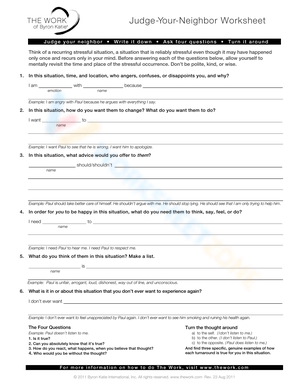
These judge your neighbor worksheets for 12th grade give teachers a concrete tool for one of the harder moves in senior-level SEL: turning a snap judgment into something students can actually examine on paper. Each worksheet guides students through a structured sequence — naming the judgment, identifying the evidence (or lack of it) behind it, and rewriting the scenario from the other person's perspective. The set addresses the fundamental attribution error, confirmation bias, and perspective-taking in a format that holds up during full-class discussion or quiet independent work.
What Each Worksheet Asks Students to Do
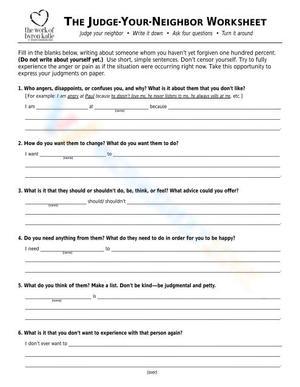
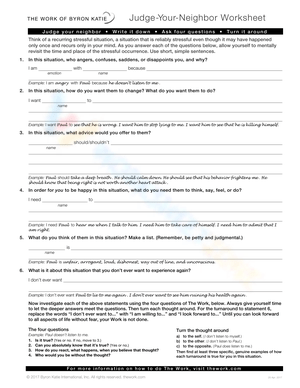
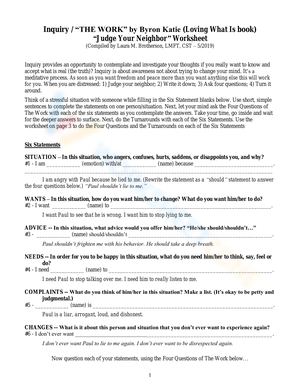
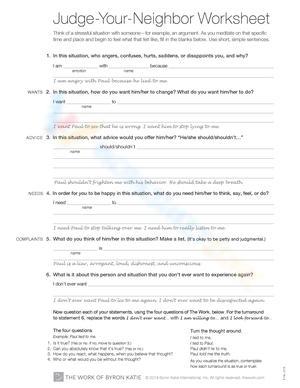
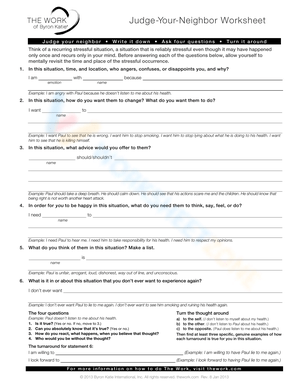
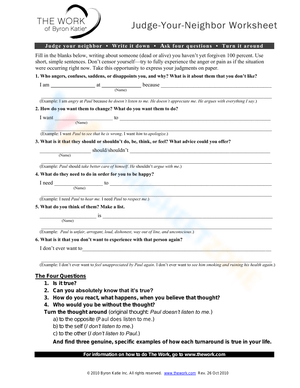
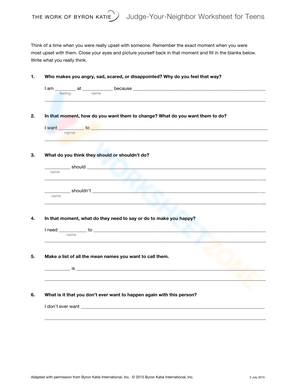
The judge your neighbor worksheets for 12th grade ask students to move through five specific steps before arriving at any conclusion about another person's behavior. That structure matters because unguided reflection on social judgment tends to loop — students talk themselves back into the position they started with. The prompts break that loop by requiring students to externalize the judgment on paper and then interrogate it systematically.
Each worksheet follows this progression:
- Name the judgment in specific language — not "she's difficult" but "she interrupted me three times in the group project meeting"
- List the evidence behind the judgment, then mark which pieces are direct observation vs. inference
- Search for contradiction — at least three concrete behaviors that do not fit the original label
- Identify a plausible external factor that could explain the behavior without excusing it
- Rewrite the scenario from the other person's perspective in first person
The rewrite prompt is where the most productive classroom discussion surfaces. Students often discover that writing a coherent explanation for someone they dislike requires actual understanding — and that the act of understanding is not the same as agreement. That distinction is worth naming explicitly when you debrief the class.
Where Student Thinking Stalls — and What to Watch For
The most consistent sticking point isn't the judgment itself; it's the evidence inventory. When asked to list three contradictory data points, students frequently list qualifications instead — "well, he's usually fine" still centers the original negative frame. The difference between "he can be friendly" and "he stayed after class to help me find my notes last Thursday" is the difference between a hedging thought and actual contradictory evidence. Students need that distinction drawn clearly before they start writing.
A second pattern worth watching: students confuse perspective-taking with sympathy. When the rewrite prompt asks them to inhabit another person's viewpoint, many slide into "I feel bad for her because..." rather than "from her position, this decision made sense because her situation involved..." Sympathy keeps the writer at the center of the narrative. Perspective-taking requires students to temporarily step out of their own frame entirely. Modeling this distinction with a fictional scenario before students attempt a personal one saves significant class time and produces much stronger first drafts.
Students who write the harshest judgments also tend to be writing about traits they've been criticized for themselves. A student who labels a peer "attention-seeking and loud" may be working through feedback they've received about their own behavior. These worksheets surface that dynamic, which is genuinely useful — but only in a classroom where honesty isn't weaponized. Set that expectation before distributing anything.
Fitting These Worksheets Into Your Actual Lesson Plan
The most effective placement is after students have already formed an opinion about a real or textual situation. After a Socratic seminar on a morally ambiguous character, after a current-events discussion that got heated, after a visible classroom conflict — hand out the worksheet and run the judgment through the protocol. That sequencing lets each worksheet do diagnostic work: you learn how students are reasoning, not just what they conclude.
For advisory or homeroom periods with limited time, each worksheet functions as a self-contained 15-minute activity. The prompts are specific enough that students can start immediately without background setup, and the reflection questions hold enough friction to fill the time without padding. Students who finish early can swap their rewrite paragraphs with a partner and assess whether the perspective-taking reads as genuine or as a thin restatement of the original criticism dressed up as insight.
The judge your neighbor worksheets for 12th grade also pair well with restorative practices curricula, where the goal before any resolution conversation is ensuring all parties can articulate the situation from multiple positions. Running a worksheet before a facilitated restorative circle reduces the reactive back-and-forth that typically derails those sessions — students arrive with their thinking already on paper, which is a different kind of readiness.
Standard Alignment
These worksheets address CASEL's 12th-grade benchmarks for Social Awareness (SA 5.B: analyzing how social systems and structures affect individual behavior) and Responsible Decision-Making (RDM 5.C: applying ethical frameworks when evaluating situations involving others). The perspective-taking sequence targets the cognitive component of empathy specifically — the capacity to understand another person's reasoning without adopting it as your own — which CASEL identifies as a distinct late-adolescent competency, separate from the affective empathy work that typically appears in earlier grades. For teachers in states that embed CASEL competencies into senior-year graduation requirements, this set covers skills that appear directly in those frameworks rather than as implied background knowledge.
Adjusting the Set for Students at Different Points in the Work
For students who freeze at "write a judgment you've recently held" — and there are always a few seniors who overthink self-disclosure — provide a fictional scenario card and have them run the full analytical protocol on someone else's narrative first. That approach preserves all the cognitive work while lowering the personal stakes. Once they've completed the process on a fictional case, applying it to a real situation feels less like vulnerability and more like a familiar procedure they've already practiced.
For students who move quickly and produce efficient but surface-level responses, add a word count floor on the rewrite section and require at least one reference to a systemic factor — financial pressure, school policy, family dynamics — that could explain the behavior without excusing it. High-achieving seniors are often skilled at writing clever answers that sidestep the actual discomfort the prompt is trying to create. The specificity requirement forces them to sit with the scenario rather than summarize it from a safe distance.
Students currently navigating their own unresolved conflicts may resist honest engagement when they worry their worksheet will be read aloud or shared. Private submission with brief written teacher feedback works better for this group than any whole-class format. Returning each worksheet with one specific observation — "your contradictory evidence is all from freshman year; what about the past three weeks?" — advances the thinking without putting the student in front of an audience.
Frequently Asked Questions
Can these worksheets be used for individual reflection rather than group discussion?
Individual use often produces stronger writing. Students tend to be more honest when they're not shaping their answers for a peer audience. The prompts are self-contained, so a student working independently moves through the full sequence without facilitation. Collected responses also give teachers formative data — you can see exactly where each student's reasoning stopped, which is harder to track when the same ideas circulate through a group discussion and smooth each other out.
How do I handle a student who is writing about someone who genuinely harmed them?
Frame the protocol clearly before anyone picks up a pen: understanding why someone acted a certain way is not the same as accepting that the behavior was acceptable. That distinction needs to be said out loud and ideally printed on each worksheet. Students working through real harm benefit from knowing that naming a plausible external cause for another person's behavior does not require minimizing their own experience of it. Analysis and absolution are different moves, and 12th graders are fully capable of holding that distinction once you name it directly.
How often should a class revisit this kind of reflection across the year?
Spaced repetition works far better here than weekly scheduling. Running the judge your neighbor worksheets for 12th grade every four to six weeks — timed to moments of real social friction in the classroom or the broader school community — produces more meaningful writing than treating the resource as routine. When the worksheet follows an event students actually care about, the reflection carries real weight. When it arrives as a regular Tuesday assignment, students complete it mechanically and take almost nothing from it.
What if a student's written judgment clearly identifies a real peer sitting in the same class?
Set the expectation before students start writing: this work stays private unless they choose to share it. If you see a worksheet where the described person is clearly someone sitting in the room, redirect that student privately and in writing toward a situation outside the current classroom. A single printed line on each worksheet — "if possible, focus on a situation outside this class" — pre-empts most of these cases before they require a conversation.












 Interactive Worksheet Maker
 Quiz Maker
 Word Search Maker
 Crossword Puzzle Maker
 Word Scramble Generator
 Sentence Scramble Generator
 Handwriting Worksheet Generator
 Name Tracing Generator
 Fill In The Blank Generator