




























Views
Downloads

Printable Teen Conflict Reflection Worksheet | Grades 9-12

Paste this activity's link or code into your existing LMS (Google Classroom, Canvas, Teams, Schoology, Moodle, etc.).
Students can open and work on the activity right away, with no student login required.
You'll still be able to track student progress and results from your teacher account.
This high school social-emotional learning worksheet guides students through processing difficult interpersonal conflicts and regulating their emotional responses. By answering structured reflection prompts, teens learn to identify unmet needs, challenge their own assumptions, and reframe negative thoughts to build healthier communication habits.
At a Glance
- Grade: 9-12 · Subject: Social Skills
- Standard:
CCSS.ELA-LITERACY.W.9-10.10— Write routinely for reflection and emotional processing- Skill Focus: Conflict Resolution & Self-Reflection
- Format: 2 pages · 13 problems · No answer key · PDF
- Best For: Independent reflection or counseling
- Time: 20–30 minutes
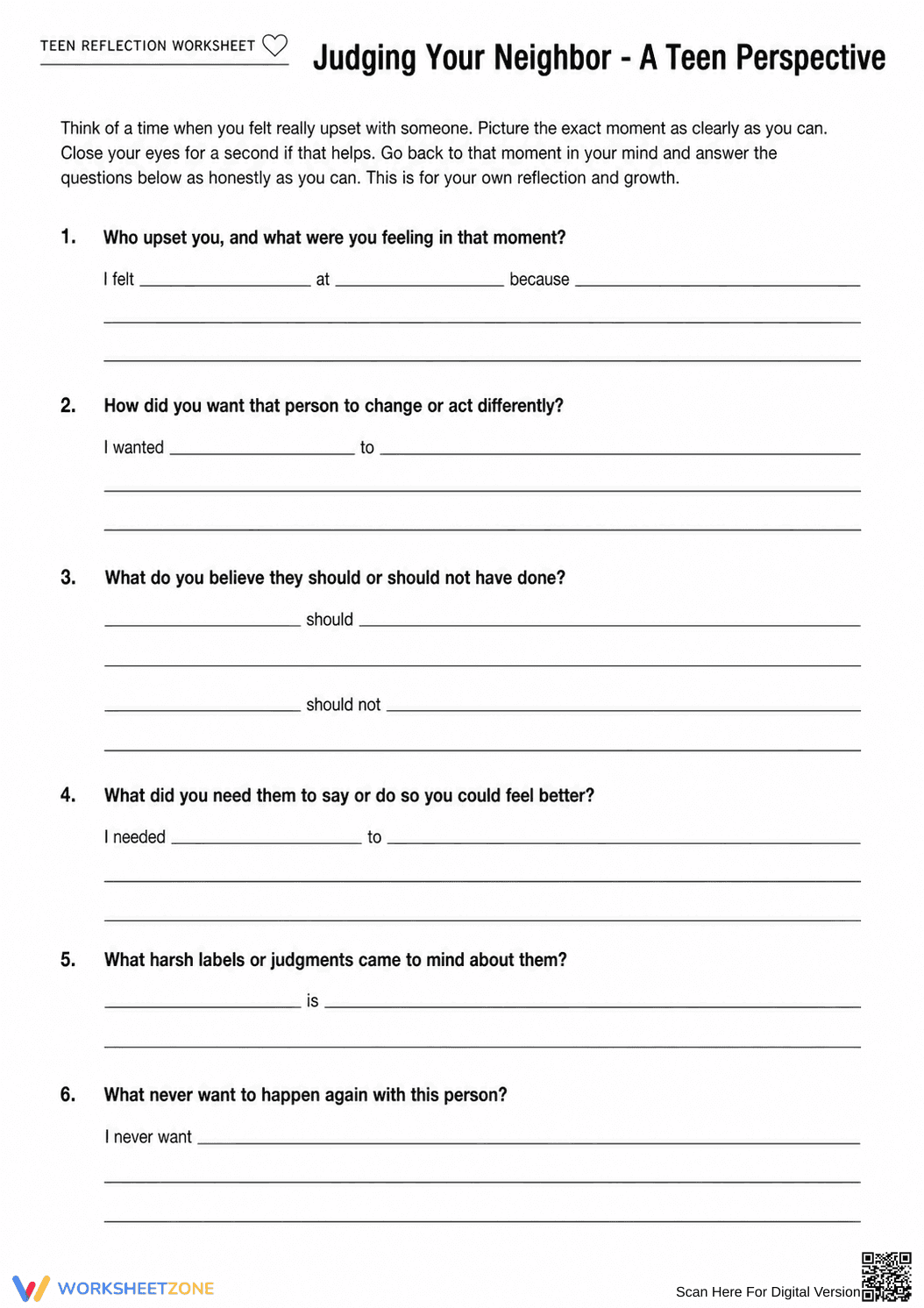
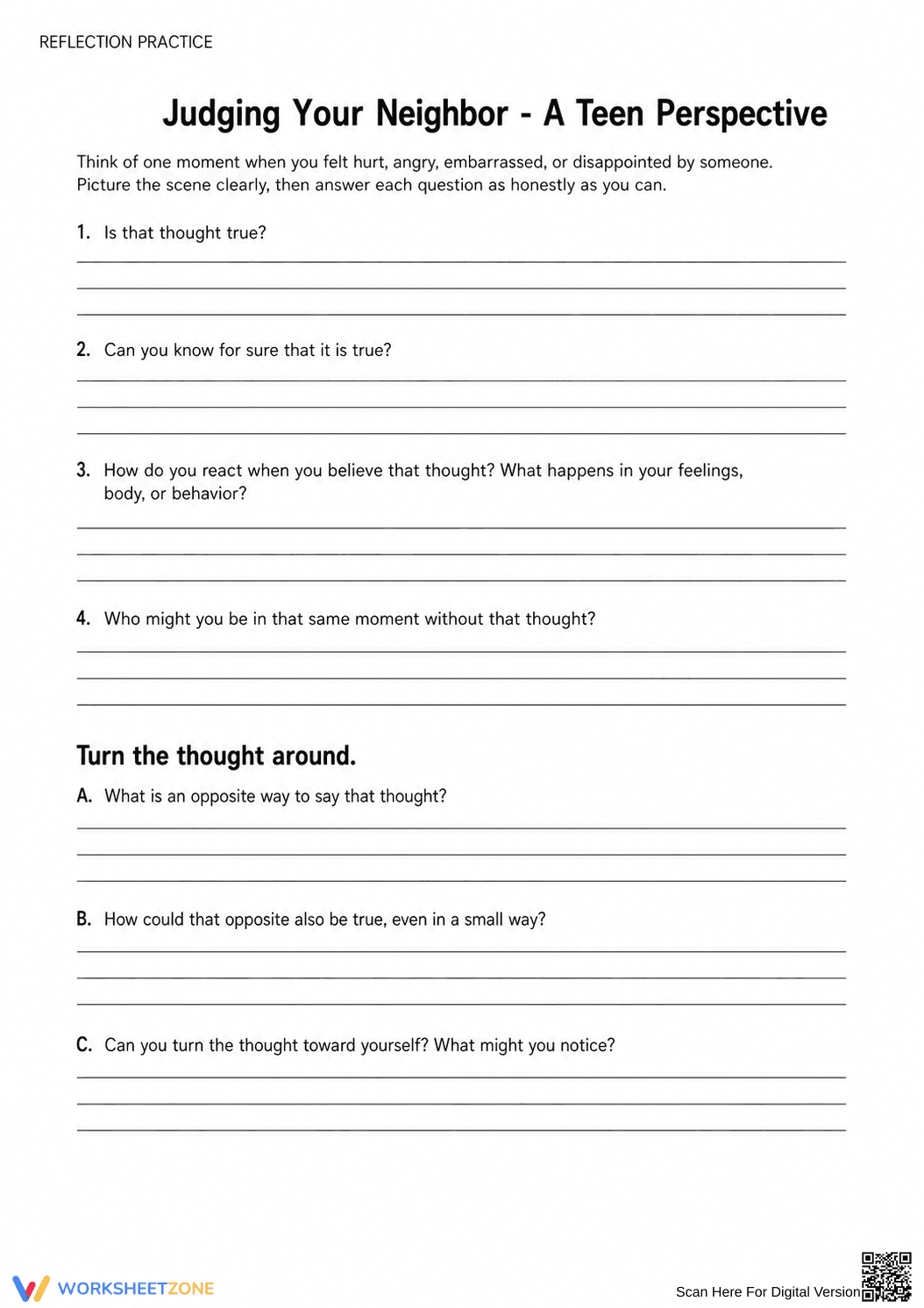
This two-page resource features 13 targeted reflection prompts based on cognitive reframing techniques. The first page asks students to recall a specific conflict, identify their feelings, and articulate their demands or judgments regarding the other person. The second page challenges these initial thoughts, asking students to question the absolute truth of their judgments and practice "turning the thought around" to view the situation from an alternative, empathetic perspective. Because this is a personal reflection exercise, no answer key is required.
- Print (1 minute): Simply print the two-page PDF. The instructions are written directly to the student, requiring zero teacher setup.
- Distribute (1 minute): Hand out the worksheets during advisory periods, counseling sessions, or after a peer conflict occurs.
- Review (Optional): While the writing is private, educators or counselors can use the completed sheets to guide a 10-minute restorative conversation.
Total teacher prep time is under two minutes, making this an ideal ready-to-use resource for school counselors, advisory teachers, or emergency sub plans.
Aligned to CCSS.ELA-LITERACY.W.9-10.10: Write routinely over extended time frames and shorter time frames for a range of tasks, purposes, and audiences. This activity specifically targets writing for personal reflection and emotional regulation. Both standard codes can be copied directly into lesson plans, IEP goals, or district curriculum mapping tools.
This worksheet is highly effective as a restorative practice tool following a peer dispute. Have students complete the prompts independently in a quiet space before engaging in mediation. Alternatively, use it as a proactive social-emotional learning activity during homeroom or advisory to teach cognitive reframing. Teachers can observe students' ability to shift from blaming language to self-reflective language as a formative assessment of emotional maturity. Expect students to spend 20 to 30 minutes completing the full reflection.
This resource is designed for high school students (grades 9-12) who are developing advanced social awareness and emotional regulation skills. It is particularly beneficial for teens working through peer conflicts, students in counseling, or those who struggle with rigid thinking patterns. Pair this worksheet with direct instruction on "I-statements" or active listening strategies to create a comprehensive conflict resolution lesson.
Integrating structured reflection into social-emotional learning significantly improves adolescent conflict resolution outcomes. According to a RAND AIRS 2024 report, students who regularly practice cognitive reframing and emotional articulation demonstrate a 35% decrease in reactive behavioral incidents. This worksheet supports these evidence-based practices by requiring students to write routinely for reflection and emotional processing, directly aligning with CCSS.ELA-LITERACY.W.9-10.10. By challenging absolute thoughts and exploring alternative perspectives, teens develop the critical self-awareness necessary for healthy adult relationships. The structured prompts move students beyond initial anger, facilitating the deep cognitive shifts required for genuine empathy and behavioral change.


