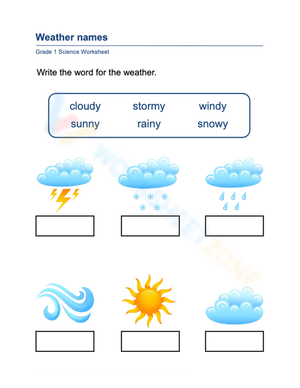
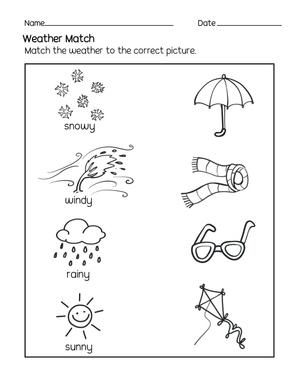
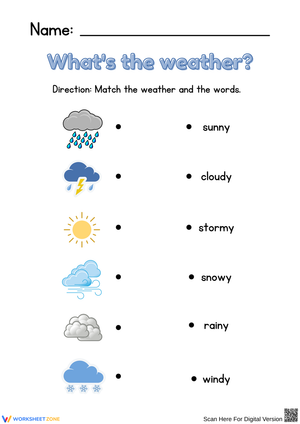
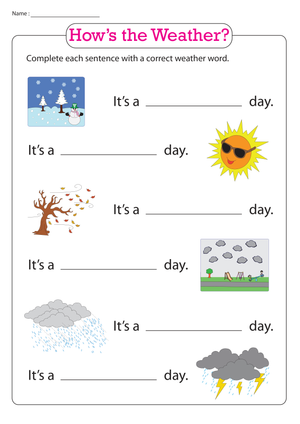
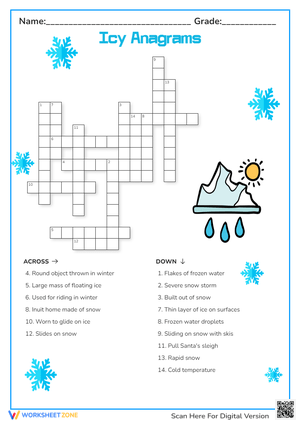
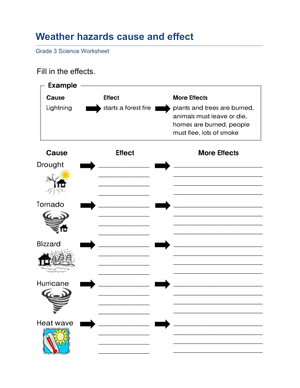
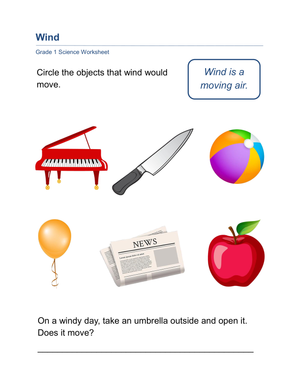
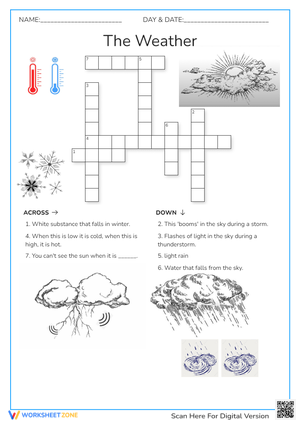
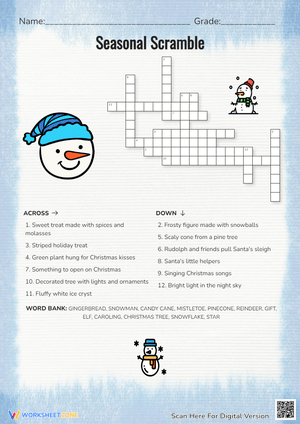
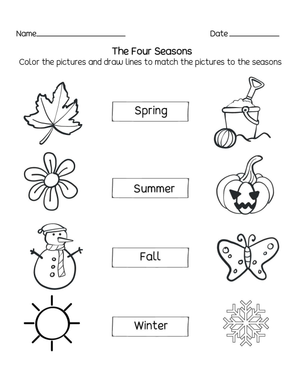
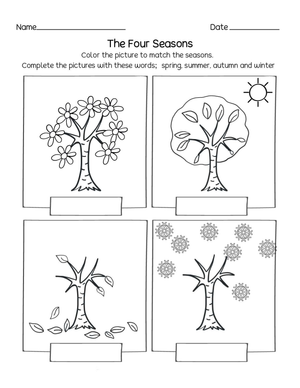
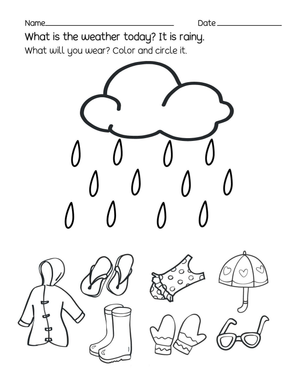
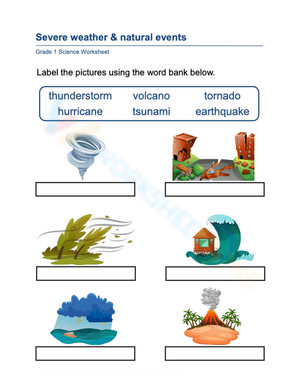
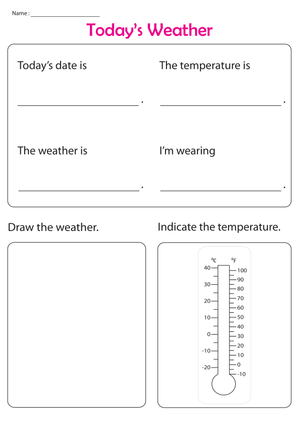
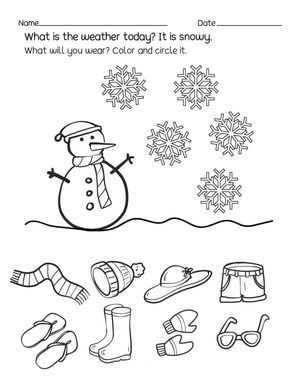
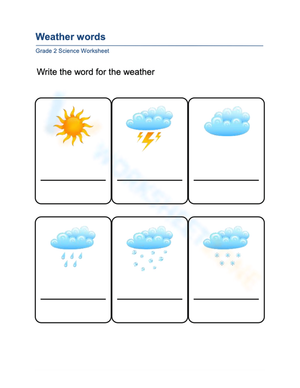
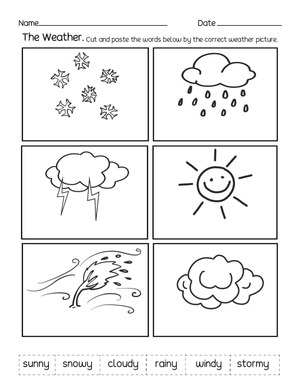
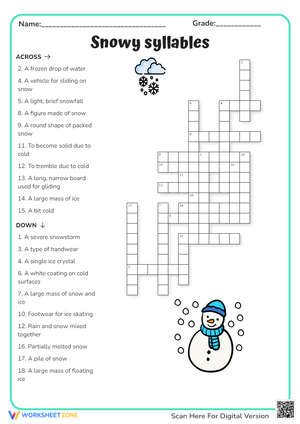
These 1st grade weather and climate pdf worksheets give teachers a print-ready tool for building observation habits and weather vocabulary into daily science routines. Each worksheet stays focused on one task — matching a weather word to a symbol, sorting clothing by condition, or recording a week's observations — which keeps cognitive demand manageable for students who are still sounding out directions while trying to do science. The set covers what Grade 1 actually addresses: naming current conditions, connecting weather to clothing and outdoor choices, tracking patterns across a week, and beginning to separate today's sky from a season's general character.
Student Mistakes Teachers Should Anticipate in Weather Lessons
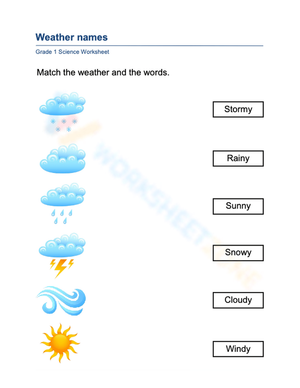
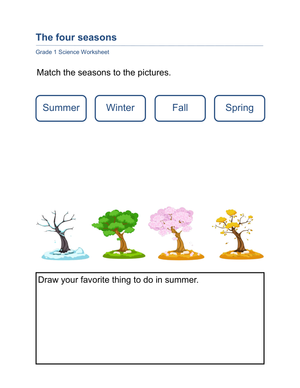
The most persistent confusion Grade 1 students bring to these worksheets is treating "weather" and "season" as synonyms. A student who writes "winter" when asked to name today's weather is not guessing randomly — they have stored "cold, gray, snowy" as a single concept and cannot yet pull one current condition from it. On matching tasks, this shows up when a child connects the snowflake symbol to the label "winter" even when the instruction clearly asks for the weather word "snowy." Naming the difference aloud before the worksheet — "weather is what the sky is doing right now; a season is a long stretch of time" — and using both terms in the same lesson reduces that error noticeably.
A second pattern surfaces on clothing-sort worksheets. Students correctly place rain boots and a raincoat in the "rainy" column, but when they reach the "cloudy" sort, many drag in the same wet-weather items, reasoning that clouds mean rain is on the way. The distinction between a current condition and its likely consequence is genuinely subtle at age six, and it shows up in nearly every first attempt at a clothing sort.
On simple bar graphs that students return to over multiple days, tally marks frequently land on the wrong day when children forget where they left off. Pre-labeling the entry columns Monday through Friday — before students begin — closes most of that gap.
What Students Practice Across the Set
The worksheets move through five areas of Grade 1 weather study:
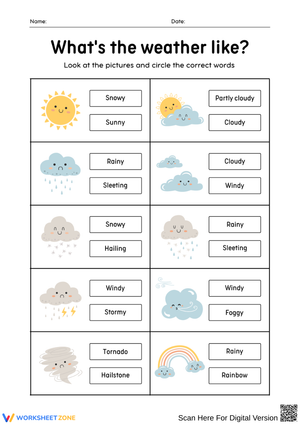
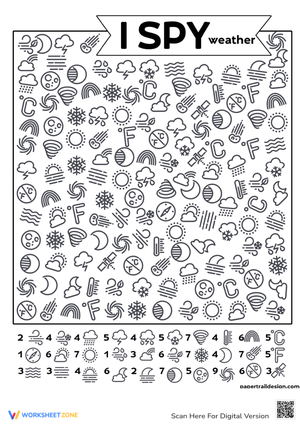
- Weather observation: students circle or mark the condition shown in a scene — sun, clouds, rain, wind, snow
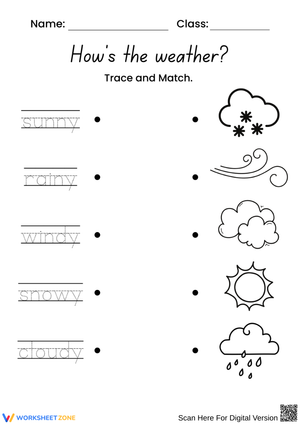
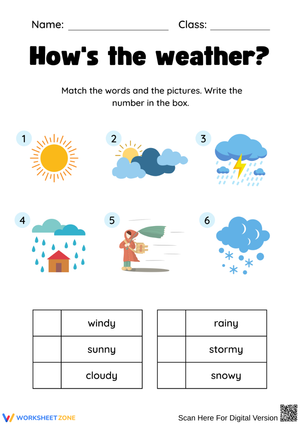
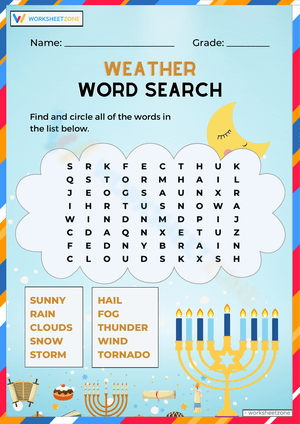
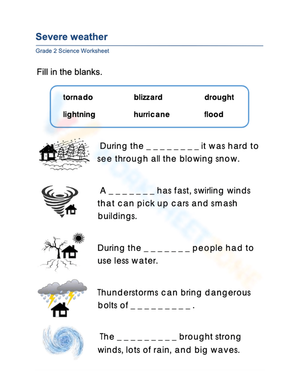
- Vocabulary work: students trace, match, or copy weather words tied to images until the labels become automatic
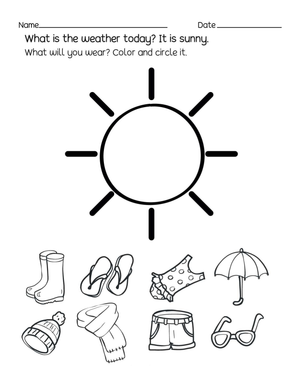
- Classification tasks: sorting clothing, outdoor gear, or activities into columns based on the weather condition shown
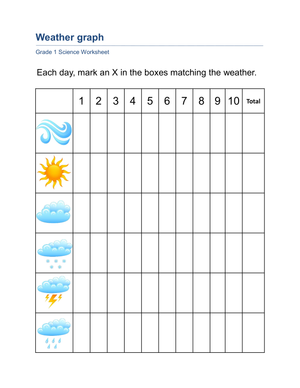
- Pattern recording: students mark daily weather on a simple chart or tally sheet over the course of a week
- Basic data reading: students count weather symbols on a completed chart and identify which type appeared most often
Fine motor practice threads through the set naturally. Circling, tracing, cutting-and-sorting, and coloring reinforce pencil control without turning a science page into a handwriting exercise — which matters in Grade 1, where motor demands can overshadow the actual content if a worksheet requires too much sustained writing.
How to Build These Worksheets Into Your Lesson Plans
The most reliable routine pairs a worksheet with the two-minute morning weather check many Grade 1 teachers already run. Students look out the window, name what they see, and then move into the worksheet while the observation is still fresh. Skipping that window check and going straight to the page produces noticeably weaker responses — students start copying a neighbor rather than thinking about what is actually happening outside.
These 1st grade weather and climate pdf worksheets also fill the eight minutes before lunch or the short transition block after morning meeting, when students need a settled independent task but the window is too tight for a full lesson. A single matching or tracing page fits that slot cleanly. For sub days, weather tasks travel especially well because a substitute can guide students through a sorting activity without any science background — the pictures carry the instruction.
A weekly structure that holds up in practice: observation-and-match on Monday, tracing or labeling on Tuesday, clothing sort on Wednesday, bar graph update on Thursday, and one open-ended pattern question on Friday. Keeping the Friday prompt open — "Which weather type appeared most this week? How do you know?" — gives you a quick formative read on which students can explain a pattern versus which ones are still just marking symbols by habit.
Standard Alignment
The worksheets connect most directly to NGSS K-ESS2-1, which asks students to use and share observations of local weather conditions to describe patterns over time. The national framework positions this standard at kindergarten, but the majority of state science sequences continue the work into Grade 1, treating kindergarten as initial exposure and first grade as the year students begin recording observations across multiple days and comparing them systematically. That shift — from single-day observation to pattern recognition over a week — is precisely what the tally sheets and graphing worksheets in this set target.
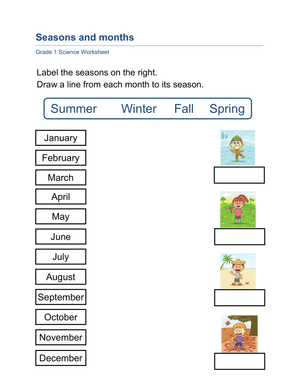
NGSS 1-ESS1-2 adds a secondary alignment: students at this level make observations at different times of year to understand how conditions change. Seasonal comparison worksheets — sorting clothing or activities by time of year, or asking students to note how the sky and temperature differ across seasons — address that performance expectation directly and give teachers a documented connection to the broader Earth science progression.
Adjusting the Worksheets Across Different Learner Levels
Students who need additional support do well when sorting columns are pre-labeled with both the weather word and a matching picture icon before they begin. A student who cannot yet read "rainy" reliably can still complete the sort accurately when a cloud-with-rain image sits next to the label. The science thinking stays fully intact; the independent reading demand drops.
On-level students work through the worksheets as designed — reading the labels, marking choices, filling in the graph — with limited teacher direction after the first introduction. The predictable format means they spend their cognitive effort on the science, not on figuring out what the page wants.
Students who move quickly benefit from brief extensions added directly on the worksheet. After finishing a clothing sort, they can draw one additional item for each column or write a sentence explaining why a specific piece of gear fits a particular condition. No extra prep, same content, more depth.
For English language learners, these 1st grade weather and climate pdf worksheets hold an advantage because the picture-first design lets students demonstrate science understanding — pointing, circling, sorting — before they have full command of written English weather vocabulary. The visual structure separates language demand from science thinking in a way that benefits newcomers and any student who processes information more easily through images than through text.
Frequently Asked Questions
What is the difference between weather and climate for first graders?
Weather is what the sky and air are doing right now — sunny, windy, rainy, snowy. Climate is the pattern a place tends to have over a long stretch of time. For Grade 1, climate surfaces most naturally through seasonal comparison: "This place is usually cold and snowy in winter" describes climate, not a single day's conditions. Keeping that language distinction consistent across every worksheet and class discussion builds the concept gradually without requiring formal definitions that six-year-olds are not yet ready to hold.
Can these worksheets stand alone as morning work, or do they require a teacher introduction first?
Matching, labeling, and tracing worksheets work as morning work after students have seen the format once. The graphing and pattern-tracking worksheets need at least one teacher-led walkthrough before students use them independently — not because the pages are complex, but because Grade 1 students need to understand why they are recording data across multiple days before the task makes sense to them. Introduce the concept first, then send the worksheet home or into centers.
How many worksheets does a solid weather unit in Grade 1 require?
Three to five worksheets per week covers the content well, but spreading the practice matters more than the number. Using 1st grade weather and climate pdf worksheets across two to three weeks — rather than cycling through the full set in a single unit push — gives students the spaced repetition with weather words and observation habits that produces real retention rather than performance that fades a week after the unit ends.