


























Views
Downloads

Sunny Day Clothing Worksheet | Essential Grade K-1 Science
Paste this activity's link or code into your existing LMS (Google Classroom, Canvas, Teams, Schoology, Moodle, etc.).
Students can open and work on the activity right away, with no student login required.
You'll still be able to track student progress and results from your teacher account.
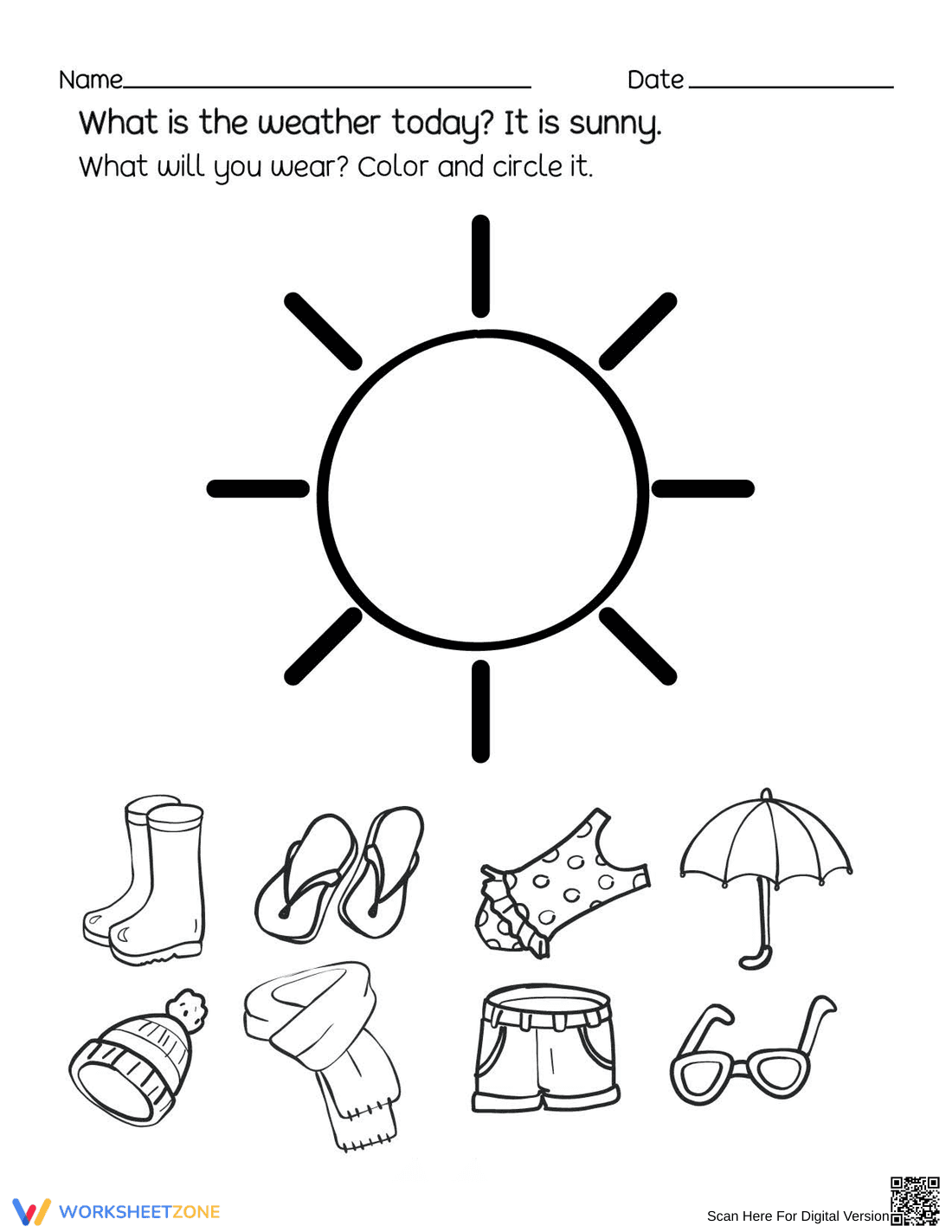
This Grade K-1 weather science worksheet helps young learners identify and select appropriate clothing for sunny conditions. By evaluating eight different apparel items and accessories, students build a foundational understanding of how humans respond to weather patterns. This engaging activity promotes critical thinking and observational skills through a simple color-and-circle format that requires no teacher preparation.
At a Glance
- Grade: K–1 · Subject: Science
- Standard:
K-ESS2-1— Use observations of local weather to describe patterns and make informed choices- Skill Focus: Weather-appropriate clothing selection
- Format: 1 page · 8 problems · Answer key included · PDF
- Best For: Independent practice and weather pattern units
- Time: 10–15 minutes
Inside this resource, you will find a single-page activity featuring a large central sun icon and eight distinct clothing illustrations. These items range from winter gear like scarves and beanies to summer-appropriate choices such as sunglasses and shorts. The layout is designed for easy visual processing, including a clear instruction line and designated spaces for the student's name and date.
The zero-prep workflow for this worksheet is exceptionally efficient, requiring less than two minutes of total teacher preparation. First, print the desired number of copies (30 seconds). Second, distribute the pages and explain the color-and-circle instruction (1 minute). Finally, conduct a whole-class review of the correct sunny-day choices (30 seconds). This streamlined process makes it an ideal choice for emergency sub plans or quick morning work.
This resource is aligned to the primary standard `K-ESS2-1`, which requires students to use and share observations of local weather to describe patterns over time. By connecting specific weather states (sunny) to human behavior (clothing choices), students demonstrate mastery of cause-and-effect relationships within earth systems. This standard code can be copied directly into lesson plans, IEP goals, or district curriculum mapping tools.
To use this effectively, assign it immediately following a direct instruction lesson on weather types or as a warm-up activity during a multi-day weather unit. For a formative assessment, observe which students can independently distinguish between temperature-sensitive items (like flip-flops versus boots). Most students will complete the identification and coloring tasks within 12 minutes, making it a perfect transition activity between core subjects.
This worksheet is designed for Kindergarten and First Grade students, featuring large illustrations that support fine motor development. It is particularly effective for English Language Learners (ELLs) who benefit from visual-to-word associations for weather vocabulary. Pair this resource with a local weather chart or a "Dress the Bear" anchor chart to reinforce the connection between daily observations and practical daily living skills.
According to the RAND AIRS 2024 analysis of primary science curricula, early exposure to practical applications of weather patterns significantly improves long-term retention of earth science concepts in young learners. This worksheet addresses the core requirements of the K-ESS2-1 standard by forcing students to categorize physical objects based on observable environmental conditions, a key cognitive milestone in the early elementary years. The "What will you wear in a sunny day?" activity provides a structured environment for students to practice these classification skills without the distraction of complex text, ensuring that the focus remains on the scientific inquiry of weather-human interactions. Research indicates that using high-contrast, recognizable icons helps students with varying literacy levels access standard-aligned content effectively. By integrating this essential resource into your science rotation, you provide a validated pathway toward meeting NGSS benchmarks while minimizing the administrative burden of lesson preparation and materials sourcing.


