


























Views
Downloads

Essential Grade 1 Science: Objects Moved by Wind
Paste this activity's link or code into your existing LMS (Google Classroom, Canvas, Teams, Schoology, Moodle, etc.).
Students can open and work on the activity right away, with no student login required.
You'll still be able to track student progress and results from your teacher account.
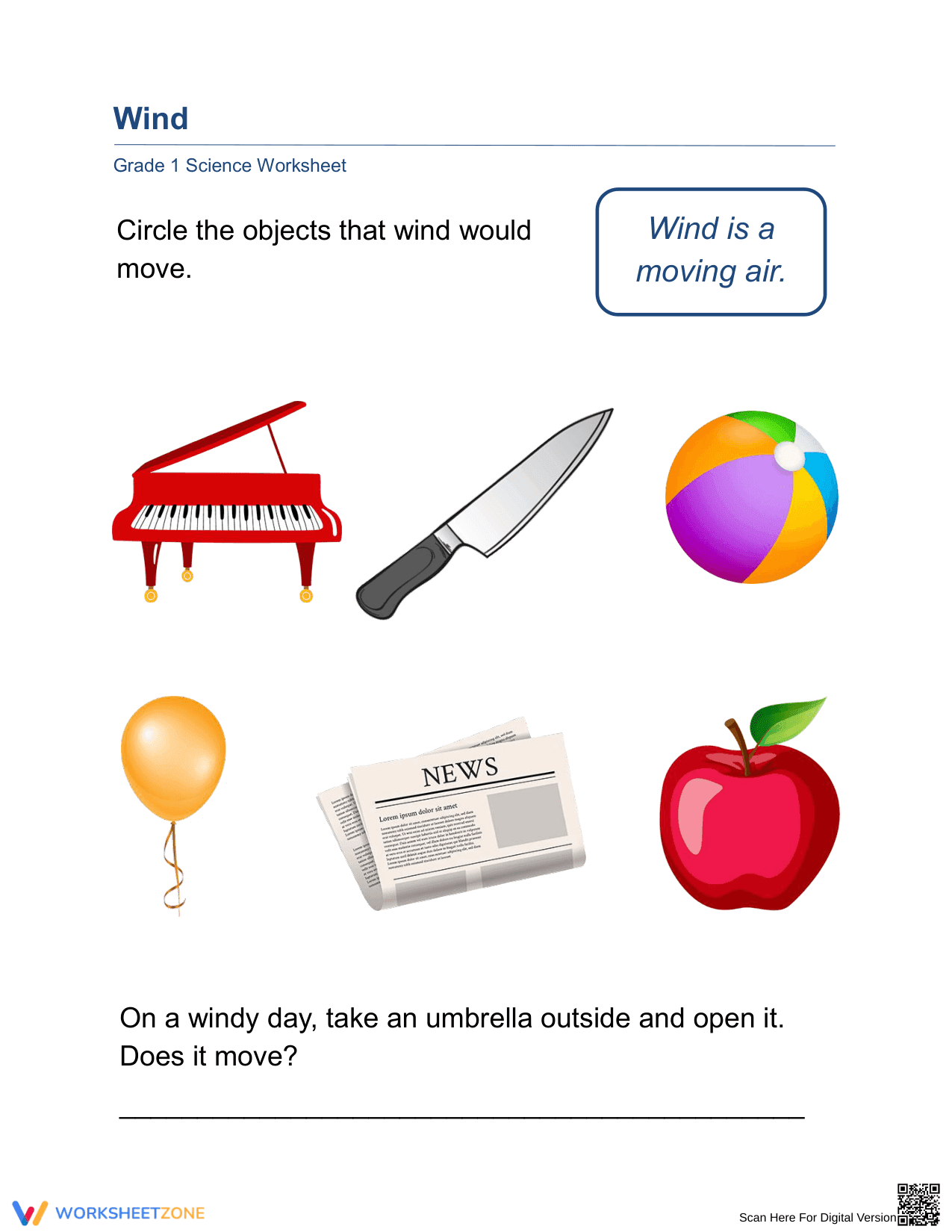
This Grade 1 science worksheet helps young learners understand that wind is moving air by identifying which common objects it can displace. Students observe six items and determine if the force of air moves them, fostering thinking about mass and weather. This resource effectively bridges the gap between abstract concepts and physical observation.
At a Glance
- Grade: 1 · Subject: Science
- Standard:
K-ESS2-1— Use observations of weather conditions to describe patterns and physical effects of wind- Skill Focus: Identifying effects of wind on physical objects
- Format: 1 page · 7 problems · Answer key included · PDF
- Best For: Weather unit introduction and formative assessment
- Time: 10–15 minutes
What's Inside
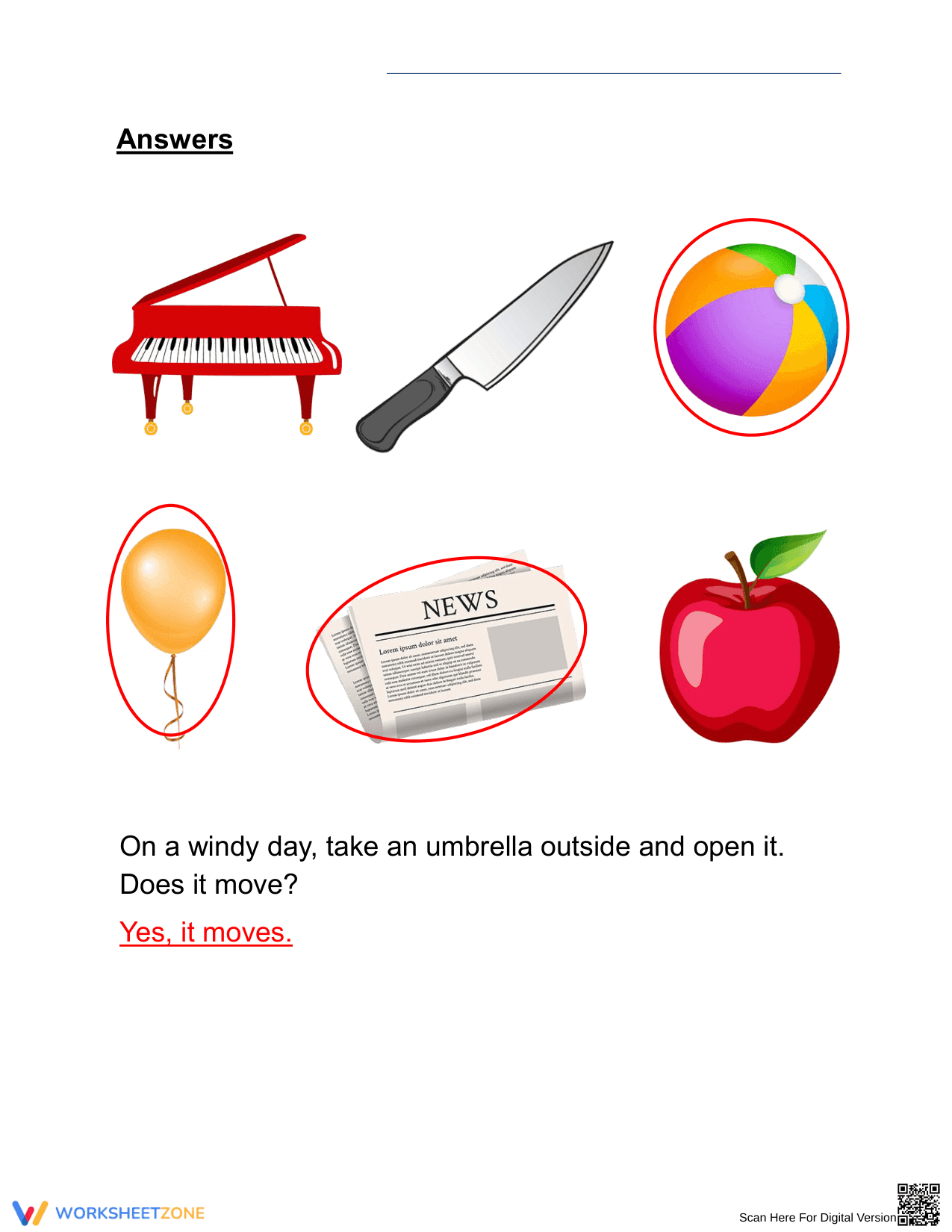
The worksheet features a clear definition of wind followed by a visual identification task. Students evaluate six illustrations, including a piano, beach ball, and balloon, to decide which would move in a breeze. It includes a single-page layout, a dedicated answer key for self-correction, and a concluding experimental prompt involving an umbrella to encourage hands-on learning.
Zero-Prep Workflow
Teachers can implement this lesson in under two minutes. Step one: Print the single-page PDF (30 seconds). Step two: Distribute to students for a quick warm-up or bell-ringer activity (30 seconds). Step three: Review the results using the provided answer key to provide immediate feedback on student comprehension (60 seconds). This makes it an ideal choice for substitute plans.
Standards Alignment
This resource aligns primarily with `K-ESS2-1`, which requires students to use observations of weather conditions to describe patterns. By identifying the physical impact of moving air on objects of varying weights, students gain a foundational understanding of atmospheric forces. Both standard codes can be copied directly into lesson plans, IEP goals, or district curriculum mapping tools.
How to Use It
Use this worksheet during the "Explain" phase of a 5E lesson cycle to reinforce air as a physical substance. Teachers should observe students as they evaluate heavy objects like the piano versus the newspaper, noting if they articulate why mass affects displacement. Expect a 12-minute completion time for most first-graders, followed by a brief classroom discussion.
Who It's For
This worksheet is designed for first-grade students but is also suitable for Kindergarten weather units or remedial review. It supports English Language Learners with clear visual cues and minimal text, making it accessible for diverse learner populations. It pairs naturally with a weather calendar or a classroom reading of a weather-themed informational text.
Instructional design for early science literacy emphasizes the critical role of observational evidence in building early conceptual frameworks. According to RAND AIRS 2024, utilizing visual identification tasks in Grade 1 significantly improves the long-term retention of weather-related vocabulary and fundamental physical science principles. This worksheet specifically focuses on the standard K-ESS2-1 by requiring students to predict and describe the physical effects of wind, which is a fundamental component of primary earth systems education. By engaging with both light and heavy objects, students develop a robust schema for forces and motion that serves as a necessary prerequisite for later physics instruction. The inclusion of a hands-on experiment prompt further aligns with established evidence-based practices for inquiry-based learning in primary classrooms. This self-contained resource provides a measurable way for teachers to track student progress in observing weather patterns and understanding the physical properties of moving air.


