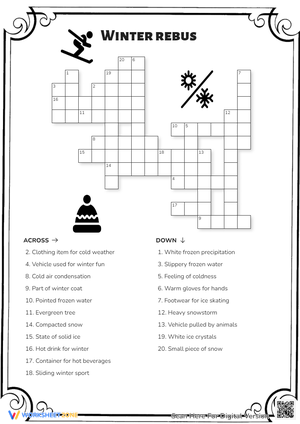
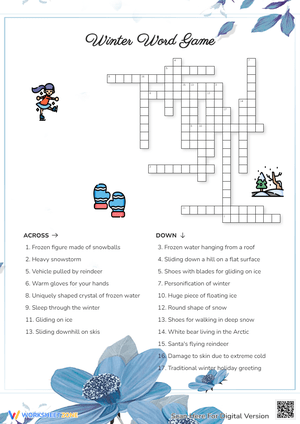
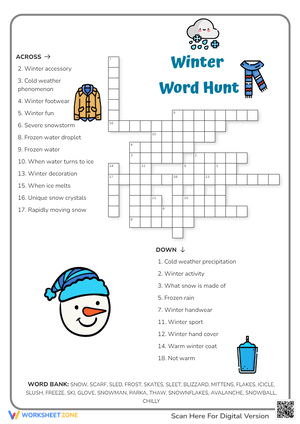
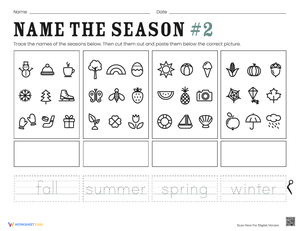
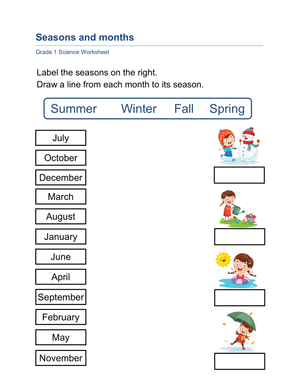
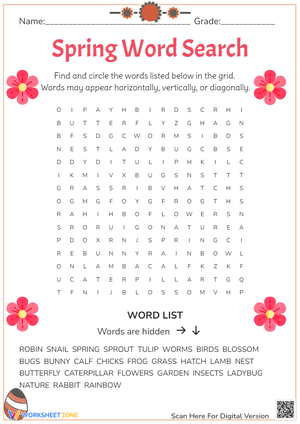
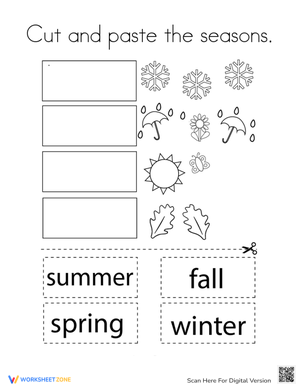
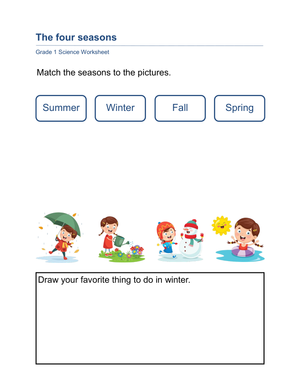
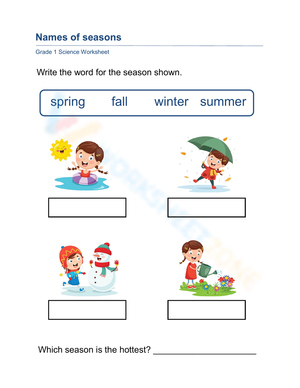
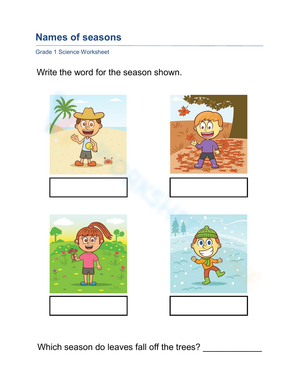
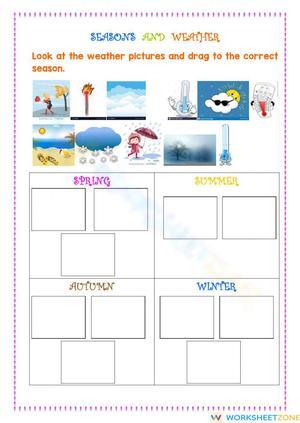
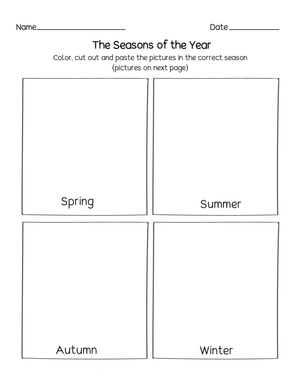
These seasons printable worksheets for 1st grade give teachers a structured set of activities that move students from casual weather observation to genuine scientific categorization — a cognitive leap that matters enormously at this age and one that the worksheets are built to support. The set covers all four seasons through sorting tasks, weather charting, daylight recording, and vocabulary work, with enough variety that teachers can distribute individual worksheets across a full unit rather than burning through the set in a single week.
The Specific Skills Targeted
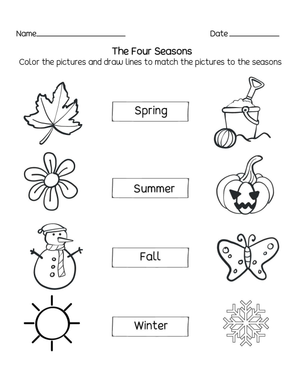
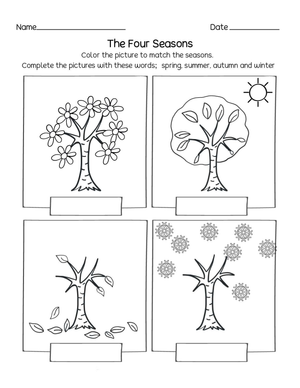
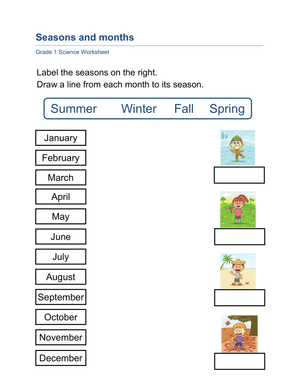
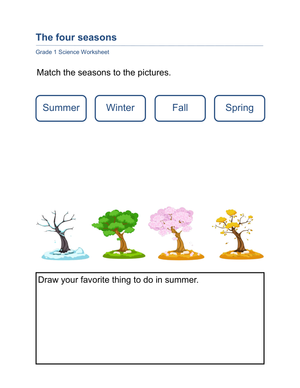
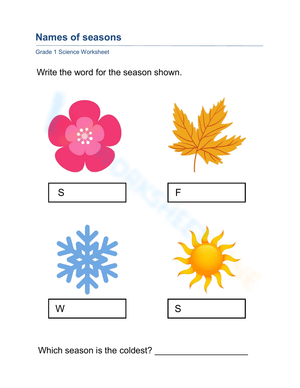
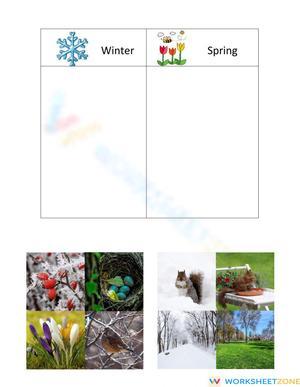
Each worksheet focuses on one of the core competencies in a 1st grade seasons unit. Students sort clothing items by season, label weather characteristics, match animal behaviors — hibernation, migration, year-round activity — to the correct time of year, and record temperature and daylight observations on simple charts. Several worksheets ask students to compare two seasons side by side: drawing a tree in fall and in winter on the same worksheet, for example, forces students to retrieve and compare stored observations rather than simply label a single image. That retrieval practice matters for long-term retention in a way that one-directional labeling tasks do not.
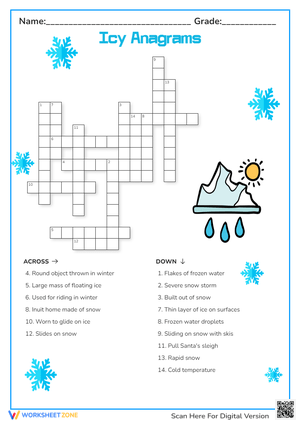
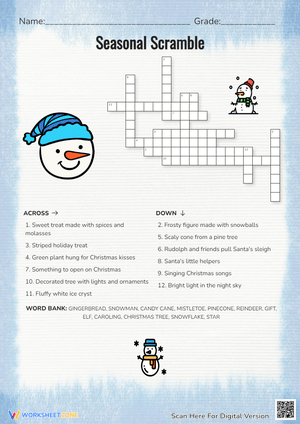
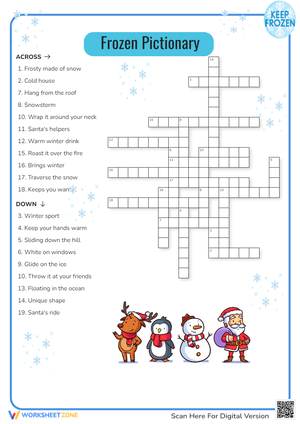
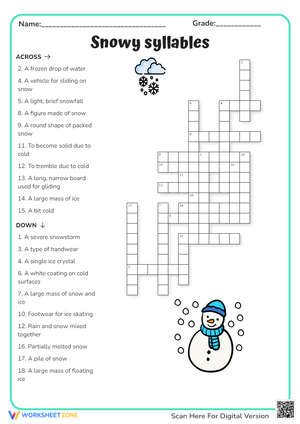
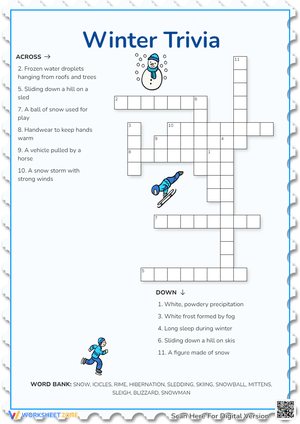
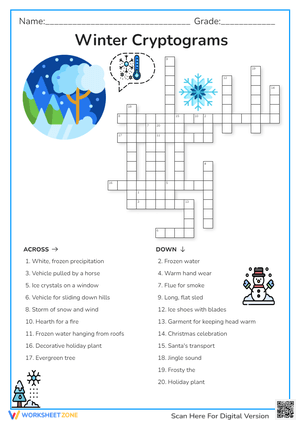
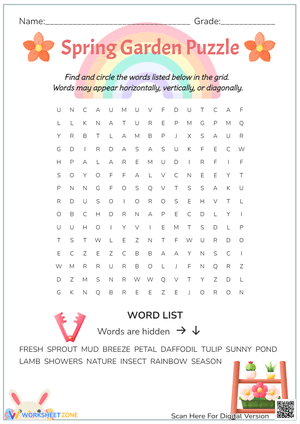
Vocabulary development runs through the set consistently. Students encounter and use words like precipitation, thermometer, cycle, migration, and hibernation in context — reading them in directions, writing them in response blanks, and matching them to definitions. For 1st graders who are simultaneously building reading fluency, encountering the same science vocabulary across multiple worksheets in varied formats reinforces word learning in a way a single vocabulary list cannot.
Standard Alignment
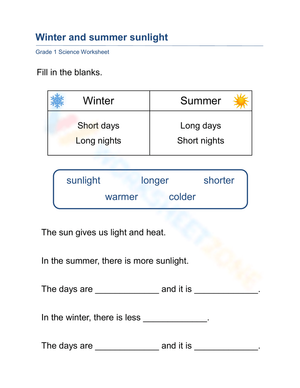
The worksheets align directly with NGSS 1-ESS1-2, which requires students to "make observations at different times of year to relate the amount of daylight to the time of year." That standard is often taught too narrowly — a single lesson with a bar graph and then on to the next unit. Using seasons printable worksheets for 1st grade across multiple months rather than all at once lets students collect actual daylight and weather data from their own location over time, which is precisely what the standard envisions: real observation, repeated at intervals.
The NGSS practice of analyzing and interpreting data operates underneath several of the charting worksheets. When a student completes a monthly sunrise and sunset recording sheet and then compares December's entry to June's, that side-by-side look is genuine data analysis. Teachers can use those completed worksheets as direct evidence of proficiency against the standard's performance expectation, which makes them useful for portfolio documentation as well as instruction.
Mistakes Students Make That These Worksheets Help You Catch
The most persistent error in a 1st grade seasons unit is treating seasons as weather types rather than cyclical time periods. Students who correctly identify a snowy picture as "winter" will still write "it is winter now" whenever it rains in April, because they're categorizing by current conditions rather than by position in an annual cycle. The comparison worksheets — particularly those that place a fall scene and a spring scene side by side — expose this confusion quickly. When a student insists both images show "cold weather" but cannot place them in sequence, the gap in understanding is visible and addressable.
A second error that appears in student work more reliably than most teachers expect: drawing the sun enormous and high in a summer scene, then small or absent in a winter scene. First graders frequently interpret "more sunlight in summer" as a physically bigger or closer sun, not as a longer period of daylight. Worksheets that ask students to record clock times for sunrise and sunset — rather than draw the sun itself — redirect that thinking toward the actual phenomenon the standard addresses. The drawn-sun misconception is easy to miss if the activity gives students room to express it visually without any corrective structure.
Practical Ways to Build These Worksheets Into Your Lesson Plans
The most effective use pattern is distributed practice over the full school year rather than a compressed two-week unit. Assign one worksheet per week during morning meeting: a student weather reporter updates the class chart, and every student records the same observation on their own sheet. By March, the class has a ten-week data set that actually shows temperature trends. That cumulative record is something a front-loaded October unit can never produce, and students feel genuine ownership of data they watched accumulate.
For science centers, rotate two or three worksheets per week at a dedicated seasons station. Cut-and-paste clothing sorts work well early in the unit when students are still building basic category vocabulary. Move toward observation-and-record formats once that foundation is in place — the shadow-length tracking activity is particularly effective here. Once a month on a sunny day, students stand in the same spot on the playground at the same time and mark their shadow's endpoint with chalk. Back inside, they record that length on a dedicated worksheet. By February, the visual evidence of the sun's lower path across the sky is undeniable, and the data students collected themselves carries far more instructional weight than any textbook illustration.
Differentiating the Set Across Ability Levels
For students who need more structural support, the sorting and matching worksheets are the right entry point because the visual cues carry most of the cognitive load. A student who cannot yet write independently can sort season picture cards, label with single words rather than sentences, and participate fully in observation-charting activities using tally marks or drawings. The goal is maintaining access to the same conceptual content — the four seasons, their characteristics, the cycle — rather than routing lower-readiness students toward simpler topics that underestimate them.
Students who are ready for extended challenge can treat the charting worksheets as a starting point for written scientific explanation. After recording a week of weather data, they write two or three sentences predicting next week's conditions, then revisit that prediction once the data is in. This moves students toward the inference and prediction work that appears in 2nd grade standards without pulling them out of the seasons content. The seasons printable worksheets for 1st grade that include open-response spaces rather than fill-in-the-blank give these students room to do exactly that, without requiring separate materials for different groups.
Frequently Asked Questions
When in the school year should I introduce this unit?
Most teachers open the seasons unit in the fall, when outdoor changes are immediate and visible, and then return to it deliberately in winter and again in spring. Spreading the content across the year — rather than front-loading it in October — is actually what NGSS 1-ESS1-2 requires: students need observations "at different times of year," which means returning to the topic across months rather than completing it in a block and moving on.
What vocabulary should I prioritize first?
Start with the four season names and basic weather descriptors: temperature, precipitation, wind. Once students use those consistently and correctly, introduce cycle to explain why seasons repeat, then hibernation and migration for the life science connections, and daylight as distinct from simply "sunny." Many teachers defer cycle until late in the unit and then find it missing when students try to explain why winter returns — it is worth introducing that word earlier than feels necessary.
Do these worksheets connect to ELA or math?
Practically without modification. The observation-recording worksheets produce written responses that teachers can evaluate for sentence structure, capitalization, and descriptive word choice. The weather charting and tally-mark activities map directly onto first-grade graphing standards — students count, compare, and interpret data using numbers they collected themselves. The cross-curricular connections are organic rather than forced, which means they hold up in actual instruction without feeling like a stretch.
How should I handle students who have lived in tropical or non-seasonal climates?
Address it directly rather than treating it as a gap. A student who says "it doesn't snow where I'm from" is making a legitimate scientific observation about regional climate variation, and their prior knowledge is accurate, not wrong. The seasons printable worksheets for 1st grade in this set emphasize observable patterns — daylight length, temperature shifts, plant and animal changes — that exist even in mild climates, so students from any background find real entry points. The contrast between what two students observe in different locations also opens a genuine discussion about climate versus weather, which extends naturally into upper-elementary content and is well worth the detour.