


























Views
Downloads

Printable Snowy Weather Clothing Worksheet | Kindergarten
Paste this activity's link or code into your existing LMS (Google Classroom, Canvas, Teams, Schoology, Moodle, etc.).
Students can open and work on the activity right away, with no student login required.
You'll still be able to track student progress and results from your teacher account.
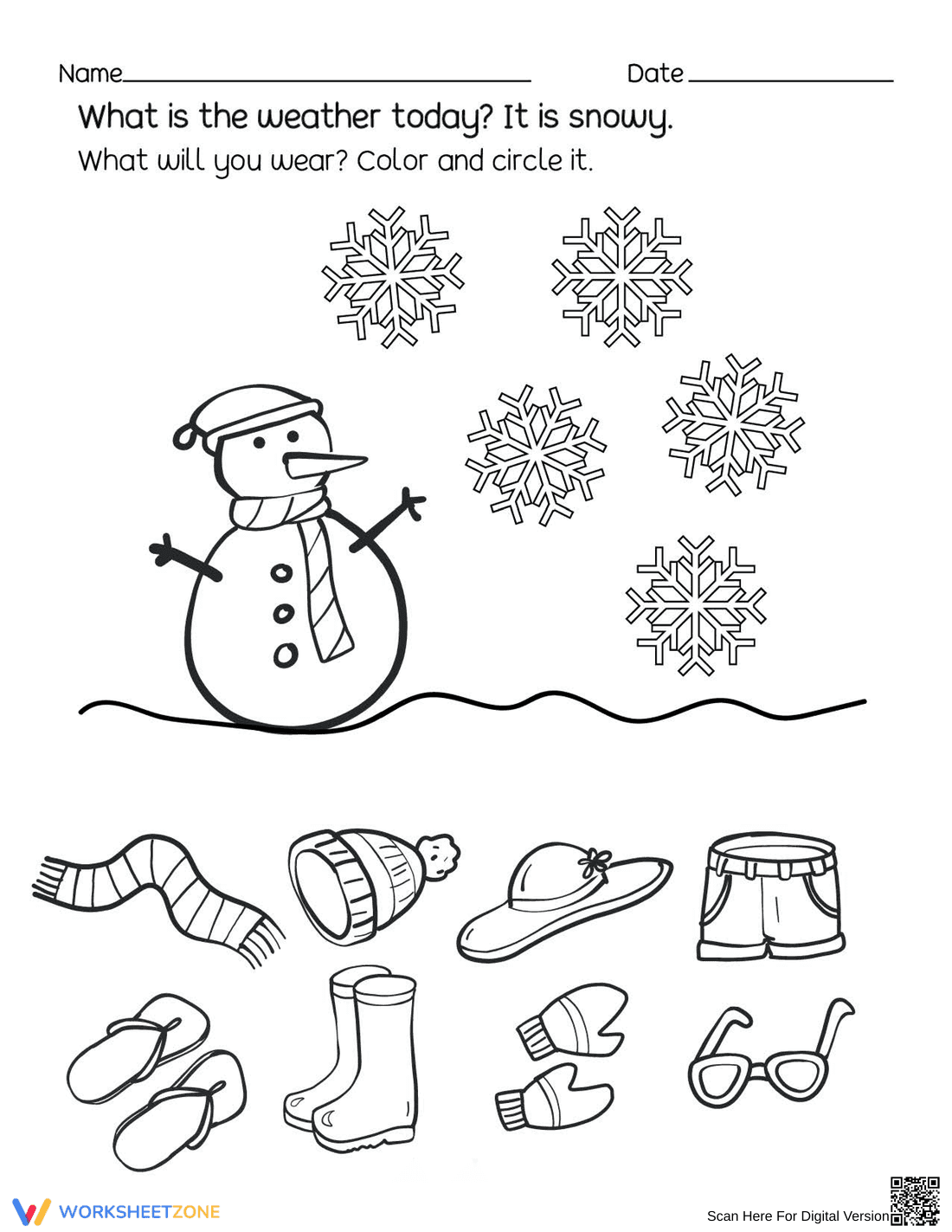
This Kindergarten weather worksheet helps students understand how to prepare for snowy conditions by identifying appropriate clothing. Students select the correct gear from seasonal options. This activity reinforces the connection between environmental conditions and human behavior, building foundational science observation skills through engaging visual tasks.
At a Glance
- Grade: Kindergarten · Subject: Science
- Standard:
K-ESS2-1— Use and share observations of local weather conditions to describe patterns over time- Skill Focus: Weather-appropriate clothing identification
- Format: 1 page · 8 tasks · Answer key included · PDF
- Best For: Daily weather check and morning work
- Time: 10–15 minutes
What's Inside
This resource features a high-interest visual layout centered around a snowman and snowflakes to set the context. Below the scene, students find eight distinct illustrations of clothing and accessories, including scarves, beanies, flip-flops, and sunglasses. The single-page PDF format includes clear, bold outlines for coloring and circling, making it accessible for developing fine motor skills. A teacher’s answer key is provided for quick visual assessment.
Zero-Prep Workflow
This worksheet is designed for immediate classroom implementation with three simple steps. Print the single-page PDF (30 seconds), distribute to students (1 minute), and review the selected items using the key (2 minutes). Total teacher preparation time is under two minutes, making it an ideal choice for sub plans or transition periods.
Standards Alignment
The primary alignment is K-ESS2-1: "Use and share observations of local weather conditions to describe patterns over time." This worksheet specifically addresses the human response to weather patterns by asking students to predict and select necessary items for specific environmental states. This standard code can be copied directly into lesson plans, IEP goals, or district curriculum mapping tools.
How to Use It
Use this activity during your morning meeting weather report or as a concluding task for a lesson on seasons. For a formative assessment, observe if students can distinguish between cold-weather gear and summer items like flip-flops or sun hats. The activity typically takes 10 to 15 minutes to complete, providing a quick check of student understanding.
Who It's For
This worksheet is perfect for Kindergarten and Grade 1 students learning about weather patterns and personal safety. It is particularly useful for English Language Learners (ELL) who benefit from the visual-to-word association of clothing items. Pair this resource with a weather-themed read-aloud or a classroom anchor chart showing different seasonal outfits for maximum instructional impact.
Aligned to standard K-ESS2-1, this resource targets the essential skill of observing weather conditions to make informed decisions about personal preparation. According to research from RAND AIRS 2024, visual-based identification tasks in early childhood science significantly improve the retention of abstract concepts like seasonal change. By engaging in the "What will you wear?" inquiry, students move beyond rote memorization of weather terms toward a functional understanding of climate impacts. This evidence-based approach aligns with the ScienceDirect TpT Analysis findings that emphasize the importance of scaffolded observation in primary grades. Educators can rely on this structured practice to meet curriculum requirements while supporting fine motor development through coloring and circling tasks. The clear connection between environmental observation and daily life choices ensures that students develop the foundational literacy needed for higher-order climate science in later grades.


