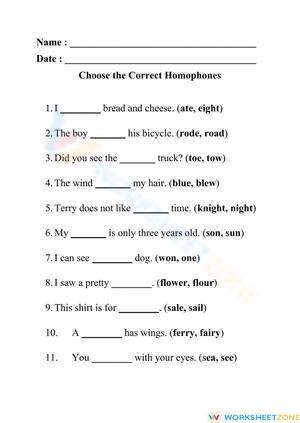
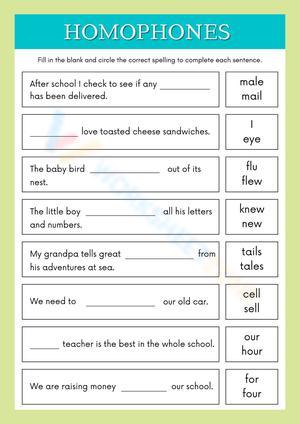
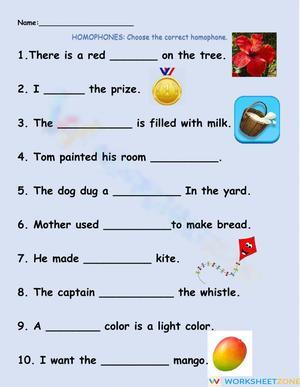
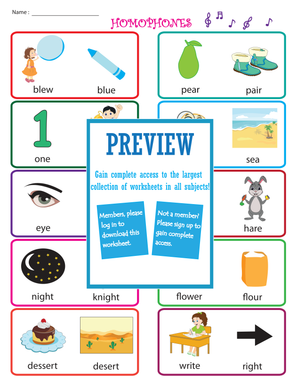
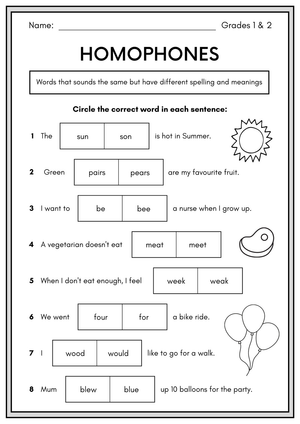
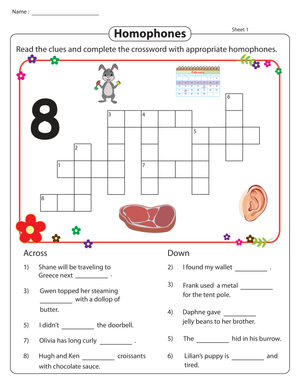
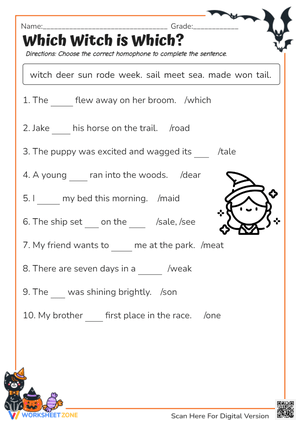
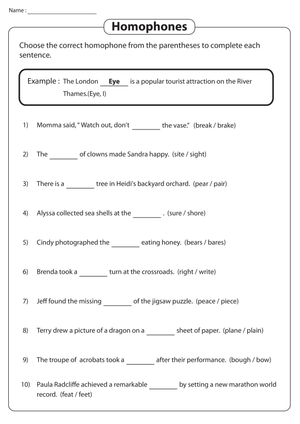
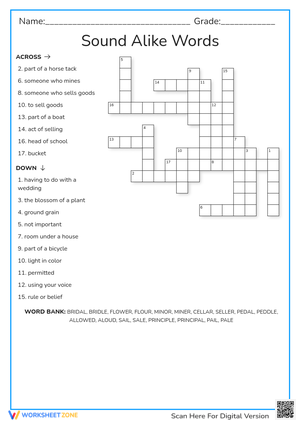
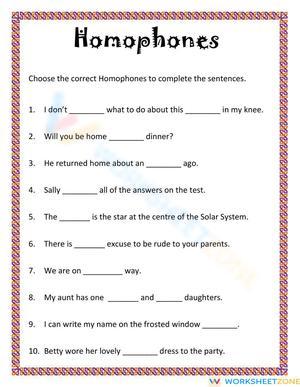
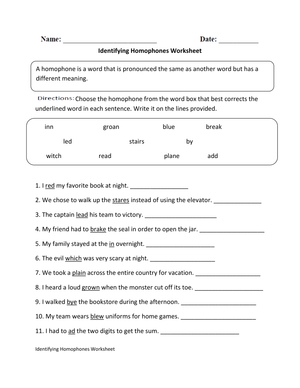
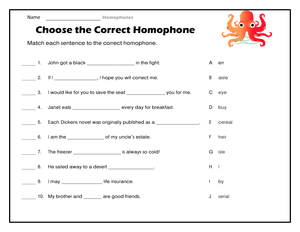
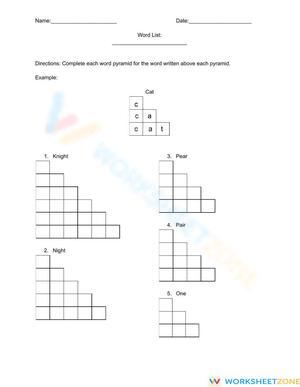
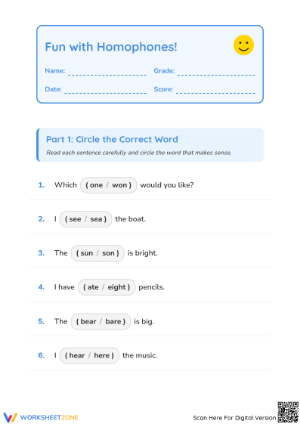
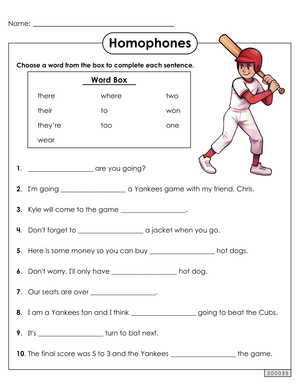
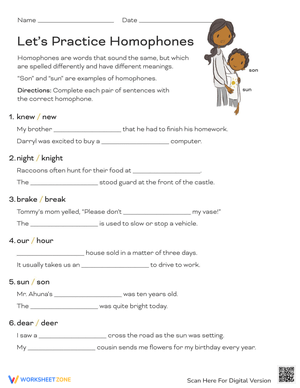
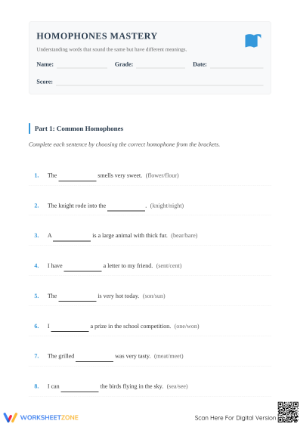
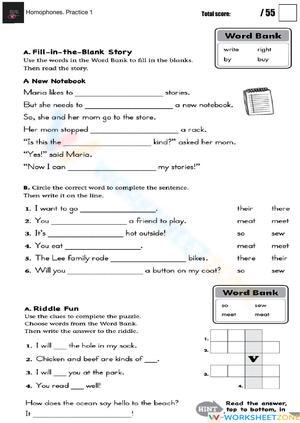
A student can read fluently, comprehend a passage, and still write 'there' when they mean 'their.' That gap between reading and writing accuracy is exactly what homophones worksheets are built to close. Homophones sound identical but carry different spellings and meanings, so the confusion shows up in writing, not in oral reading, which means it is easy for a busy classroom teacher to miss until a graded paragraph reveals the pattern. Because the error is invisible during read-alouds, many teachers do not catch a homophone gap until a writing sample or spelling test surfaces it, which is why a short, targeted worksheet routine works better than waiting for it to appear in a essay.
Grade-by-Grade Progression for Homophone Instruction
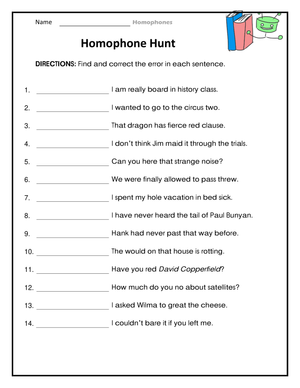
Homophone instruction is not a single lesson; it is a progression that builds across elementary grades. In grade 1, CCSS.ELA-LITERACY.L.1.4a asks students to use sentence-level context as a clue to word meaning, which is the foundation for noticing that two words sound alike but fit different sentences. By grade 2, CCSS.ELA-LITERACY.L.2.4 extends that work, asking students to determine the meaning of unknown or multiple-meaning words using context and word relationships. Grade 4 is where the expectation becomes explicit: CCSS.ELA-LITERACY.L.4.1g requires students to correctly use frequently confused words such as to/too/two and there/their/they're. Worksheets that scaffold from simple picture-matching in grade 1 to sentence-correction tasks in grade 4 mirror this standards progression instead of treating homophones as a one-off vocabulary list.
Common Homophone Pairs to Prioritize First
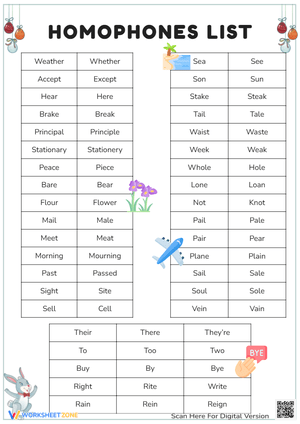
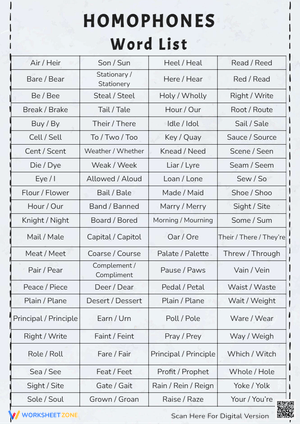
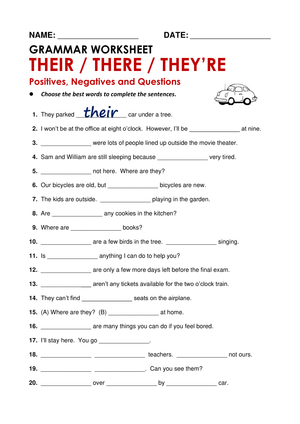
Not every homophone pair deserves equal classroom time. Teachers get more return on instruction by starting with the pairs students actually misuse in daily writing. The most common sets taught across elementary grades include there/their/they're, to/too/two, and steal/steel. Starting with there/their/they're and to/too/two covers a large share of the errors seen in independent writing samples, since these words appear constantly in student sentences about people, places, and possession. A worksheet sequence that drills these two sets before moving to less frequent pairs like steal/steel respects instructional time and keeps practice relevant to what students actually write.
- there/their/they're - location, possession, and contraction
- to/too/two - preposition, intensifier, and number
- steal/steel - verb and material noun, useful once foundational pairs are secure
Using Homophones Worksheets in Small-Group Intervention
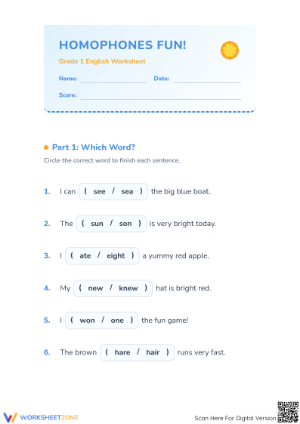
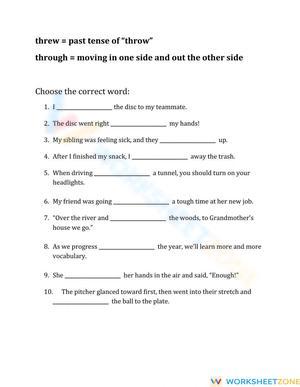
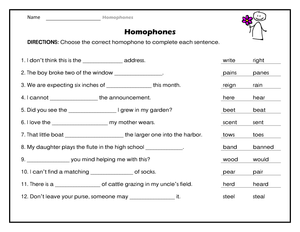
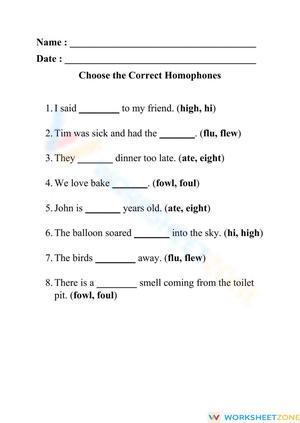
Homophone confusion is a common target for small-group reading and writing intervention, especially with students who read on grade level but whose writing shows consistent there/their/they're or to/too/two errors. A five-to-ten minute warm-up using a short fill-in-the-blank worksheet lets an intervention teacher isolate the skill without pulling time from the main lesson block. Because the task is self-contained and quick to score, it also works well as a repeatable Monday routine, giving the teacher a running record of which pairs a student has mastered and which still need review. Pairing the worksheet with a quick verbal explanation of the meaning difference reinforces the context-clue strategy rather than asking students to memorize spellings by rote.
Pairing Homophone Practice with Context-Clue Strategies
Homophone worksheets work best when they are not treated as an isolated spelling drill but connected to the broader context-clue strategies already being taught under L.1.4a and L.2.4. When a student selects 'their' instead of 'there' in a fill-in-the-blank sentence, asking them to explain what clue in the sentence pointed to possession rather than location turns a simple worksheet into active practice of the standard. This pairing also helps students generalize the strategy to new homophone pairs they encounter later, rather than needing a separate worksheet for every new pair introduced.
Classroom Implementation
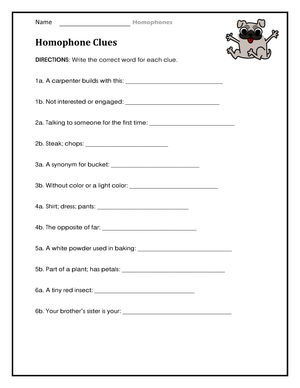
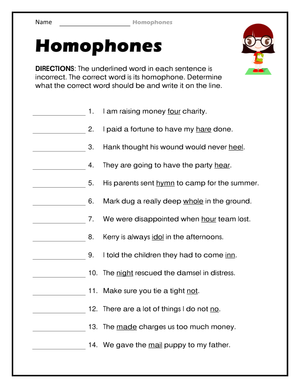
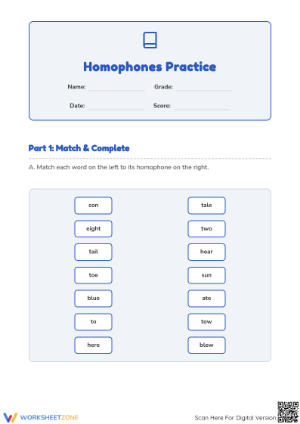
Start the week with a two-minute matching worksheet for the featured pair, move to a fill-in-the-blank version midweek once students seem comfortable, and close with a short sentence-writing task on Friday to confirm the skill has transferred to independent writing. For students still struggling by grade 4, connect the routine explicitly to CCSS.ELA-LITERACY.L.4.1g so the practice ties directly to grade-level writing expectations rather than feeling like an extra spelling list. Keep a simple tracking sheet of which pairs each student has mastered so intervention groups can be adjusted without re-testing the whole class each time.
Frequently Asked Questions
1. What grade level should introduce homophones instruction?
Homophone instruction can begin in grade 1, where CCSS.ELA-LITERACY.L.1.4a introduces using sentence context as a clue to word meaning, building toward more explicit homophone correction expectations by grade 4 under L.4.1g.
2. How are homophones different from homographs for classroom teaching purposes?
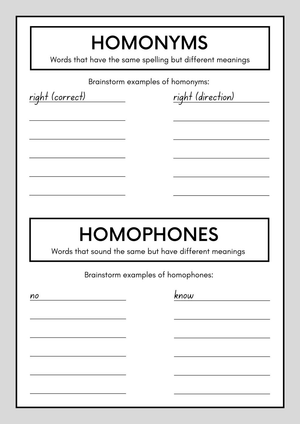
Homophones sound alike but have different spellings and meanings, such as to/too/two, while homographs are spelled the same but may sound different or carry different meanings depending on context. Teaching them separately avoids confusing students about which skill a worksheet is targeting.
3. How can teachers use homophones worksheets for spelling intervention?
A short fill-in-the-blank worksheet used at the start of a small-group session isolates a specific homophone pair, letting an intervention teacher track which pairs a student has mastered without pulling time from core instruction.
4. Which homophone pairs should be taught first in elementary grades?
There/their/they're and to/too/two are the most common pairs taught across elementary grades and should be prioritized before less frequent sets like steal/steel.
5. How do homophones worksheets align with Common Core language standards?
They connect directly to CCSS.ELA-LITERACY.L.1.4a and L.2.4 for context-clue skills in early grades, and to L.4.1g, which explicitly requires correct use of frequently confused words like to/too/two and there/their/they're.












 Interactive Worksheet Maker
 Quiz Maker
 Word Search Maker
 Crossword Puzzle Maker
 Word Scramble Generator
 Sentence Scramble Generator
 Handwriting Worksheet Generator
 Name Tracing Generator
 Fill In The Blank Generator