


























Views
Downloads

Essential Grade 4 Homophone Worksheet | CCSS L.4.1.G Aligned
Paste this activity's link or code into your existing LMS (Google Classroom, Canvas, Teams, Schoology, Moodle, etc.).
Students can open and work on the activity right away, with no student login required.
You'll still be able to track student progress and results from your teacher account.
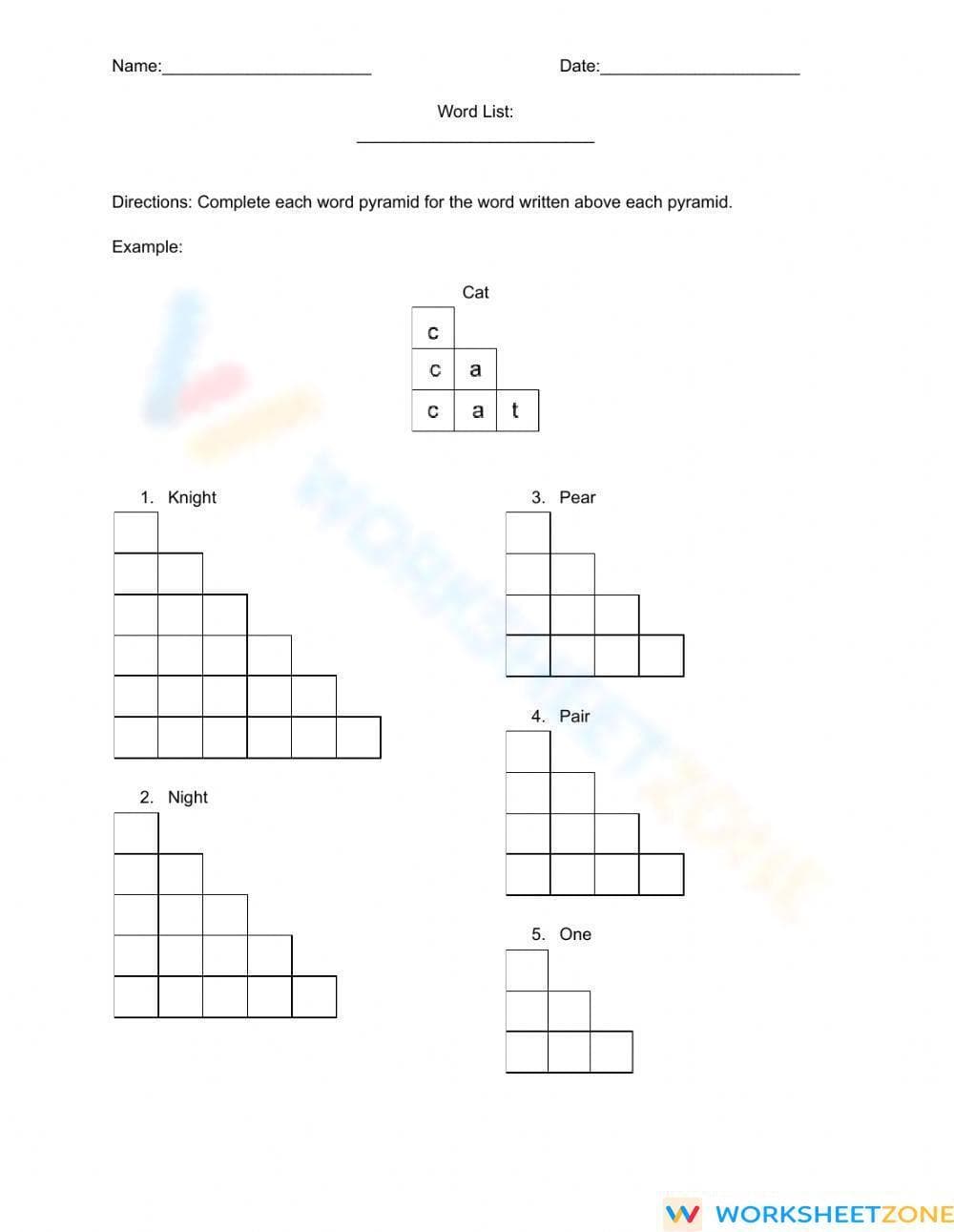
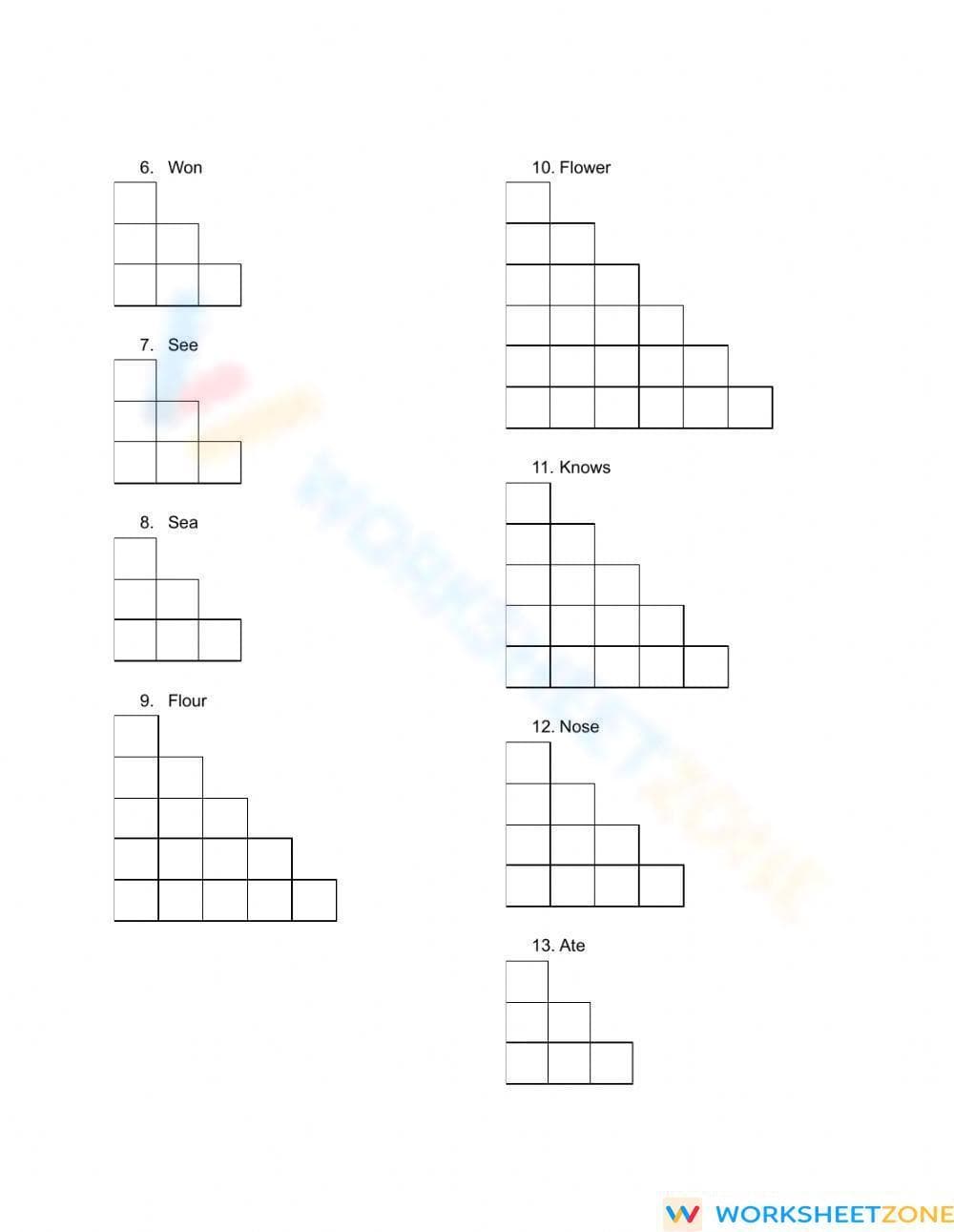
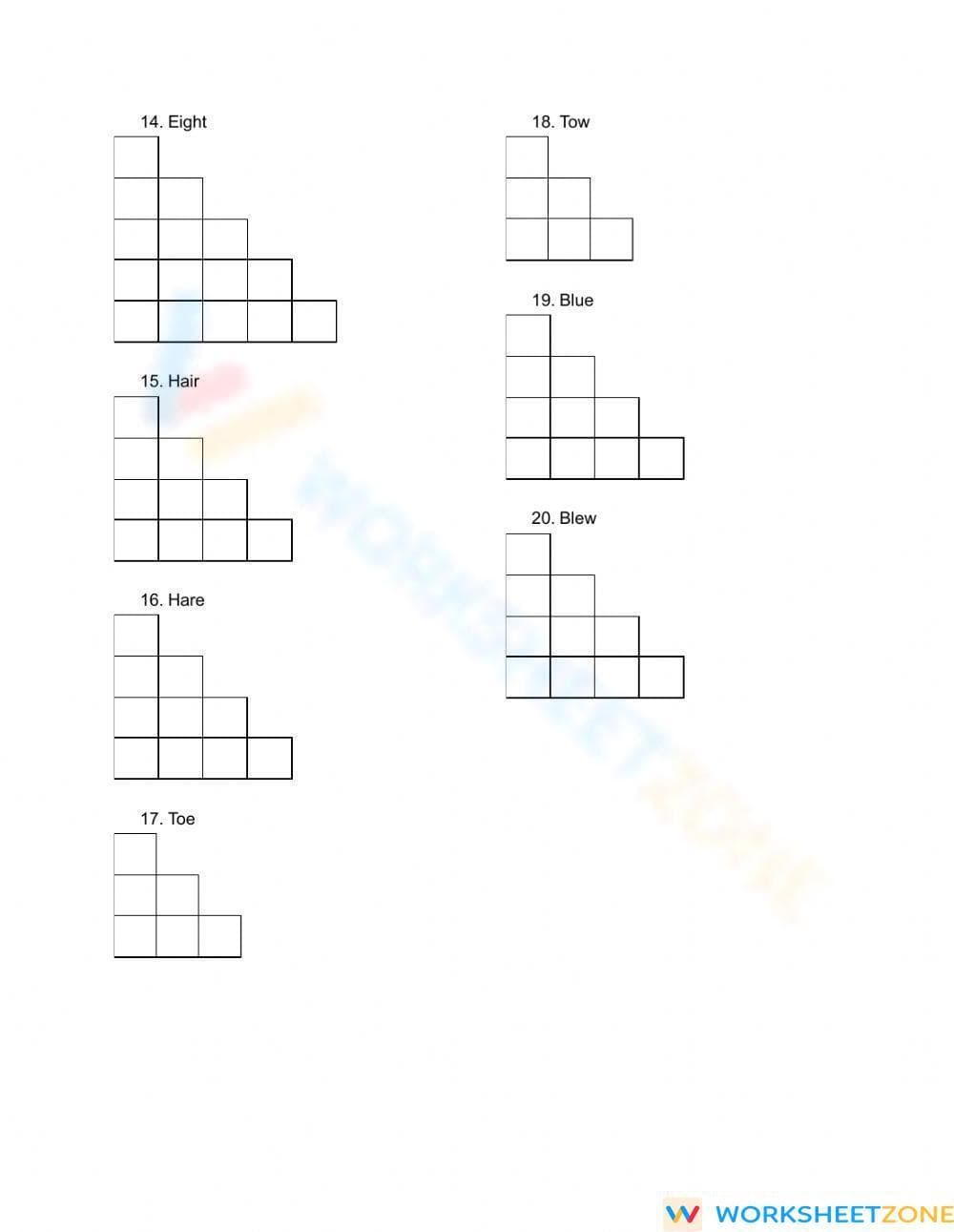
This Grade 4 homophone worksheet provides focused, independent practice for students on correctly using and spelling frequently confused words. Students solve six homophone spelling pyramids, a format that offers a built-in self-correcting mechanism. This ready-to-use resource builds vocabulary and spelling accuracy with common homophones, making it an ideal choice for literacy blocks.
At a Glance
- Grade: 3–4 · Subject: ELA · Standard:
CCSS.ELA-LITERACY.L.4.1.G— Correctly use frequently confused words like to, too, and two.- Skill Focus: Homophone spelling and usage
- Format: 2 pages · 6 problems · Answer key included · PDF
- Best For: Literacy centers and independent practice
- Time: 15–20 minutes
What's Inside
This resource includes a single-page student worksheet featuring six distinct homophone tasks. Each task presents a pair of homophones within a meaningful sentence context, prompting students to select the correct word and spell it within the pyramid structure. A comprehensive answer key is included to facilitate rapid grading and provide students with immediate feedback on their spelling accuracy.
Zero-Prep Workflow
This worksheet is engineered for maximum classroom efficiency, requiring less than two minutes of teacher preparation time. Follow this simple three-step process:
- Print (1 min): Print one copy of the student page for each learner and one reference copy of the answer key.
- Distribute (1 min): Hand out the sheets for use as a warm-up activity, a center station rotation, or a quick homework assignment.
- Review (1 min): Use the provided answer key to quickly verify student responses or allow for student-led self-correction.
Standards Alignment
This resource is strictly aligned with the Common Core State Standard CCSS.ELA-LITERACY.L.4.1.G, which targets the correct usage of frequently confused words. By requiring students to distinguish between homophones in context and then physically map the spelling, the worksheet reinforces foundational language skills necessary for proficient writing. Both standard codes can be copied directly into lesson plans or digital gradebooks.
How to Use It
Use this worksheet following direct instruction on homophones to reinforce the lesson through independent application. The spelling pyramid format encourages students to slow down and focus on individual letters, supporting orthographic development. As a formative assessment, teachers can quickly scan completed pyramids to identify specific homophone pairs that may require further whole-group review or small-group intervention.
Who It's For
This practice page is designed for third and fourth-grade students mastering English language conventions. The structured format is particularly beneficial for visual learners and students who require clear, predictable task boundaries. It serves as an excellent pairing with a classroom anchor chart, allowing students to bridge the gap between instructional support and independent mastery of lexical word classes.
Mastering frequently confused words is crucial for academic writing, aligning with CCSS.ELA-LITERACY.L.4.1.G. This worksheet offers targeted practice for orthographic mapping, moving students beyond rote memorization to automatic recognition of correct homophone spelling and usage. Structured practice, like the spelling pyramid format, is essential for bridging guided instruction and independent mastery, as supported by research (Fisher & Frey, 2014). Engaging with six distinct homophone pairs in context strengthens vocabulary and proofreading skills, fostering clear communication and reducing common writing errors to meet grade-level language standards.


