Grammar activities are interactive language exercises that help students master the rules of syntax, punctuation, and parts of speech beyond simple memorization. These activities refer to hands-on tasks like sentence fix-its, verb charades, and grammar color-coding designed for students in grades PreK–12. Worksheetzone provides these resources to ensure educators can build student confidence and writing accuracy through engaging, context-based practice.
20+ grammar activities
Grammar activities foster children’s linguistic curiosity and precision through active application. In a classroom setting, these tasks work best when grammar is connected to real-world reading and writing. According to the National Council of Teachers of English (NCTE), teaching grammar in context is significantly more effective than isolated drills.
1. Sentence Fix-It
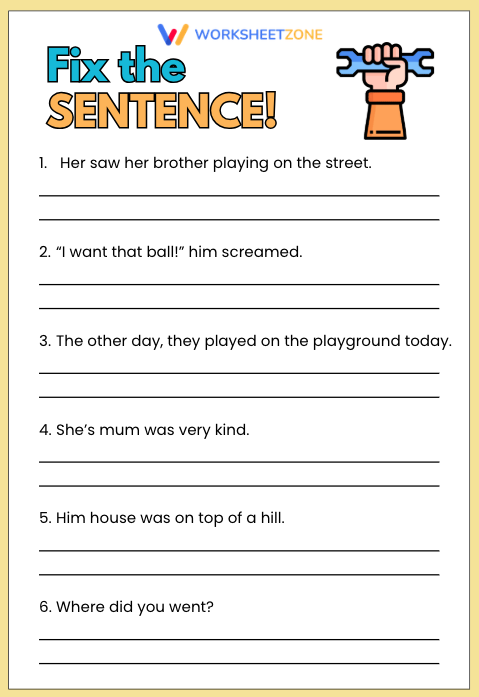
Provide a few sentences with intentional errors and have students use a Fix the Sentence Worksheet to identify and correct them.
Sentence Fix-It activities invite students to read sentences or short passages that contain grammar, punctuation, or capitalization errors and revise them. Teachers can introduce this by modeling how to identify one type of error at a time before students work independently or in pairs. Because the mistakes resemble those students often make in their own writing, this activity builds strong editing awareness and encourages careful attention to detail.
2. Parts of speech sort

In Parts of Speech Sort Worksheet, students categorize words into groups such as nouns, verbs, adjectives, and adverbs. Teachers can organize this using word cards, sentence strips, or digital tools and encourage discussion about why each word belongs in a specific category. This activity helps students move beyond memorization by focusing on how words function within sentences. A clear understanding of word roles supports stronger sentence construction overall.
3. Sentence expanding
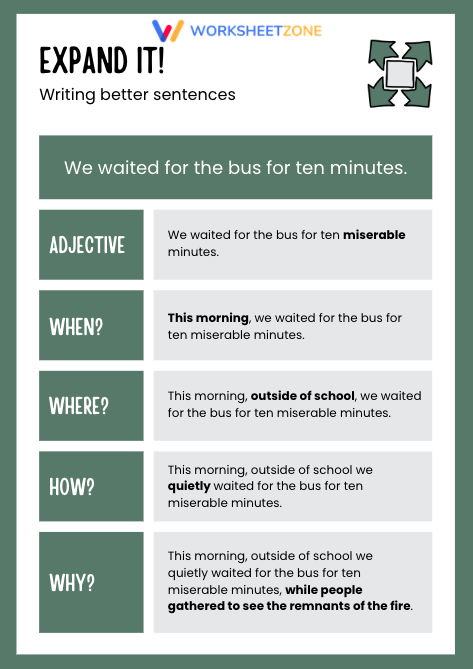
Sentence expanding begins with a simple sentence that students gradually add details to, such as descriptive words or phrases. Teachers can guide this process through discussion, asking questions that prompt students to add meaningful information. This activity helps students see how grammar choices enrich writing rather than complicate it. Over time, students learn to write with greater clarity and depth.
4. Grammar color-coding

Grammar color-coding uses visual cues to highlight parts of speech or sentence elements in different colors. Teachers can assign specific colors for nouns, verbs, adjectives, or other grammar features and apply the activity to short passages. This approach makes abstract grammar concepts easier to recognize and remember. It is especially helpful for students who benefit from visual organization.
5. Mad Libs grammar game

Mad Libs-style grammar games ask students to supply words based on parts of speech without seeing the completed text. Once the story is revealed, students immediately notice how grammar choices affect meaning and tone. Teachers often use this activity for review or engagement at the end of a lesson. It reinforces grammar skills in a relaxed, memorable way.
6. Verb tense timeline
A verb tense timeline helps students visualize when actions occur by placing sentences along a timeline labeled past, present, and future. Teachers can introduce this activity using examples that relate to students’ experiences. This visual structure makes verb tense rules more concrete and easier to understand. It is especially useful for students who struggle with tense consistency in writing.
7. Subject-verb agreement match
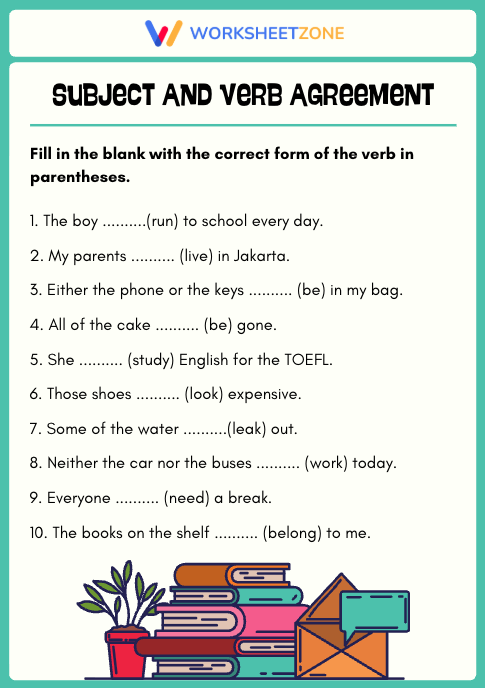
Subject-verb agreement match activities ask students to pair subjects with verbs that agree correctly in number and tense. Teachers can organize this using matching cards or guided worksheets. Focused practice like this helps students internalize agreement rules that often cause errors, while repeated exposure leads to more accurate sentence construction.
8. Grammar error hunt
In a grammar error hunt, students search for mistakes hidden within a paragraph or short text. Teachers can encourage students to explain why each correction is needed, which promotes deeper understanding. This activity strengthens close reading and analytical skills. It also helps students transfer grammar knowledge into real editing situations.
9. Sentence types sort

Sentence types sort activities ask students to classify sentences as statements, questions, commands, or exclamations. Teachers can use sentence strips or examples from familiar texts to guide discussion. Sorting helps students connect sentence purpose with punctuation and structure. This understanding supports clearer communication in both writing and speaking.
10. Pronoun replacement
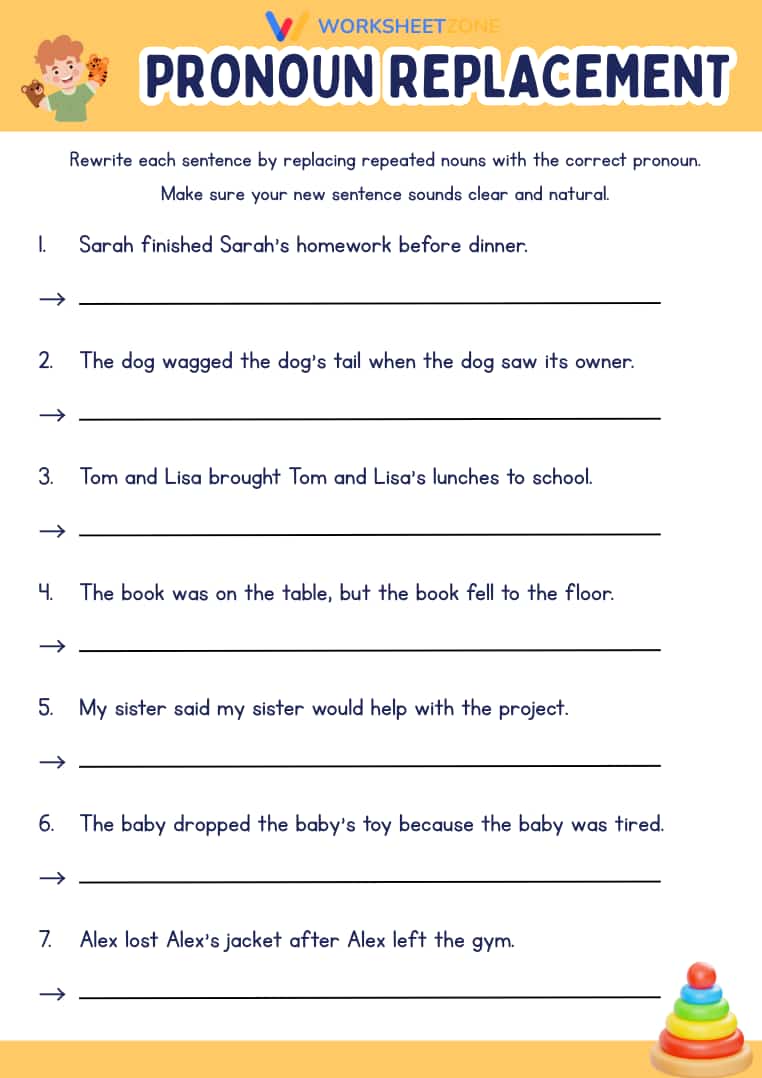
Pronoun replacement activities involve rewriting sentences to replace repeated nouns with appropriate pronouns. Teachers often introduce Replacing Nouns with Pronouns Worksheet by discussing clarity and avoiding repetition in writing. This activity helps students practice pronoun-antecedent agreement while improving sentence flow. It encourages more natural and polished writing.
11. Punctuation replacement
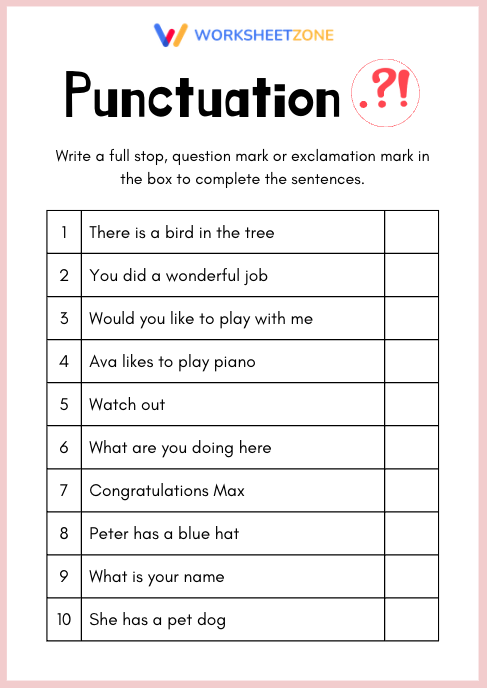
Punctuation replacement asks students to add missing or correct punctuation in sentences or short passages. Teachers can use this activity to support close reading and thoughtful discussion about meaning. As students explain their choices, they develop a stronger understanding of how punctuation shapes clarity and tone. This practice leads to more confident and accurate writing.
12. Editing checklist activity

An editing checklist gives students a clear, repeatable process for reviewing their writing instead of relying on guesswork. Teachers can introduce the checklist by modeling how to check for one grammar skill at a time, such as verb tense or capitalization, before students apply it independently. This approach helps students develop stronger self-editing habits and understand that effective writing improves through thoughtful revision rather than quick corrections.
13. Sentence unscramble

Sentence unscramble activities challenge students to reorganize words into a grammatically correct sentence, requiring them to think carefully about word order and structure. Teachers can use this activity to reinforce syntax after introducing sentence patterns or as targeted practice for students who struggle with sentence formation. By actively constructing sentences, learners gain a clearer understanding of how grammar rules guide meaning.
To save time and generate practice instantly, teachers can use the Sentence Scramble Generator to quickly create ready-to-use sentence unscramble worksheets tailored to students’ needs.
14. Conjunction connect
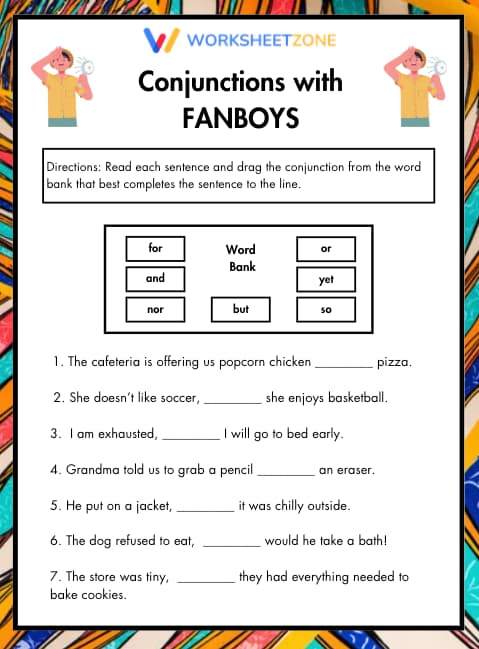
Conjunction connect activities ask students to join related ideas using coordinating or subordinating conjunctions, encouraging them to think about how ideas relate to one another. Teachers often begin by discussing how different conjunctions change meaning before students practice combining sentences themselves. This activity supports the development of smoother, more coherent writing and helps students move beyond short, disconnected sentences.
15. Capitalization challenge
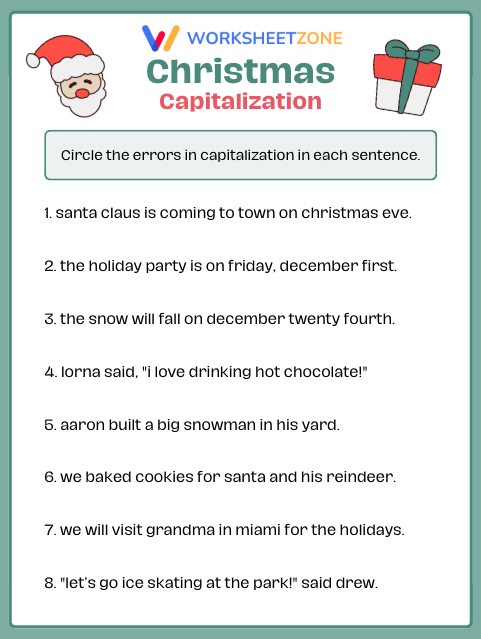
A capitalization challenge focuses students on identifying and correcting errors in proper nouns, titles, and sentence beginnings within authentic examples. Rather than memorizing rules in isolation, students apply them directly to sentences that resemble their own writing. Over time, this repeated exposure helps capitalization become a natural part of the writing process instead of an afterthought.
16. Verb charades

Verb charades allows students to explore verbs and verb tenses through movement and interaction. Teachers select target verbs and invite students to act them out while classmates identify the action and, when appropriate, the tense. This physical involvement helps many learners retain grammar concepts more effectively and adds variety to traditional grammar instruction.
17. Noun hunt
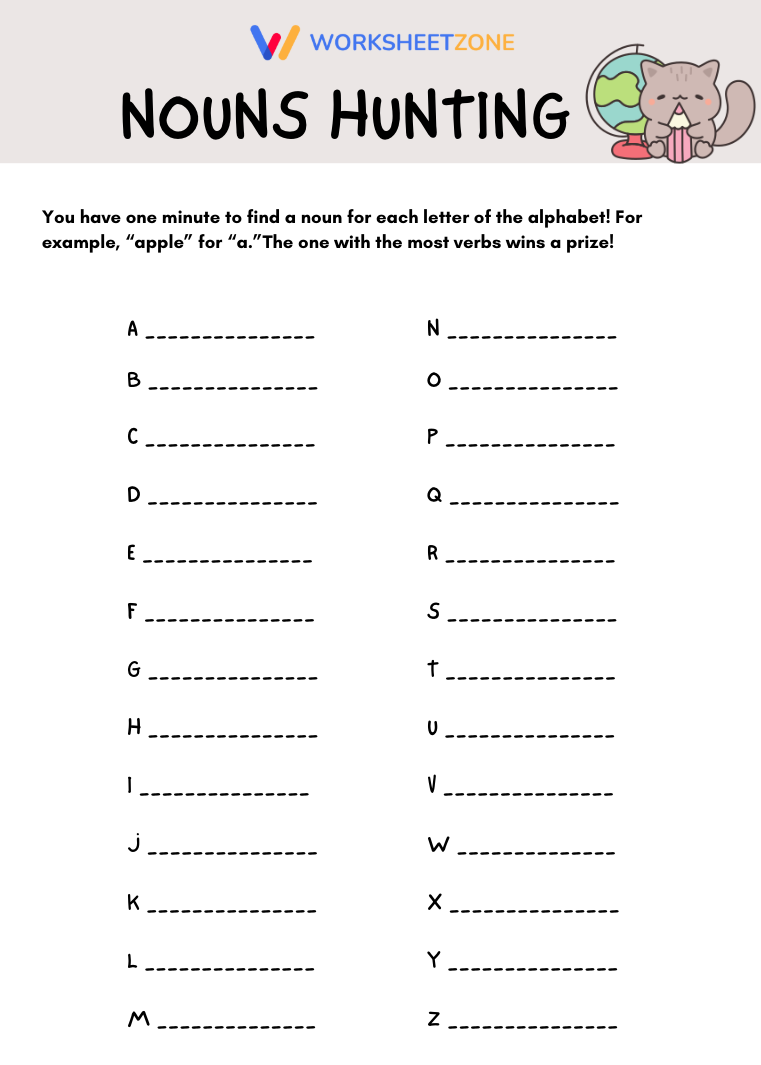
A noun hunt integrates grammar practice into reading by asking students to locate specific types of nouns within a text. Teachers can use familiar passages so students focus on grammar rather than decoding. This activity helps learners recognize how grammar functions in real language, strengthening both grammatical awareness and reading comprehension.
18. Sentence sorting

Sentence sorting activities invite students to analyze and group sentences based on structure, such as simple, compound, or complex. Teachers can encourage discussion by asking students to explain why each sentence belongs in a particular category. This comparison deepens understanding of sentence variety and supports more intentional sentence use in writing.
19. Grammar exit tickets

Grammar exit tickets provide a quick snapshot of student understanding at the end of a lesson. Teachers might ask students to correct a sentence or apply a rule that was just taught. Reviewing responses helps identify patterns of misunderstanding and informs future instruction without interrupting lesson flow.
20. Would you rather (grammar edition)

In this activity, students respond to “Would you rather” questions using complete, grammatically accurate sentences. Teachers can use it to encourage discussion or short writing responses while still reinforcing grammar expectations. The open-ended format keeps students engaged and allows grammar practice to feel more conversational and meaningful.
21. Mini grammar quizzes
Mini grammar quizzes focus on a single skill and are designed to check understanding without overwhelming students. Teachers often use them to confirm mastery or identify areas that need reinforcement before moving on. When used regularly, these short assessments help track progress while keeping grammar instruction manageable.
22. Grammar journals
Grammar journals give students ongoing opportunities to apply grammar skills through short, focused writing tasks. Teachers can assign a specific grammar focus for each entry while still allowing students to express their ideas freely. Over time, this consistent practice helps grammar skills transfer naturally into longer, more independent writing.
Frequently Asked Questions (FAQs)
1. Are these grammar activities free?
Yes, Worksheetzone offers a wide range of freemium grammar resources, including the Sentence Scramble Generator and various printable worksheets. While some premium interactive tools may require a subscription, the foundational classroom ideas are accessible to everyone. We believe that mastering language should be fun and available to all learners.
2. How often should I include grammar activities in my lesson plans?
We recommend integrating short, 10–15 minute grammar activities 2-3 times per week. Consistency is more effective than long, infrequent sessions. By using “warm-up” or “exit ticket” activities, you can reinforce rules without taking away too much time from your primary curriculum.
3. Can these activities be used for ESL or ELL students?
Absolutely. Most of these tasks, like the “Parts of Speech Sort” and “Verb Charades,” are excellent for English Language Learners because they use visual and physical cues. Worksheetzone provides scaffolds for diverse learners to ensure that every student can participate and succeed.
4. Do these activities align with state standards?
Yes, all Worksheetzone grammar activities are designed to support Common Core ELA Standards. We focus on the foundational language skills required for standardized testing and, more importantly, for effective real-world communication.
Final thoughts
Grammar activities play an essential role in shaping well-rounded, confident communicators. From simple noun hunts to complex sentence expanding, each task supports a different area of linguistic growth. The most effective grammar practice balances fun with meaningful application. When chosen thoughtfully, these activities inspire curiosity and prepare young learners for long-term success.