


























Views
Downloads
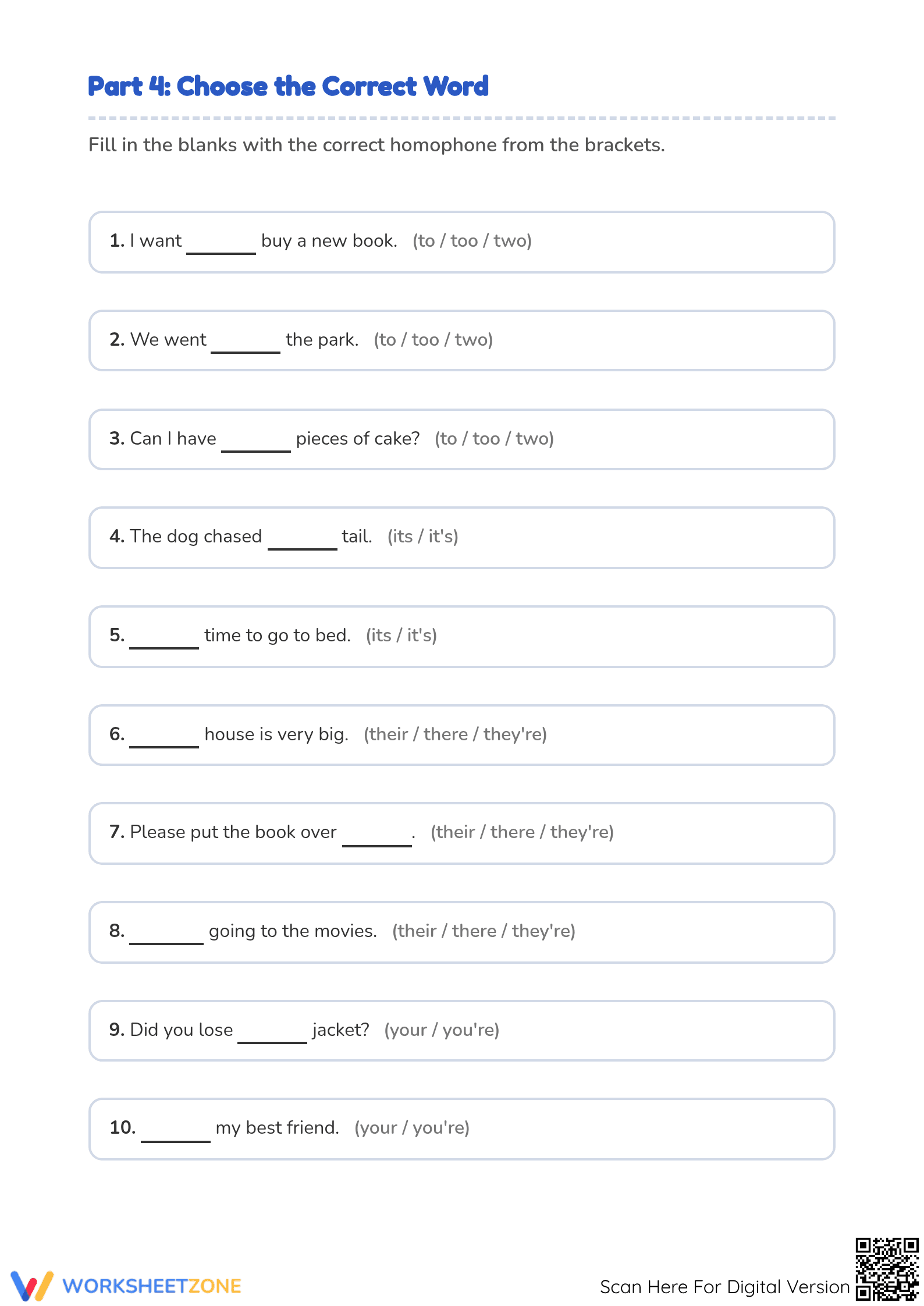

Printable Homophones Worksheet | Grade 4 ELA
Paste this activity's link or code into your existing LMS (Google Classroom, Canvas, Teams, Schoology, Moodle, etc.).
Students can open and work on the activity right away, with no student login required.
You'll still be able to track student progress and results from your teacher account.
This comprehensive Grade 4 homophones worksheet helps students master frequently confused words by providing extensive contextual practice. By matching, selecting, and writing sentences with homophones, learners develop the essential vocabulary and spelling accuracy needed for clear, effective written communication across all subjects.
At a Glance
- Grade: 4 · Subject: ELA
- Standard:
CCSS.ELA-LITERACY.L.4.1.G— Correctly use frequently confused words in written sentences- Skill Focus: Homophones
- Format: 5 pages · 40 problems · Answer key included · PDF
- Best For: Independent practice and review
- Time: 25–35 minutes
This five-page resource features a variety of task types to keep students engaged while building vocabulary skills. The packet includes word matching, picture identification, sentence completion, and original sentence writing. A complete answer key is provided for quick grading, and the clean layout ensures students can focus entirely on distinguishing between similar-sounding words.
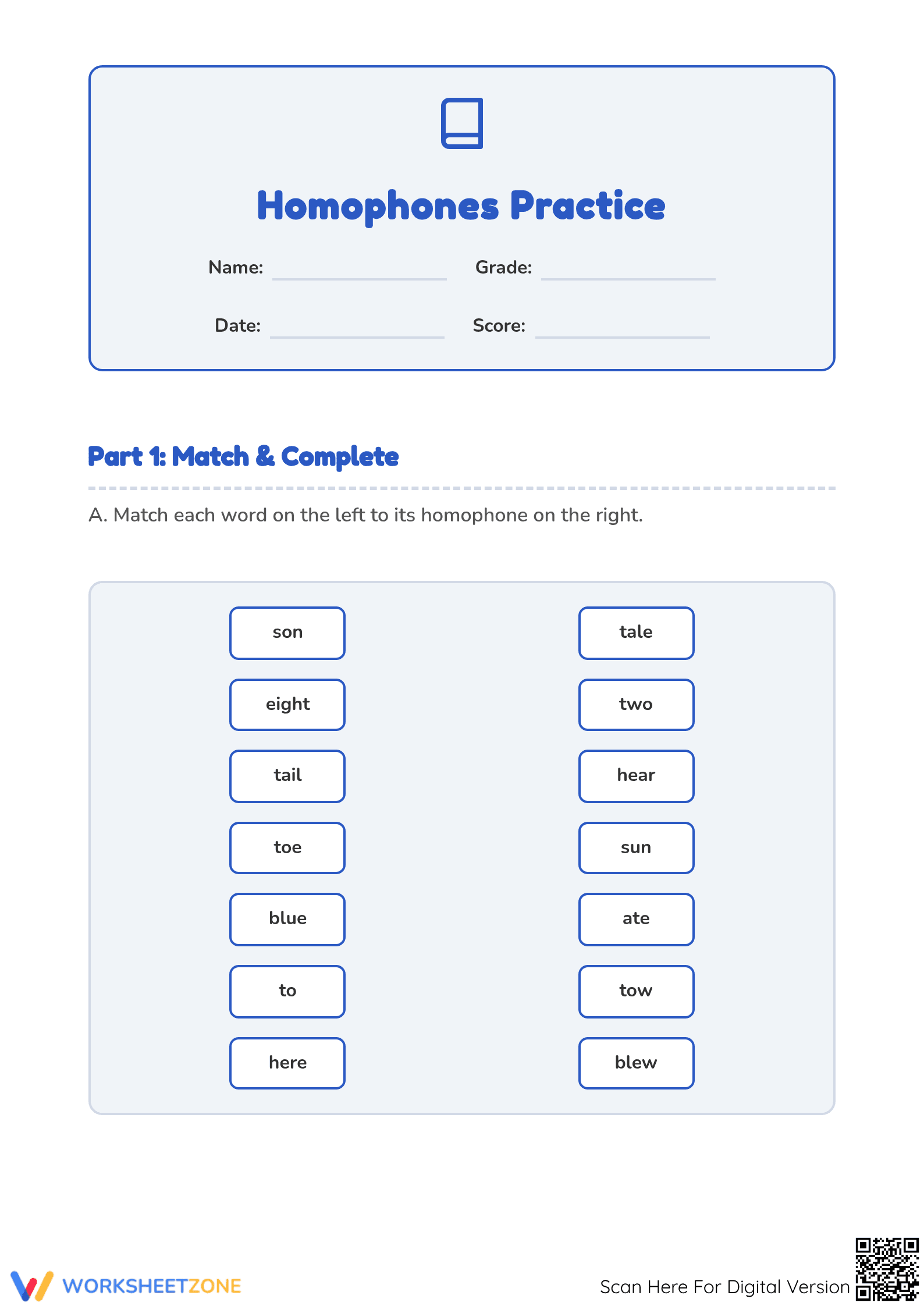
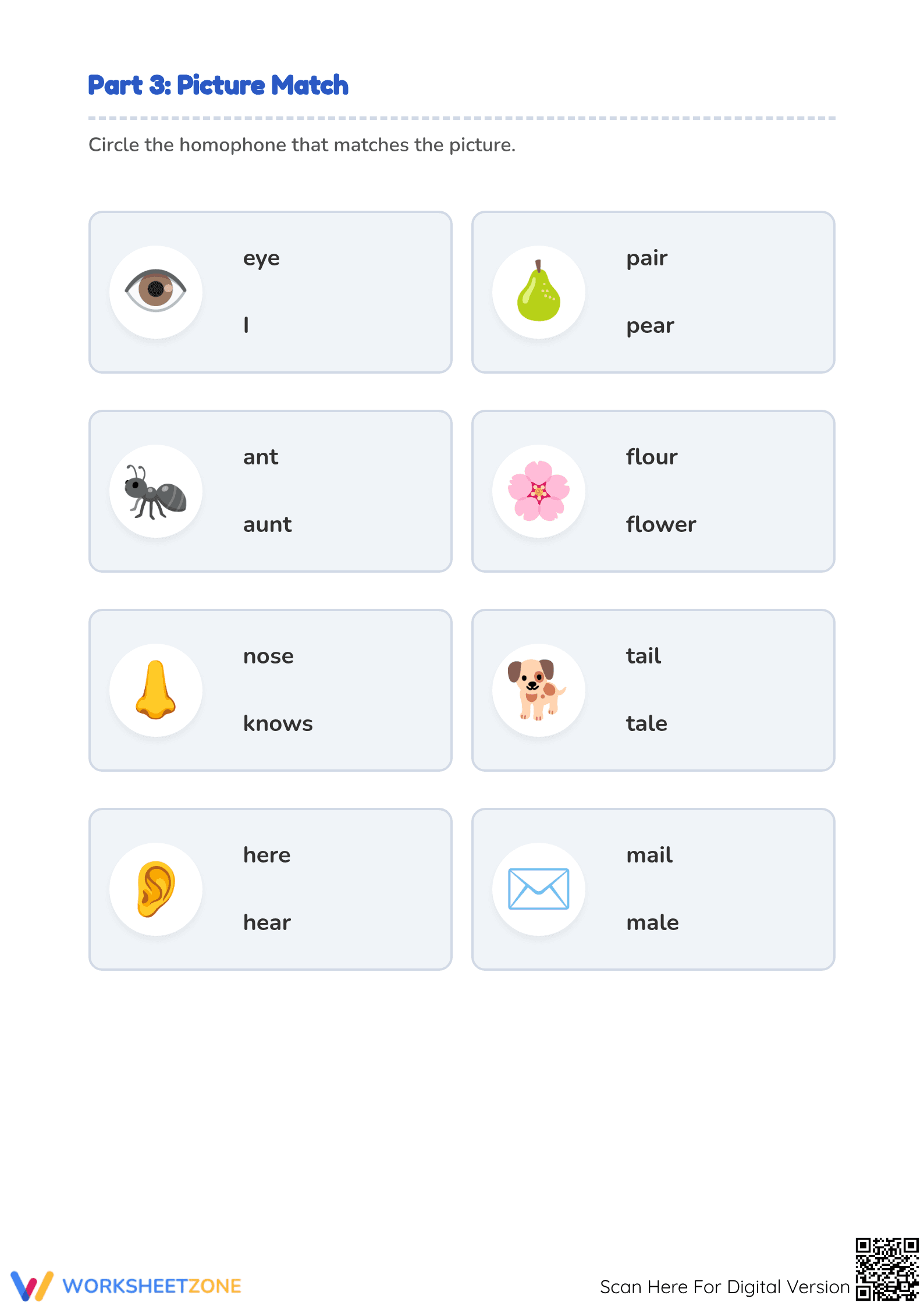
- Guided practice: Students begin by matching 10 homophone pairs and identifying words based on visual picture cues, building foundational recognition.
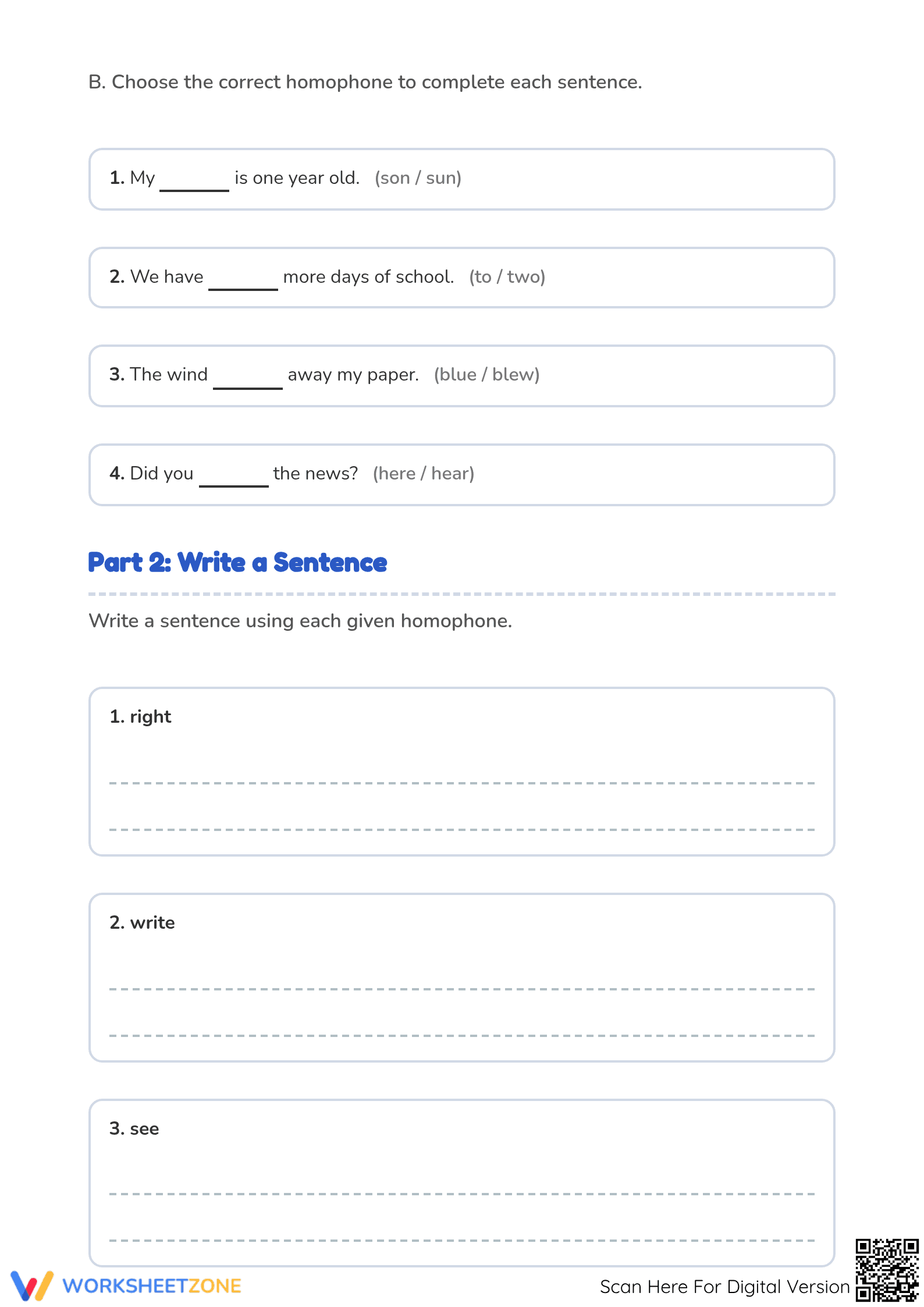
- Supported practice: Learners complete 14 fill-in-the-blank sentences using provided word banks or bracketed choices, applying their knowledge in context.
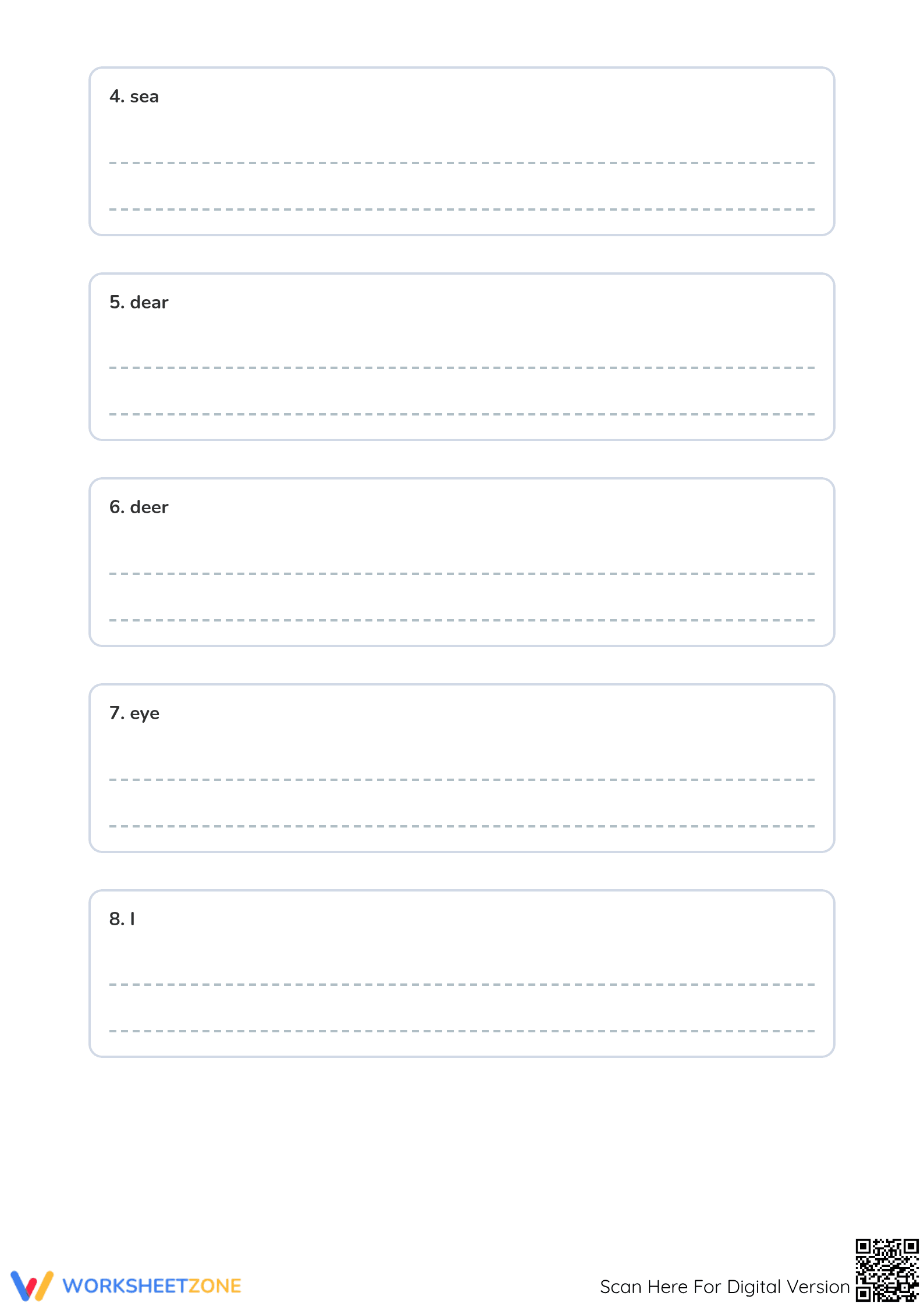
- Independent practice: The final challenge requires students to write 8 original sentences using specific homophones, demonstrating full comprehension.
This gradual-release approach ensures students build confidence before tackling more complex application tasks.
This resource is aligned to primary standard CCSS.ELA-LITERACY.L.4.1.G: Correctly use frequently confused words (e.g., to, too, two; there, their, they're). It also supports broader vocabulary acquisition and spelling standards. Both standard codes can be copied directly into lesson plans, IEP goals, or district curriculum mapping tools.
Deploy this worksheet during independent work time after a direct instruction lesson on common homophones. It also serves as an excellent homework packet or substitute teacher activity. While students are working, observe their sentence creation section as a formative assessment to identify who might need a targeted reteach on specific word sets like their/there/they're. Expect students to complete the full packet in 25 to 35 minutes.
This practice set is designed for fourth-grade general education students, but it works beautifully as a review tool for fifth graders or an extension activity for advanced third graders. For students needing extra support, pair this worksheet with a visual anchor chart displaying common homophone definitions and examples.
Mastering vocabulary nuances is a critical component of elementary literacy development. This resource targets CCSS.ELA-LITERACY.L.4.1.G, helping students correctly use frequently confused words in their daily writing. According to Fisher & Frey (2014), explicit vocabulary instruction combined with multiple exposures in varied contexts significantly improves reading comprehension and writing clarity. By transitioning students from simple matching exercises to generating their own original sentences, this worksheet provides the repeated, varied practice necessary for long-term retention. Understanding homophones reduces common spelling errors and enhances a student's ability to convey precise meaning in their written work. This structured progression ensures learners not only memorize definitions but also understand how syntax and context dictate word choice, ultimately fostering stronger, more confident communicators in the classroom and beyond.


